


Circular Marble Centre Table
A circular marble centre table anchors a room with its polished stone top and central pedestal, offering a striking focal point for any interior.
Circular Marble Centre Table
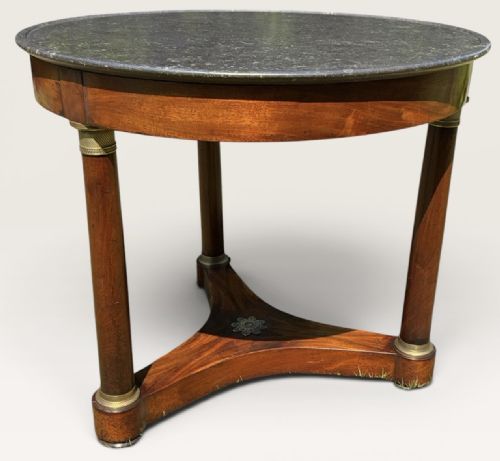
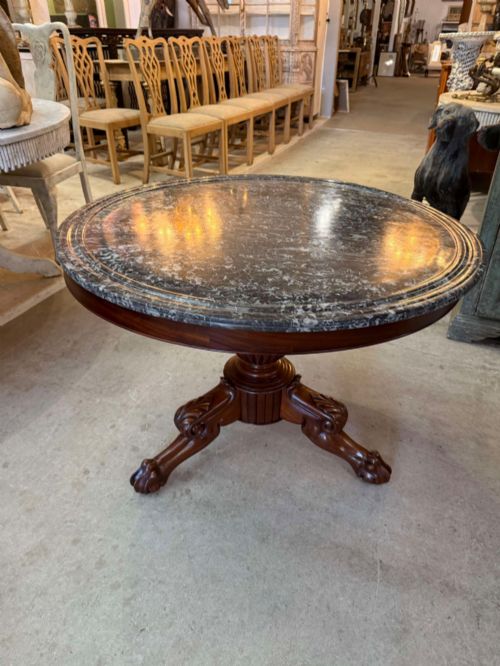
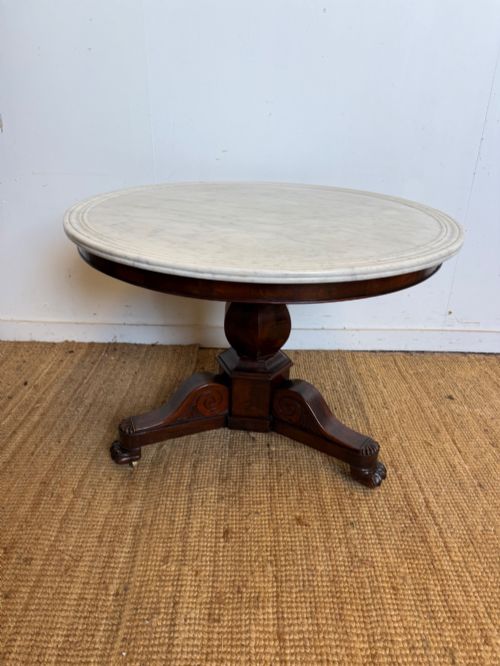
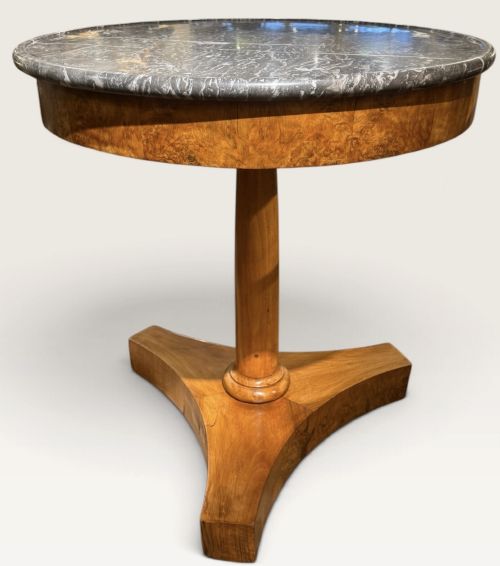
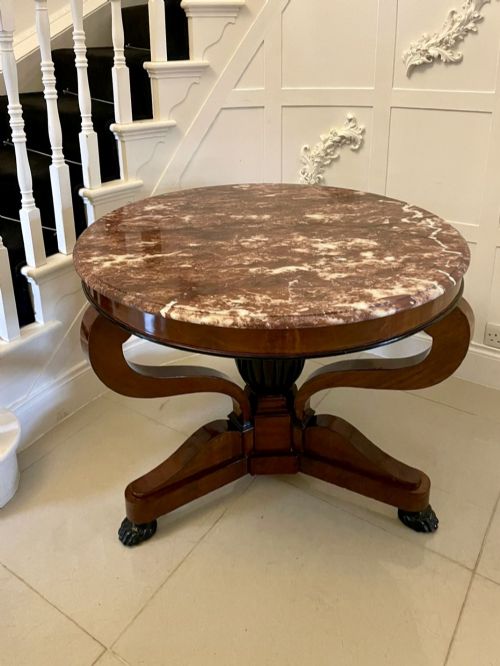
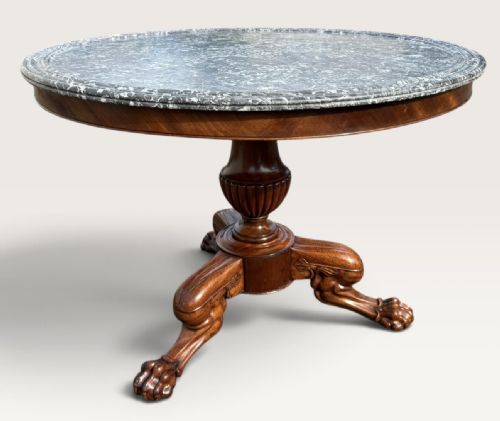
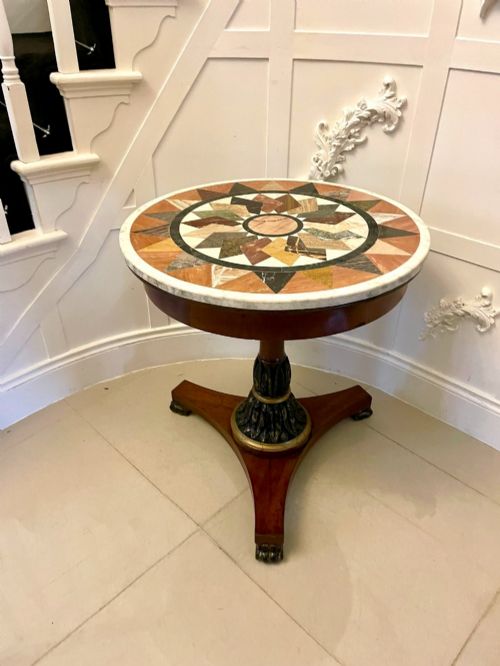
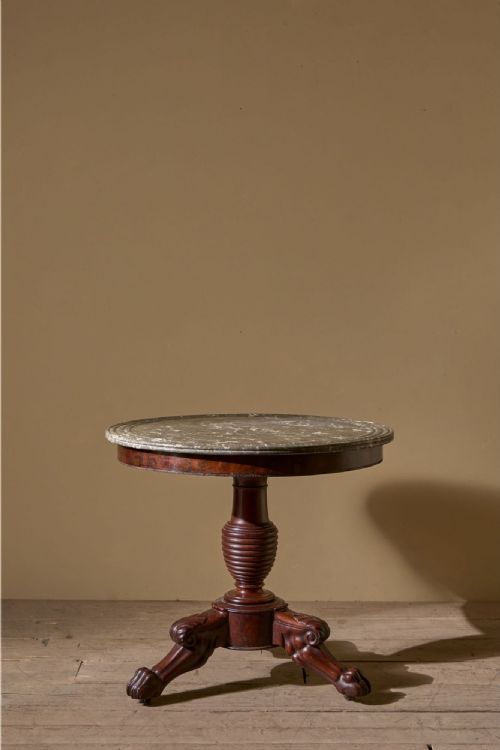
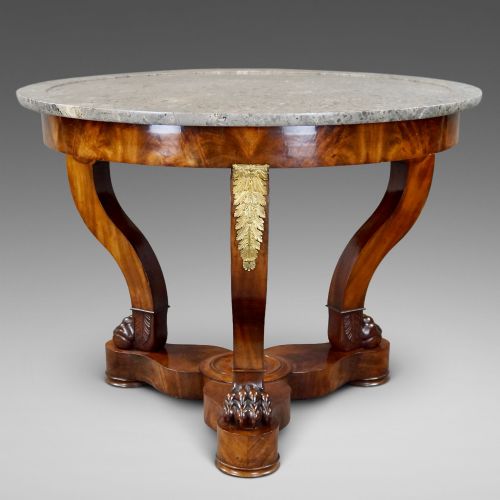
A circular marble centre table is typically encountered as a freestanding gueridon or pedestal table dating from the nineteenth century, including the Regency, William IV, and French Empire periods. These tables frequently pair a heavy stone top with a robust wooden base, serving as functional statement pieces in principal reception rooms.
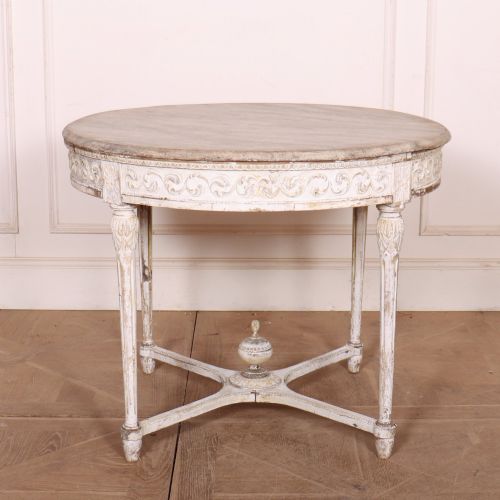
Most examples originate from French workshops or English makers, appearing in variations such as occasional tables, breakfast tables, and side tables. The overarching design relies on a central pillar or pedestal support rather than traditional corner legs, allowing the piece to sit comfortably in the middle of a space.
Materials and Construction
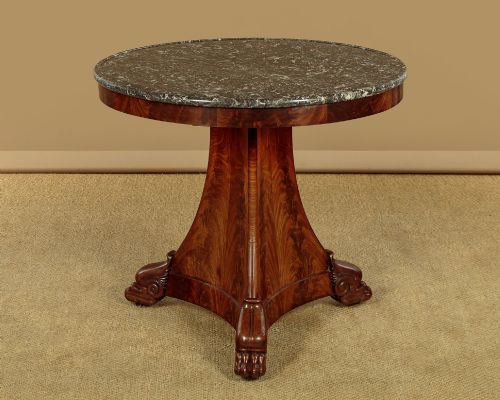
Makers constructed the primary framework using dense timbers such as mahogany, walnut, rosewood, and kingwood, occasionally employing giltwood, painted finishes, or parcel-gilt details for decorative effect. These woods were selected for their structural stability and rich grain patterns, which complemented the weight and colour of the stone above.
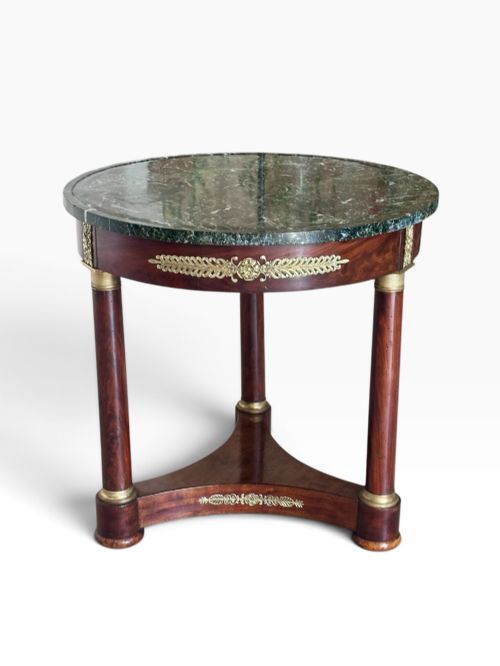
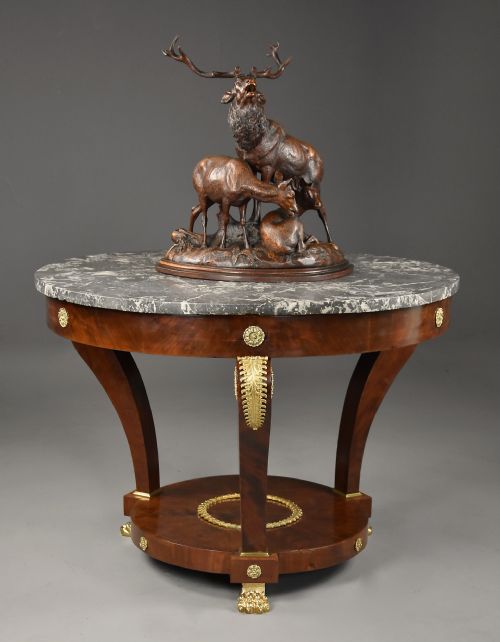
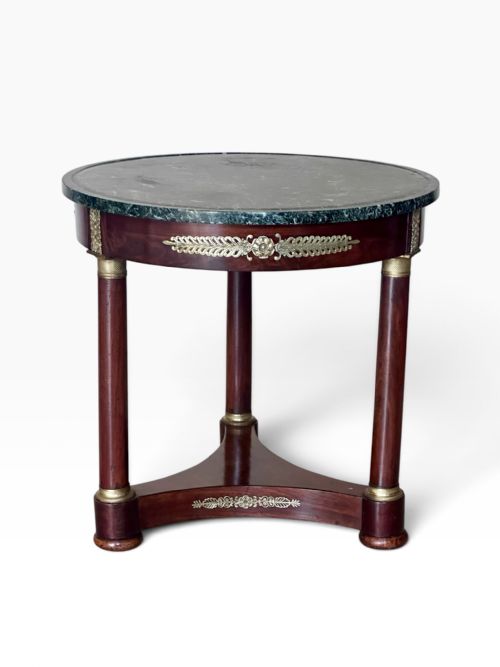
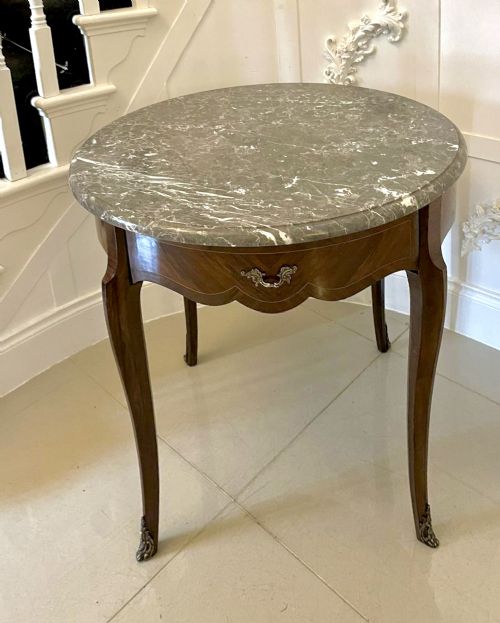
The defining characteristic is the inset top, shaped from white, grey, black, purple, or multi-coloured specimen marble. Mounts in brass, ormolu, and bronze frequently accent the timber bases and pedestals, while carved elements like swan supports, rams heads, or floral motifs add sculptural depth.
Circular Marble Centre Table Retail Price Guide 2026
Typical asking prices for circular marble centre table among the pieces listed under this phrase on Sellingantiques today, from the lower quarter to the upper quarter. They describe what is for sale here now, not the wider market.
Materials recorded across the selection include mahogany, walnut, kingwood, rosewood, giltwood, ormolu, brass, and grey or specimen marble.
Judging Quality
Quality rests in the selection of materials and the crispness of the carving on the pedestal and base. Finer examples display meticulously matched flame mahogany veneers, intricate brass or ormolu mounts, and heavy, unblemished marble tops with natural veining.
The integrity of the central support and the stability of the joint where the top meets the pedestal determine the structural success of the piece. Superior craftsmanship shows in the seamless integration of heavy stone slabs onto balanced wooden frames that stand firm without wobble.
The Circular Marble Centre Table Glossary
- Gueridon
- A small French table supported by a central column or pedestal. This term frequently applies to nineteenth-century circular tables designed for display or general use in the centre of a room.
- Ormolu
- Gilt bronze mounted onto furniture bases and pedestals. The technique involves applying a gold amalgam to bronze, creating a durable metallic finish popular in French Empire design.
- Specimen Marble
- A top composed of various coloured marbles arranged in geometric patterns or composite designs. These surfaces demand high precision in cutting and fitting the individual stone sections.
- Parcel-Gilt
- Partially gilded woodwork where gold leaf highlights specific carved details. This treatment draws attention to architectural motifs against a painted or dark wood ground.
- Breakfast Table
- A large circular or tilt-top table originating in the nineteenth century. Despite the name, these pieces functioned primarily as general centre or lamp tables in grand interiors.
Circular Marble Centre Table: Frequently Asked Questions
What is a gueridon table?
A gueridon is a traditional French term for a small table supported by a single central pillar rather than standard legs. These pieces were designed to stand freestanding in the middle of a room.
In nineteenth-century interiors, they frequently featured circular stone tops and served multiple functions as lamp stands, display tables, or decorative centrepieces.
How do I care for a marble top?
Marble requires gentle cleaning with a soft, damp cloth and neutral soap to protect its polished surface from acidic spills and staining. Avoid harsh chemical cleaners that can etch the stone over time.
Using coasters and mats helps preserve the historic finish of the stone while allowing daily use in a modern home.
Where should I place a centre table?
These tables are built to be viewed from all sides, making them ideal for the middle of a hallway, landing, or large living room. They work well as independent focal points beneath a central ceiling rose or chandelier.
Ensure there is enough walking space around the perimeter to appreciate the freestanding pedestal and circular top without obstruction.