

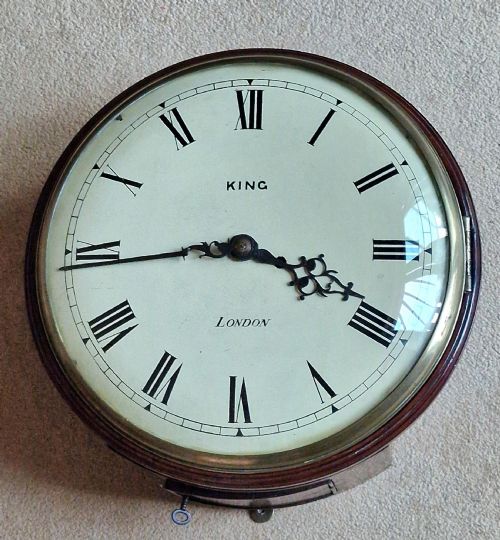

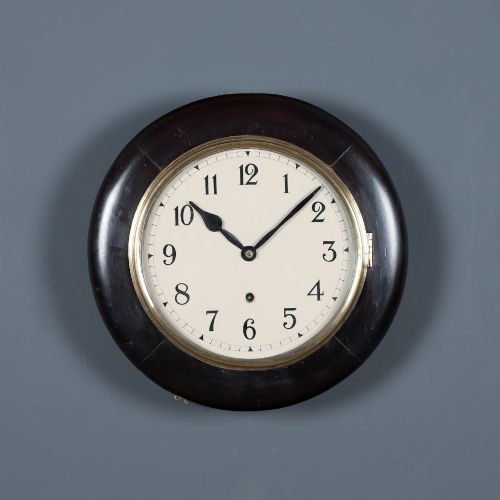
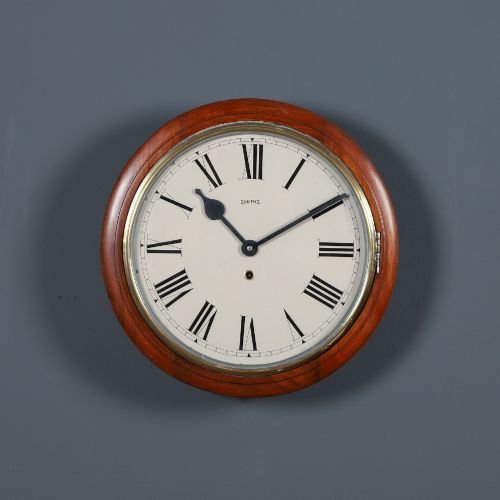
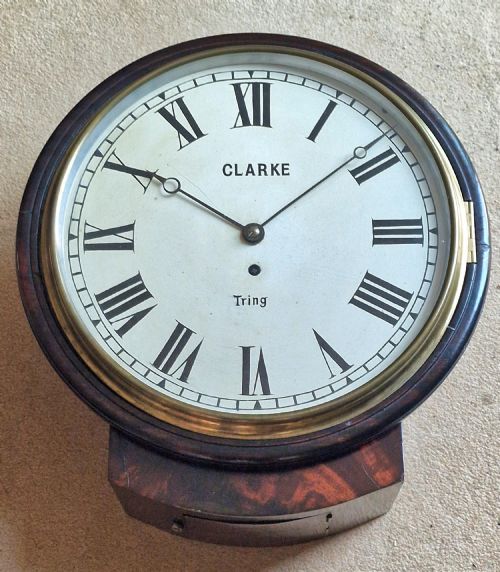


Circular Mahogany Timepiece
These circular mahogany timepieces are timber-cased wall clocks built for railways, schools, and offices, offering clean architectural faces and reliable mechanical movements.
Circular Mahogany Timepiece
A circular mahogany timepiece is a wall-mounted clock housed in a round timber surround, designed for clear legibility in public spaces and transit hubs. When you search for this phrase, you encounter heavy wooden cases fitted with glass face covers and straightforward painted dials.
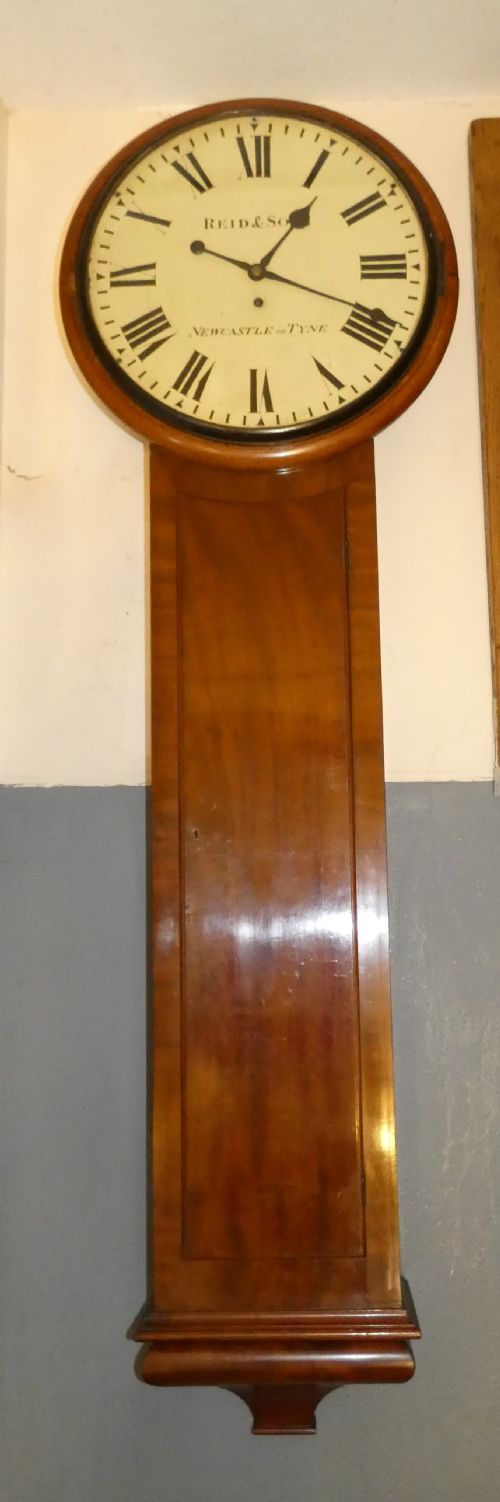
The versions most likely to meet you on this page date from the Georgian and Victorian eras through to the interwar period, often bearing the names of railway companies or provincial makers. Their utility-driven forms range from simple domestic wall clocks to large station regulators.
How they were made
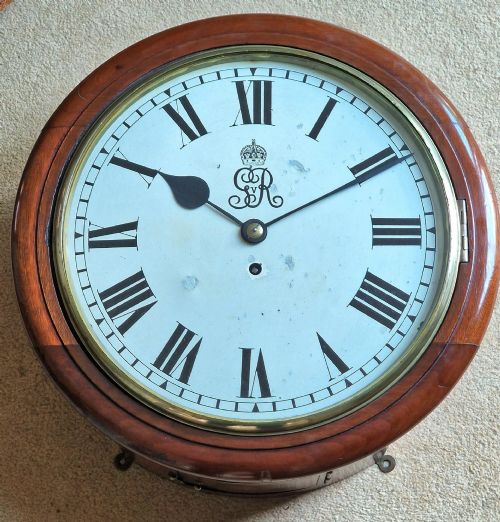
The makers formed the circular outer surrounds from solid mahogany, frequently utilising a hinged wooden bezel or a cast brass door to hold the protective glass pane. Inside these timber housings, mechanical movements relied on brass plates and steel pinions to drive the hands.
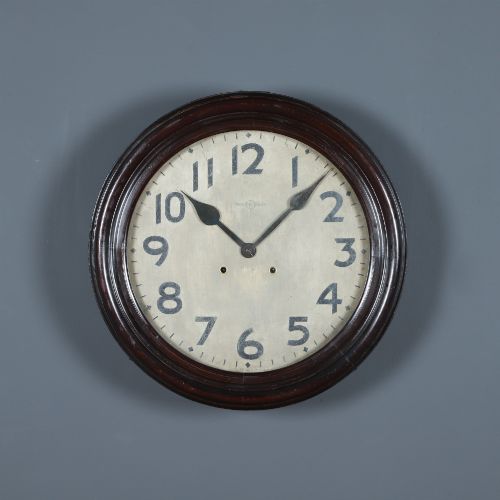
Faces were constructed from painted metal, iron, or wood, marked with clear numerals to ensure high legibility from a distance in busy environments like railway platforms and schoolrooms.
Circular Mahogany Timepiece Retail Price Guide 2026
Typical asking prices for circular mahogany timepiece among the pieces listed under this phrase on Sellingantiques today, from the lower quarter to the upper quarter. They describe what is for sale here now, not the wider market.
Listings feature mahogany timepieces spanning the Georgian era, the Victorian period, and into the interwar years of the twentieth century.
What varies in quality
The distinction between ordinary production items and finer pieces lies in the crispness of the case timber and the precision of the interior movement. Robust fusee movements, which maintain even tension as the mainspring unwinds, represent a higher standard of mechanical engineering than standard spring-driven alternatives.
Originality of components also dictates the standing of a piece, particularly where painted dials retain their initial lettering without extensive repainting. Well-preserved maker signatures and company stamps on the dial or movement further elevate the standing of an individual clock.
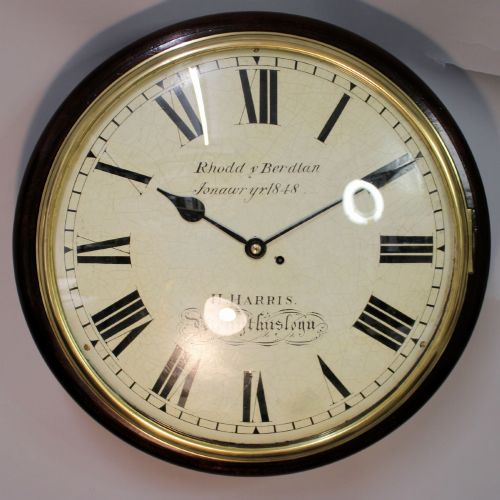
Richard Jones of Hereford·George Clarke Tring·Henry Harris of Monythusloyn·Anglo Swiss Watch Co·John Wilson London
The Circular Mahogany Timepiece Glossary
- Fusee
- A conical pulley connected to the mainspring by a chain or cord, designed to equalise the torque as the spring unwinds. This mechanism ensures consistent timekeeping throughout the duration of the wind.
- Bezel
- The ring of brass or wood that holds the glass cover over the dial of the clock. It is commonly hinged to allow access for setting the hands and winding.
- Dial
- The visible face of the clock where the hours and minutes are marked. On these pieces, dials are typically painted metal or iron.
- Timepiece
- A clock that indicates the time without striking the hours or playing a musical tune. Many practical wall clocks were built purely as timepieces for offices and stations.
- Regulator
- A precision clock designed to keep exceptionally accurate time, often featuring a long pendulum and a sophisticated movement. They served as master clocks to set other timepieces.
Circular Mahogany Timepiece: Frequently Asked Questions
How do I wind a fusee wall clock?
You insert the winding key into the small aperture on the dial face and turn it gently clockwise until the mechanism resists further movement. Care must be taken not to overwind the spring.
Most fusee timepieces require attention once a week to maintain accurate timekeeping, depending on the length of the chain and the specifics of the movement.
Where were these circular wall clocks originally used?
These clocks were manufactured primarily for functional environments where precise timekeeping and clear visibility were essential for daily operations. Common locations included railway station platforms, school assembly halls, and military offices.
Transport companies such as the GWR and LMS utilised them extensively to coordinate schedules and manage staff punctuality across the network.
Can I hang a heavy mahogany wall clock on modern plaster?
Hanging these heavy timber cases requires securing the mounting directly into a wall stud or masonry anchor rather than relying solely on plasterboard. The substantial weight of the mahogany housing and brass movement demands robust hardware.
Ensuring a firm fixing prevents the clock from vibrating or slipping, which could otherwise disrupt the pendulum beat and accuracy of the movement.