


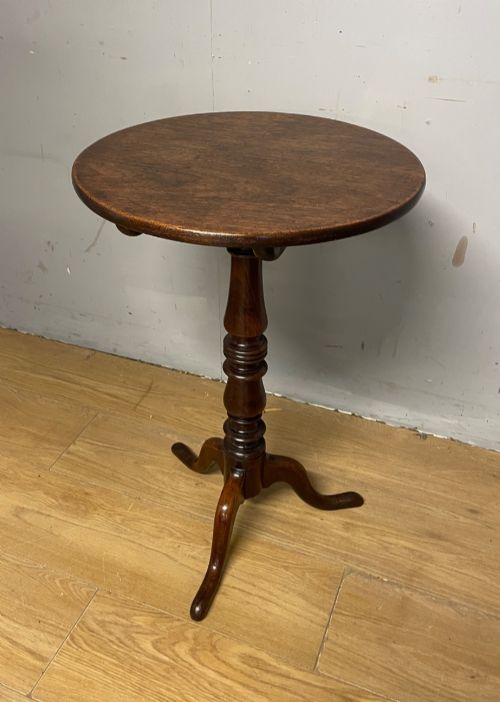
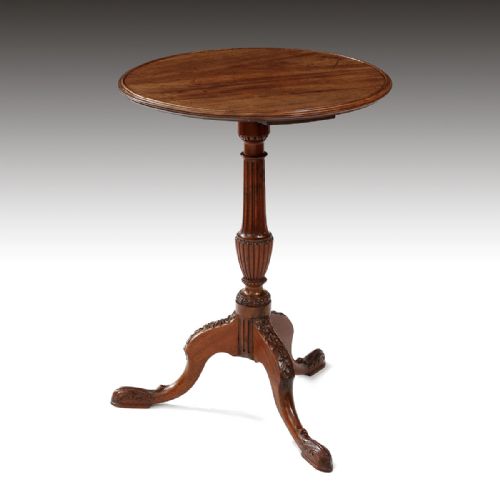
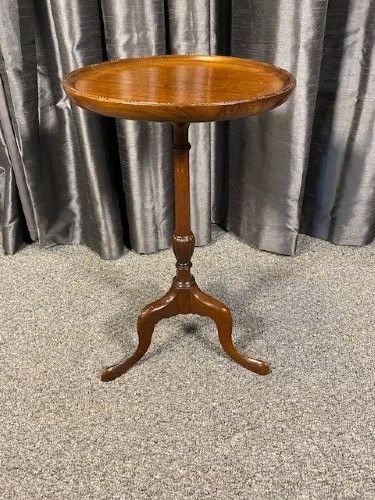
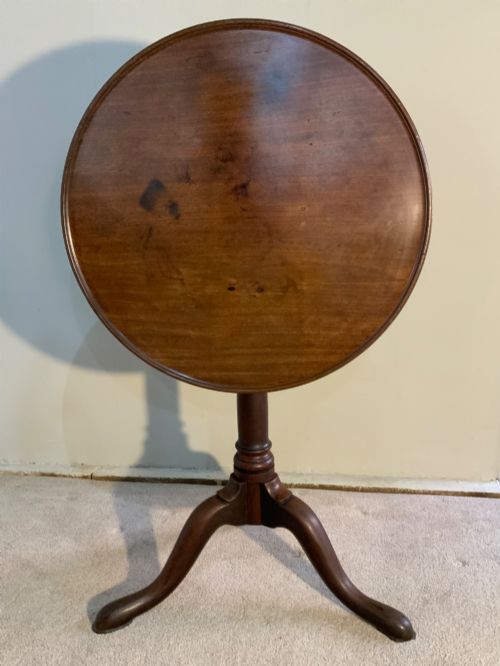
Circular Mahogany Occasional Table
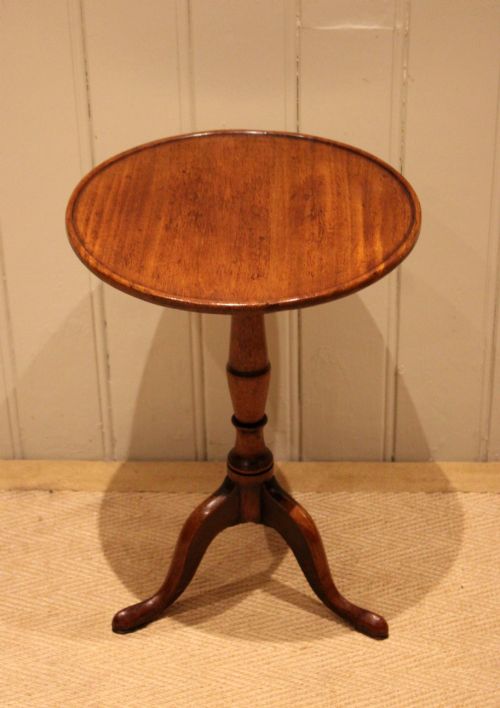
A circular mahogany occasional table offers a compact surface that moves easily from a corner to a fireside chair.
Circular Mahogany Occasional Table
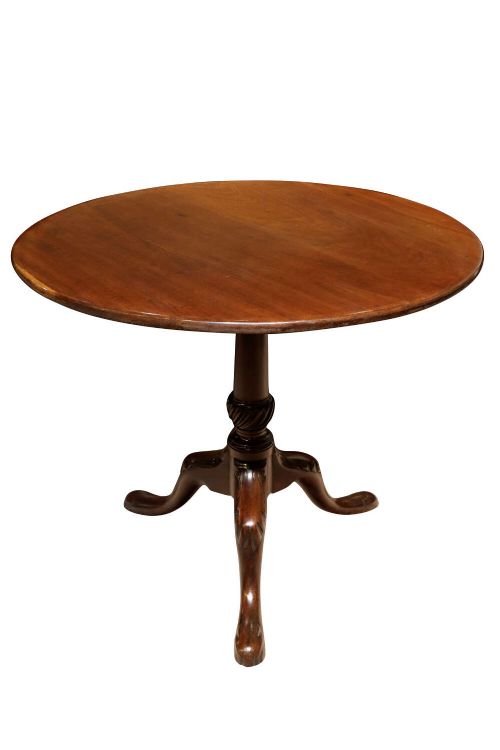
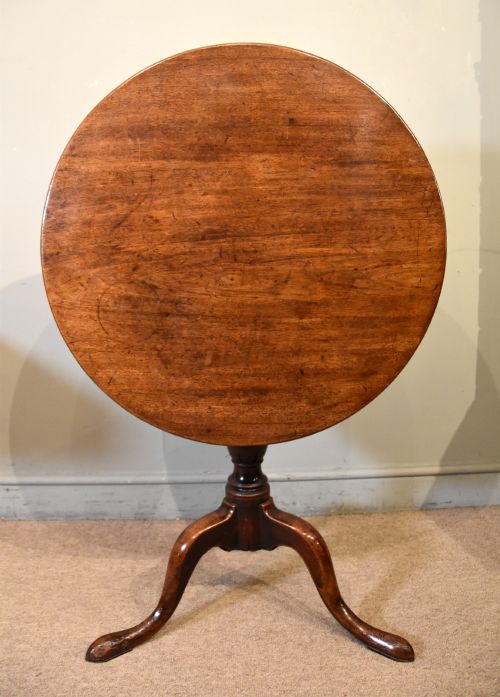
A circular mahogany occasional table is a versatile small furniture form designed for flexibility in period rooms, often taking the shape of a tripod wine table, a tilt-top tea table, or a larger centre table.
Buyers searching for a circular mahogany occasional table will encounter pieces spanning from the 18th century through the Georgian, Regency, Victorian, and Edwardian eras, reflecting shifts in domestic entertaining.
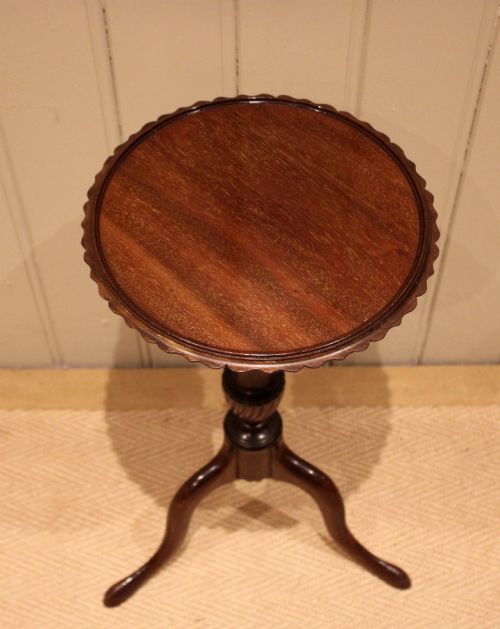
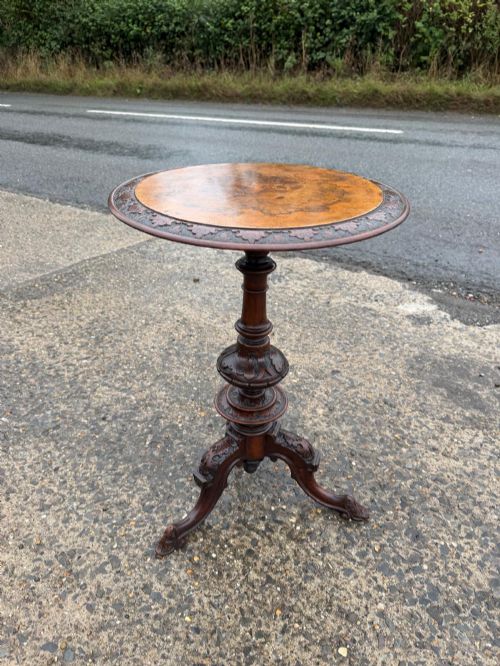
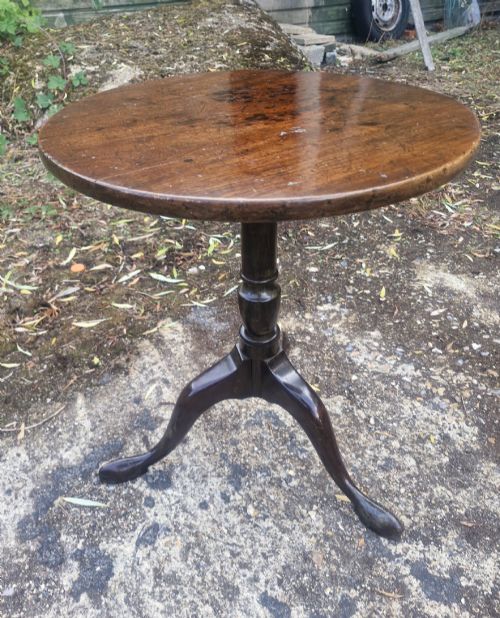
The standard version met most frequently is the tripod wine table or lamp table, typically featuring a turned pillar and three-legged base that fits neatly beside seating.
Materials and Construction Methods
Cabinetmakers constructed these tables primarily using solid or veneered mahogany, frequently selecting figured timber, flame mahogany, or burr wood for the top to create rich surface movement.
Structural integrity relied on traditional joinery, including dovetails, mortise and tenon joints, and sophisticated pivoting mechanisms such as birdcage supports or brass tilting catches on tripod bases.
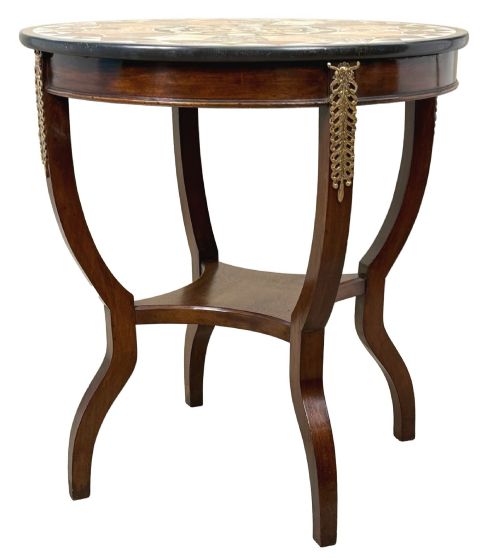
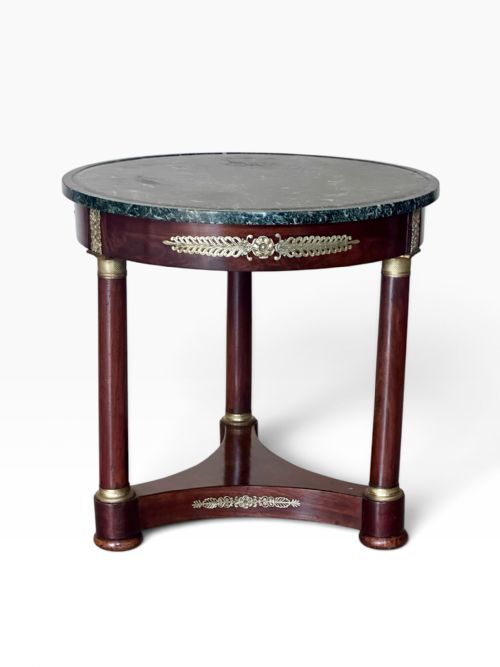
Listings feature circular tables incorporating marble, brass galleries, leather inserts, and inlaid satinwood alongside traditional solid mahogany.
Factors That Determine Quality
Quality rests heavily on the selection of the timber, where dense grain patterns and well-matched veneers elevate a piece far above utilitarian examples built from plain stock.
The crispness of the turning on the central pedestal and the proportion of the legs reveal the maker's hand, distinguishing workshop pieces from mass-produced late examples.
James Shoolbred·Gillow·Maples and Co
The Circular Mahogany Occasional Table Glossary
- Tilt-top table
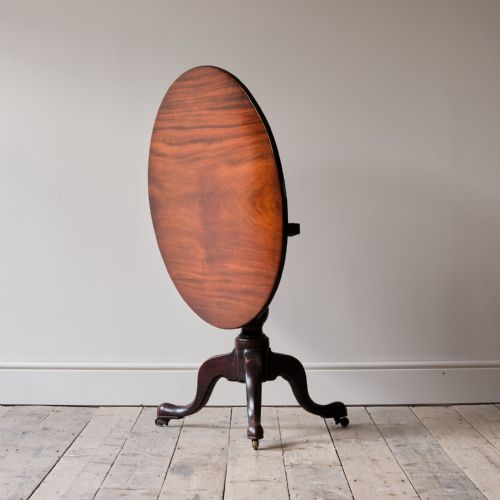
- A table with a hinged top that folds flat when not in use, allowing the piece to stand against a wall to save space. This mechanism often involves a birdcage block beneath the surface.
- Tripod base
- A three-legged support structure commonly found on smaller occasional and wine tables, offering stability on uneven floorboards. Each leg typically terminates in a pad, claw, or brass castor.
- Birdcage
- A revolving wooden framework beneath a table top that allows the surface to both tilt and rotate. This complex mechanism is frequently associated with finer 18th-century examples.
- Gueridon
- A small French occasional table, often featuring a circular marble top surrounded by a brass gallery. These tables arrived in English interiors during the Regency and Victorian periods.
- Drum table
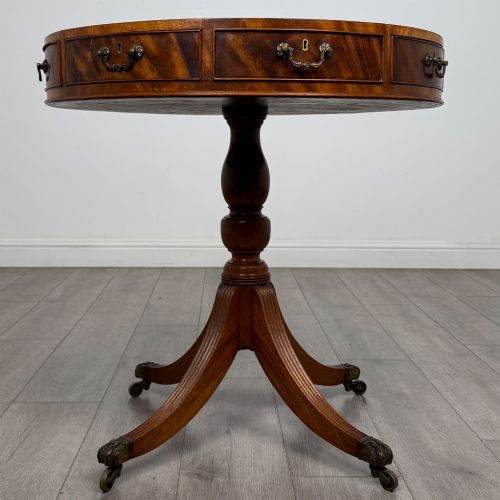
- A large circular library or centre table with a deep frieze containing drawers, mounted on a central pillar and heavy plinth base. They provide substantial storage alongside a circular surface.
Circular Mahogany Occasional Table: Frequently Asked Questions
What is a tilt top table used for?
A tilt top table served primarily as a tea, wine, or card table during the evening hours. When the household finished entertaining, the top released and folded downward so the furniture could slide against the parlour wall.
This clever space-saving design kept small rooms clear during the day while providing a sturdy surface when needed.
How do I identify a Georgian table?
Georgian tables generally display restrained proportions, hand-cut dovetails, and dense, dark mahogany timber that has developed a deep patina over centuries. The turning on the central column tends to be sharp and precise rather than heavy.
Examining the underside often reveals pegged joints and tool marks left by period hand planes rather than modern machinery.
Where should I place an occasional table?
An occasional table suits almost any corner, hallway, or gap between seating where a temporary surface is useful for a lamp, book, or cup. Tripod versions fit easily beside armchairs because the three-legged base avoids colliding with chair legs.
Due to their compact footprint, they anchor empty wall spaces without crowding a room.
What is a birdcage mechanism?
A birdcage is a small wooden cage structure fitted beneath a table top that connects the surface to the central pillar. It allows the table top to rotate in a full circle and tilt vertically.
This intricate assembly indicates a higher grade of 18th-century cabinetmaking designed for convenience and display.