


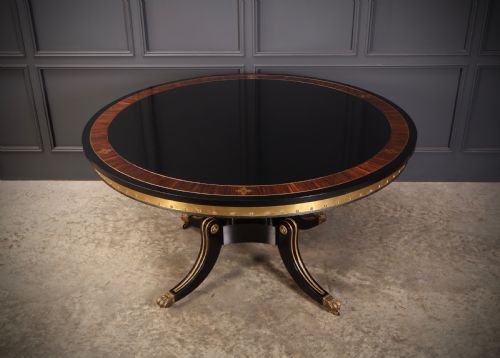


Circular Inlaid Pedestal Table
These circular inlaid pedestal table pieces balance practical design with intricate marquetry, offering a grounded centrepiece for any room.
Circular Inlaid Pedestal Table
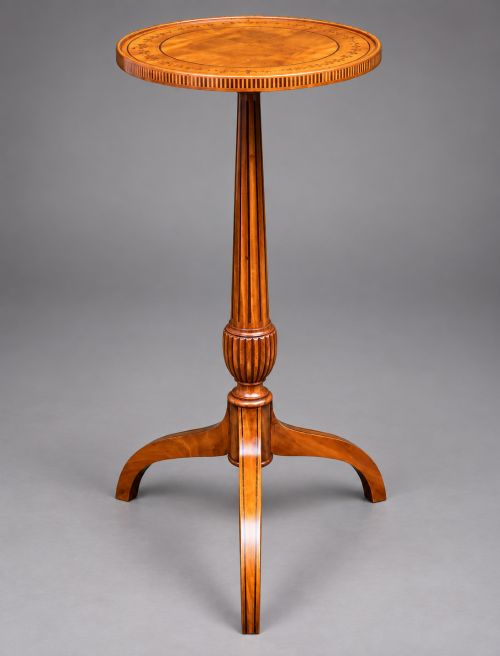
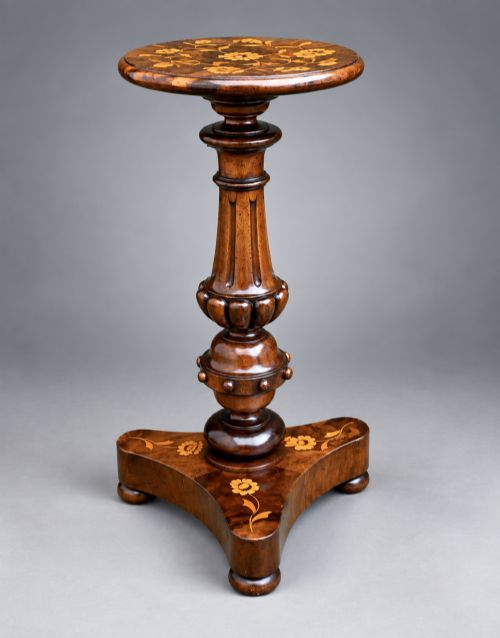
A circular inlaid pedestal table stands on a central column supported by a tripartite or round base, bringing geometric balance to a room. When searching for a circular inlaid pedestal table, you encounter forms ranging from compact wine tables and plant stands to expansive centre and dining tables.
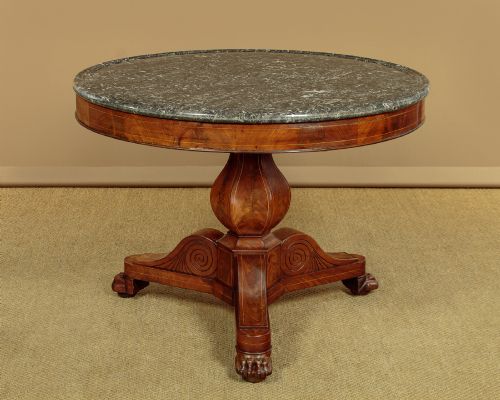
The materials and styles span the nineteenth and early twentieth centuries, with Victorian and Regency periods heavily represented. Walnut, burr walnut, mahogany, and rosewood dominate the structural woods, often paired with elaborate marquetry, brass inlay, or marble tops.
How They Were Made
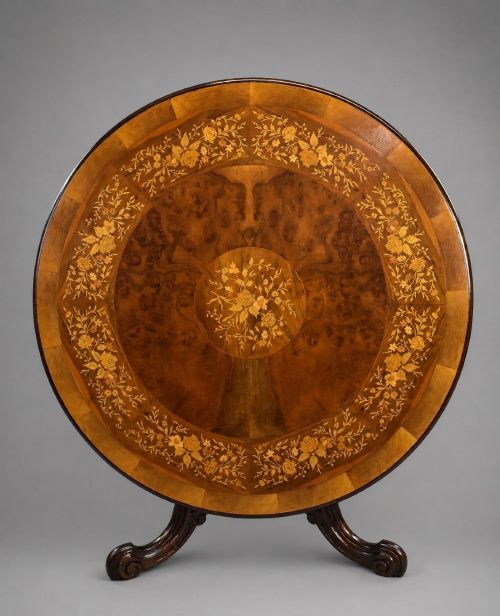
Cabinet makers constructed these tables using dense timbers such as mahogany, rosewood, and walnut as a stable carcase. Surfaces frequently received rich veneers, including burr walnut and flame mahogany, to exploit the natural grain patterns.
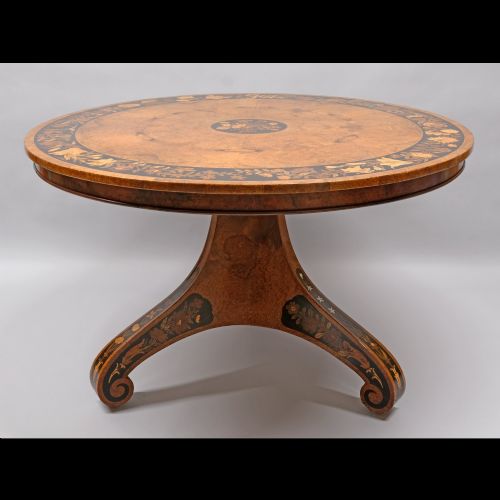
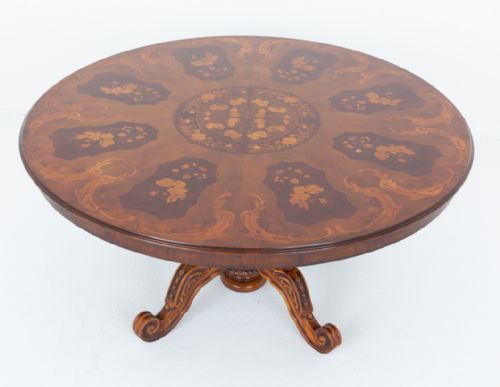
Inlay work required precise hand-cutting of contrasting woods, brass, or stone like marble and pietra dura into fitted recesses. These decorative elements were then smoothed flush with the surrounding timber before polishing.
Listings for a circular inlaid pedestal table feature walnut, mahogany, and rosewood across Victorian and Regency periods.
What Varies in Quality
The standard of a circular inlaid pedestal table rests on the precision of the joinery and the complexity of the surface decoration. Fine examples display seamless integration of marquetry or brass inlay, where individual pieces fit tightly without visible gaps or excessive filler.
Proportion and material selection also divide the ordinary from the exceptional. Tables utilising choice veneers like burr walnut or rosewood paired with solid pedestals and well-defined carving command greater appreciation than simpler utility pieces.
Holmes Baldock
The Circular Inlaid Pedestal Table Glossary
- Marquetry inlay
- Decorative patterns formed by fitting small pieces of veneer into a prepared wooden surface. This technique allows for elaborate pictorial or geometric designs across the tabletop.
- Pedestal
- A central vertical support that holds up the table top, typically rising from a weighted base or feet. It eliminates the need for four corner legs, allowing easier seating arrangement.
- Pietra dura
- An inlay technique using cut and fitted polished coloured stones to create images or patterns. It appears on select marble-topped tables.
- Gueridon
- A small French occasional table supported by a single central column or figures. These often feature decorative marble tops and fine woodwork.
- Drum table
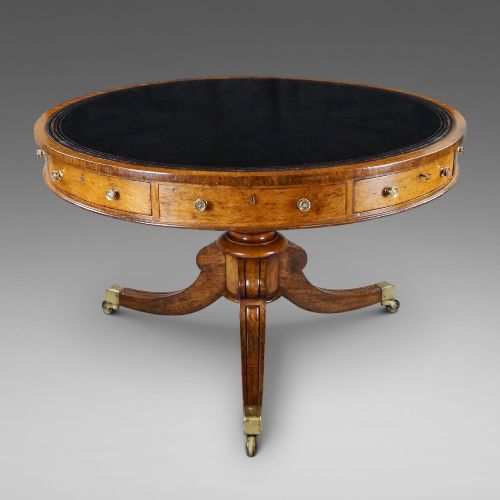
- A circular library table with a deep top resembling a drum, frequently fitted with drawers around the perimeter. These pieces often stand on a robust central pillar.
Circular Inlaid Pedestal Table: Frequently Asked Questions
Where do I place a circular inlaid pedestal table?
These tables suit hallways, living rooms, and libraries where a central focal point works best. Their single pedestal design allows chairs or people to move around them easily.
Smaller versions function well as lamp or wine tables beside seating, while larger centre tables anchor the middle of a spacious room.
How do I care for a wood and marquetry top?
Keep the wood away from direct sunlight and sudden temperature changes to prevent the veneer from drying or lifting. Dust regularly with a soft, dry cloth.
Apply a quality beeswax polish occasionally to nourish the timber and maintain the sheen of the polished surface.
How do I distinguish Regency from Victorian examples?
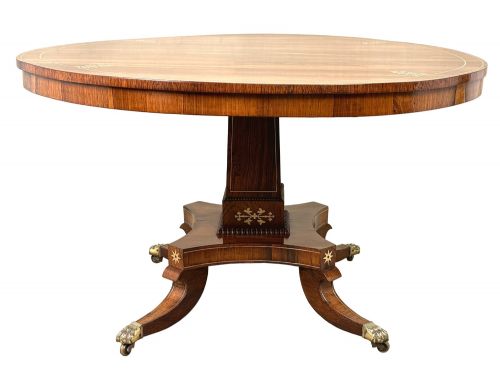
Regency tables often feature cleaner architectural lines, rosewood timbers, and precise brass inlay work reflecting classical influences. They frequently date from the early nineteenth century.
Victorian pieces tend to incorporate heavier proportions, elaborate marquetry, and rich burr walnut or mahogany. Stylistic revivals also emerged later in the nineteenth century.
What is the difference between a centre table and a wine table?
Centre tables are larger and designed to sit in the middle of a room, sometimes doubling as dining or library surfaces. They often feature complex marquetry or marble tops.
Wine tables are smaller, lighter tripods meant to hold drinks or small decorative items near seating areas. They prioritize portability and modest proportions.