


Circular Gold Pendant
A circular gold pendant brings together fine metalwork and intimate design, offering a wearable piece of history from the Georgian era to the mid-twentieth century.
Circular Gold Pendant
A circular gold pendant appears in various forms across this selection, most commonly as a locket or a charm pendant designed to hold a small keepsake or picture. The pieces span periods from the Georgian era through Victorian, Edwardian, and Art Nouveau times up to French mid-century examples.
The objects frequently combine yellow gold with decorative stones or detailed engravings, taking the shape of lockets, round floral motifs, or figural charms. Buyers searching for a circular gold pendant will encounter round frames fashioned from nine-carat or eighteen-carat gold, often housing glass compartments, pearls, emeralds, or tourmalines.
How they were made
Goldsmiths worked primarily with yellow gold, frequently employing nine-carat and eighteen-carat alloys alongside gold back and front constructions or gold on silver applications. Metal was shaped into round frames, screw bezels, and hollow forms designed to house photographs or hair.
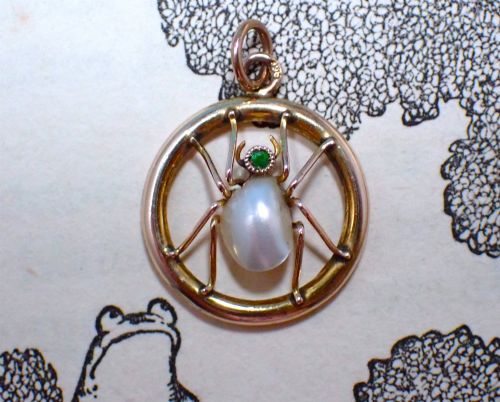
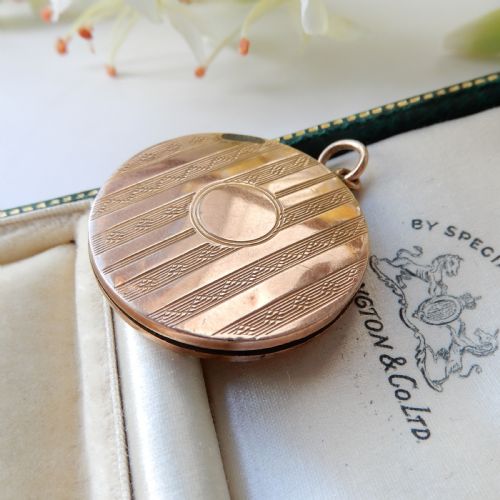
Surface decoration relied on hand engraving, engine-turned detailing, and beaded wirework to create textures on the circular fields. Stones such as pearls, emeralds, pink tourmalines, and garnets were set by hand into the gold mounts to accent floral baskets, swallows, and spider motifs.
What varies in quality
The standard of execution in a circular gold pendant depends on the crispness of the hand engraving and the complexity of the engine-turned patterns etched into the metal. Finer examples display deeply cut motifs, such as flower baskets or swallows, executed with precision across the round surface.
Material composition also distinguishes the range, moving from gold back and front constructions to solid nine-carat and eighteen-carat yellow gold bodies. The integration of quality gemstones, such as matched pearls and genuine emeralds or tourmalines, elevates the sophistication of the piece.
GALLIA
The Circular Gold Pendant Glossary
- Locket pendant
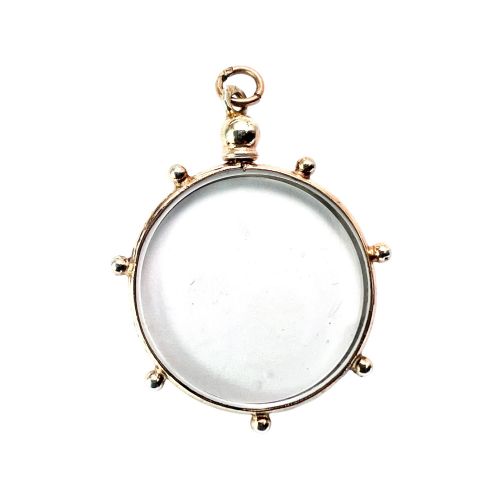
- A hinged circular pendant designed to open and reveal a small compartment for a portrait or keepsake. These pieces often feature glass fronts or snap-shut rims.
- Engine turned
- A decorative technique involving precise geometric patterns mechanically engraved into metal surfaces. This method creates repetitive, textured designs across the gold body.
- Gold back and front
- A method of construction where the exterior plates are made of gold while the internal core consists of a base metal. This technique provided the appearance of solid gold at a lower weight.
- Belle Epoque
- A stylistic period spanning the late nineteenth and early twentieth centuries characterised by delicate garland motifs and fine diamond or pearl work. Pieces from this era often lightness and elegance.
Circular Gold Pendant: Frequently Asked Questions
What fits inside a locket pendant?
Circular lockets traditionally held miniature painted portraits, silhouettes, or small locks of hair belonging to loved ones. The interior compartments usually retain small bezels or frames designed to secure these paper-thin mementos.
Modern wearers often place tiny photographs cut to a circular shape inside the cavity. The hinged or screw-top mechanisms keep the enclosed items protected during daily wear.
How do I date a gold pendant?
Dating relies on stylistic markers, construction techniques, and the types of gems utilised. Georgian and Victorian pieces often show hand-engraved details and engine-turned backs, whereas Edwardian examples frequently incorporate pearls and lighter filigree.
Hallmarks stamped on the metal loop or interior rim provide definitive stamps indicating the assay office and year of manufacture. Pieces lacking full hallmarks are attributed through stylistic comparison with dated counterparts in the archive.
Are these pendants suitable for daily wear?
Many antique gold pendants are robust enough for regular use, provided they are handled with reasonable care. Solid nine-carat and eighteen-carat gold pieces withstand daily rotation well.
Lockets with glass compartments or delicate seed pearls require more attention to prevent accidental impacts or moisture ingress. Removing the pendant before swimming or heavy physical activity preserves the historic hinges and settings.
What is a screw locket pendant?
A screw locket uses a threaded bezel or threaded glass retaining ring to secure the front cover in place. This mechanical closure differs from standard snap-shut hinges found on typical hinged lockets.
This method ensured a tight seal around the glass top, protecting delicate contents such as braided hair or fabric from dust and moisture. The small threaded screw forms an integrated part of the circular design.