


Victorian Pearl Charm
A victorian pearl charm brings tactile nineteenth-century symbolism to a modern chain.
Victorian Pearl Charm
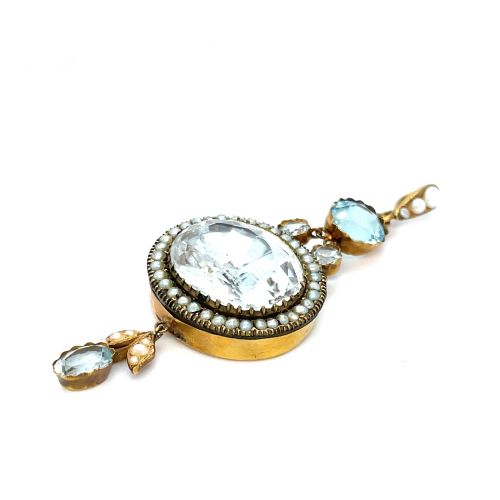
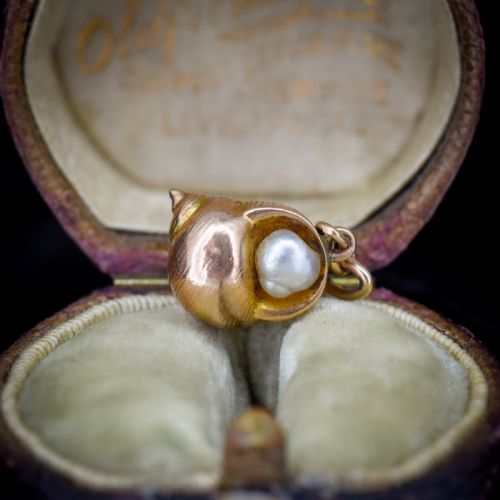
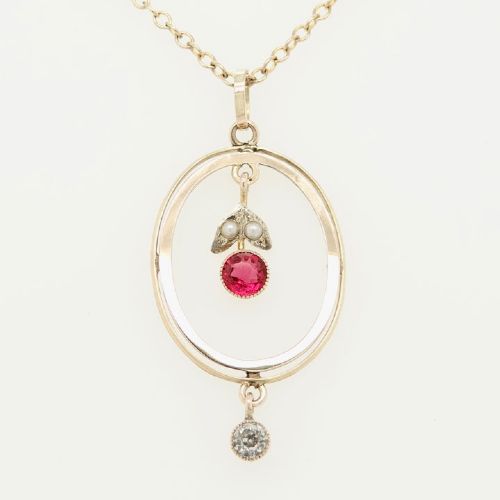
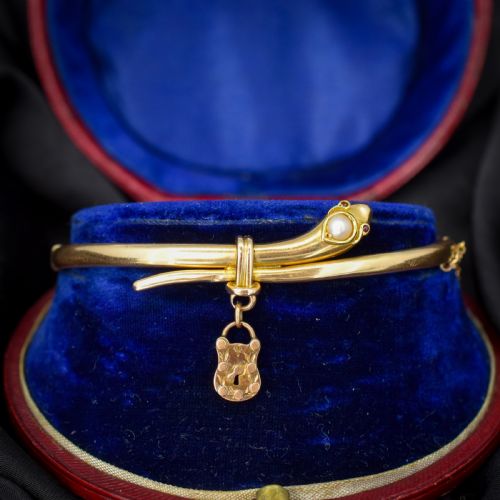
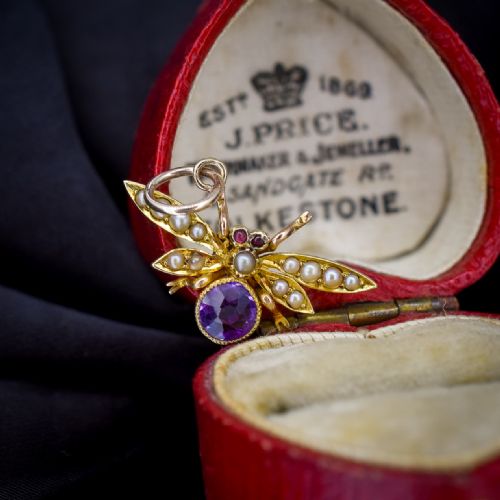
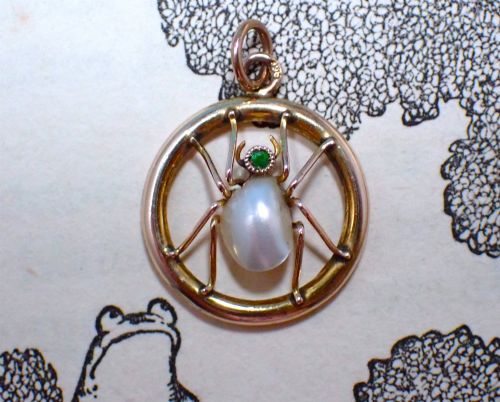
Buyers encounter seed pearls mounted alongside amethyst, turquoise, ruby, emerald, and diamond in 9ct and 15ct gold settings. Forms range from puffy hearts and floral motifs to insects and snakes.
How they were made
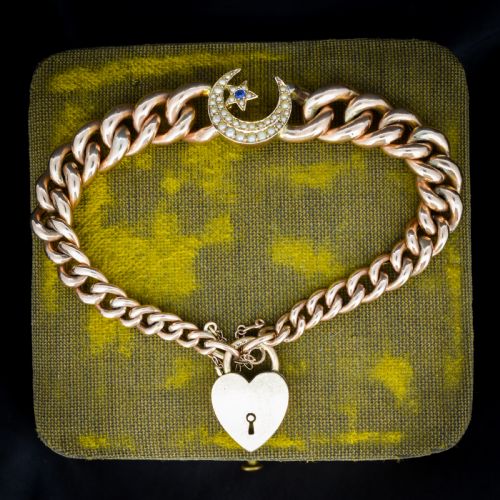
Goldsmiths shaped 9ct and 15ct yellow and rose gold into hollow forms, solid hearts, and intricate curb links. Seed pearls were meticulously applied to create floral clusters, crescents, and borders.
Gemstones such as amethyst, turquoise, and diamonds were integrated alongside mother-of-pearl and enamel work. Construction methods include chased front panels, foil backing, and secure prong or bezel settings.
Listings span the Victorian and Edwardian periods, utilising 9ct gold, 15ct gold, pearls, amethysts, and diamonds.
What varies in quality
The density of gold, ranging from standard 9ct to high-carat 15ct, distinguishes weight and presence. Finer examples display complete seed pearl coverage without vacant settings and retain crisp chasing on gold surfaces.
Design complexity drives differentiation, separating simple pearl drops from multi-gemstone compositions involving enamel, diamonds, and articulated links.
The Victorian Pearl Charm Glossary
- Seed pearl
- A very small, naturally occurring pearl, often drilled and threaded or glued onto metal mounts in clustered patterns.
- Pendant
- A decorative piece designed to hang from a necklace, ribbon, or bracelet.
- Crescent
- A motif shaped like a waxing or waning moon, frequently rendered in pearls or coloured stones during the nineteenth century.
- Heart padlock
- A clasp shaped like a padlock, commonly incorporated into Victorian curb link charm bracelets.
- Foil back
- A thin reflective sheet placed beneath a gemstone to enhance its brilliance and colour under candlelight.
Victorian Pearl Charm: Frequently Asked Questions
What is a victorian pearl charm?
A victorian pearl charm is a small nineteenth-century pendant or bracelet element decorated with pearls and gold.
These items often take the form of hearts, animals, or geometric motifs made during the Victorian era.
How were these charms worn?
These charms were suspended from gold curb link bracelets, ribbons, or chains around the neck.
Many pieces double as pendants and bracelet charms depending on the wearer's preference.
What metals are used?
Jewellery from this era is typically constructed from 9ct or 15ct yellow and rose gold.
Silver and higher carat gold variants also appear alongside gemstone combinations.
How do I identify the period?
Period identification relies on material composition, gemstone cuts, and distinct stylistic motifs like puffy hearts and seed pearl crescents.
Victorian and Edwardian pieces exhibit characteristic craftsmanship associated with nineteenth-century workshops.