
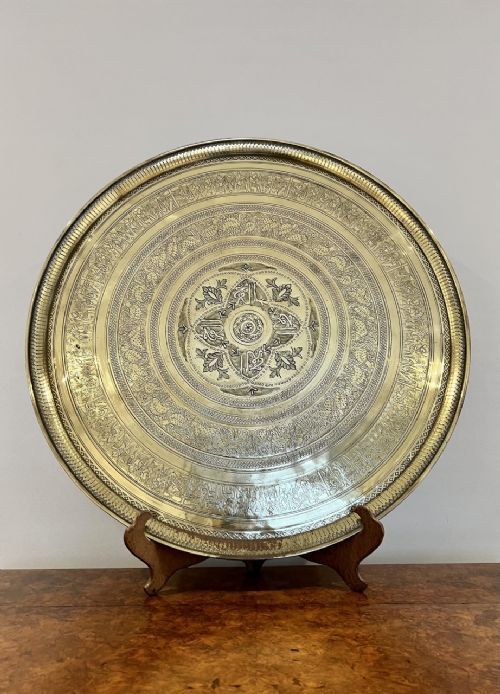
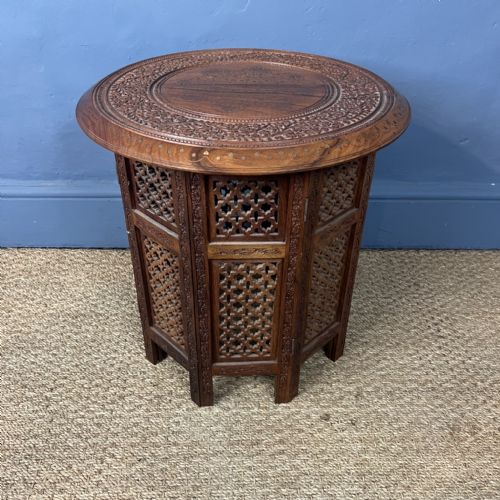
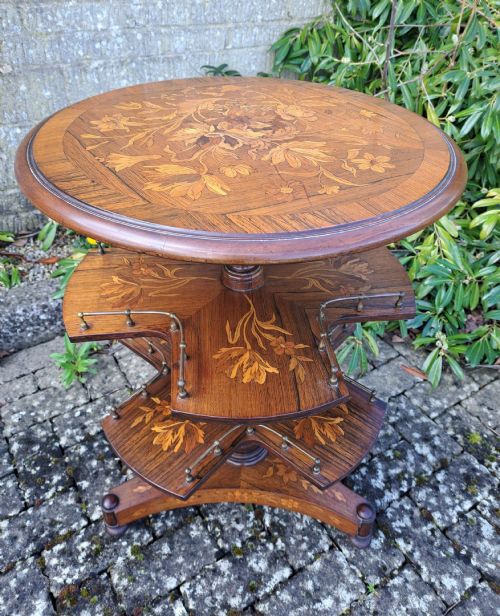

Circular Brass Table
A circular brass table brings polished warmth and architectural balance to a room, turning a simple surface into a focal point.
Circular Brass Table
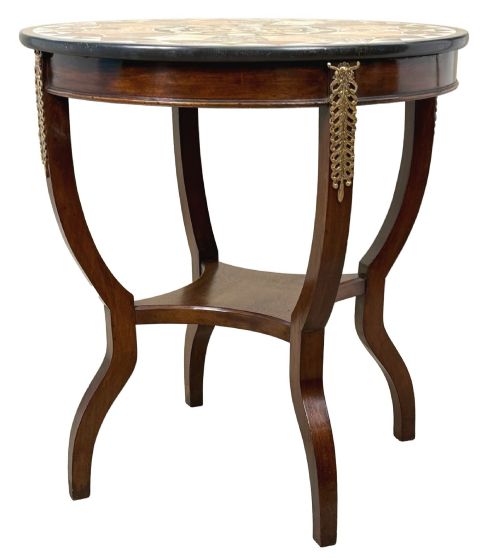
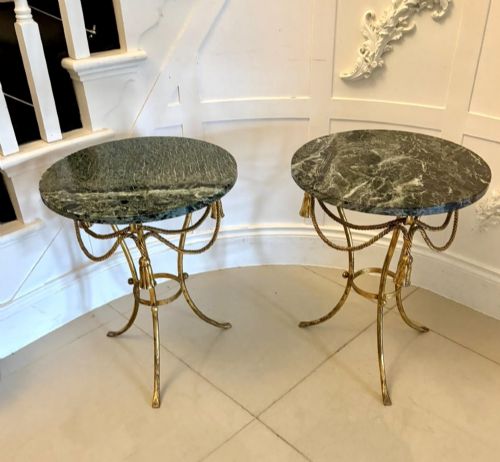
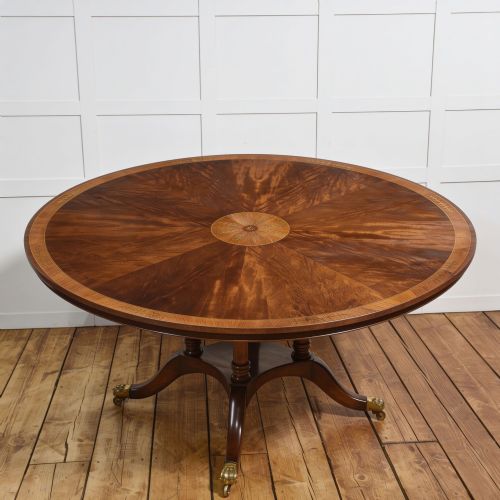
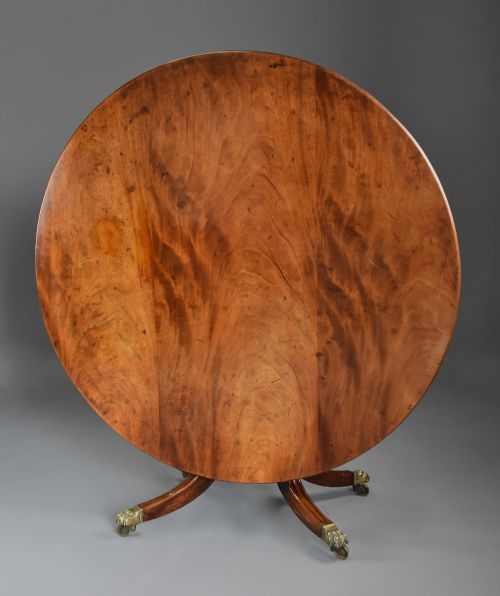
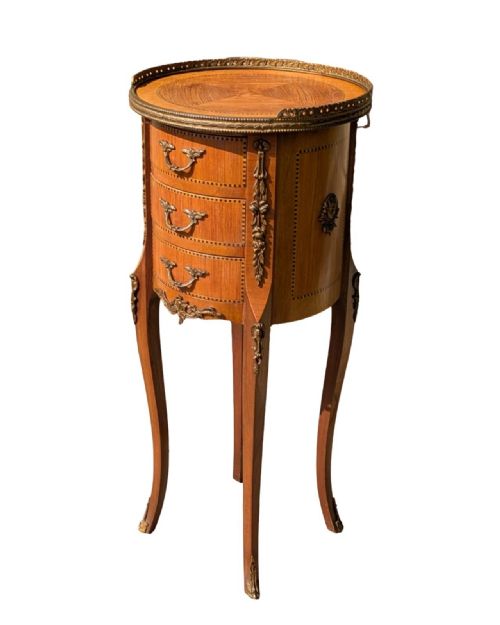
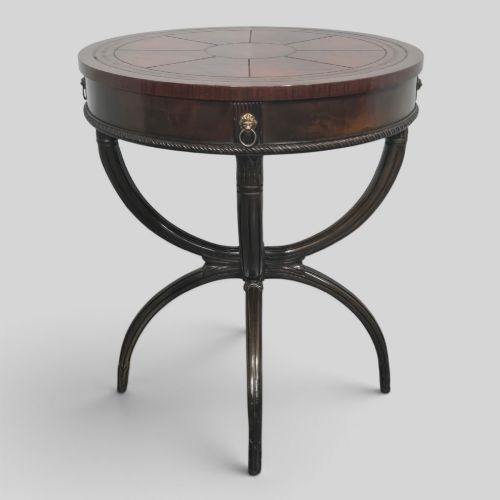
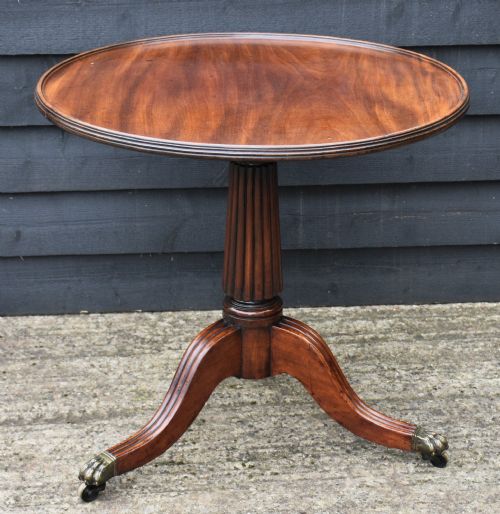
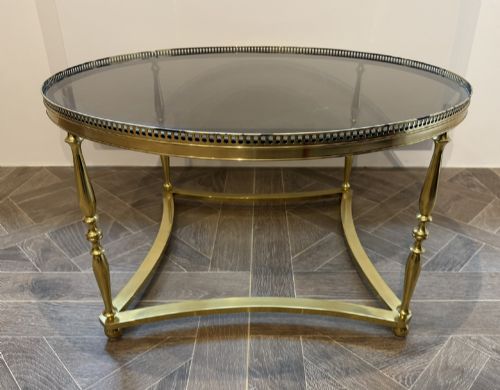
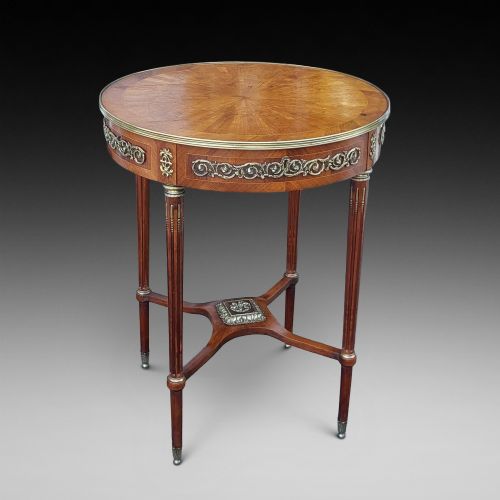
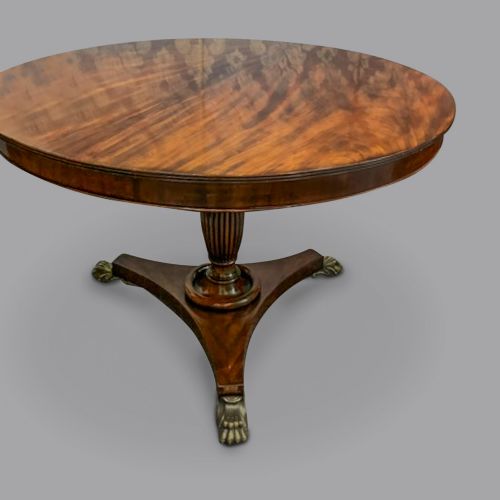
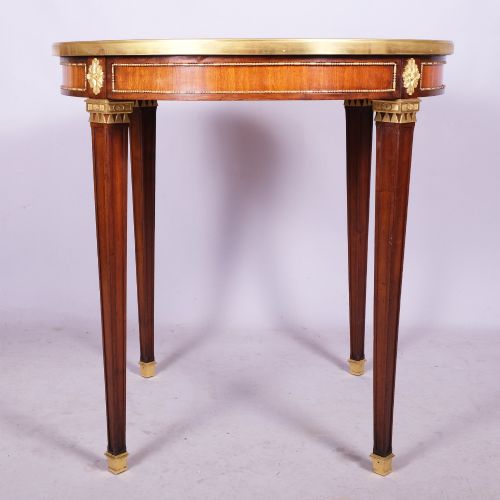
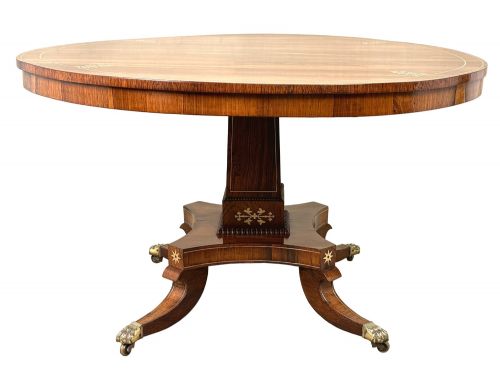
A circular brass table spans centuries of design, appearing as a compact lamp table, a substantial library centrepiece, or an elaborate bouillotte form. When searching for a circular brass table, buyers encounter everything from Georgian mahogany drum tables with brass inlay to French Empire guéridons and early twentieth-century brass-framed occasional tables.
The primary forms on this page include occasional, centre, and coffee tables, frequently paired with mahogany, rosewood, or white marble tops. These pieces originate across English, French, Italian, and Indian traditions, demonstrating a rich variety of regional craftsmanship.
Materials and Construction
Makers combined heavy timber bases in mahogany, rosewood, or kingwood with cast brass galleries, inlaid brass stringing, and applied ormolu mounts. Tops frequently incorporate white marble, specimen marble, or inset leather surfaces secured within sturdy wooden framing.
Structural integrity relied on solid pedestals, tripod supports, or brass framing, allowing tables to carry heavy stone or timber tops while maintaining a balanced profile.
Materials appearing across the inventory include solid mahogany, rosewood, kingwood, white marble, specimen marble, glass, leather, and cast brass.
Assessing Quality and Execution
Quality rests in the precision of the brass inlay, the weight and detail of the cast ormolu mounts, and the depth of figure in the timber veneers. Superior examples show seamless integration between the metalwork and the wood, with crisp chasing on bronze mounts and stable, well-balanced pedestals.
Lesser pieces exhibit simpler turned timber without inlay and lighter-gauge metal fittings that lack the substantial presence and crisp detail found at the upper end of the range.
James Shoolbred·Thomas Rubergall·A Hugnet Paris·François Linke
The Circular Brass Table Glossary
- Bouillotte table
- A small French occasional table with a raised gallery rim around the top, traditionally used for card games. They frequently feature marble tops and brass or gilt metal mounts.
- Guéridon
- A small French pedestal table dating from the seventeenth century onward, often designed for holding a light or ornament. The form commonly utilises marble, mahogany, and brass mounts.
- Drum table
- A large, circular library or centre table with a deep top containing drawers, resembling the shape of a drum. These pieces frequently rest on a central pillar and tripod base.
- Ormolu
- Gilt bronze mounted onto furniture or decorative objects, utilising a mercury gilding process common in French neoclassical and Empire design. This material provides a bright, lasting metallic finish.
Circular Brass Table: Frequently Asked Questions
What is a bouillotte table used for today?
A bouillotte table functions effectively as a bedside table or a compact lamp surface in a drawing room. Its raised gallery edge prevents small items from slipping off.
The marble top and brass details also make it a practical choice for holding drinks or small decorative objects without risking water damage to wood.
How do I distinguish a Regency table from later revivals?
Regency tables date from the early nineteenth century and rely on dense native timbers like mahogany and rosewood combined with precise brass inlay. They possess a natural patina developed over generations of use.
Revival pieces produced around nineteen-ten or nineteen-twenty often copy these proportions but utilise cleaner, more uniform factory finishes and modern construction methods.
Are these tables suitable for daily use?
Most occasional and centre tables accommodate daily placement of lamps, books, and decorative items safely. Solid timber and marble surfaces handle normal household wear well.
Care should be taken with antique French polish finishes by using coasters to prevent rings from moisture or heat.
What distinguishes a gueridon from an occasional table?
A guéridon is a specific French pedestal table design originating in the seventeenth century, typically featuring a round top supported by a single central column. English occasional tables of the same period often utilise tripod legs or small four-pillar bases.
Both forms serve similar functions as moveable display surfaces within a room.