
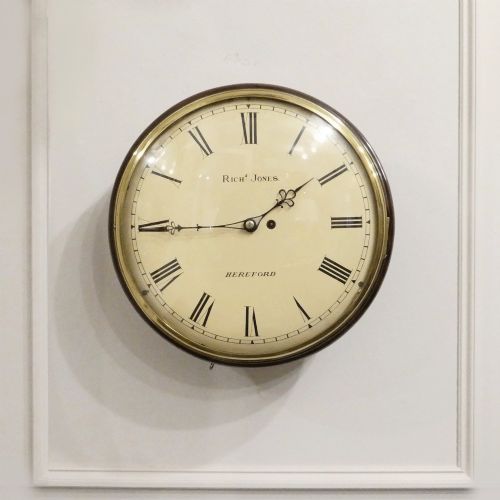
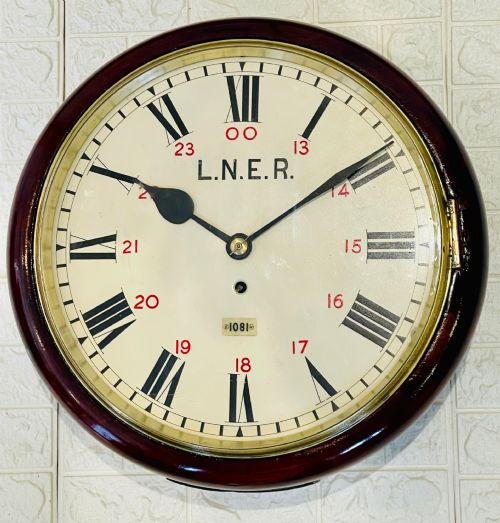
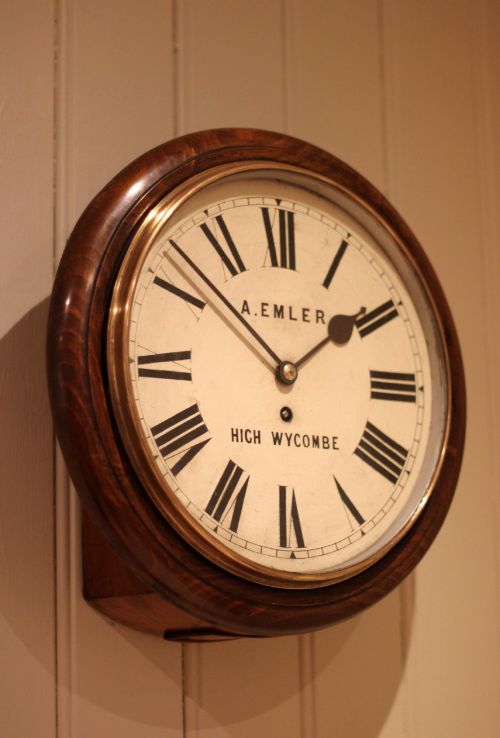
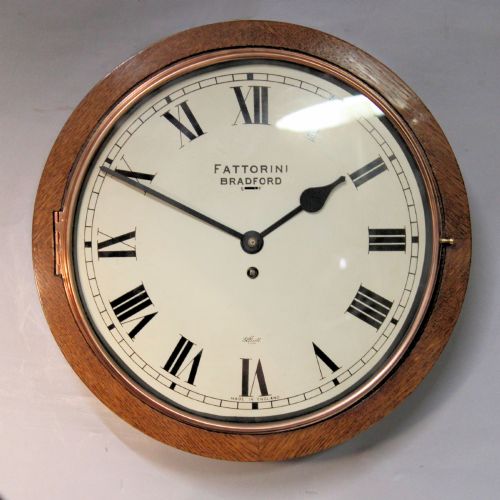
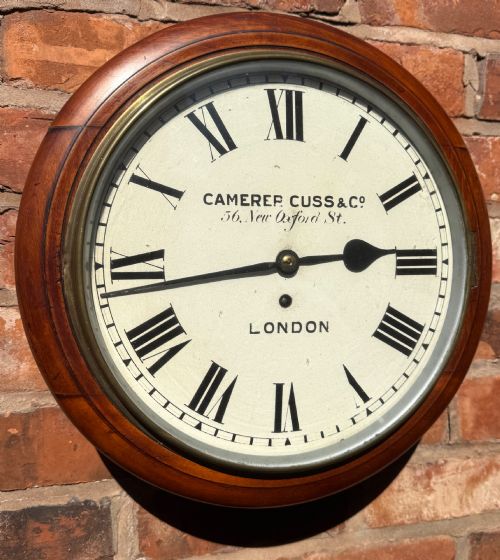

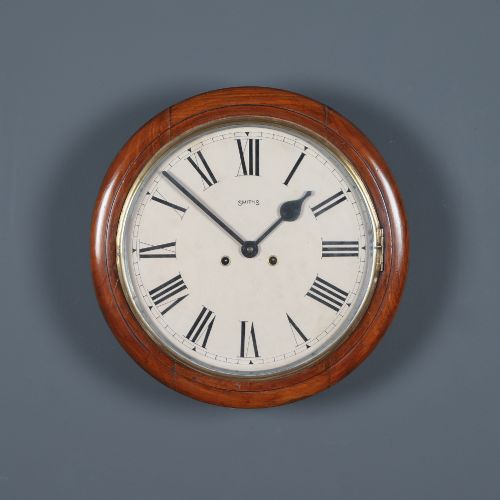
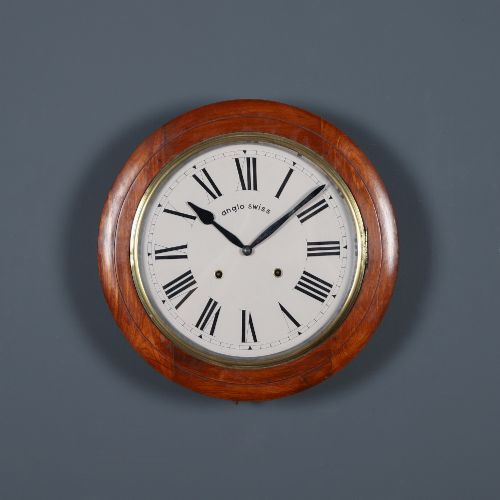
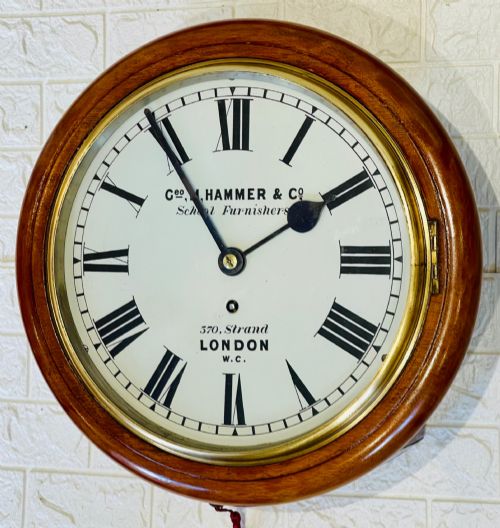
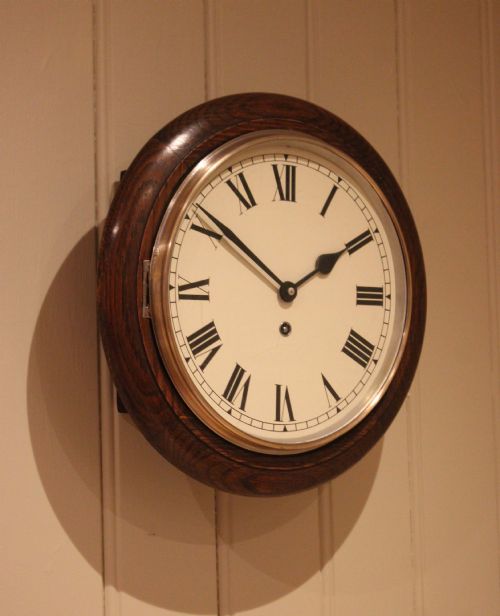
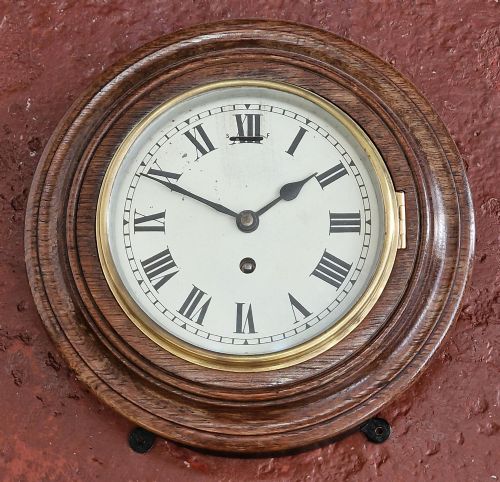
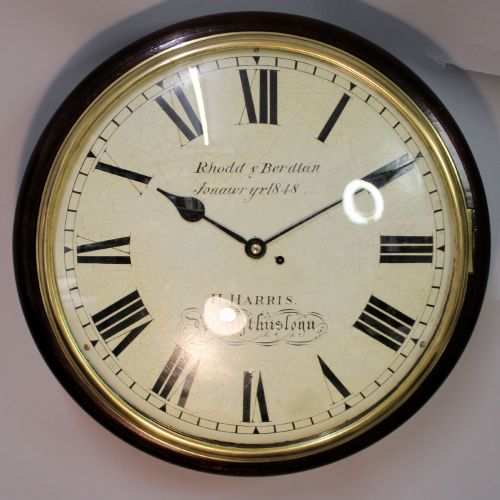
Circular Brass Clock
A circular brass clock combines functional utility with robust materials, making it a practical and handsome addition to any interior wall.
Circular Brass Clock
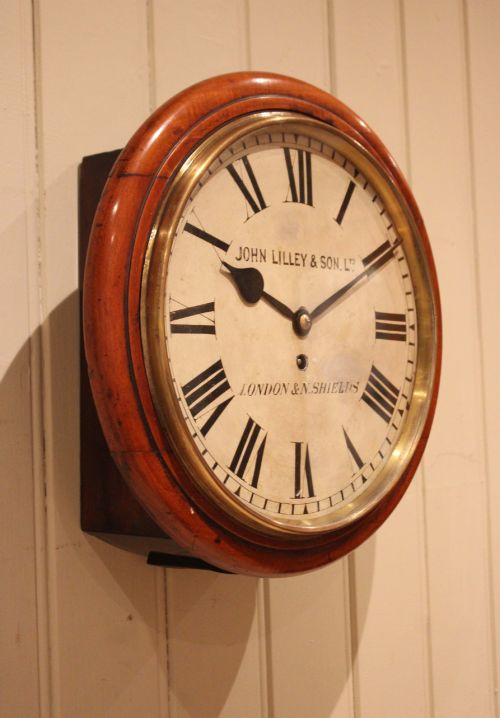
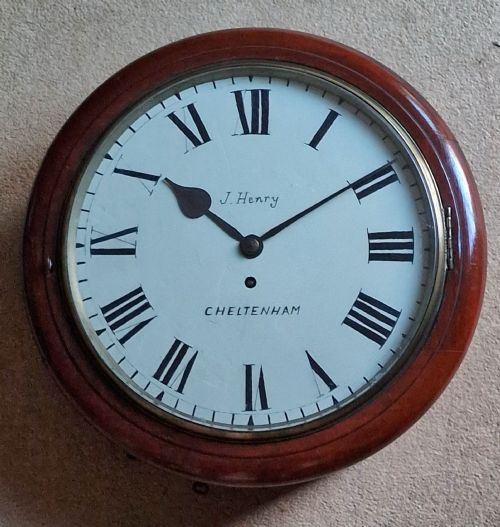
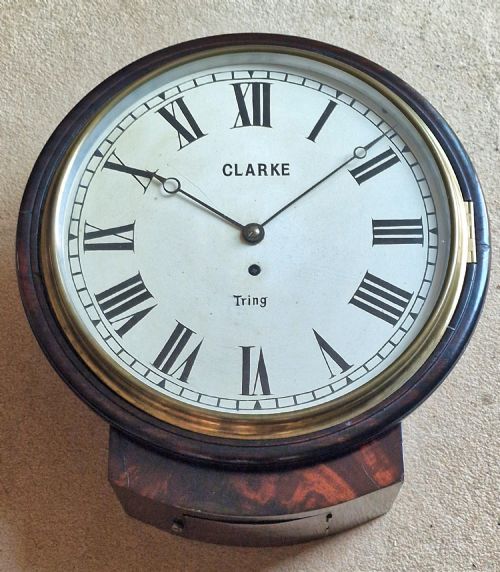
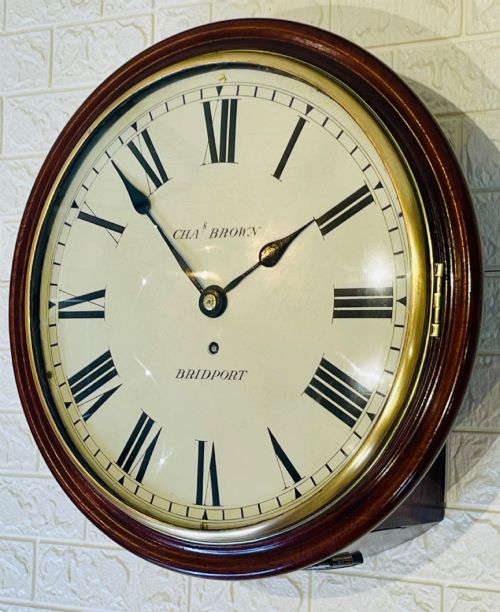
A circular brass clock typically presents as a wall-mounted timepiece housed within a sturdy brass bezel, often accompanied by a mahogany, oak, or beech surround. These pieces range from compact six-inch timepieces to large dial clocks utilised by railways, post offices, and schools across Britain. When searching for a circular brass clock, buyers encounter examples spanning from the Georgian period through the Victorian era and into the Art Deco style of the twentieth century.
The most common form on this page is the fusee dial wall clock, designed to maintain even tension as the mainspring unwinds to ensure accurate timekeeping. Many bear the names of provincial makers or railway companies such as the GWR, LNER, and British Railways. Alongside standard timepieces, variants include bell-striking models, barometers, and lever escapement clocks housed in timber cases.
How they were made
The construction relies on heavy brass bezels and cast surrounds paired with timber cases fashioned from mahogany, oak, walnut, or beech. Movements frequently utilise a fusee mechanism connected to the mainspring via a chain or cord, regulating power delivery to the gear train. Dials are commonly painted metal or enamel, marked with Roman or Arabic numerals and protected by a hinged glass door.
Cabinetmakers turned and joined the timber surrounds to securely house the heavy brass and iron components of the clock mechanism. Specialised makers engraved dials and assembled intricate gear trains with steel pivots and brass plates. The marriage of durable metal bezels with seasoned hardwood cases ensured these instruments could withstand the daily demands of railway stations, offices, and public rooms.
Listings feature circular brass clock examples spanning from the Georgian period through the Victorian era to twentieth-century Art Deco designs.
What varies in quality
Quality in these timepieces rests upon the crispness of the dial engraving, the originality of the brass bezel, and the condition of the fusee movement. Superior examples retain their original matching timber cases and authentic painted metal dials without heavy repainting or modern component replacements. Maker attribution also influences standing, particularly when signed by renowned London or provincial clockmakers.
The precision of the mechanical parts and the integrity of the timber housing distinguish finer pieces from standard utility clocks. Well-proportioned brass castings and clean, unblemished glass doors reflect higher standards of original manufacture. Retaining authentic railway or institutional provenance adds another layer of historical interest to the piece.
Richard Jones of Hereford·Camerer Cuss and Co London·Henry Harris of Monythusloyn·Thomas Hedge of Colchester·John Walker London
The Circular Brass Clock Glossary
- Fusee
- A conical pulley used in clock movements to equalise the power of the mainspring as it unwinds. This mechanism ensures consistent torque is applied to the gear train throughout the running period.
- Bezel
- The brass ring that holds the glass face of the clock in place over the dial. It is commonly hinged to allow easy access for hand-setting and winding.
- Escapement
- The mechanical linkage that regulates the speed of the clock by converting rotary motion into impulse swings. Common types include the verge and the lever escapement.
- Dial
- The visible face of the clock upon which the hours and minutes are marked. On these pieces, dials are typically painted metal or enamel fitted within a circular timber surround.
- Chain fusee
- A fusee movement that utilises a fine steel chain rather than a gut line to connect the spring barrel to the cone. This sturdy setup is frequently found on reliable nineteenth-century office and station clocks.
Circular Brass Clock: Frequently Asked Questions
How do I wind a fusee wall clock?
Most fusee wall clocks require a winding key inserted through a small hole in the dial face to tension the mainspring.
Care must be taken not to overwind the mechanism, turning the key steadily until resistance is felt.
Where were railway dial clocks used?
Railway dial clocks were mounted on platform walls, ticket offices, and station master rooms to coordinate train departures.
Their clear circular brass bezels and bold painted dials allowed staff and passengers to read the time from a distance.
What is the difference between a timepiece and a clock?
In horological terms, a timepiece indicates the hours and minutes without incorporating any striking mechanism.
A clock includes a bell or gong to sound the passage of the hours.
How do I hang a heavy brass dial clock safely?
These clocks are heavy due to their brass bezels and dense hardwood cases, requiring secure fixing directly into wall studs or masonry.
Using appropriate wall plugs and heavy screws through the internal mounting blocks ensures the weight is supported safely.