






Circa 1930 Dress Ring
A circa 1930 dress ring delivers unmistakable Art Deco geometry and vibrant coloured stones for those seeking genuine period character on the hand.
Circa 1930 Dress Ring
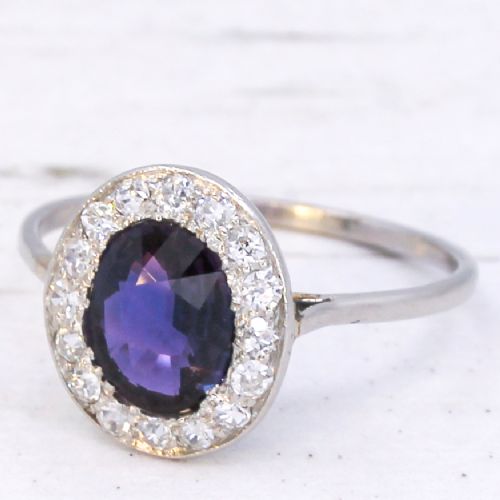
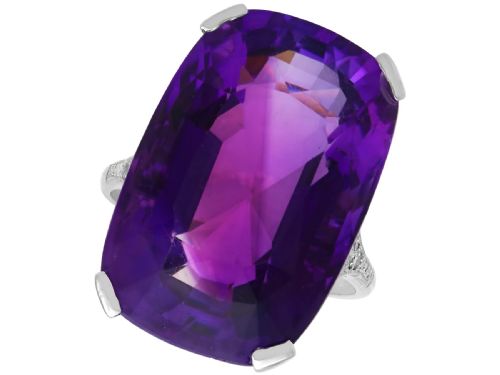
A circa 1930 dress ring represents the height of the Art Deco aesthetic, combining geometric arrangements with striking centre gemstones. The version most frequently encountered here is a platinum or gold mount set with diamonds alongside sapphires, emeralds, rubies, or amethysts.
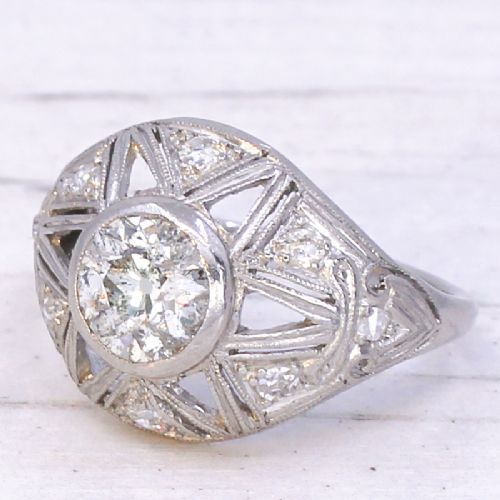
These rings function primarily as ornamental hand ornaments rather than traditional bands, favouring bold designs such as bombé star clusters, trilogies, and multi-stone settings. The period focus sits squarely in 1930, capturing the transitional phase between strict early geometric forms and softer later variations.
How they were made
Makers utilised durable precious metals including platinum and 18ct gold, both white and yellow, to construct secure settings for complex stone arrangements. Platinum provided the strength needed for intricate, fine-line metalwork characteristic of the Art Deco style.
Gems such as diamonds, sapphires, emeralds, rubies, amethysts, opals, and pearls were meticulously hand-set into these precious mountings. Master jewellers balanced large cushion-cut or cabochon stones with pavé or accent diamonds to maximise light and colour contrast.
Current selections span platinum and 18ct gold mounts, incorporating diamonds paired with emeralds, rubies, sapphires, amethysts, opals, and pearls from the year 1930.
What varies in quality
The sophistication of the stone selection separates standard examples from exceptional pieces, particularly regarding the origin and treatment of coloured gems like emeralds and sapphires. Stones featuring specific geographic provenances or minimal oil enhancements elevate the overall standard.
Precision in the platinum or gold metalwork and the integration of old-cut diamonds dictate the execution level of each ring. Superior construction ensures the geometric motifs and delicate settings remain robust and harmonious.
The Circa 1930 Dress Ring Glossary
- Art Deco
- A design style characterised by sleek geometric shapes, stylised motifs, and streamlined elegance. This aesthetic dominated jewellery production around 1930.
- Bombé
- A rounded, dome-shaped ring design that swells outward from the finger. It creates a bold profile that showcases multiple stones.
- Cabochon
- A gemstone shaped and polished with a smooth, convex upper surface rather than faceted. This cut is frequently seen on sapphires and opals from this era.
- Old Cut
- A precursor to the modern brilliant cut featuring a smaller table, higher crown, and larger culet. These diamonds display a distinctive, softer candlelight sparkle.
- Trilogy
- A ring featuring three main stones set in a row, often symbolising the past, present, and future. They frequently pair a central coloured gem with flanking diamonds.
Circa 1930 Dress Ring: Frequently Asked Questions
How should I wear an antique dress ring?
Wear these rings on any finger as a standalone statement piece to highlight their intricate geometry and coloured stones. Because they often incorporate delicate platinum settings or softer gems like opals and pearls, reserve them for lighter daily activities.
Avoid wearing them during rigorous manual tasks or swimming to protect the antique metalwork and stone settings from impact. Regular care preserves the integrity of the original claw and channel fastenings.
Are these rings made of platinum or gold?
The listings show constructions in both platinum and 18ct gold, encompassing white and yellow variations. Platinum was favoured for its strength in fine Art Deco diamond settings.
Gold provided a warmer alternative, particularly for cluster and multi-stone rings featuring rubies or emeralds. Both metals were standard choices for high-quality jewellery production during this era.
How do I identify an Art Deco ring?
Look for symmetrical, geometric patterns, clean lines, and architectural motifs that define the Art Deco style. Settings often incorporate calibrated or baguette-cut stones arranged in sharp angles rather than flowing curves.
The use of platinum alongside old-cut diamonds and vibrant coloured gems further confirms the aesthetic typical of jewellery produced around 1930.