



Antique Blue Gem Ring
An antique blue gem ring brings deep colour and enduring design to the hand, combining precious stones with historic gold and platinum settings.
Antique Blue Gem Ring
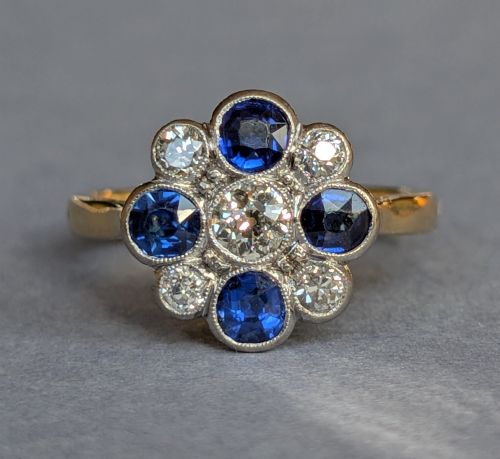
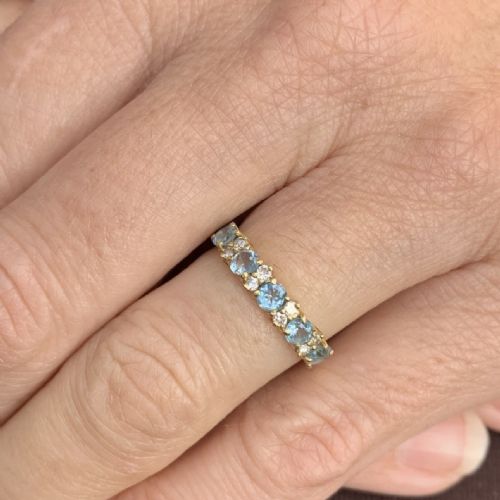
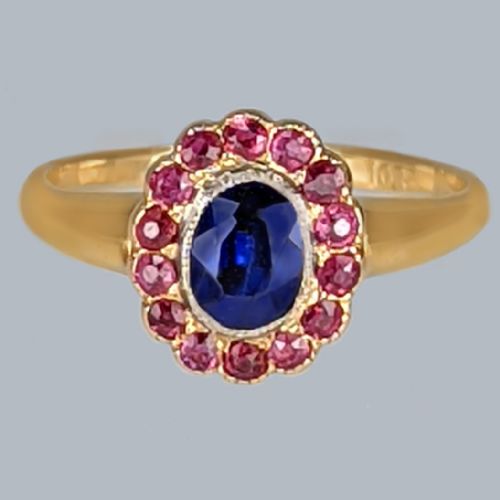
An antique blue gem ring encompasses dress rings and cluster rings featuring rich coloured stones set within precious metals. These pieces span the Victorian, Edwardian, and Art Deco periods, alongside mid-century creations.
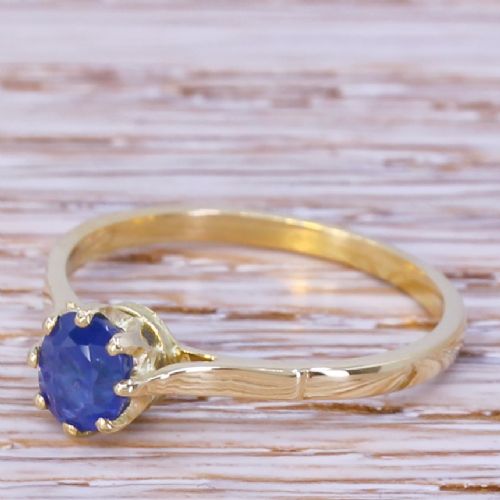
The sapphire remains the primary blue gem encountered in these listings, appearing alongside blue spinel, synthetic sapphire, black opal, and opal cabochon. Settings range from three-stone configurations to elaborate diamond-haloed clusters in platinum and gold.
How they were made
Master jewellers constructed these rings using durable precious metals, mounting stones securely in platinum, 18ct gold, 18ct yellow gold, and occasionally 15ct gold. Platinum gained favour during the Art Deco era for its strength and crisp finish.
Gemstones are shaped into oval cuts, rose cuts, and cabochons, often accented with sparkling diamonds in rubover or claw settings. Construction techniques evolved across decades, shifting from intricate Victorian claw work to geometric Edwardian and Art Deco frameworks.
Listings span multiple eras from the Victorian period through Edwardian times to Art Deco and mid-century modern design.
What varies in quality
Quality rests in the saturation and depth of the central gemstone, alongside the cut and clarity of surrounding diamonds. Natural origin stones with documented reports contrast with synthetic alternatives.
The precision of the metalwork and the structural integrity of the setting determine a piece's resilience. Heavier mountings and well-preserved prongs or rubover borders reflect higher standards of period craftsmanship.
The Antique Blue Gem Ring Glossary
- Sapphire
- A precious gemstone of the corundum family prized for its deep blue hue, though it occurs in various colours. In these rings, it forms the central focal point.
- Cluster ring
- A ring design featuring a prominent central stone encircled by a border of smaller gems, typically diamonds. This layout maximises visual impact and light reflection.
- Platinum
- A dense, durable, and naturally white precious metal widely utilised in Edwardian and Art Deco jewellery for secure stone settings. It allows for delicate yet robust structural work.
- Cabochon
- A gemstone shaped and polished with a smooth, rounded surface rather than faceted edges. This cut is frequently applied to opals and certain sapphires.
- Rose cut
- An antique diamond cut featuring a flat base and a domed crown composed of triangular facets. It imparts a subtle, understated shimmer distinct from modern brilliant cuts.
Antique Blue Gem Ring: Frequently Asked Questions
How do I clean my ring safely?
Warm soapy water and a soft brush remove everyday oils safely from most durable gemstones and metal settings.
Softer stones like opal require gentle wiping rather than soaking to protect their moisture and structure.
Can these rings be resized easily?
Most gold and platinum bands permit adjustment by a skilled jeweller experienced in antique pieces. Elaborate side galleries or continuous channel-set stones may limit the range of resizing.
Are synthetic stones common in period rings?
Synthetic sapphires appear in certain twentieth-century pieces, created through scientific processes that produce genuine crystal structures without natural extraction.
Independent gem reports often accompany these stones to clarify their precise origin and composition.
What distinguishes Art Deco settings?
Art Deco settings rely on geometric symmetry, straight lines, and the extensive use of platinum to frame stones sharply. This style contrasts with the flowing organic curves typical of earlier Victorian designs.