
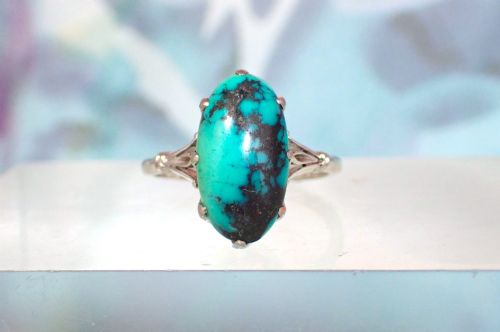


Art Deco Cabochon Ring
An art deco cabochon ring brings together smooth, polished gemstones and geometric metalwork to create a striking statement of early twentieth-century design.
Art Deco Cabochon Ring
An art deco cabochon ring centres on a rounded, unfaceted gemstone rather than a traditional brilliant cut. These pieces emerge predominantly from the 1920s and 1930s, alongside transitional examples from the Edwardian period.
The dominant forms on this page include dress rings and cluster rings featuring substantial central stones. Buyers find sapphire, ruby, emerald, opal, and jade set alongside sparkling diamonds.
Makers of the period utilised clean lines and architectural symmetry to frame the soft dome of the central stone. The resulting jewel offers a distinct visual contrast between smooth curvature and sharp geometric mounts.
Materials and construction
Platinum and 18ct white gold provide the strong, crisp framework typical of the era. Yellow gold and 14ct or 10k gold appear in select examples, supporting coloured stones like jade and amethyst.
Goldsmiths shaped platinum into intricate pierced galleries and millegrain borders to hold old cut diamonds tightly around the main cabochon. Central stones are secured with precise claws or bezels that accentuate their smooth, domed profiles.
The archive demonstrates a strong preference for sapphire, emerald, and ruby centres framed by old cut diamonds.
Evaluating quality and proportion
The quality of an art deco cabochon ring rests heavily on the natural origin, weight, and saturation of the central gem. Ceylon sapphires, Mogok rubies, and Colombian emeralds with desirable natural colour command particular attention.
The harmony between the central dome and the surrounding diamond cluster determines the visual success of the piece. Superior examples display meticulous metalwork in the gallery and secure, even settings that do not overpower the stone.
The Art Deco Cabochon Ring Glossary
- Cabochon
- A gemstone shaped and polished with a smooth, convex dome rather than facets. This cut highlights the natural colour and internal characteristics of stones like sapphire, ruby, and opal.
- Millegrain
- A decorative technique featuring a row of tiny, raised metal beads along the edges of a setting. This adds a delicate textural border typical of the period.
- Old cut diamond
- A diamond cut by hand before modern machinery, characterised by a small table, high crown, and deep culet. These stones produce a softer, candlelit sparkle compared to modern brilliant cuts.
- Cluster ring
- A ring design featuring a prominent central gemstone encircled by a group of smaller stones, usually diamonds. This arrangement maximises overall brilliance and presence on the hand.
- Trilogy ring
- A ring set with three stones in a row, often symbolizing past, present, and future. In this inventory, they combine a central cabochon with flanking diamonds.
Art Deco Cabochon Ring: Frequently Asked Questions
How do I care for my ring?
Clean your piece gently using warm soapy water and a soft brush, avoiding harsh chemical dips that can harm softer stones like opal or emerald. Store the ring separately in a fabric-lined box to prevent scratching against other jewellery.
Regularly check the security of the claws holding the central cabochon and the surrounding diamonds, especially given the age of the setting. Professional inspection every few years ensures the platinum or gold work remains sound.
Can these rings be resized?
Many platinum and gold rings from this era can be carefully adjusted by a skilled jeweler experienced in antique pieces. The geometric shoulders and intricate gallery work require delicate handling to preserve the original design.
Consult a specialist who can determine if the band thickness and side engraving allow for alteration without compromising the structural integrity of the mount.
What is the difference between a sapphire and a ruby cabochon?
Both gemstones belong to the corundum mineral family and share identical hardness, but trace elements create distinct colours. Chromium produces the rich red tones of a ruby, while iron and titanium yield blue sapphire varieties.
In these listings, both stones are shaped into smooth domes to showcase their depth of colour rather than relying on facets to reflect light.
How can I tell the period of the ring?
Examination of the metal type, mounting style, and gemstone cut offers clear clues to the era of manufacture. Platinum mountings, geometric frameworks, and old cut diamonds point directly to the 1920s and 1930s.
Hallmarks stamped inside the band provide official dates or standard metal purities, while construction techniques distinguish genuine period work from later reproductions.