




Cabochon Sapphire Dress Ring
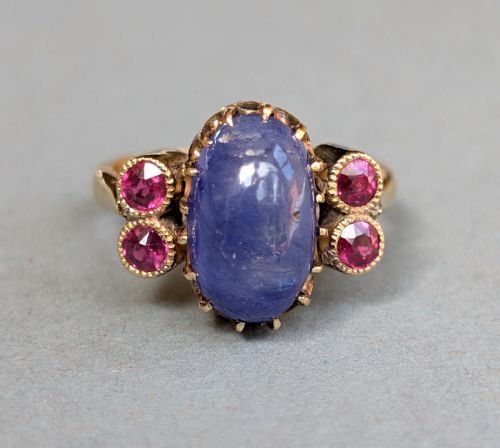
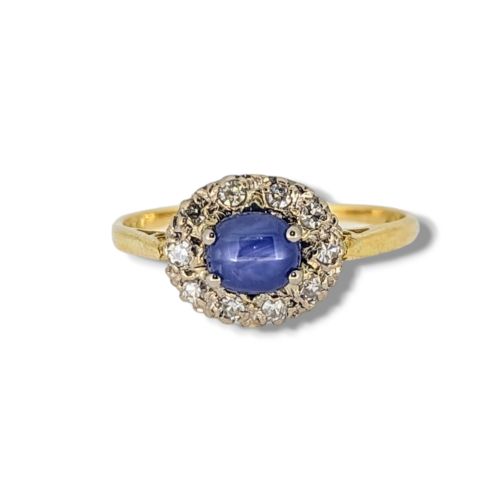
A cabochon sapphire dress ring brings together a smooth, rounded stone and precious metal settings across several distinct historical periods.
Cabochon Sapphire Dress Ring
The selection here includes cluster settings where diamonds or contrasting gemstones frame the central dome. Stones span standard blue varieties alongside star sapphires, with origins noted from Ceylon, Burma, and basaltic sources.
Forms vary from delicate Edwardian mountings in platinum and yellow gold to substantial Art Deco white gold and platinum pieces. Cluster formats predominate, occasionally incorporating opal or ruby elements alongside the primary sapphire.
Evaluating quality and manufacture
Quality rests in the weight, origin, and optical characteristics of the central stone, alongside the finesse of the surrounding metalwork. Unheated sapphires and stones with pronounced star effects command attention, while the symmetry of the dome dictates visual impact.
The integration of the platinum or gold setting reveals the maker's hand, particularly in pierced Art Deco galleries and secure prong placement. Balance between the central cabochon and the surrounding diamond or gemstone cluster determines the overall harmony of the piece.
Current listings feature pieces spanning the Edwardian period, 1920, 1930, 1940, 1950, 1960, and the 19th Century, utilising platinum, white gold, and yellow gold.
The Cabochon Sapphire Dress Ring Glossary
- Cabochon
- A gemstone shaped and polished with a smooth, rounded dome rather than faceted surfaces. This style enhances the deep colour and optical phenomena within sapphires.
- Cluster ring
- A ring design featuring a prominent central stone encircled by a cluster of smaller gems, typically diamonds. This layout maximises visual presence on the finger.
- Star sapphire
- A variety of sapphire that exhibits a star-like phenomenon called asterism when cut as a cabochon. Tiny needle-like inclusions reflect light in intersecting rays.
- Old-cut diamond
- A diamond cut by hand before modern standards, characterised by a high crown and small table. These stones appear frequently in antique cluster rings.
- Platinum
- A dense, durable white precious metal utilised extensively in Edwardian and Art Deco jewellery. Its strength allows for fine claw settings and delicate filigree work.
Cabochon Sapphire Dress Ring: Frequently Asked Questions
What is a cabochon sapphire dress ring?
A cabochon sapphire dress ring is a piece of jewellery featuring a polished, domed sapphire set into precious metal, often surrounded by diamonds. These rings span periods from the Victorian era through the mid-twentieth century.
Designs typically focus on cluster formations that showcase the smooth contours of the central stone rather than faceted brilliance.
How do I care for my ring?
Care involves gentle cleaning with warm soapy water and a soft brush to remove everyday oils from beneath the setting. Avoid harsh chemical dips, particularly if the piece incorporates softer gems like opal alongside the sapphire.
Store the ring separately from other jewellery to prevent harder diamonds from scratching the polished cabochon surface.
How can I tell the period of the piece?
Dating relies on examining the metal combinations, stone cuts, and overall geometric or organic motifs present in the mount. Edwardian pieces often utilise delicate platinum filigree, while Art Deco examples display bold symmetry.
Hallmarks stamped inside the band provide official assay office marks and date letters for verification.
What is a star sapphire?
A star sapphire is a specific type of cabochon stone that displays a luminous six-rayed star across its surface under direct light. This optical effect results from microscopic needle inclusions aligned within the crystal structure.
Jewellers orient the dome precisely during cutting to centre this natural phenomenon.