

Church Settle Bench
A church settle bench brings heavy timber architecture indoors, offering high-backed seating built to withstand centuries of communal use.
Church Settle Bench
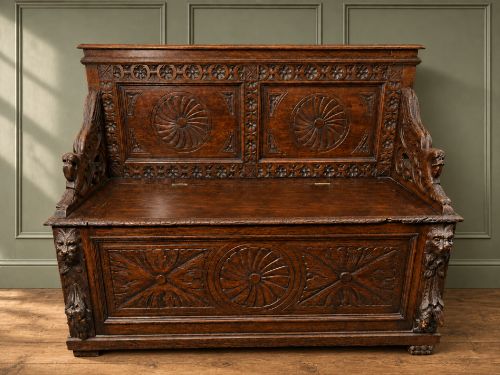
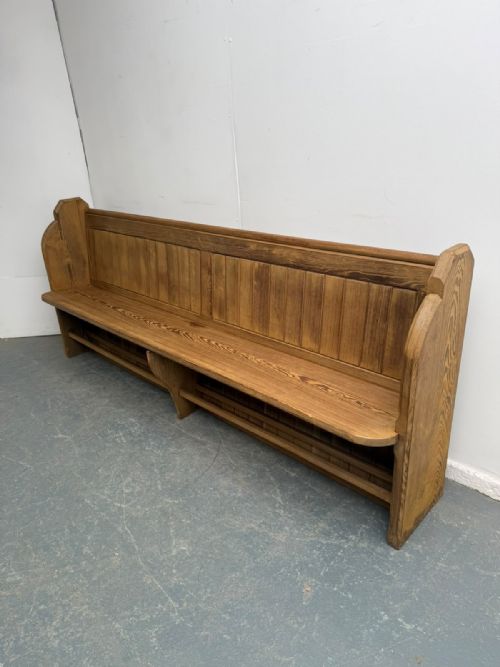
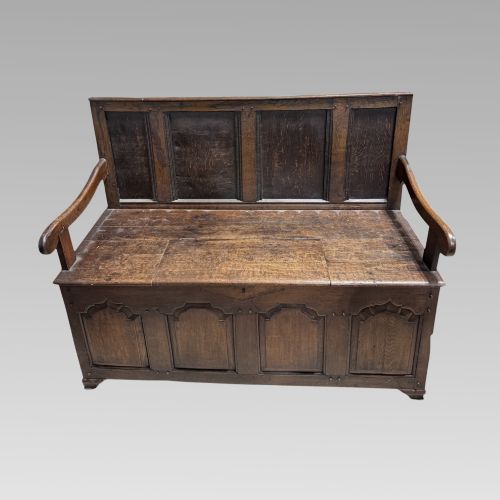
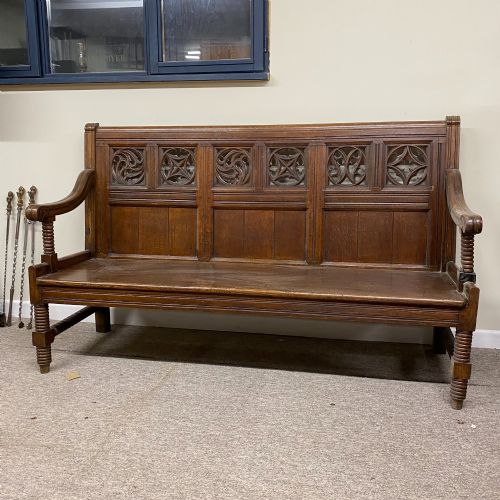
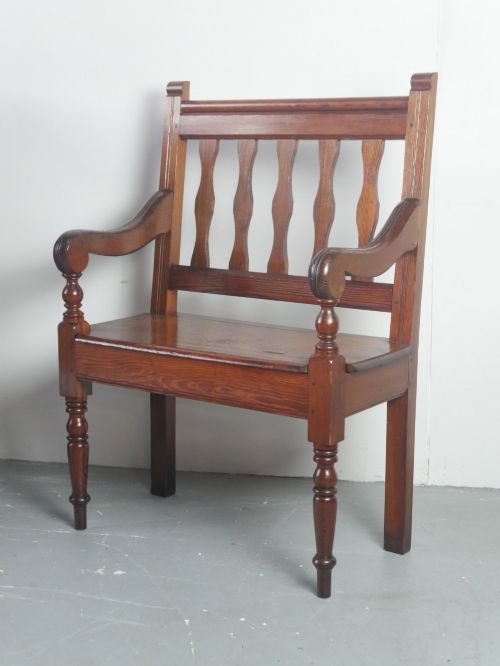
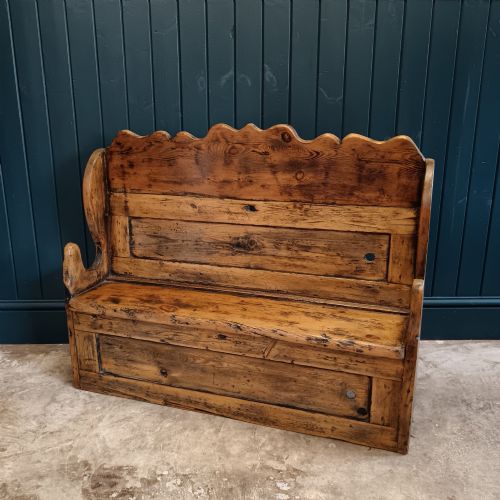
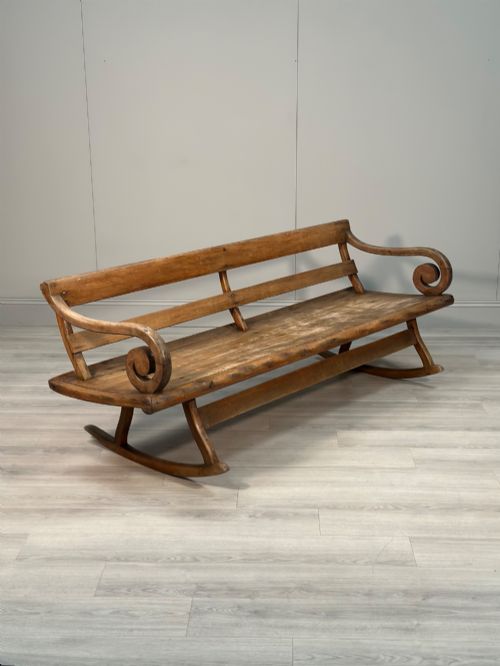
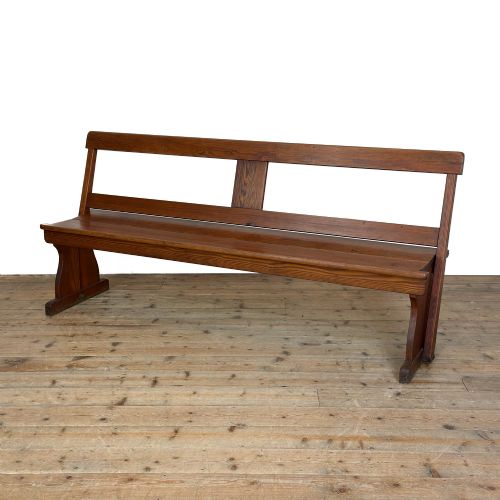
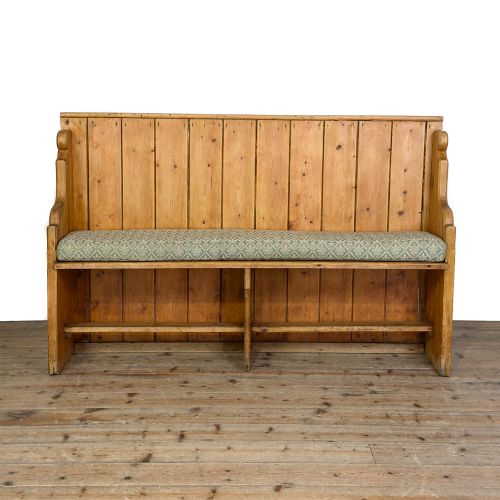
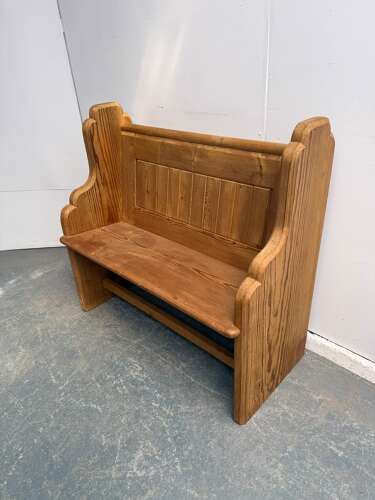
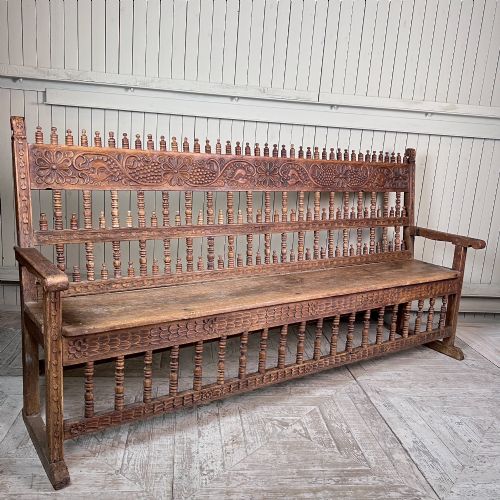
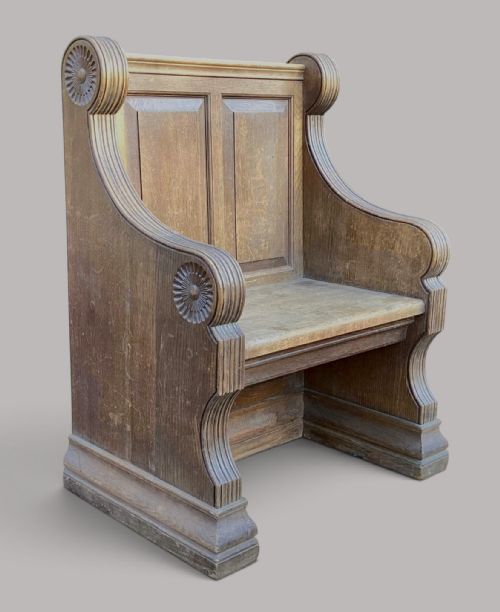
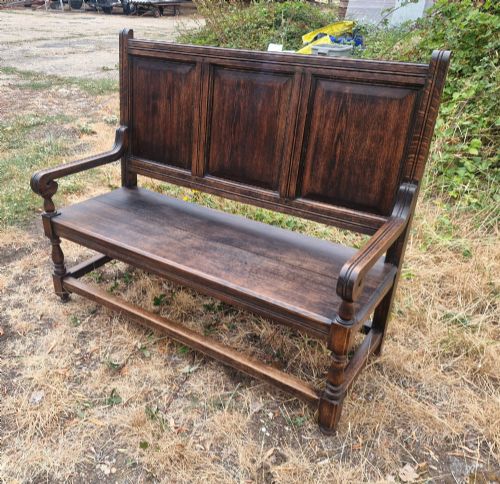
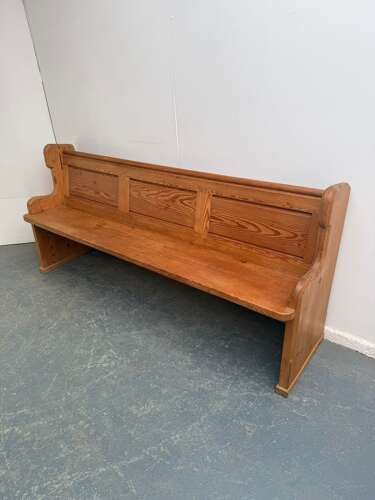
A church settle bench unites several long-form seating styles, ranging from high-backed oak pews to panelled hall seats and rustic tavern settles. These timber seats trace back through the nineteenth and eighteenth centuries, reflecting both ecclesiastical architecture and utilitarian domestic traditions.
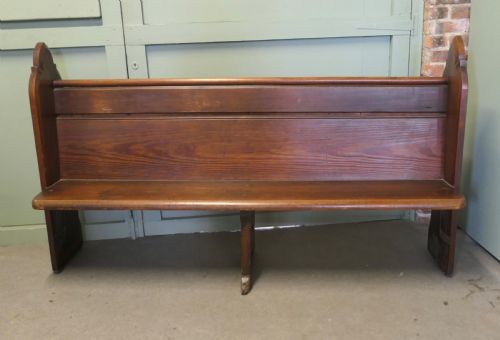
Most examples encountered here are pine or oak, configured as settles with protective high backs or as simpler chapel and church pews designed for long rows. Regional variations stretch across English, Welsh, Irish, French, Spanish Colonial, and Scandinavian workshops.
The functional design of a church settle bench often includes enclosed lower compartments, flip-over mechanisms, or solid panelled construction to block draughts in large hallways and draughty rooms.
Materials and construction methods
Solid timber forms the foundation of every church settle bench, utilising dense native hardwoods like oak alongside softer domestic woods such as pine, pitch pine, elm, chestnut, and beech. Joinery relies heavily on pegged mortise and tenon joints, tongue and groove panelling, and heavy structural framing.
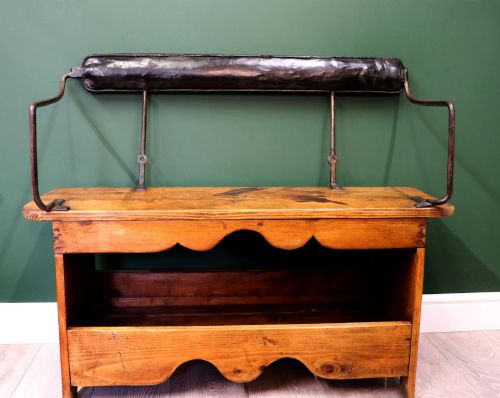
Surface finishes vary from wax and honey brown patina to original painted schemes in blue or muted tones, preserving the underlying grain and tool marks of the carpenter. Additional hardware like brass fixings or structural ironwork frequently appears on folding or architectural variations.
Church Settle Bench Retail Price Guide 2026
Typical asking prices for church settle bench among the pieces listed under this phrase on Sellingantiques today, from the lower quarter to the upper quarter. They describe what is for sale here now, not the wider market.
Listings feature structural timber species spanning pine, pitch pine, oak, elm, chestnut, and painted surfaces.
Assessing quality in seating
Quality in a church settle bench lies in the integrity of its structural timber and the depth of its original surface patination. Pieces retaining their honest wax finish or untouched original paint command greater interest than those stripped down and aggressively refinished.
The sophistication of the joinery and carving separates standard utilitarian pews from high-status furniture. Architectural mouldings, fielded panels, and ecclesiastical origins, such as documented church provenance, elevate a piece above standard domestic workshop production.
The Church Settle Bench Glossary
- Settle
- A wooden wooden bench featuring a high back designed to block draughts, often incorporating solid panel arms and a box seat base. These seats served centuries of communal gathering in halls, taverns, and farmhouses.
- Pew
- A long wooden bench traditionally fixed within churches and chapels for congregational seating. Examples found in domestic settings usually display plain or panelled backs adapted from ecclesiastical layouts.
- Patina
- The surface sheen and colour built up on timber through decades of handling, polishing, and natural ageing. A rich patina indicates long-term use and minimal chemical intervention.
- Monks Bench
- A convertible piece of furniture functioning as both a table and a settle bench through a hinged, tilting top. The mechanism allows the backrest to flip forward onto the arms to form a flat surface.
Church Settle Bench: Frequently Asked Questions
What is a church settle bench used for?
These benches serve primarily as substantial hallway seating or architectural statement pieces in large domestic spaces. Their high solid backs originally functioned to block cold draughts in stone churches and entrance halls.
Today, they provide deep, sturdy seating alongside generous proportions that suit modern open-plan living rooms or boot rooms.
How do I date a church settle bench?
Dating relies heavily on evaluating the timber species, construction joinery methods, and surface wear patterns. Eighteenth-century examples frequently display hand-planed oak boards and pegged mortise joinery, while nineteenth-century pieces often incorporate pine, pitch pine, or revival styling.
Specific design indicators like Gothic revival arches or traces of original church provenance also help narrow down the period of manufacture.
Are these benches comfortable to sit on?
Most historic church settle benches feature upright wooden backs and solid timber seats built for utility rather than lounging. Adding loose squab cushions or sheepskins easily softens the firm wooden base for everyday use.
Their deep proportions and supportive backrests actually make them very comfortable for upright seating at dining tables or in hallways.
How do I care for an antique wooden bench?
Maintain the timber by feeding it occasionally with a quality beeswax to preserve the natural patina and prevent the wood from drying out. Avoid placing the bench near direct heat sources or in fluctuating humidity to protect the ancient joinery.
Gentle dusting with a soft, dry cloth is all that is required for regular day-to-day maintenance of wax or painted finishes.