

Gothic Oak Seat
A gothic oak seat brings medieval architectural gravity into a Victorian hall with solid timber and pointed arches.
Gothic Oak Seat
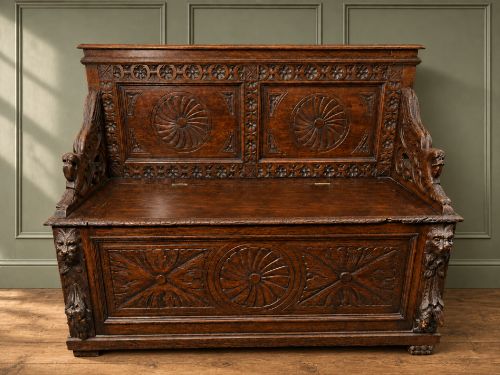
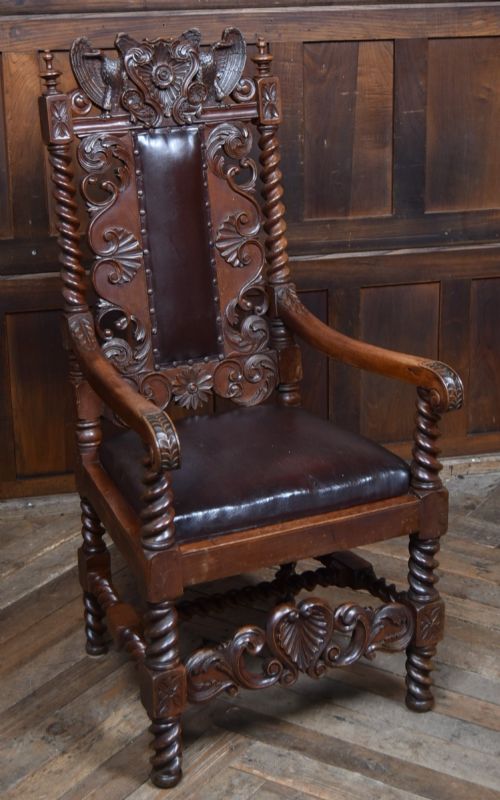
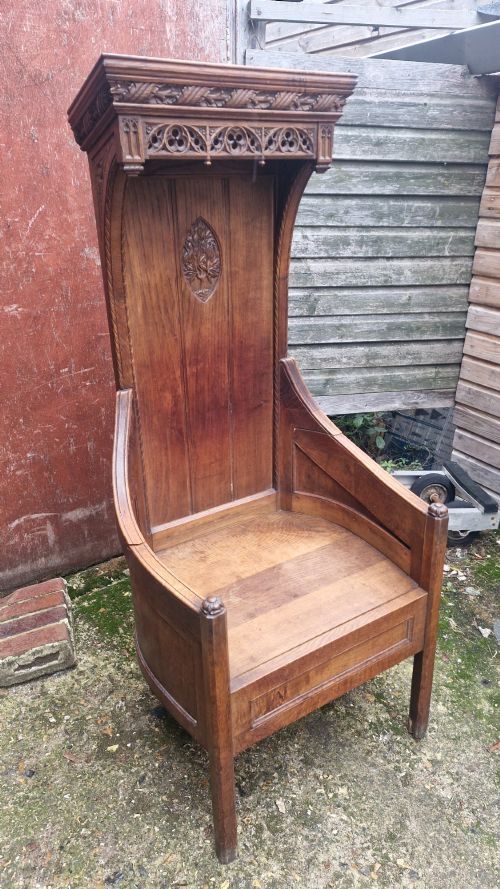
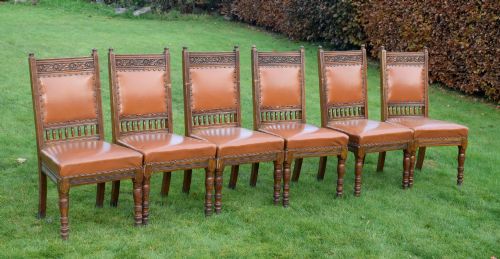
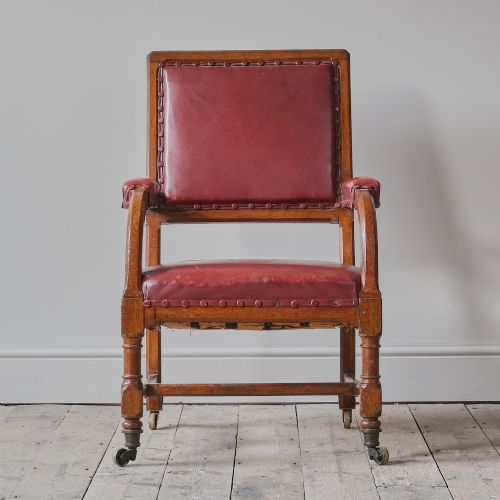
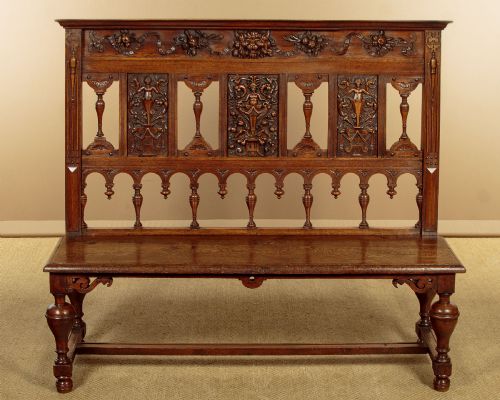
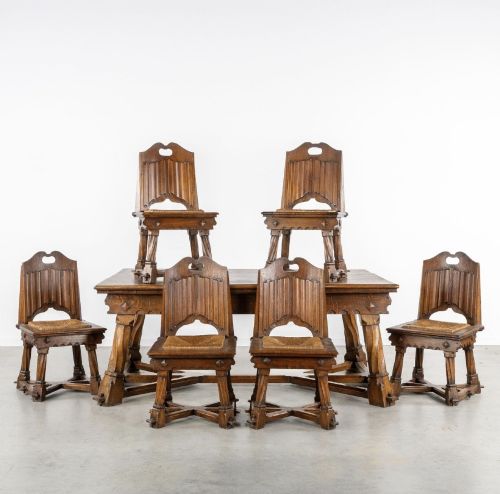
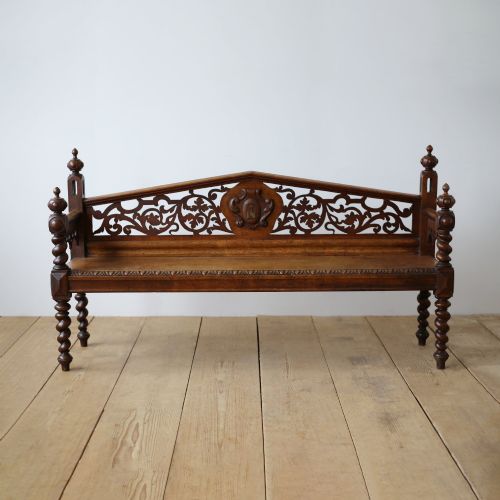
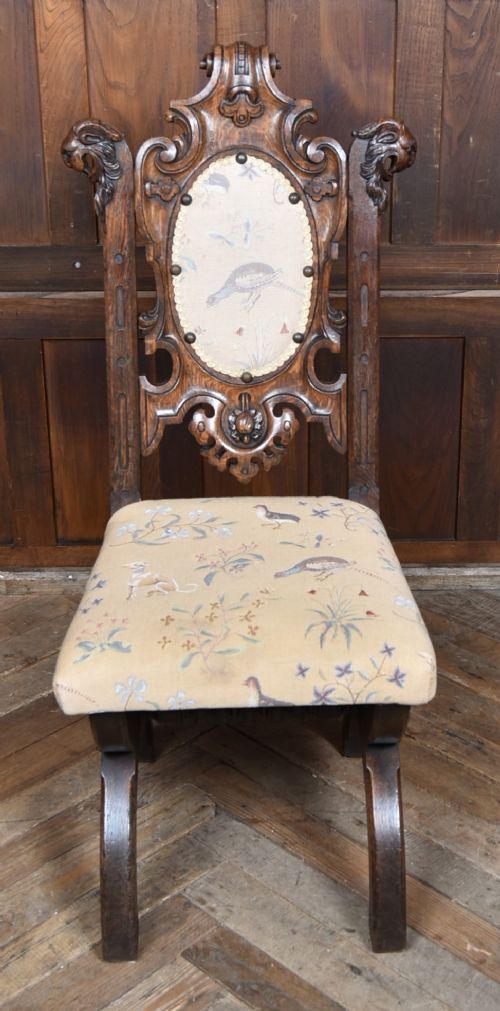
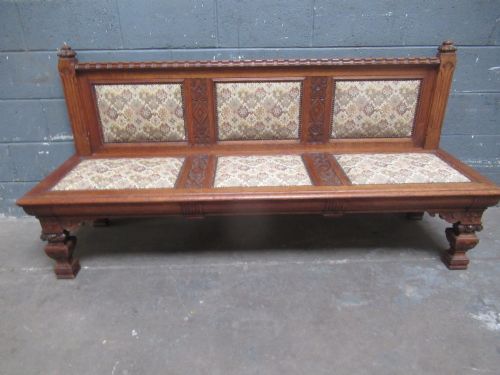
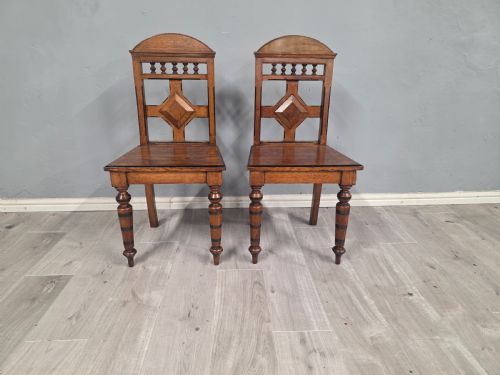
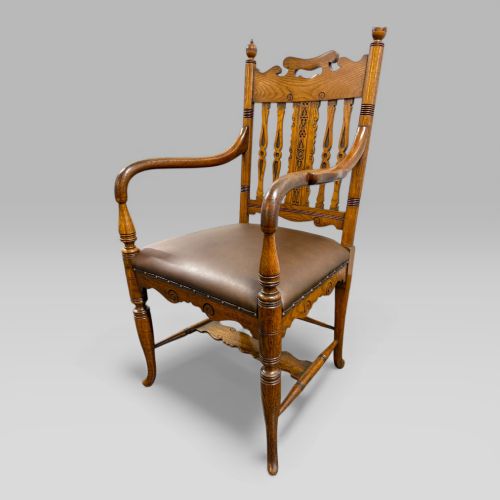
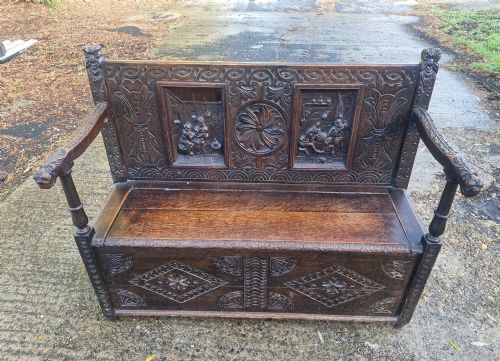
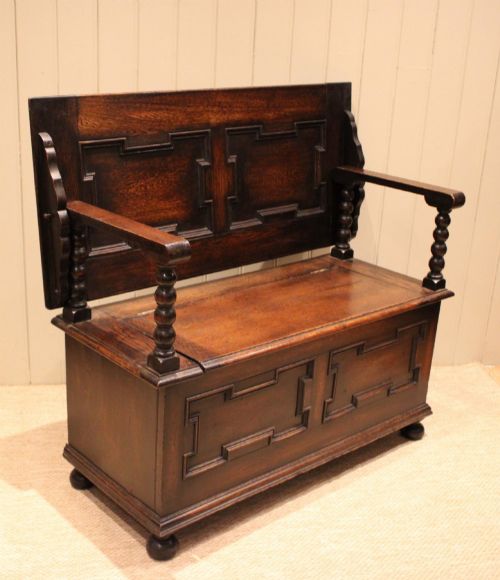
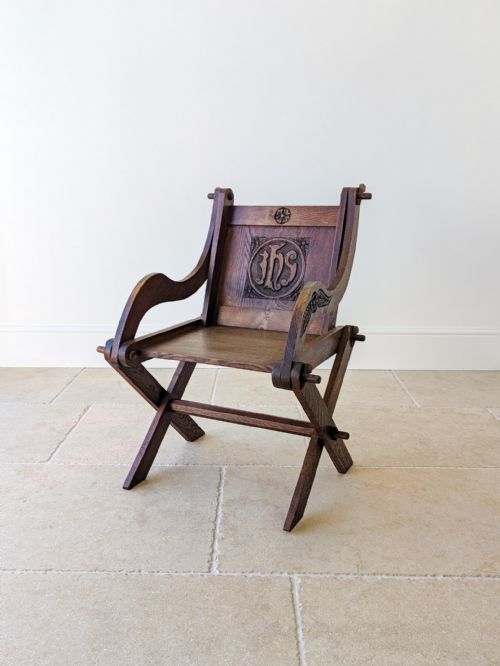
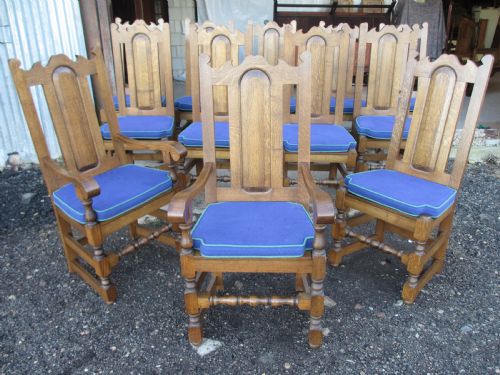
A gothic oak seat encompasses heavy armchairs, hall benches, settles, and dining chairs originating predominantly from the nineteenth century. These pieces draw heavily on architectural motifs, featuring trefoil carvings, high backs, and structural mass.
The most common version met on this page is the nineteenth century hall chair or monastic bench, constructed for domestic entranceways and reception rooms. Such seating frequently adopts the Gothic Revival style alongside Jacobean and Renaissance influences.
Makers utilised solid timber frames, often pairing the natural grain of oak with brass hardware, leather, rush, or fabric upholstery. The functional scope ranges from single occasional seats to extensive matched dining sets.
Materials and Construction
Carpenters relied almost exclusively on solid oak, selected for durability and finished to highlight deep, dark natural grain patterns. Structural integrity was achieved through traditional joinery, mortise and tenon frames, and heavy turned supports.
Carving formed the primary decorative technique, executed by hand to render intricate tracery, linenfold panels, and geometric patterns. Secondary materials such as brass, embossed leather, and rush seats provided functional contrast to the dense timber.
Gothic Oak Seat Retail Price Guide 2026
Typical asking prices for gothic oak seat among the pieces listed under this phrase on Sellingantiques today, from the lower quarter to the upper quarter. They describe what is for sale here now, not the wider market.
Listings feature oak as the dominant material, supplemented by walnut, brass, leather, and rush across nineteenth and early twentieth century items.
Assessing Quality and Execution
Depth and precision in hand carving separate standard commercial seating from bespoke architectural commissions. Crisp undercut tracery and balanced proportions indicate superior craftsmanship.
The choice of timber grain and the integrity of structural joinery dictate longevity. Pieces retaining original hardware, unaltered upholstery foundations, and unblemished oak surfaces represent the highest standard.
Gillows Lancaster·Bruce James Talbert
The Gothic Oak Seat Glossary
- Gothic Revival
- An architectural and decorative style popular during the Victorian period that imitates medieval forms. It incorporates pointed arches, trefoils, and heavy vertical lines.
- Settle
- A wooden bench with high back, solid arms, and often a storage box beneath the seat. This form protected sitters from draughts in entrance halls.
- Wainscot
- A type of heavy wooden armchair characterised by panelled construction and solid wooden backrests. Originating in earlier centuries, this form was heavily replicated in nineteenth century revivals.
- Trefoil
- A three-lobed ornamental design resembling clover leaves, frequently pierced through the backs of gothic chairs. It is a defining motif of medieval window tracery.
- Turned chair
- A chair constructed entirely from cylindrical wooden members shaped on a lathe. These pieces rely on interlocking spindles rather than flat panels.
Gothic Oak Seat: Frequently Asked Questions
What is a gothic oak seat?
A gothic oak seat is a nineteenth century chair or bench constructed from solid oak in the medieval revival style. These pieces incorporate architectural elements like pointed arches and heavy carved panels.
They were built primarily for domestic halls, libraries, and dining rooms to project historical weight and solemnity.
How were settle benches used?
Settle benches served as communal seating near hall fires or in entryways, offering protection from cold drafts. The high back and solid sides shielded the occupants while the enclosed base provided storage.
Over time, these heavy oak forms transitioned into decorative reception furniture rather than functional hearth seating.
How do I date a gothic oak chair?
Dating relies on examining construction marks, timber patina, and stylistic overlaps with Victorian revival movements. Pieces marked by nineteenth century registry numbers or specific maker attributions help anchor the timeline.
Stylistic cues such as heavy linenfold carving or Pugin-inspired geometry point directly to the height of the Gothic Revival.
Where should I place an oak hall bench?
An oak hall bench sits well in a spacious hallway, entrance vestibule, or large dining room where its architectural presence can anchor the space. The deep timber tones contrast effectively against neutral walls.
Due to their physical weight and solid construction, these pieces require adequate floor space to display their carved backs fully.