

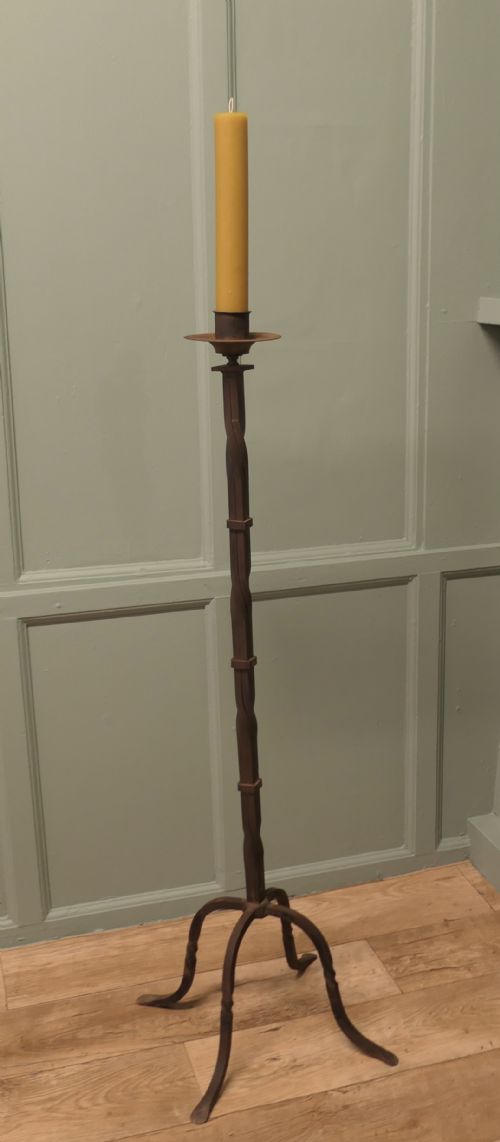
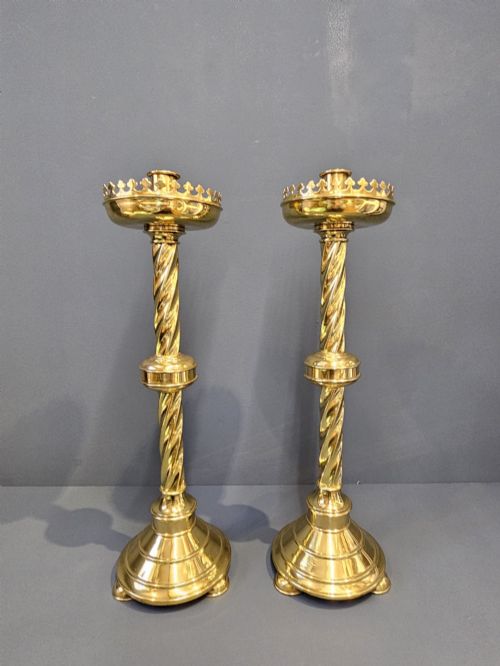
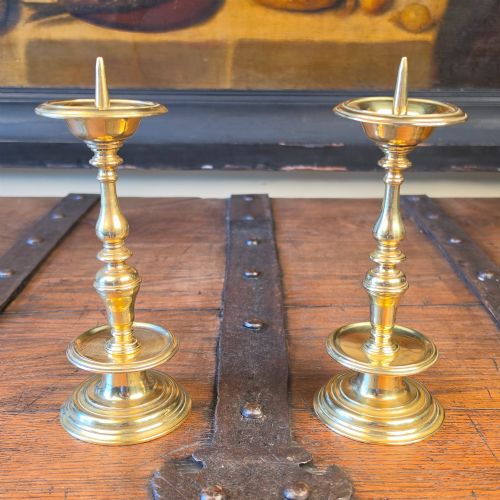
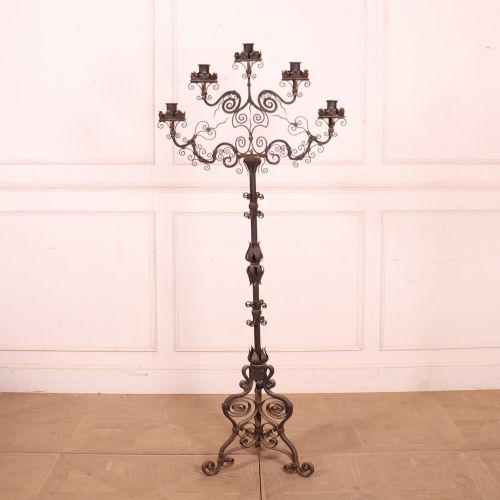


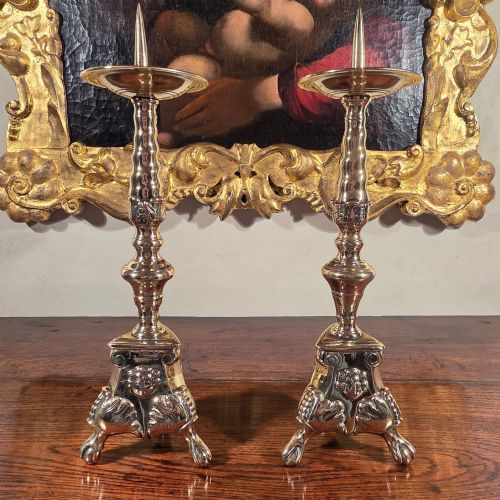


Church Candle Prickets
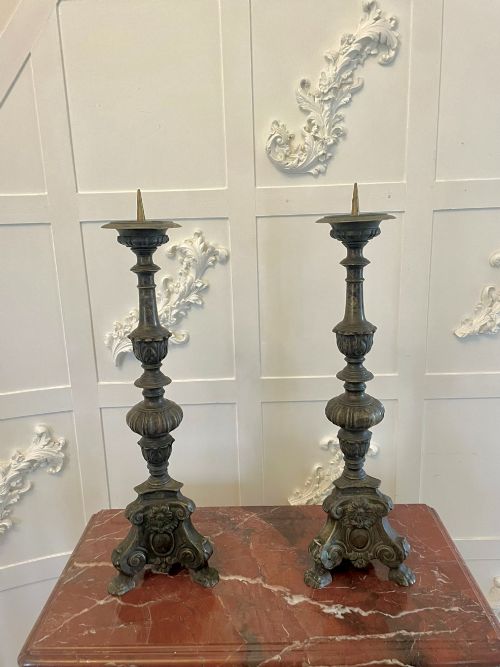
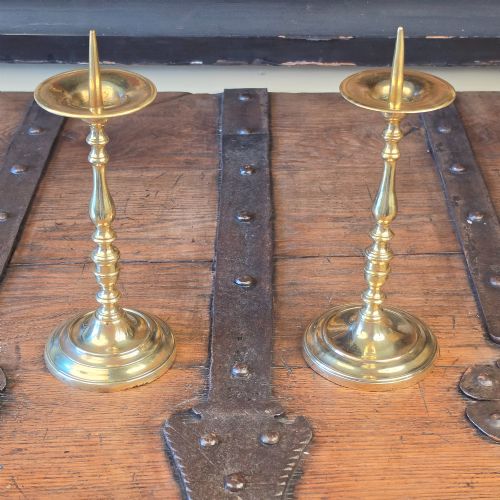
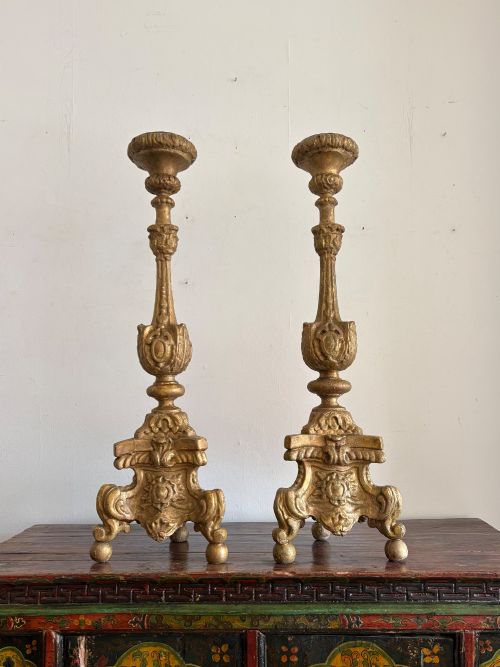
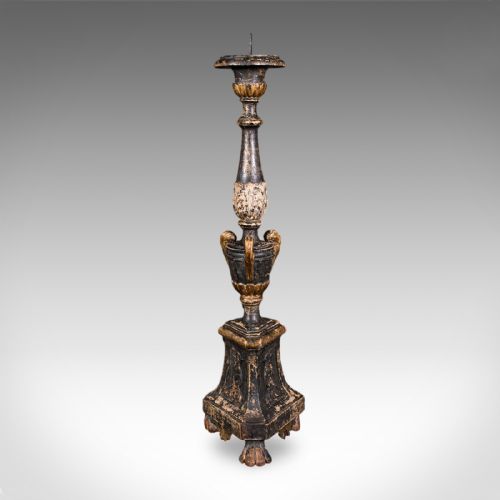
Church candle prickets are functional iron, brass and carved wood altar pieces that bring height and solemn focal weight to a room.
Church Candle Prickets
When you search for church candle prickets, you encounter tall altar candlesticks, floor-standing torchères and heavy bronze or brass candle holders designed for ecclesiastical spaces. These objects span the seventeenth to the early twentieth centuries, drawing on Italian Baroque, French regional and Gothic Revival traditions.
The specimens most commonly met on this page include nineteenth-century brass pairs, wrought iron blacksmith-made stands and carved wooden altar pieces from continental Europe. They range from modest tabletop heights to imposing floor-standing examples intended to elevate a single taper on a spiked metal pin.
Many examples reflect historical revivals, featuring seventeenth-century style forms produced in the nineteenth century alongside genuine period works from the eighteenth and nineteenth centuries. Their varied utility embraces floor standards, table centrepieces and converted lamp bases.
How They Were Made
Metal pieces rely on cast brass, heavy bronze and hand-forged wrought iron, utilising techniques like sand casting and blacksmithing to achieve solid weight and structural integrity. Iron surfaces often show the hammer marks of the forge, while brass components feature turned shafts and bolted joints.
Wooden examples combine carved pine, gesso and applied finishes such as silver leaf, gilding and ebonisation. Carvers shaped the timber bases into volutes, fluted columns and figural acolyte supports before applying layers of priming and metallic leaf.
Church Candle Prickets Retail Price Guide 2026
Typical asking prices for church candle prickets among the pieces listed under this phrase on Sellingantiques today, from the lower quarter to the upper quarter. They describe what is for sale here now, not the wider market.
The inventory records pieces dated across the seventeenth, eighteenth, nineteenth and early twentieth centuries, including Victorian and Edwardian ecclesiastical examples.
What Varies in Quality
The distinction between ordinary and superior pieces rests on the crispness of the casting, the depth of the hand-carving and the integrity of the original surface finish. Heavy gauge brass and well-balanced forged iron indicate robust workshop production rather than lighter mass-market manufacture.
Proportion and scale dictate visual impact, separating modest domestic items from grand ecclesiastical furnishings intended for altar spaces. Original gilding, silver leaf and untouched patination elevate the standing of a piece far above later stripped or refinished surfaces.
The Church Candle Prickets Glossary
- Pricket
- A metal spike on the top plate of a candlestick designed to impale the base of a candle and hold it upright. This form predates socket candlesticks and remains standard for church altars.
- Torchère
- A tall ornamental stand or candlestick used to support a light source. These floor-standing pieces often feature carved wooden columns or wrought iron shafts.
- Giltwood
- Wood that has been coated with a thin layer of gold leaf or gesso preparation. It appears frequently on continental Baroque and revival altar pieces.
- Acolyte
- An altar assistant, whose name is sometimes given to smaller processional or secondary candlesticks paired with main altar lights. These figures or stands support smaller ceremonial candles.
- Amsterdam School
- An architectural and design movement from the early twentieth century known for expressive brickwork and dynamic metalcraft. Pieces from this style display distinct sculptural silhouettes.
Church Candle Prickets: Frequently Asked Questions
How do I use a pricket candlestick safely?
Push the base of the candle firmly onto the central metal spike until it sits level. Ensure the spike pierces the wax deeply enough to prevent the candle from wobbling as it burns down.
Place the candlestick on a stable, heat-resistant surface away from drafts. Because prickets lack high protective rims, monitor burning candles closely and extinguish them before they reach the spike base.
What is the difference between a torchère and an altar candlestick?
Torchères are typically taller, freestanding floor pieces designed to stand beside furniture or illuminate large architectural spaces. They often feature elaborate carved wooden stems or heavy iron tripod bases.
Altar candlesticks are traditionally proportioned for placement on a raised table or altar ledge. They focus attention inward toward the liturgical centre rather than illuminating an entire room.
How do I clean antique brass and bronze prickets?
Dust the metal gently with a dry, soft cloth to remove surface particles. Avoid harsh chemical polishes that strip away historical patination and darken the underlying alloy over time.
Preserve the natural ageing by leaving unlacquered surfaces alone. If cleaning is essential, use warm water with mild soap and dry thoroughly to prevent corrosion.
Can these candle holders be converted to lamps?
Many taller metal and wooden examples are converted into electric lamp bases by threading a wire through the centre or running a cord alongside the stem. This practice adapts heavy ecclesiastical forms for modern domestic lighting.
Consider whether a conversion preserves the original pricket spike or alters the structure permanently. Unaltered pieces retain greater interest for collectors of antique metalwork.