


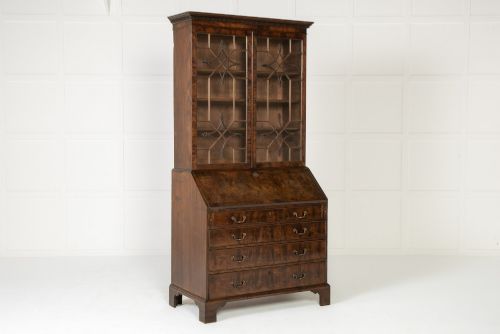
Chippendale Writing Bureau
These mahogany and fruitwood pieces known as a chippendale writing bureau offer serious period character and clever fitted interiors for any room.
Chippendale Writing Bureau
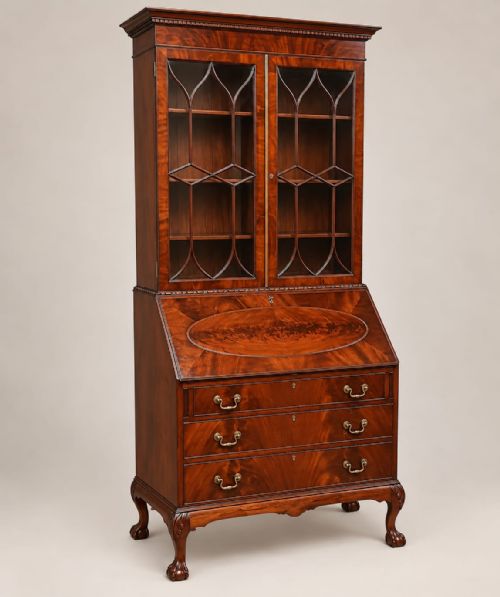
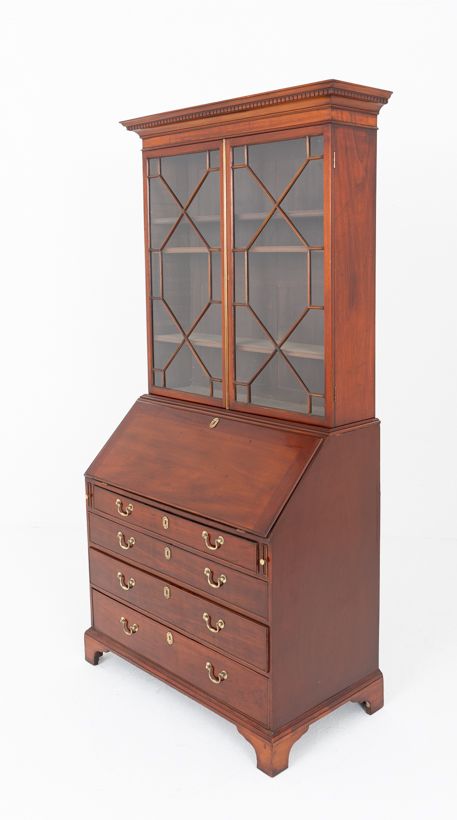
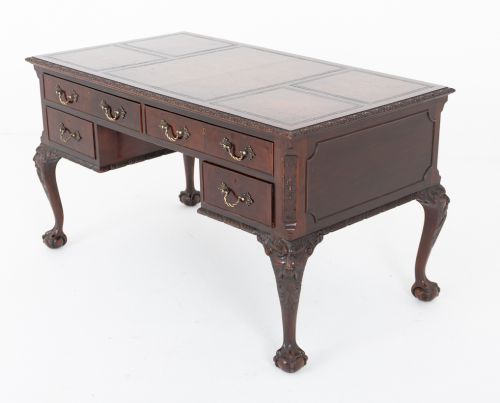
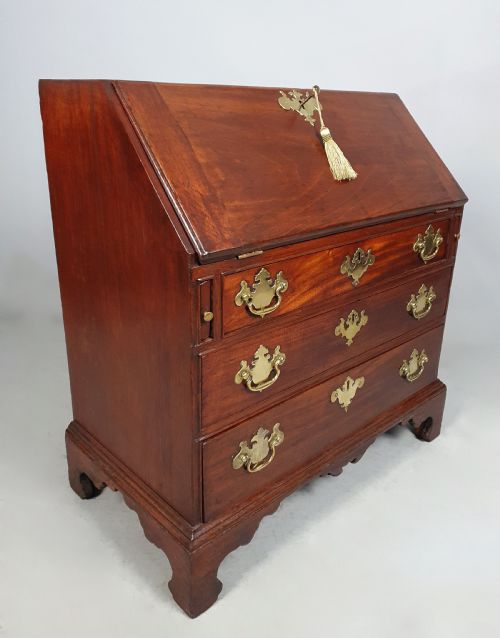
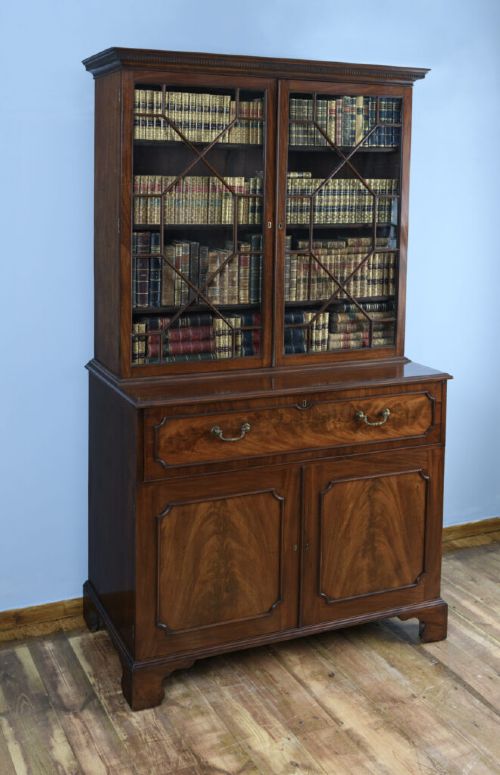
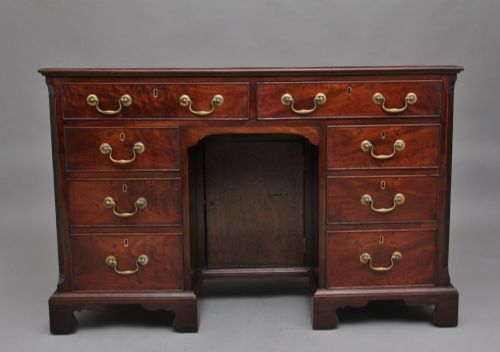
A chippendale writing bureau brings together centuries of cabinet-making, spanning the eighteenth century through to later revival periods. The selections include bureau bookcases, tallboys, kneehole desks, and fall-front writing furniture.
Most examples found here date from the eighteenth century, alongside revival pieces from the late nineteenth and early twentieth centuries. Makers utilised mahogany primarily, with occasional fruitwood, cedarwood, padauk, and oak.
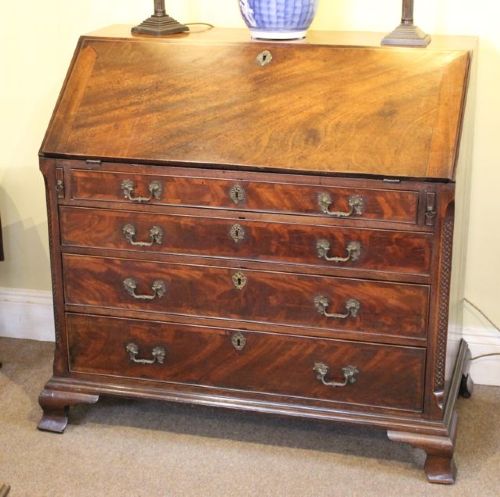
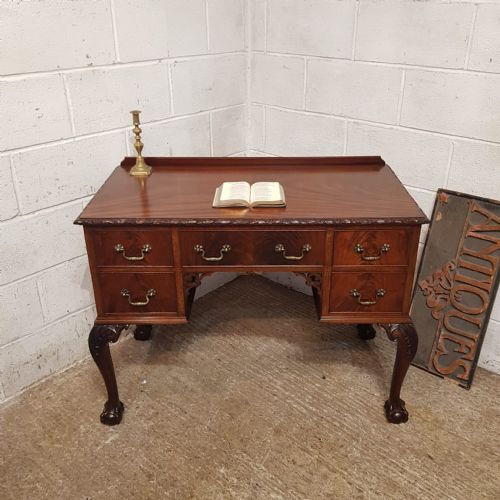
Form follows function closely in these designs, featuring fitted desk interiors, drop fronts, and multiple drawers. Buyers encounter both pedestal desks and tall cabinet formats housing shelving behind glazed or panelled doors.
How they were made
Cabinet-makers relied heavily on solid mahogany and figured veneers, supported by secondary timbers like cedarwood and oak. Brass hardware, including drop handles and escutcheons, secures the drawers and fall fronts.
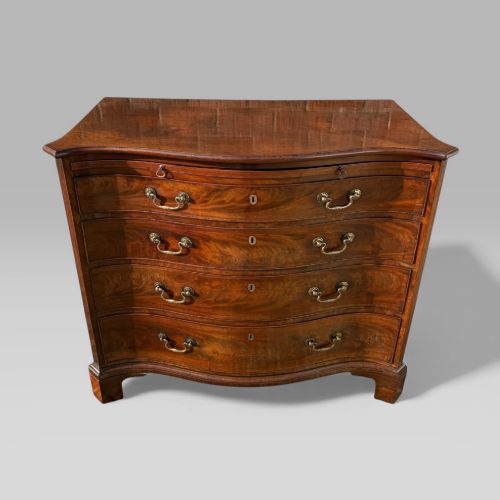
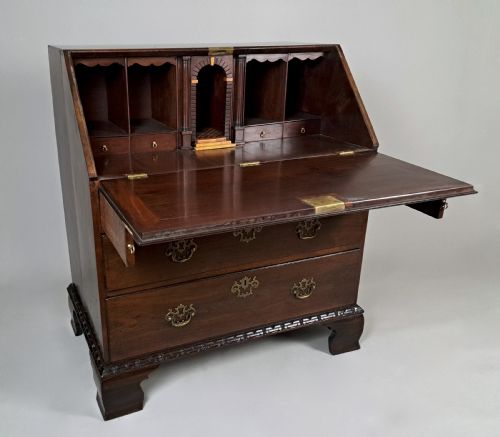
Construction techniques involve dovetail joints for drawers and panelled construction for tallcases and bureau bookcases. Finer details include serpentine fronts, brush slides, and intricate internal pigeonholes.
Some nineteenth-century makers evidently decided that desks needed both pigeonholes and secret drawers for utmost secrecy.
What varies in quality
The choice of timber figure and colour dictates visual presence, particularly in eighteenth-century mahogany surfaces. Highly figured grain and rich natural patination elevate an ordinary desk into a distinguished focal point.
Internal complexity and joinery precision separate standard pieces from superior examples. Elaborate pigeonholes, secret compartments, and crisply carved blind fretwork reflect superior workshop standards.
Gillows·Edwards and Roberts
The Chippendale Writing Bureau Glossary
- Secretaire
- A piece of furniture containing a writing drawer or fold-down writing flap. This feature allows a tallboy or chest to double as a desk.
- Serpentine
- A curved furniture front characterised by a convex centre flanked by concave ends. This shaping requires expert timber selection and joinery.
- Kneehole desk
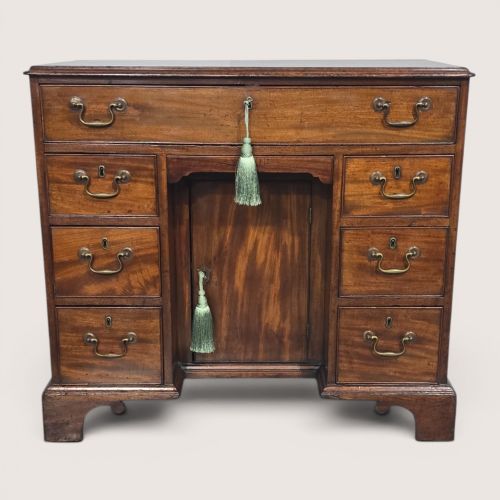
- A compact desk featuring a central recessed space for the legs, flanked by pedestals of small drawers. Irish and English makers produced these in mahogany throughout the Georgian era.
- Bureau bookcase
- A writing bureau surmounted by a glazed or panelled cabinet for books. These dual-purpose pieces dominate the eighteenth-century listings.
Chippendale Writing Bureau: Frequently Asked Questions
What is a chippendale writing bureau?
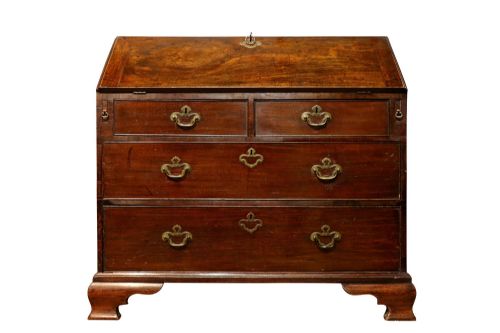
A chippendale writing bureau is a period desk featuring a sloping fall-front that opens to reveal internal drawers and pigeonholes. These items date primarily from the eighteenth century or later revival eras.
They combine practical writing space with substantial drawer storage, often standing on bracket feet or straight legs.
How do I identify a revival piece?
Revival pieces from the late nineteenth and early twentieth centuries often display machine-cut dovetails and different secondary woods compared to eighteenth-century originals. Timber conditioning and hardware styles also point towards later manufacture.
Cabinet makers of the nineteen hundreds frequently copied earlier Georgian proportions and Chinese Chippendale motifs.
Where were these desks used?
Original owners utilised these desks in private libraries, parlours, and private chambers for correspondence and managing estate accounts. Bureau bookcases held household volumes alongside writing paper.
Today they function effectively in modern home studies and living rooms as characterful writing surfaces.
What timber did makers use?
Mahogany is the dominant timber across the inventory, selected for its strength and rich grain. Makers also employed fruitwood, cedarwood, padauk, oak, and walnut.
Brass fittings provide contrast against the dark timber surfaces.