


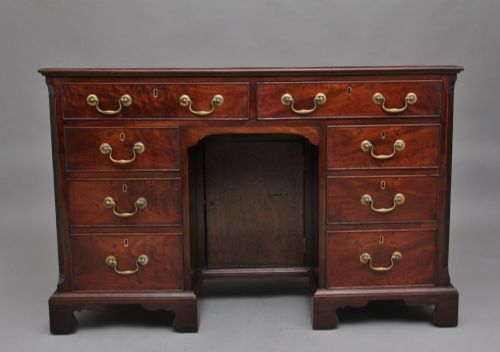
Chippendale Style Pedestal
These Chippendale style pedestal pieces bring substantial mahogany presence and architectural line to a room.
Chippendale Style Pedestal
A Chippendale style pedestal unites the robust proportions of eighteenth-century design with the sturdy practicality of later revivals. When you search for chippendale style pedestal, you meet pieces ranging from substantial twin-pedestal desks to carved plant stands and occasional tables.
The selection on this page draws heavily on nineteenth and early twentieth-century revivals, alongside pieces from the Georgian period itself. Form follows function closely here, moving between executive workspace desks and elevated stands designed for display.
Materials and construction
Makers relied primarily on mahogany, sometimes pairing figured walnut or incorporating brass hardware and inset leather writing surfaces. Solid timber construction provided the necessary weight and stability for both large pedestal desks and slender tripod tables.
Joinery techniques relied on traditional framing and drawer construction to handle the heavy loads demanded by partners desks and library tables. Surface finishing involved polishing the timber to bring out the natural depth and grain pattern of the mahogany.
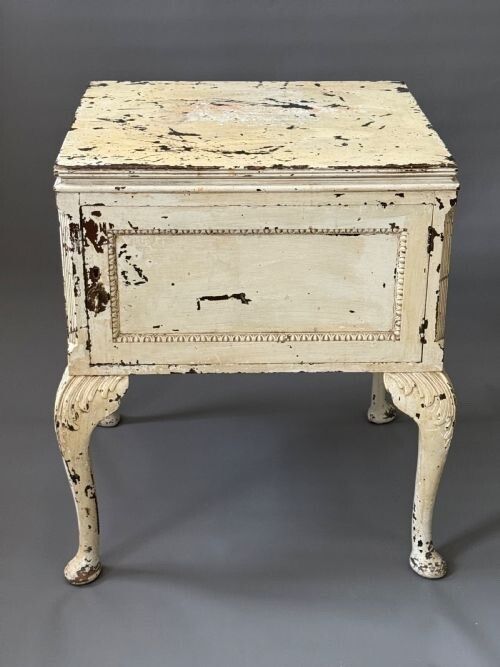
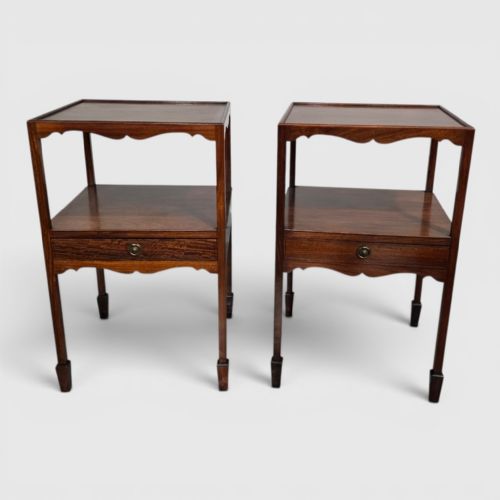
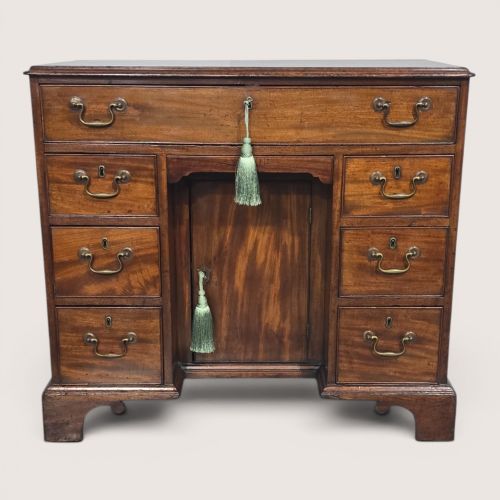
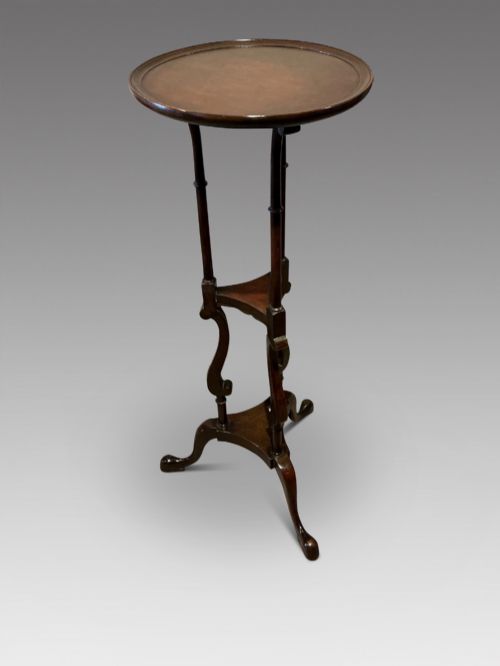
Object forms span large partners desks, kneehole desks, occasional wine tables, torcheres, plant stands and bedside cabinets.
Assessing quality
Quality rests in the crispness of the carved detail and the selection of the timber grain, particularly where figured mahogany or walnut is chosen. Finer examples display meticulous attention to proportion, edge moulding and drawer alignment.
The integrity of the timber and the weight of the pedestals dictate how well a piece holds its structure over decades of daily use. Higher tier items exhibit harmonious carving that follows structural lines without crowding the form.
Edwards & Roberts
The Chippendale Style Pedestal Glossary
- Pedestal
- A structural support column or base used to hold up a desk, table or plant stand. It often contains stacked drawers in the case of larger desks.
- Piecrust edge
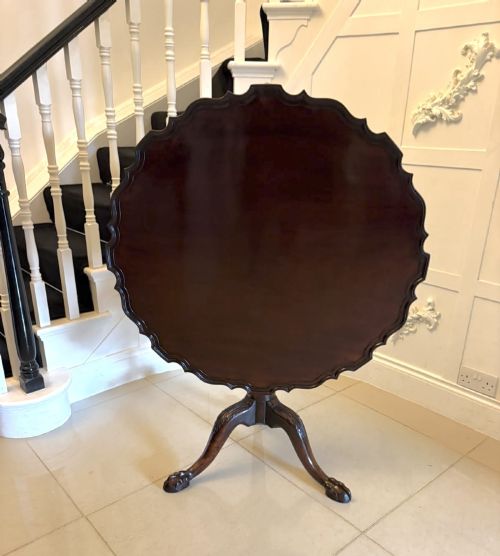
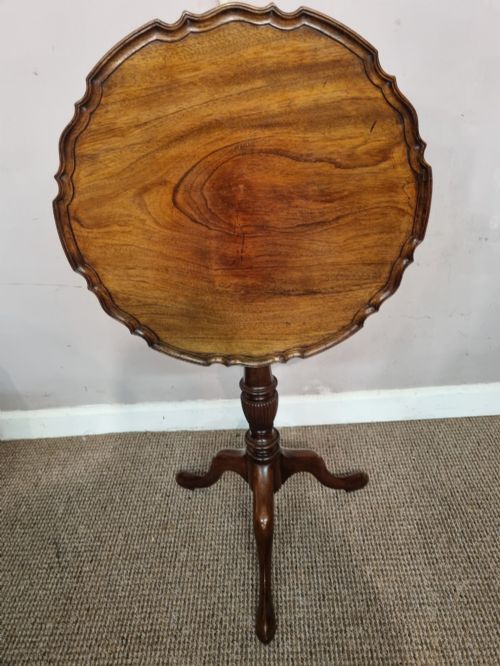
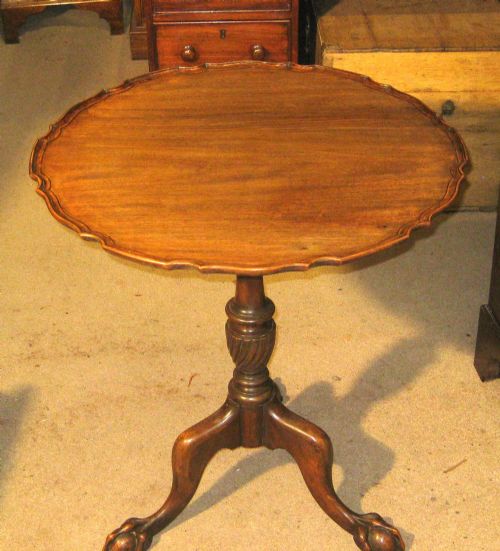
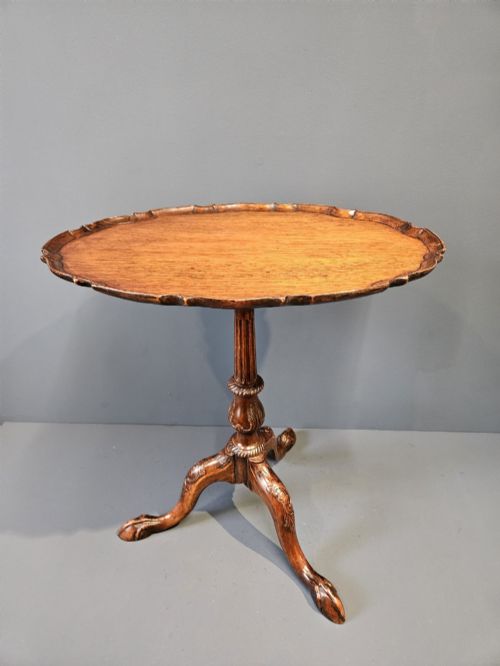
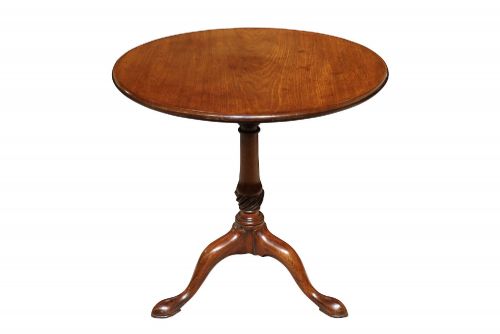
- A raised, decoratively carved perimeter sculpted into undulating curves resembling pastry work. This detail typically appears on circular occasional and tilt-top tables.
- Tilt top
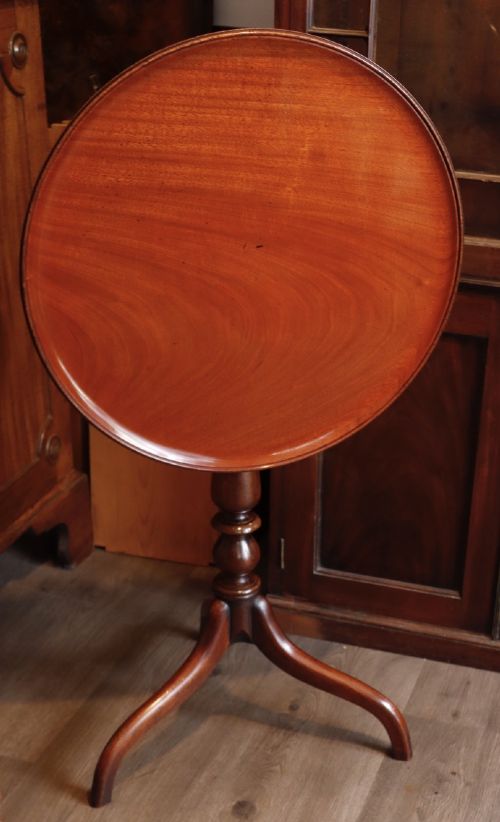
- A tabletop mechanism that allows the surface to pivot upright on its tripod base when not in use. This saved space in historic rooms.
- Tripod table
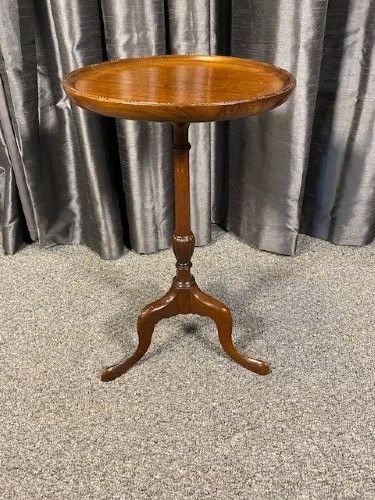
- A small freestanding table supported by three legs radiating from a central pillar. These pieces offer compact versatility for lamps or drinks.
- Partners desk
- A large executive desk designed with drawers and cupboards on both opposing sides. It allowed two people to work opposite one another.
Chippendale Style Pedestal: Frequently Asked Questions
What is a chippendale style pedestal desk?
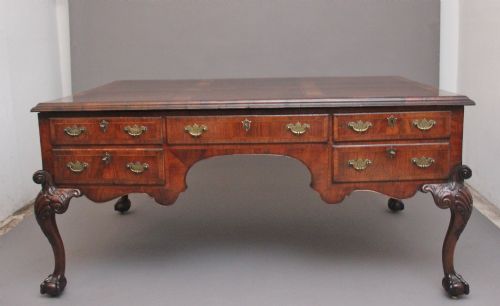
A chippendale style pedestal desk is a large writing table featuring two banks of drawers supporting the main work surface. These pieces often incorporate rich mahogany timber and detailed carving inspired by eighteenth-century cabinet making.
They serve as focal points in studies and libraries, providing generous storage alongside an expansive writing surface.
How do I use a tripod table?
A tripod table functions as a versatile surface for lamps, drinks or display items in living spaces. Their compact footprint allows them to fit easily beside armchairs or in empty corners.
Many examples feature a tilt top mechanism, enabling the surface to fold flat against the wall when floor space is required.
How can I tell the period of these pieces?
Dating relies on examining the timber construction, interior drawer linings, and the style of the carving. Eighteenth-century originals display hand-cut joinery and aged patination, while nineteenth and twentieth-century revivals show machine-assisted precision.
Comparing the specific revival characteristics, such as Edwardian or Victorian interpretations, helps narrow down the decade of manufacture.
Are these pieces suitable for modern homes?
These mahogany items integrate smoothly into contemporary rooms by adding warmth and traditional character. Their durable construction makes them practical for everyday use as functional desks or side tables.
Proper placement away from direct heat sources ensures the timber remains stable and preserves the finish over time.