
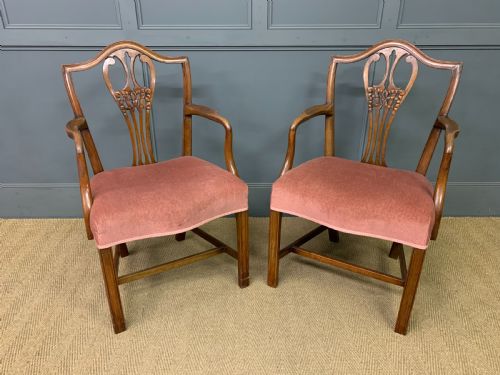
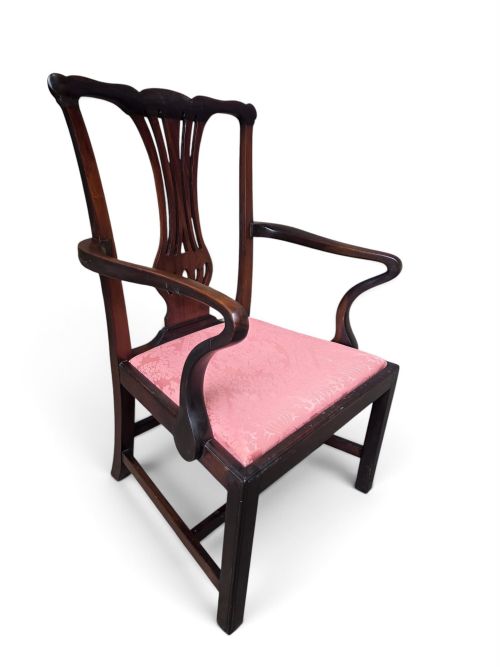
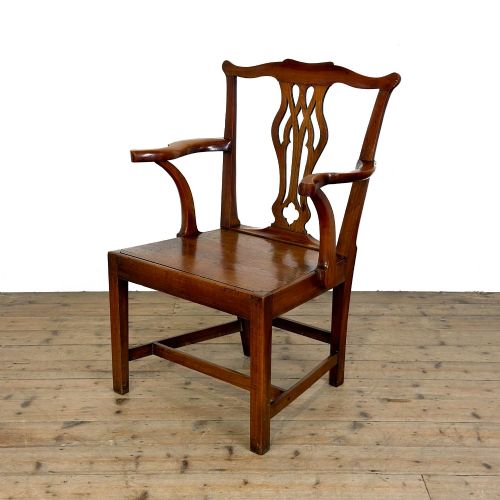
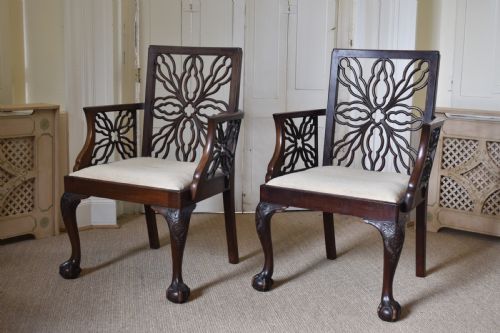
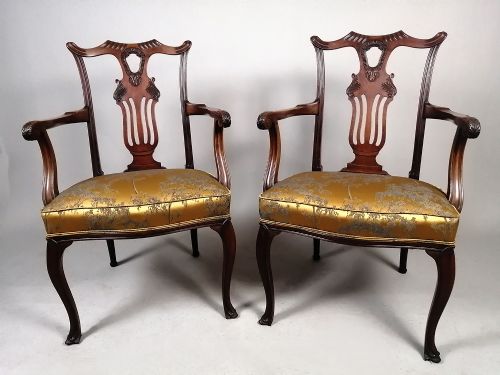
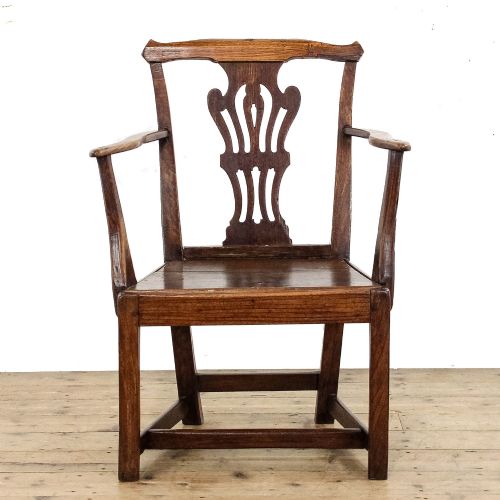
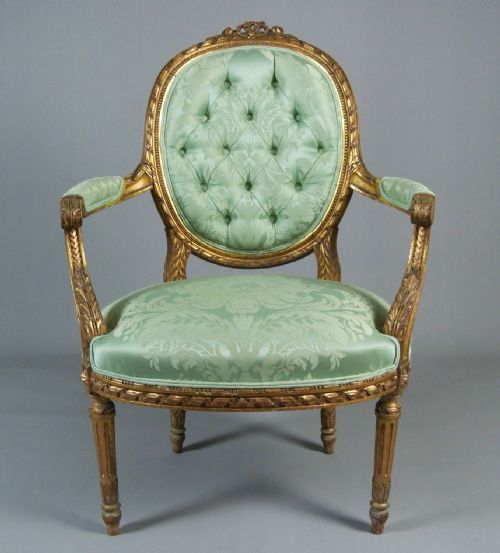
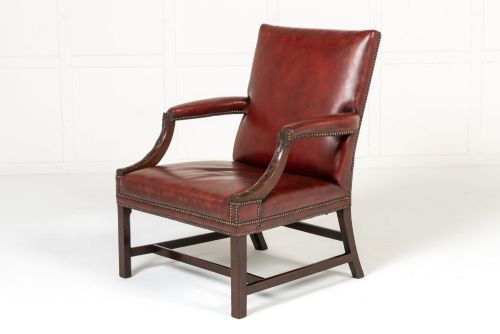
Chippendale Style Open Armchairs
These chippendale style open armchairs bring classic timber frames and traditional seating into modern rooms with enduring presence.
Chippendale Style Open Armchairs
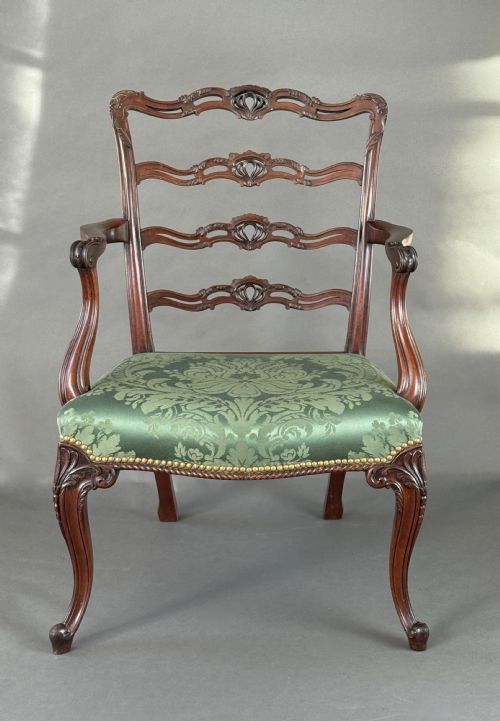
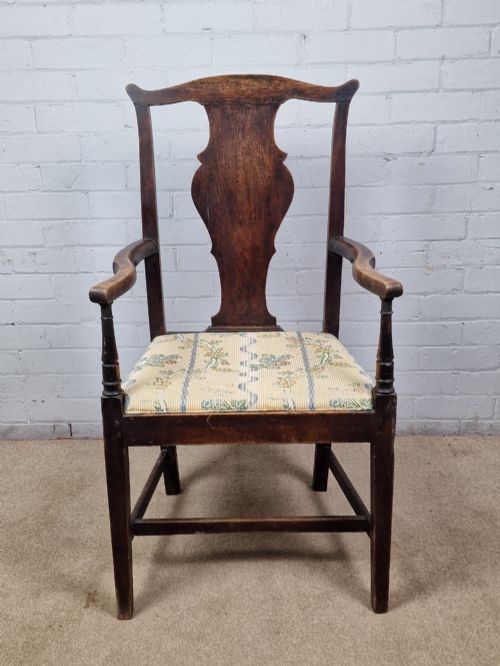
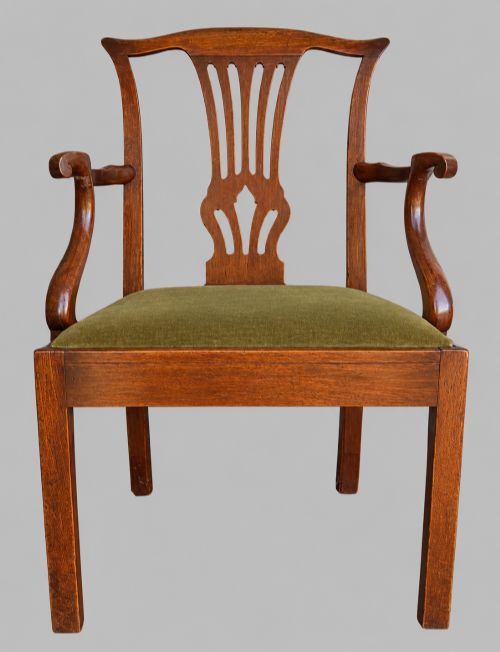
When you search for chippendale style open armchairs, you encounter seating designed for libraries, desks, and principal rooms across several distinct periods. The selection spans authentic 18th-century pieces from the Georgian era alongside later 19th-century Victorian interpretations and 20th-century revivals.
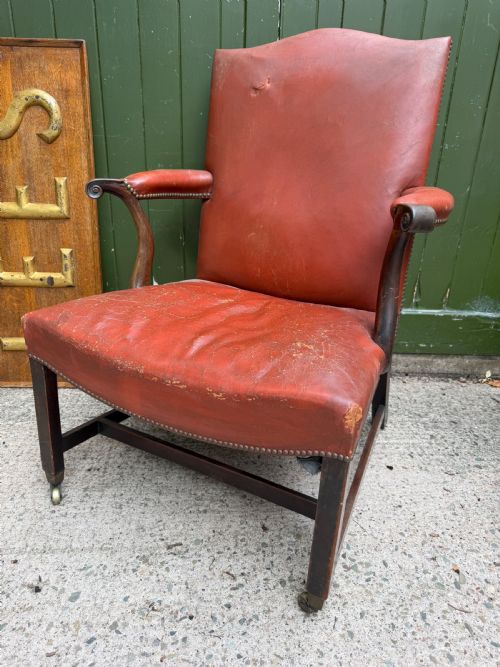
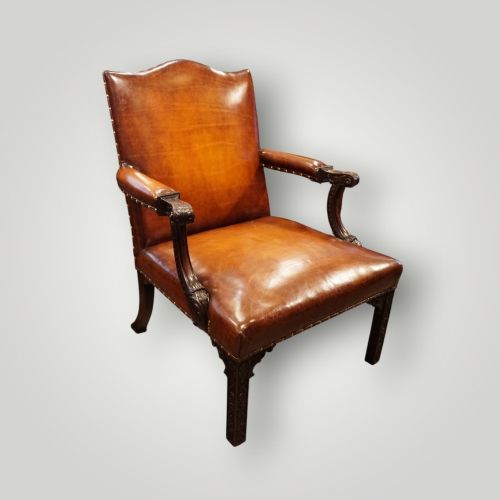
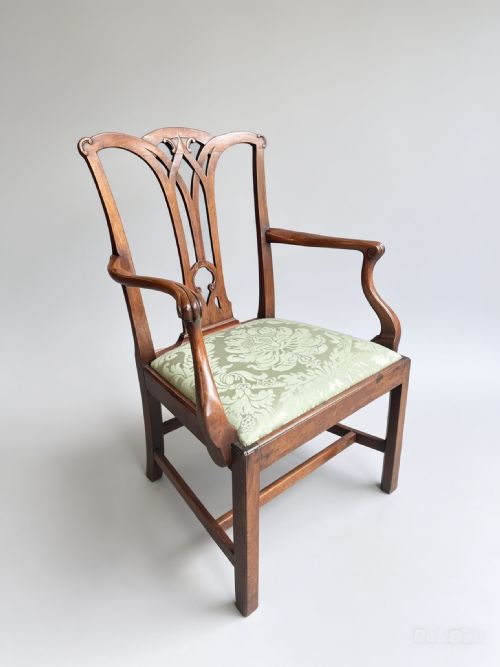
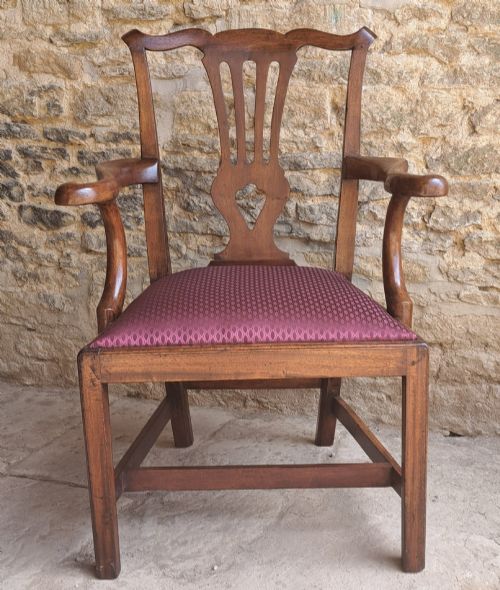
You meet various specific forms among these listings, including large Gainsborough library chairs, elbow chairs, carver chairs, and dedicated desk chairs. Mahogany and walnut form the structural core of these seats, often paired with traditional coverings.
The aesthetic bridges formal 18th-century design and later revival movements like Chippendale Revival and George II style. Pieces range from straightforward utilitarian elbow chairs to grand library seats featuring carved wooden details.
Materials and Construction
Makers constructed these chairs primarily from solid mahogany, walnut, and occasional fruitwood, utilising dense timber to support substantial frames and carved elements. Joinery relied on traditional methods to ensure structural integrity across heavy library and desk seating.
Upholstery methods involved durable foundations finished with hand-dyed English hide leather, red leather, fabric, velvet, damask, or general upholstery fabric. Brass elements frequently accented the detailing of fine library chairs and heavy desk seats.
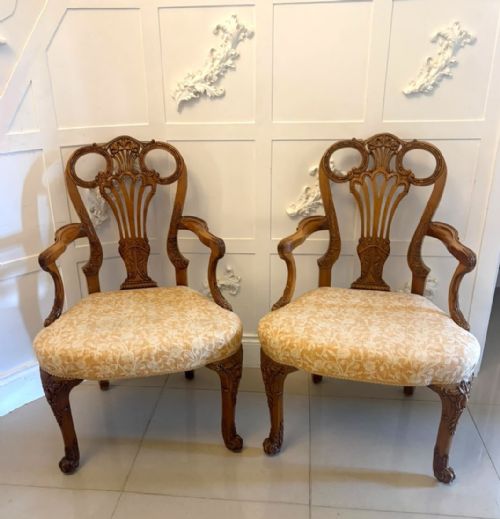
Carving defined the ornament, ranging from elaborate blind carving on mahogany rails to hipped cabriole legs and lyre back formations. Giltwood also appears on specific high-status 18th-century items.
Children occasionally shared the same taste, as demonstrated by the inclusion of small Georgian revival children's open armchairs.
Assessing Quality
The distinction between standard examples and the finest pieces rests upon the crispness of the timber carving and the architectural proportion of the frame. Heavy, over-scaled library chairs and pieces featuring intricate blind fretwork or sculptural cabriole legs generally represent superior craftsmanship.
Originality of materials and the depth of the timber grain determine the desirability of an armchair. Period pieces with authentic leather or well-preserved secondary woods command different attention compared to later revival items, though quality of joinery remains high across both.
Thomas Chippendale
The Chippendale Style Open Armchairs Glossary
- Gainsborough armchair
- A wide, low-seated library armchair with padded arms, upholstered back, and open wooden arm supports. These typically date from the Georgian period.
- Elbow chair
- A seating form equipped with armrests, frequently utilised at a desk or as an auxiliary chair in a reception room.
- Carver chair
- A term used interchangeably with an armchair, often describing a sturdy wooden seat with supportive arms designed for a head of the table or desk use.
- Blind carving
- Carved ornamentation applied in low relief directly onto a flat wooden surface, frequently seen on mahogany chair rails.
- Cabriole leg
- A furniture leg that curves out and then bends inward, terminating in a foot, commonly associated with 18th-century seating design.
Chippendale Style Open Armchairs: Frequently Asked Questions
What is a Gainsborough armchair?
A Gainsborough armchair is a wide, upholstered library chair featuring open wooden arms and a low seat designed for comfort during reading.
These pieces typically date from the 18th century and were constructed to stand near bookcases or desks in large residential libraries.
How do I date a Chippendale style armchair?
Dating relies on examining the timber species, the sharpness of the carved details, and the construction methods used within the frame.
Authentic 18th-century pieces show specific Georgian joinery and patination, whereas late 19th-century revival pieces exhibit the characteristic craftsmanship of the Victorian era.
Are these chairs suitable for daily desk use?
Many of these pieces function effectively as desk chairs or elbow seats due to their supportive armrests and structured proportions.
Library and desk armchairs from the Georgian and revival periods provide sturdy wooden frames that accommodate regular everyday seating.
What is the difference between an armchair and a carver?
The terms are often used interchangeably in historical listings to describe any wooden seat fitted with structural armrests.
Historically, carvers often served at the head of dining tables or as principal desk chairs, while armchairs fulfilled broader reception room functions.