


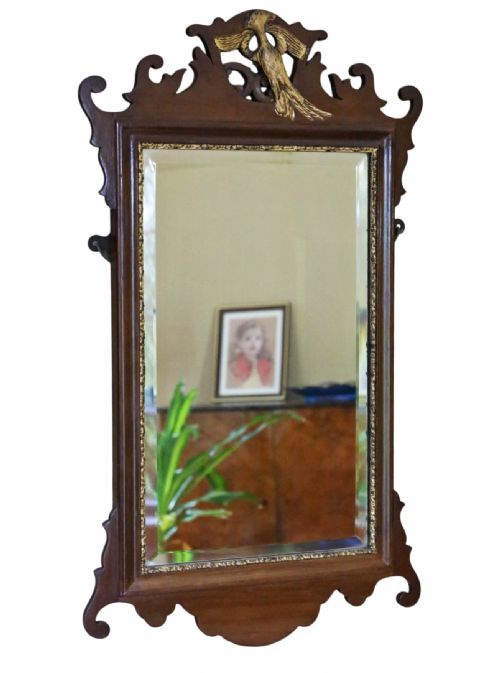


Chippendale Style Fret Mirror
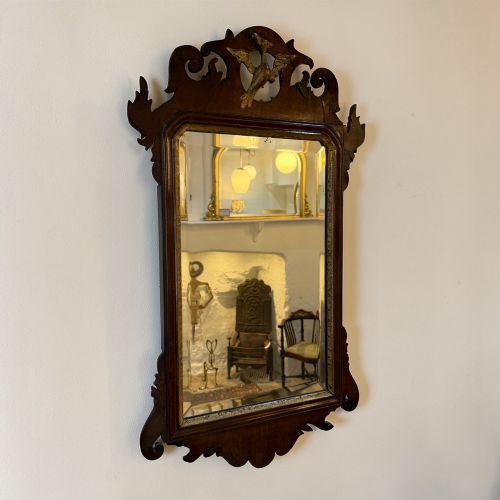
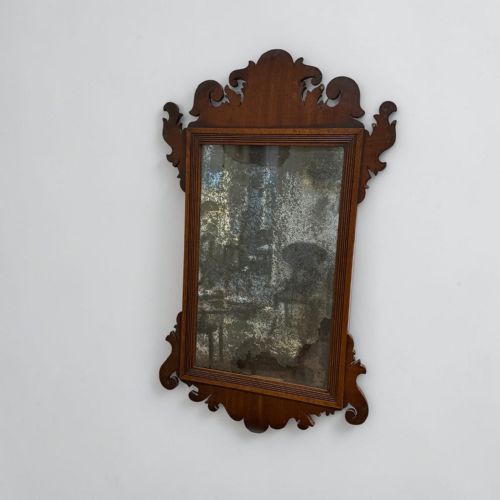
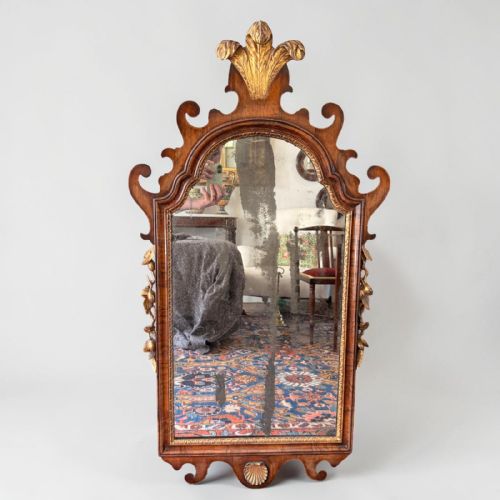
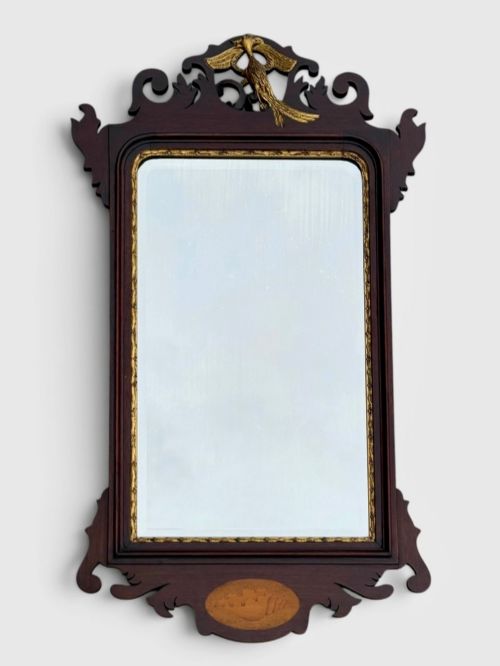
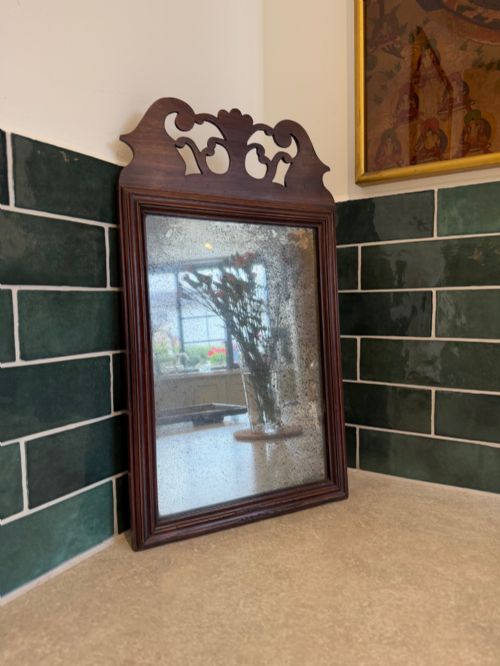
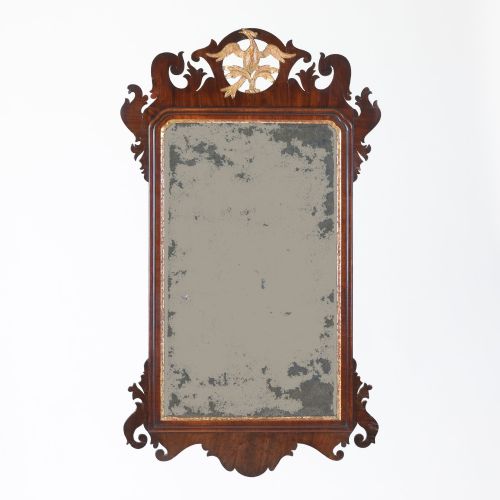
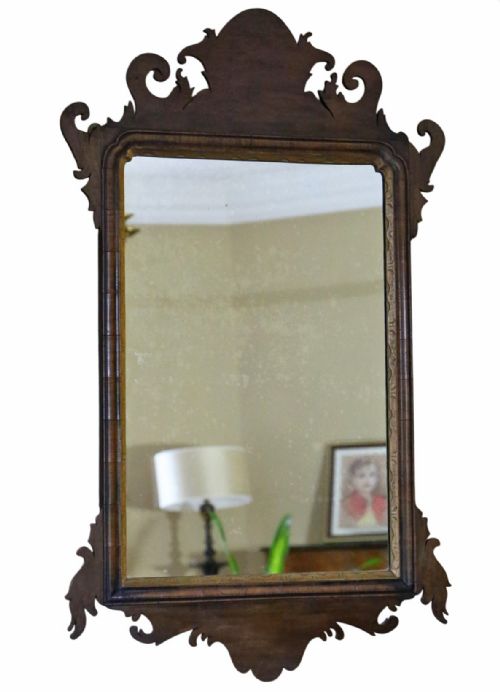
These chippendale style fret mirror pieces are pierced mahogany and walnut wall hangings built for eighteenth-century reception rooms and later revival settings.
Chippendale Style Fret Mirror
A chippendale style fret mirror brings together scrolled wooden silhouettes and classical proportions designed for Georgian and revival interiors. The form relies on intricate fret-cut frames that project flat surfaces into dynamic outlines, frequently finished with scrolling ears at the lower corners.
Most examples found on this page date from the eighteenth century through to later revival periods including Edwardian and nineteen-twenties production. Walnut and mahogany form the structural core of these wall mirrors, often accented with parcel-gilt details or inlaid wood motifs.
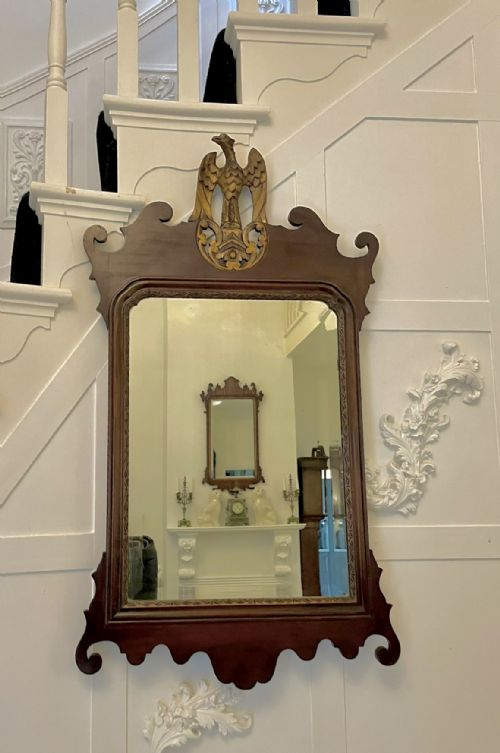
The profile typically incorporates the iconic Ho-ho bird carved at the crest, referencing Chinese-inspired motifs popular during the Georgian period. Pieces range from modest domestic wall mirrors to large pier-glass mirrors intended for principal reception rooms.
What varies in quality
The refinement of the fret-cut silhouette dictates much of the distinction across these pieces, with superior examples exhibiting crisp, sharply defined interior angles and deep relief carving. The presence of original Vauxhall mirror glass and untouched surface patination elevates an example far above later replacements.
Carved elements such as the Ho-ho bird crest demonstrate the hand of a more accomplished artisan when rendered with anatomical depth and fluid movement. Timber selection also defines the tier, with figured mahogany and richly grained walnut marking out the finer workshops from standard commercial production.
Listings feature wall mirrors spanning the Georgian period, the nineteenth century, and revival eras through to nineteen-twenty.
The Chippendale Style Fret Mirror Glossary
- Fret-cut
- A decorative woodwork technique where patterns are pierced through thin boards using a fine saw. This method creates the signature openwork silhouettes characteristic of these frames.
- Parcel-gilt
- A method of partial gilding where gold leaf is applied only to specific carved details such as crests and mouldings. This technique highlights particular areas against a dark wood background.
- Vauxhall mirror
- An early type of looking glass featuring bevelled edges, historically associated with high-end English manufacture. These plates often show subtle inclusions and age-related oxidation.
- Pier-glass
- A large wall mirror specifically designed to hang on the narrow pier of wall between windows. These pieces often feature extended proportions to reflect light into darker rooms.
Chippendale Style Fret Mirror: Frequently Asked Questions
How do I date a fret mirror?
Dating relies on examining the timber construction, the crispness of the fret-cut work, and the characteristics of the mirror plate itself. Eighteenth-century examples display hand-cut joinery and older glass, whereas revival pieces from the Edwardian era or nineteen-twenties show machine-sawn precision and later backing boards.
Secondary indicators include the style of the gilt highlights and the wear patterns on the wood finish. Comparing the backboards and fixing methods to known period examples helps confirm the timeline.
What is a Ho-ho bird?
The Ho-ho bird is a mythical phoenix-like creature derived from Chinese motifs that became popular in British furniture design during the Georgian period. It typically appears perched at the very top of the fret-cut crest.
Carved with stylized plumage and an arched neck, this decorative element adds vertical emphasis to the frame. Its presence is a defining characteristic of Chippendale-inspired wall mirrors.
Where should I hang a wall mirror?
These mirrors suit principal rooms such as drawing rooms, dining spaces, or hallways where they can reflect natural light. Historically, they were hung above mantelpieces or between windows to brighten the interior.
Ensure the wall fixings match the weight of the hardwood frame, particularly for large mahogany or giltwood pieces. Hanging them at eye level allows the detail of the pierced fretwork to be appreciated fully.
Are original glass plates important?
Original glass plates contribute significantly to the authenticity and visual character of an antique mirror. They often exhibit soft distortion and age spots that modern replacements cannot replicate.
While many mirrors received replacement glass over the centuries due to breakage, surviving original plates retain the true historical integrity of the piece. Close inspection of the rebates reveals whether the glass has been secured with its original wooden slips.