
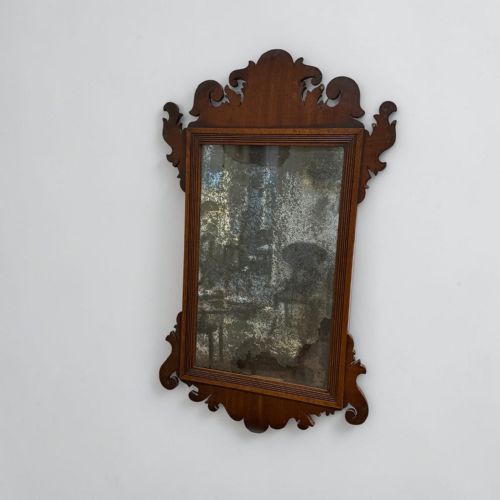
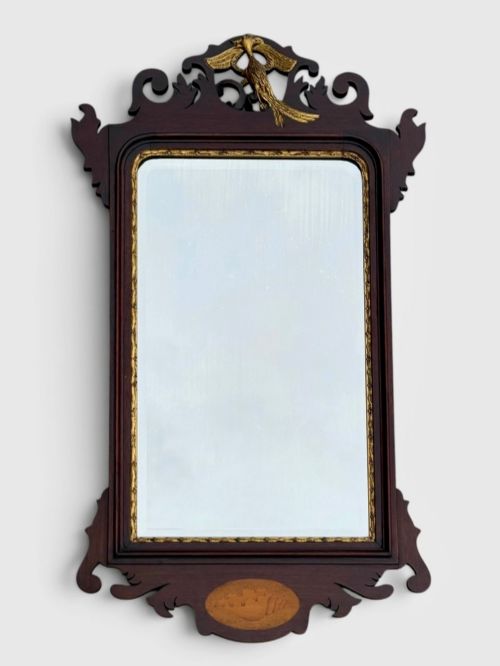
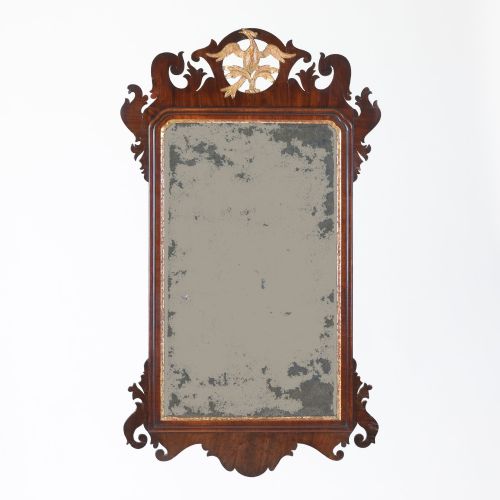
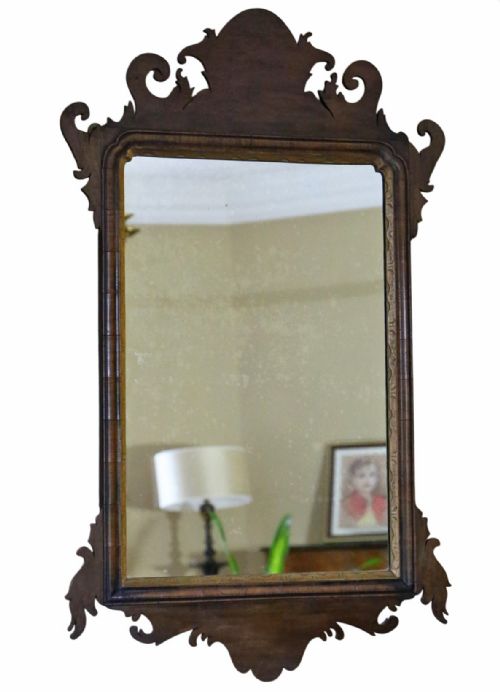


Georgian Style Fret Frame Mirror
A georgian style fret frame mirror brings crisp silhouette and warm timber tones to any hallway or drawing room.
Georgian Style Fret Frame Mirror
When you search for a georgian style fret frame mirror, you encounter wall hanging looking glasses defined by pierced wooden outlines and classic scrollwork. The examples gathered here span centuries, ranging from genuine eighteenth century pieces to later Edwardian and nineteen twenties revivals.
Mahogany and walnut form the backbone of these selections, often enriched with gilt wood details or delicate inlay work. You meet tall vertical formats designed to draw the eye upward, frequently featuring the iconic carved crest of a ho-ho bird at the top.
The style borrows heavily from Chippendale designs, offering proportion and balance that suit both period properties and modern interiors. These mirrors function as architectural focal points rather than simple reflective surfaces.
How they were made
Cabinet makers constructed these frames using dense hardwoods like mahogany and walnut, which permitted intricate fret cutting without splintering the timber. Scrollwork and pierced borders were carefully sawn by hand before the surfaces received hand rubbed finishes.
Many frames incorporate applied giltwood details or sections of satinwood and general wood inlay to create contrast along the inner and outer mouldings. Vauxhall mirror plates, known for their bevelled edges and distinct glass quality, are set securely within the wooden rabbets.
What varies in quality
The sharpness and depth of the fret cutting dictate much of the visual success in these frames, separating hurried reproductions from crisp cabinet work. Finer examples display meticulous symmetry and carefully proportioned scrolls that maintain tension across the entire silhouette.
The choice of timber grain and the preservation of original gilding also mark the distinction between standard pieces and those of higher standing. Rich figuring in the mahogany or walnut veneer adds depth that flat, uniform timber simply lacks.
The Georgian Style Fret Frame Mirror Glossary
- Fret cut
- Wood pierced and shaped with a fine saw to create geometric or scroll patterns. This technique defines the outer edge of the frame.
- Ho-ho bird
- A stylized Chinese phoenix often carved into the crest of eighteenth century and revival mirrors. It represents good fortune in traditional decorative schemes.
- Giltwood
- Timber coated with fine gold leaf or gilt paint to highlight carved motifs. It catches light effectively in dimly lit hallways.
- Vauxhall mirror
- An early plate glass mirror type known for its bevelling and slight imperfections. These plates carry historical authenticity.
- Satinwood
- A pale, durable exotic timber used for contrasting inlay work on darker frames. It brings brightness to the central frieze.
Georgian Style Fret Frame Mirror: Frequently Asked Questions
Are these mirrors genuinely eighteenth century?
The selection includes both authentic eighteenth century pieces and later Edwardian or nineteen twenties revivals. Examining the timber shrinkage, backing boards, and glass plate helps determine the exact period.
Revival pieces often replicate the earlier Chippendale aesthetic with great precision while retaining nineteenth or twentieth century construction methods.
How do I clean antique mirror glass?
Clean the glass gently using a soft cloth and a minimal amount of mild glass cleaner, avoiding harsh ammonia. Spray the cloth rather than the glass to prevent moisture seeping behind the old silvering.
Take care not to let moisture touch the bare wood or gilt edges surrounding the plate.
Where should I place a fret frame mirror?
These mirrors suit narrow entrance halls, above mantelpieces, or as focal points between two windows. Their vertical proportions help elongate wall spaces effectively.
Position them where they can reflect natural light to brighten darker corners of a room.