


Chippendale Style Carvers Pair
These Chippendale style carvers pair options offer classic seating, bringing timeless woodcraft and sturdy arm support into your dining room or study.
Chippendale Style Carvers Pair
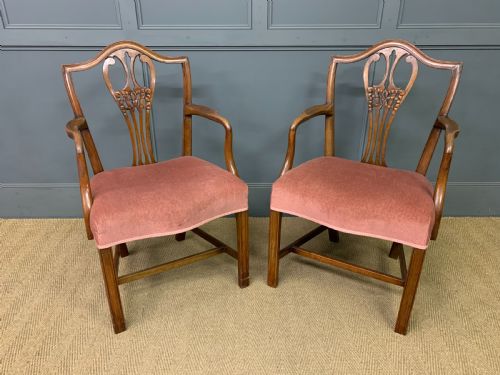
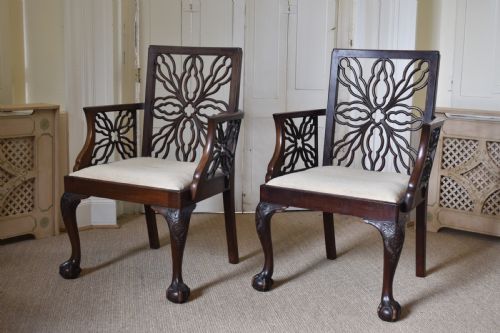
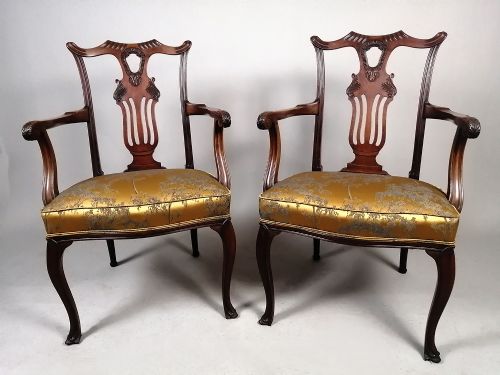
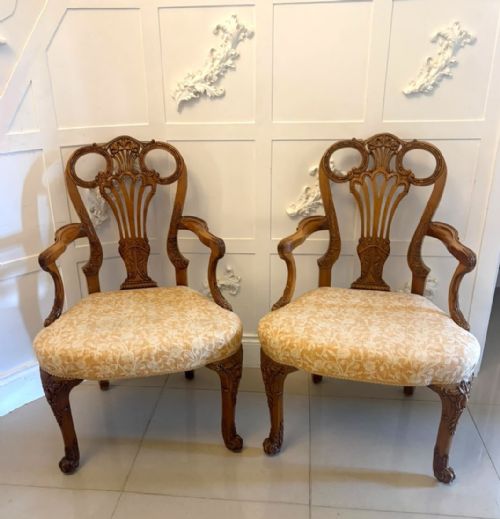
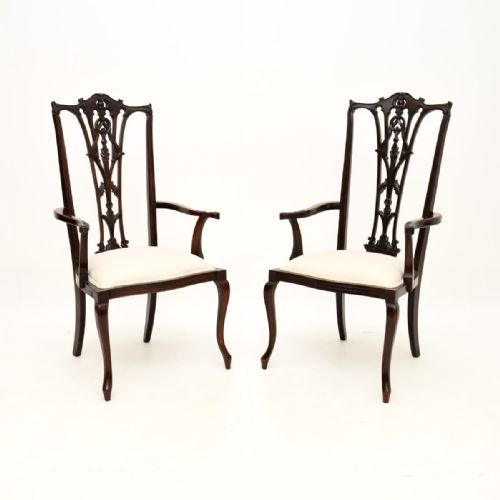
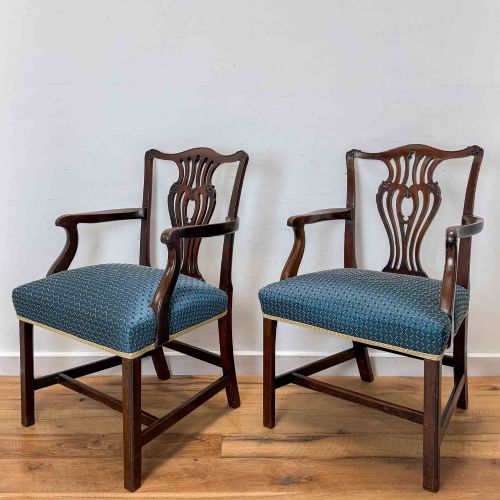
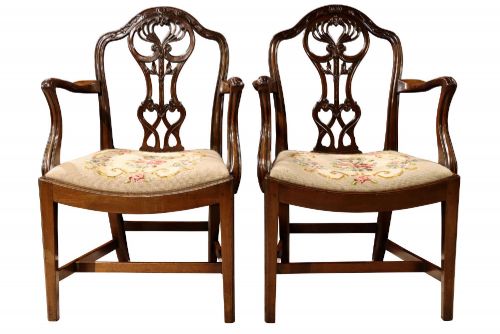
A chippendale style carvers pair represents formal seating designed with distinct arms, traditionally placed at the heads of a dining table or utilised as desk chairs. When you search for a chippendale style carvers pair, you encounter examples stretching from the eighteenth century through nineteenth-century revivals and into early twentieth-century interpretations.
The selections span several periods, notably Georgian originals, late nineteenth-century revival pieces from around eighteen eighty to nineteen hundred, and subsequent twentieth-century adaptations. Forms include open armchairs, elbow chairs, library armchairs, and children's carver chairs.
Mahogany predominates among the materials, supplemented by walnut in specific desk variants and various upholstery textiles. You will find that revival craftsmanship strongly mirrors the proportions and motifs of earlier centuries.
Factors of Quality
Quality rests upon the crispness of the timber carving, particularly along the top rail, the pierced splat, and the knees of the cabriole legs. Superior examples display fluent hand-chiselled details rather than shallow, mechanical shaping.
The structural integrity of the joints where the arms meet the uprights and seat frame dictates the endurance of each chair. Heavier gauge timbers and thoughtful timber selection separate standard production pieces from finer revival works.
The listings span from the eighteenth century to the twentieth century, with mahogany remaining the dominant wood choice throughout.
The Chippendale Style Carvers Pair Glossary
- Carver
- An armchair, traditionally designed with elbow rests for the head of a dining table. These chairs match or complement the side chairs in a dining set.
- Revival
- A later period of design where makers consciously copied historical styles. Nineteenth and early twentieth-century cabinet makers frequently looked back to Georgian aesthetics.
- Splat
- The vertical wooden strip down the centre of a chair back. In these designs, the splat is frequently pierced and intricately carved.
- Elbow Chair
- An alternative term for an armchair. The phrasing highlights the prominent arm supports intended for resting the elbows.
Chippendale Style Carvers Pair: Frequently Asked Questions
What is a carver chair?
A carver chair is an armchair traditionally placed at the head and foot of a dining table. The arms provide extra support while maintaining a formal silhouette.
These pieces function equally well as desk chairs or occasional seating in a study or library.
How do I date a revival piece?
Dating relies on examining the timber colour, tool marks, and secondary woods used beneath the seat frame. Nineteenth-century revivals often exhibit a denser patina and specific construction traits distinct from eighteenth-century originals.
Consulting the listed period details helps establish whether a chair is a Georgian original or a later revival.
Are these chairs comfortable for daily use?
Most examples feature upholstered drop-in seats or padded squabs that provide a firm sitting position. The open arm design offers adequate elbow space for dining.
Adding appropriate upholstery fabrics allows you to tailor the seating comfort to your personal preference.
What woods were commonly used?
Mahogany is the primary timber found across these listings, valued for its rich tone and receptivity to carving. Walnut also appears in specific desk armchairs and alternative revival interpretations.
Both hardwoods ensure the structural stability required for heavy armframes and legs.