


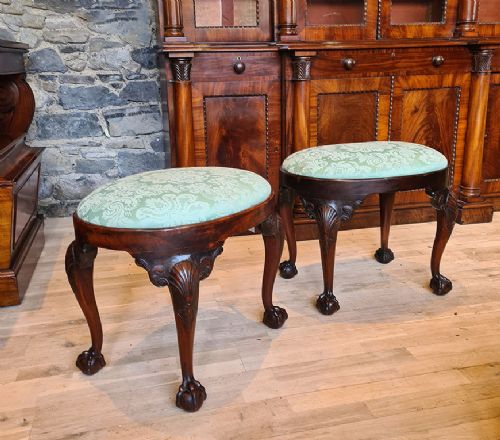


Chippendale Style Carved Bench
These chippendale style carved bench examples bring enduring Georgian elegance to a room through robust mahogany frames and intricate carved detail.
Chippendale Style Carved Bench
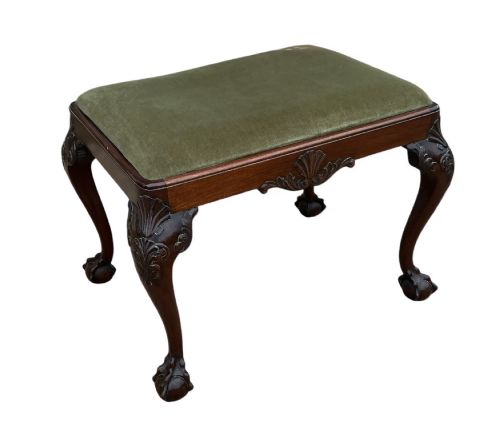
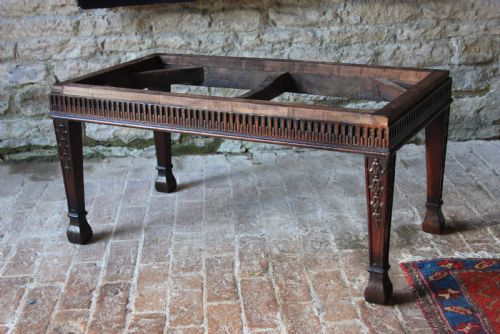
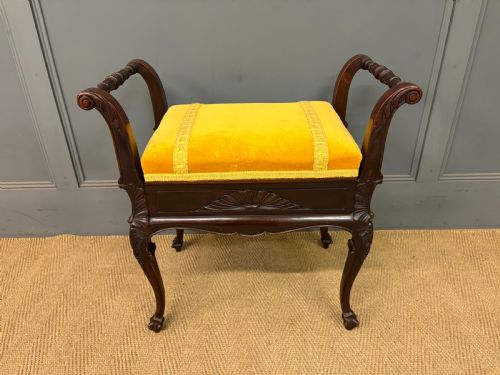
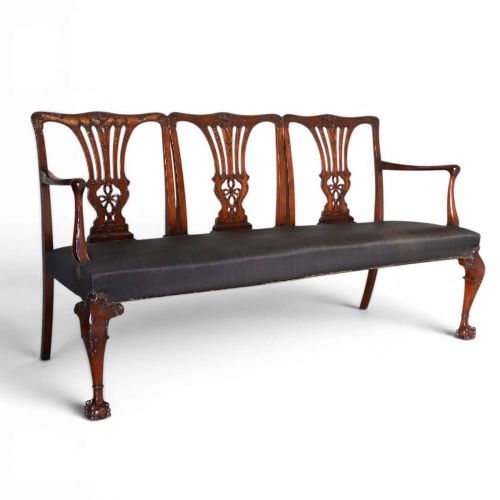
The selection includes specialised variants such as piano stools, dressing stools, and multi-seater settees featuring elaborate carved backs. These pieces bridge the gap between functional seating and ornamental woodwork, drawing heavily on eighteenth-century design vocabulary.
Materials and construction
Makers relied primarily on mahogany for the structural frames, utilising its dense grain to support deep carving and ball and claw details. Timber selection dictated the longevity and crispness of the carved ornamentation across both stools and settees.
Upholstery forms an integral part of the construction, with pieces upholstered in fabric, velvet, tapestry fabric, and wool. These textiles are secured to frames that span from the eighteenth century through to twentieth-century revivals.
Listings span from the eighteenth century through to the twentieth century, featuring mahogany frames paired with wool, velvet, and tapestry fabric.
Assessing craftsmanship
Quality rests heavily on the depth and definition of the carved ornamentation on the mahogany frame, particularly around the knees and feet of the piece. Finer examples display crisp, hand-chiselled details that retain sharp relief rather than softened contours.
The structural integrity of the joints and the choice of secondary timbers also separate standard production from superior work. Proportion and balance in multi-seater settees and chair-back sofas dictate the visual success of the revival designs.
The Chippendale Style Carved Bench Glossary
- Chippendale
- A style of eighteenth-century English furniture design characterised by ornate carving, ribbon backs, and cabriole legs. Later revival periods replicated these defining motifs on various seating forms.
- Settee
- A medium-length upholstered seat with arms and a back, designed for multiple occupants. These pieces often feature carved wooden frames echoing Georgian aesthetics.
- Cabriole leg
- A furniture leg that curves out and then tapers in, commonly terminating in a ball and claw foot. This form appears frequently on mahogany stools and sofas.
- Ball and claw
- A decorative foot motif depicting a bird's talon gripping a ball. It is a hallmark of classical carved seating design.
- Chair-back sofa
- A sofa whose back is constructed like a series of conjoined chair backs. This specific form draws directly on eighteenth-century prototypes.
Chippendale Style Carved Bench: Frequently Asked Questions
How do I date my carved bench?
Dating relies on examining the timber grain, tool marks, and upholstery buildup beneath the fabric. Eighteenth-century pieces show distinct hand-tooling, whereas nineteenth and twentieth-century revivals often incorporate later construction methods.
Comparing the stylistic nuances of the carving against documented revival periods helps narrow down the decade of manufacture. Consulting the secondary woods inside the frame offers further clues to the workshop's origin.
Were these benches used in parlours?
These seating forms occupied principal reception rooms, parlours, and drawing rooms where entertaining took place. Settees and long stools provided formal seating for guests during social gatherings.
Smaller dressing stools and piano stools served more private functions in bedrooms and music rooms. Their dual role as decorative objects and practical furniture made them versatile household assets.
How should I care for the mahogany?
Maintain the timber by keeping the piece away from direct heat sources and fluctuating humidity. Gentle dusting with a dry, soft cloth prevents surface accumulation without harming the finish.
Avoid modern silicone polishes that can penetrate the grain and alter the timber's appearance over time. Occasional application of traditional beeswax preserves the natural lustre of the mahogany.
What defines the Chippendale revival?
The Chippendale revival encompasses nineteenth and twentieth-century furniture produced in the manner of the famous eighteenth-century designer. Makers reinterpreted classical proportions and carved motifs for contemporary Victorian and Edwardian interiors.
These later interpretations adopted traditional techniques while often utilising denser nineteenth-century mahogany stocks. They represent a Victorian and Edwardian enthusiasm for historic domestic grandeur.