



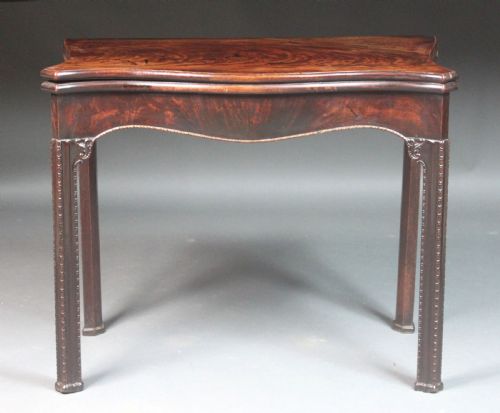
Chippendale Serpentine Table
A chippendale serpentine table combines flowing cabinetwork with solid timber, forming a centrepiece for formal rooms.
Chippendale Serpentine Table
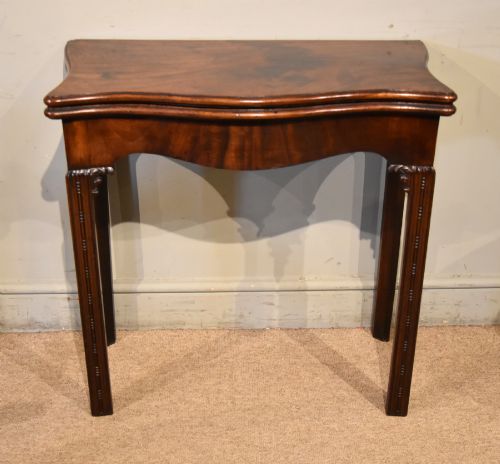
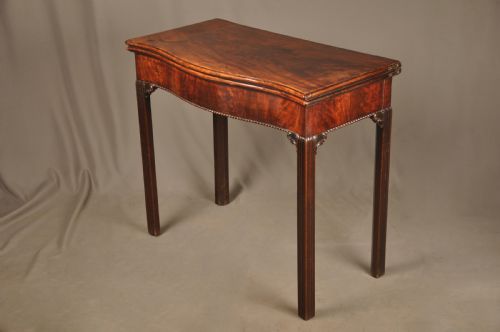
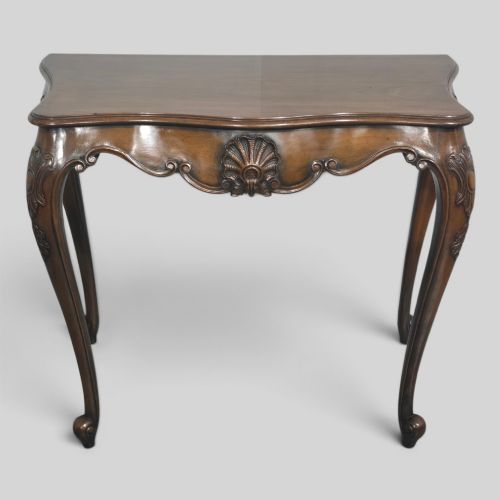
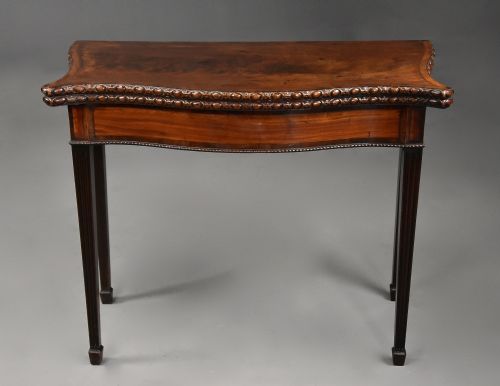
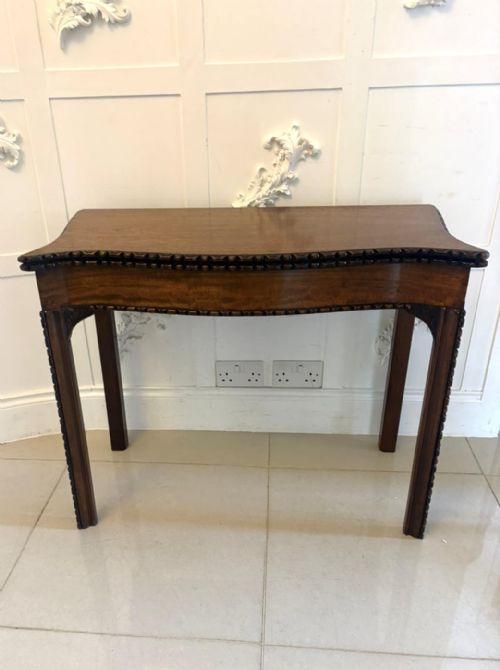
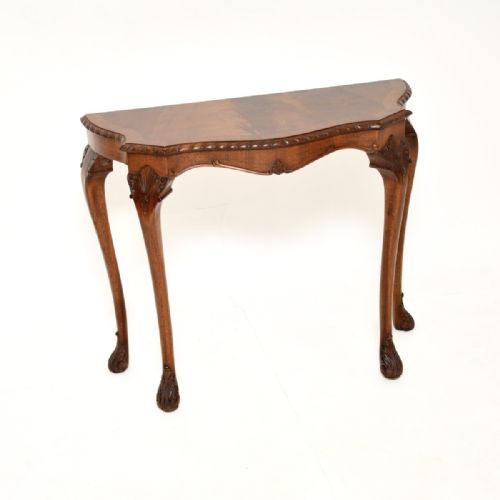
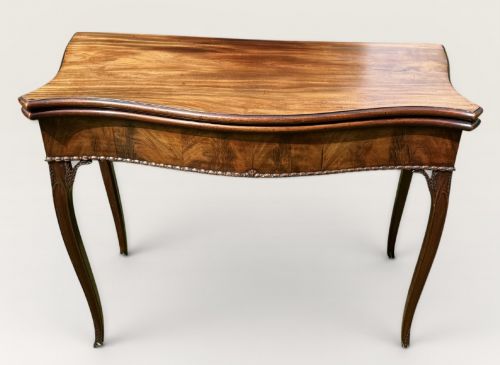
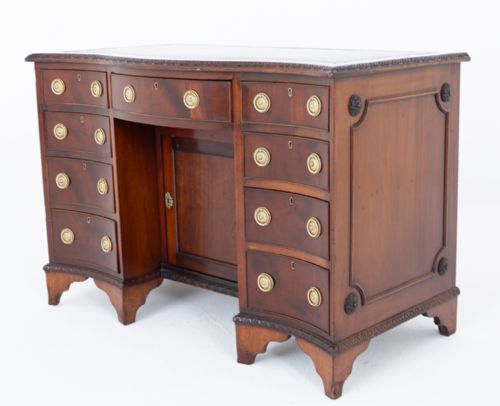
Buyers seeking a chippendale serpentine table encounter pieces ranging from authentic mid-eighteenth-century Georgian originals to later revival interpretations from the Edwardian era and the twentieth century. The forms span card tables, tea tables, and console tables alongside desks and bedside cabinets, all sharing the distinct undulating front outline.
Original eighteenth-century examples sit alongside revival pieces made around nineteen hundred, nineteen ten, nineteen twenty, and nineteen thirty. The survival of these varied forms demonstrates a lasting demand for curved mahogany furniture across multiple design periods.
Materials and construction
Makers built these tables predominantly in solid mahogany and wood veneer, frequently mounting brass hardware such as castors, handles, or hinges on the opening leaves and drawers. Timber selection relied on figured grain to catch the light along the sweeping curves of the front edge.
Construction involved shaping solid timber planks to create the convex and concave contours of the serpentine outline, often incorporating concertina actions for folding card tables or intricate kneehole arrangements for desks.
Chippendale Serpentine Table Retail Price Guide 2026
Typical asking prices for chippendale serpentine table among the pieces listed under this phrase on Sellingantiques today, from the lower quarter to the upper quarter. They describe what is for sale here now, not the wider market.
The listings span mahogany, walnut, and painted timber alongside brass and leather, recorded across Georgian, Edwardian, and twentieth-century periods.
Judging the quality
Quality rests in the crispness of the carved details along the frieze and legs, and the depth of the natural patina built up on the mahogany surfaces over centuries. Superior pieces display seamless joints along complex curves and retain their original brasses and timber colour.
Lesser examples show mechanical repetition in later revival carving or replacement secondary woods in hidden structural areas, whereas top-tier pieces maintain structural integrity and original folding mechanisms without modification.
The Chippendale Serpentine Table Glossary
- Serpentine
- A furniture front shape featuring a convex centre flanked by two concave curves, or the reverse. This undulating outline requires precise carpentry to execute across solid timber.
- Concertina action
- An expanding frame mechanism used in fold-over card tables that extends outward to support the opened top leaf evenly. It allows the table legs to move away from the corners when opened.
- Kneehole desk
- A writing desk featuring a central recessed space for the sitter's legs, flanked by pedestals of small drawers. The serpentine variation curves the front facade across the entire width.
- Patina
- The surface sheen and colour developed by wood over years of handling, polish, and exposure to light. Original patination serves as an indicator of age and careful maintenance.
- Pembroke table
- A small rectangular table with two hinged side leaves that drop down. These tables often incorporate drawer storage and slender legs.
Chippendale Serpentine Table: Frequently Asked Questions
How do I identify a true eighteenth-century piece?
Examine the secondary timbers used inside the drawers, such as oak or pine, alongside the hand-cut dovetails and the wear patterns on the feet. Eighteenth-century construction methods leave distinct tool marks that differ from later machinery.
Check the timber patina and the construction of the folding mechanisms on card tables. Revival pieces from nineteen hundred onward often display standardised internal components and uniform surface finishes.
What is the difference between George III and revival styles?
George III pieces date from the mid to late eighteenth century and carry the marks of contemporary workshop production. The timber density and hand-carved decorative motifs reflect the working methods of that specific reign.
Revival pieces date from the late nineteenth and early twentieth centuries, produced during renewed interest in historical cabinetmaking. These items utilise older stylistic vocabulary but display different internal construction techniques.
Where should I place a serpentine table at home?
These tables suit hallways, drawing rooms, and studies where the curved front profile can be viewed without obstruction. Console and side tables function well against flat walls, while card tables can stand closed until needed for use.
Keep wooden surfaces away from direct heat sources and strong sunlight to protect the mahogany polish. Regular dusting and occasional wax application help maintain the timber condition.
Why do card tables have folding tops?
Fold-over tops allowed multi-purpose use in historic homes, serving as console tables against walls when closed and opening into games surfaces for cards or tea. The hinged mechanism reveals a baize-lined interior designed for evening entertainment.
The internal framework required precise engineering to support the heavy mahogany leaf when unfolded. Concertina actions expanded the frame to keep the structure level during use.