

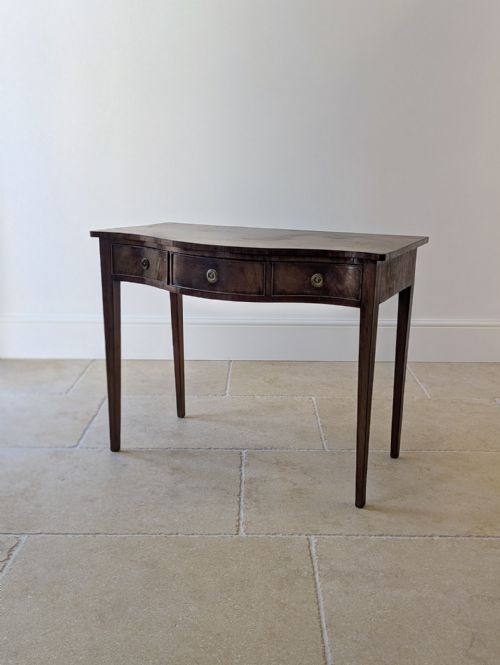
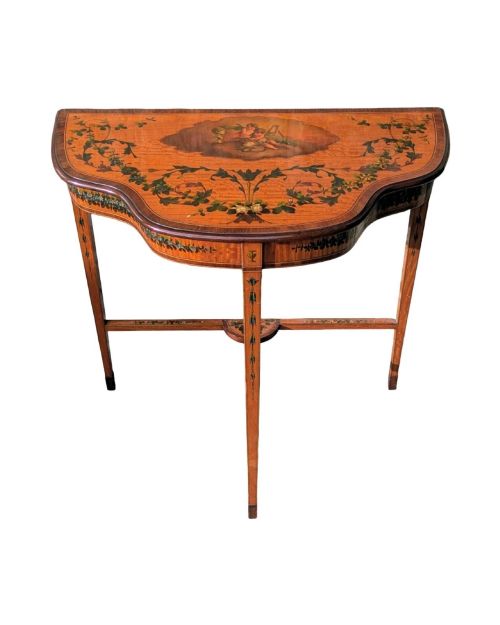
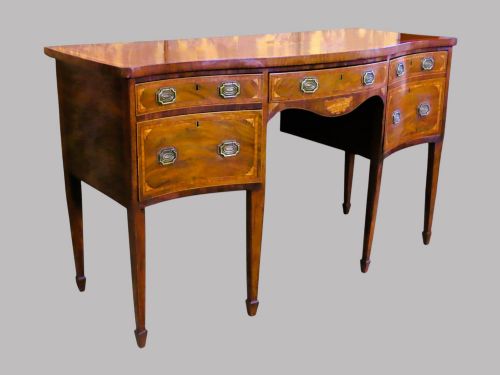
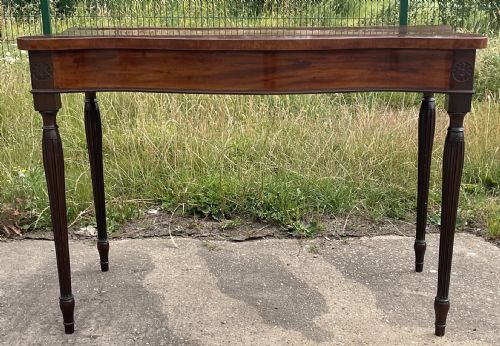

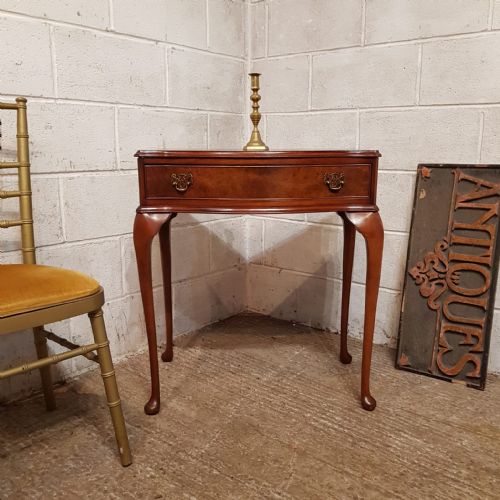

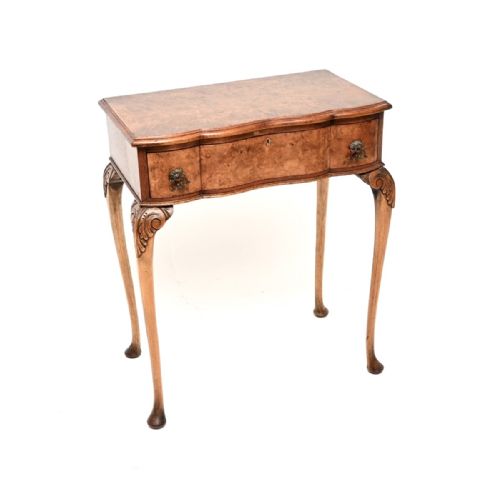


Georgian Serpentine Hall Table
A georgian serpentine hall table brings a fluid, undulating frontage to an entrance, offering surface space with an elegant footprint.
Georgian Serpentine Hall Table
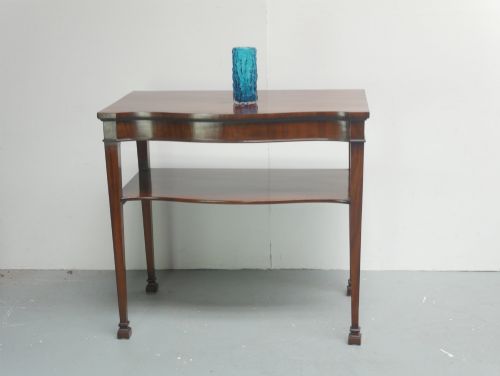
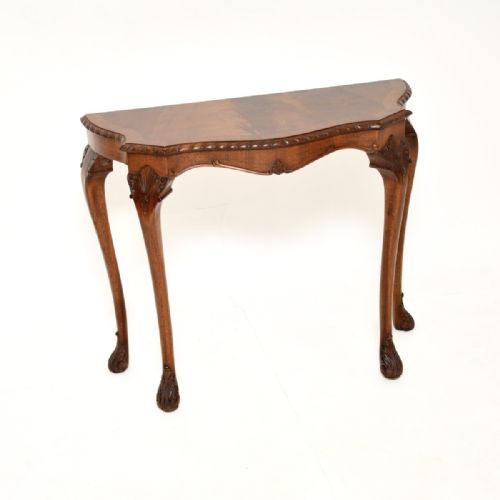
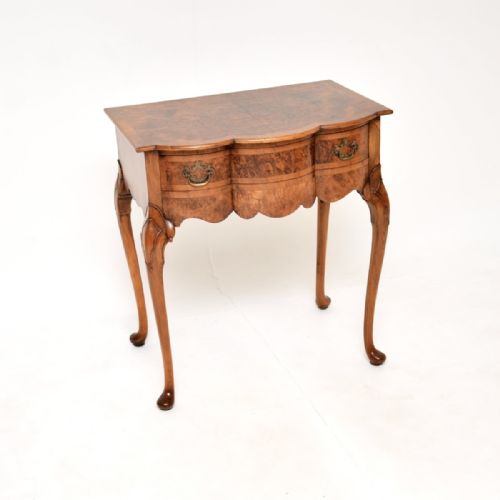
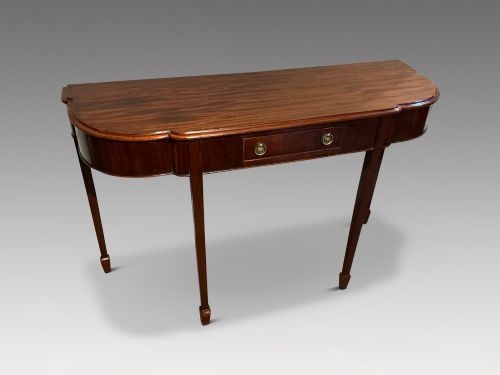
A georgian serpentine hall table combines a characteristically curved, undulating front with the proportions necessary for narrow entrance spaces. These pieces appear across various forms in the record, including side tables, console tables, and serving tables.
Makers adapted the serpentine outline for tea tables, lowboys, and larger servers during the eighteenth and nineteenth centuries. The listings show examples originating from the Georgian period alongside later revival iterations in mahogany and burr walnut.
Materials and Construction Methods
Cabinetmakers constructed these tables primarily using solid mahogany and figured burr walnut, frequently applying flame mahogany veneers to the main surfaces. Workshops enhanced the timber figures with boxwood inlay, contrasting stringing, and marquetry detailing.
The undulating serpentine shape required careful timber selection and precise sawing to maintain the flowing contour along the front edge. Joiners built these frames to support drawers, integrating brass hardware where appropriate.
Georgian Serpentine Hall Table Retail Price Guide 2026
Typical asking prices for georgian serpentine hall table among the pieces listed under this phrase on Sellingantiques today, from the lower quarter to the upper quarter. They describe what is for sale here now, not the wider market.
Object types recorded include console tables, side tables, serving tables, and lowboys featuring boxwood inlay and flame mahogany veneers.
Distinctions in Quality and Execution
Quality rests in the precision of the serpentine curve and the selection of timber veneers, such as flame mahogany or burr walnut. Superior examples display seamless grain matching across the curved front and fine execution of boxwood inlay.
The integrity of the structural joinery and the retention of original drawer linings separate period originals from later revival interpretations. Finer pieces maintain crisp carving along the edges and legs without softened contours.
The Georgian Serpentine Hall Table Glossary
- Serpentine
- A curved shape featuring a convex centre flanked by concave wings, creating an undulating front edge. This contour requires specialised woodworking skill to execute properly.
- Lowboy
- A small table with one or more rows of drawers, standing on relatively tall legs. They functioned variously as dressing tables or side tables.
- Console Table
- A table designed to stand against a wall, frequently supported by brackets or legs at the front. These pieces serve decorative and surface functions in hallways.
- Marquetry
- The art of applying pieces of veneer to a structure to form decorative patterns and pictures. Craftsmen utilise various coloured woods to achieve tonal contrast.
Georgian Serpentine Hall Table: Frequently Asked Questions
Where should I place a serpentine hall table?
These tables suit narrow entranceways, hallways, and passages where their shallow depth and curved front maximise floor space. They provide a surface for lamps, correspondence, and decorative objects.
Their finished backs and detailed fronts also allow them to stand against living room walls or function as console tables in larger reception rooms.
How do I distinguish a period piece from a revival table?
Examine the timber shrinkage, secondary woods used in the drawer linings, and the hand-tool marks on internal surfaces. Eighteenth-century pieces exhibit construction methods consistent with period joinery.
Revival pieces from the twentieth century often display machine-cut elements and standardised timber preparation while retaining the traditional serpentine profile.
What is the difference between a console and a side table?
Console tables traditionally rely on the wall for some degree of support or are specifically designed to abut flat vertical surfaces. Side tables are freestanding four-legged items intended to sit alongside walls.
In practical terms within historical furniture, these terms often overlap depending on the proportions and intended placement of the piece.
How do I care for mahogany and walnut surfaces?
Maintain the timber by dusting with a soft, dry cloth and avoiding placement near direct heat sources or strong sunlight. Excessive temperature fluctuations cause veneers to lift.
Apply traditional beeswax sparingly to nourish the grain and preserve the natural sheen of the wood without building up heavy silicone layers.