

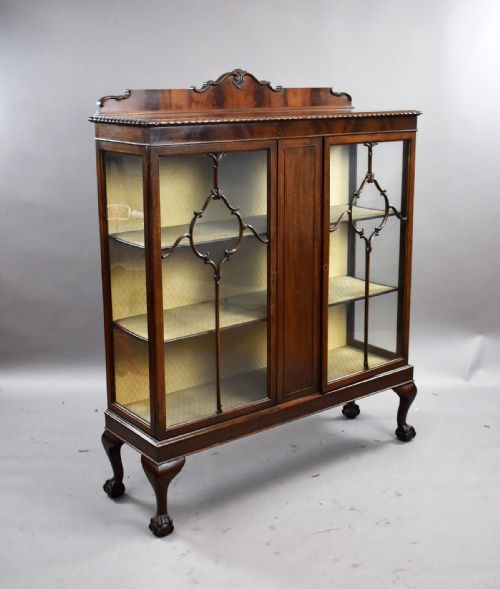


Chippendale Revival Display Cabinet
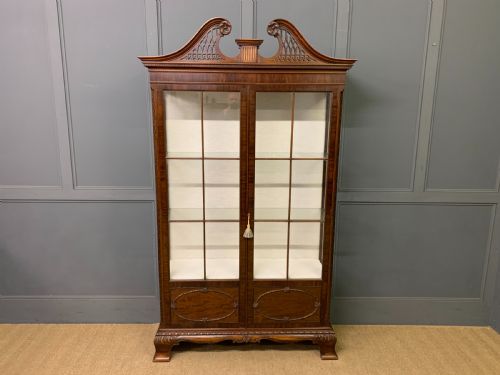
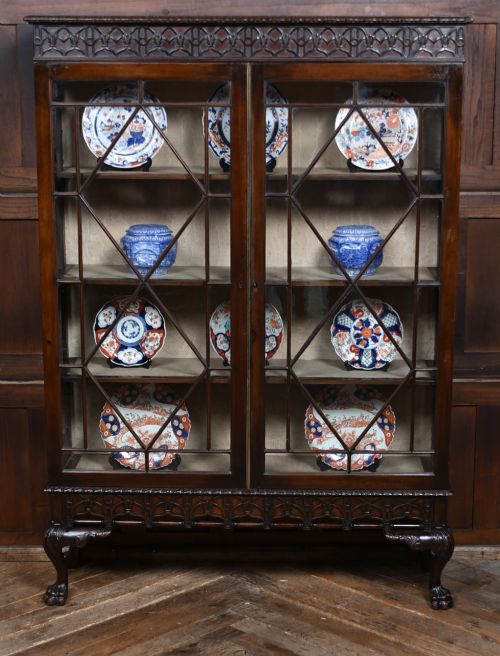
A chippendale revival display cabinet brings rich mahogany and astragal glazing together to hold silver and china.
Chippendale Revival Display Cabinet
A chippendale revival display cabinet draws on eighteenth-century design ideas while taking shape in the nineteenth and twentieth centuries. Pieces here span the Victorian and Edwardian eras up to nineteen twenty, alongside examples from eighteen ninety and nineteen ten.
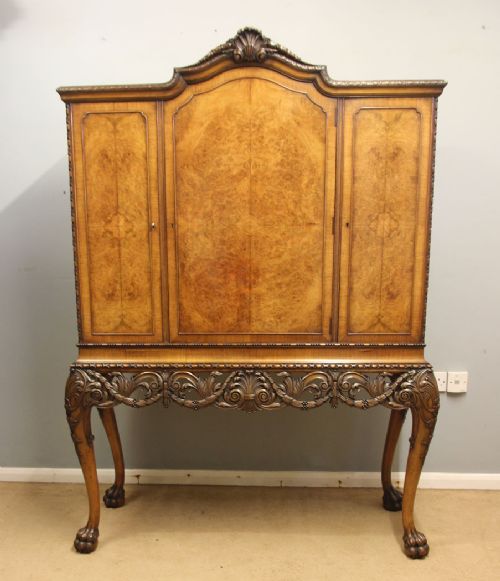
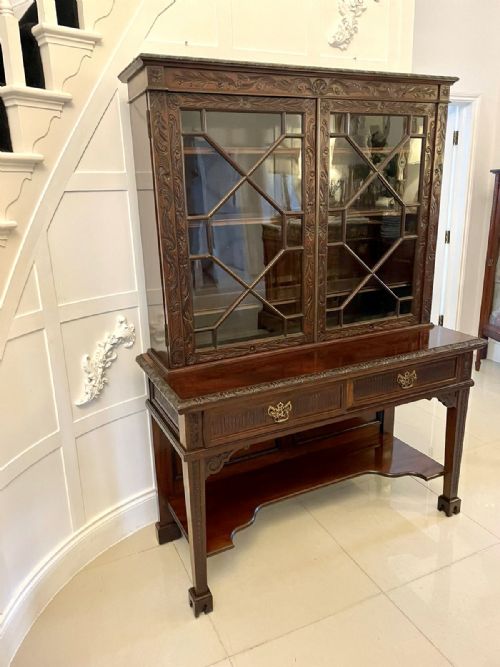
The form appears as display cabinets, bookcases, side cabinets, corner cupboards, and display tables. Many items sit on stands or feature astragal glazing to frame the glass fronts.
Shoppers most frequently meet Edwardian and late Victorian mahogany pieces carrying carved details or chinoiserie influences. Some variations stretch to burr walnut veneer or silver cabinets.
How they were made
Makers built these cabinets primarily in mahogany, often employing burr walnut veneer for surface depth. Glass panels and mirrored backs were fitted to display china, porcelain, and smaller curiosities.
Brass hardware such as handles and hinges completed the construction, while internal shelves occasionally lined with fabric or velvet provided a soft base for displayed objects.
Listings feature items dated from eighteen sixty through to nineteen twenty, spanning the Victorian and Edwardian eras.
What varies in quality
The standard of carving determines much of the distinction between pieces, moving from simple mouldings to deeply shaped cabriole legs and elaborate fretwork. Workshops known for high production values, such as Edwards & Roberts or James Winter & Sons, achieved particular crispness in their timber work.
Proportion and the selection of timber veneers also set individual examples apart. Well-chosen mahogany figures and balanced astragal bar patterns separate ordinary workshop output from finer creations.
James Winter & Sons·Edwards & Roberts·Warings
The Chippendale Revival Display Cabinet Glossary
- Astragal glazing
- Framework of wooden bars that holds small panes of glass within a cabinet door. This grid pattern defines much of the traditional aesthetic.
- Bijouterie cabinet
- A glazed display table or cabinet designed specifically for small valuable items and trinkets. These pieces often feature velvet or fabric linings.
- Breakfront
- A piece of furniture where the central section projects forward from the side sections. It creates visual depth in larger bookcases and cabinets.
- Chinoiserie
- European decorative style reflecting Chinese artistic motifs. It appears on select cabinets through lacquer work or specific carved details.
- Cabriole leg
- A furniture leg that curves out and then narrows inward resembling animal legs. It commonly terminates in a claw and foot motif.
Chippendale Revival Display Cabinet: Frequently Asked Questions
What is a chippendale revival display cabinet?
These pieces are storage and display furniture built during the Victorian and Edwardian periods using eighteenth-century stylistic inspiration. They use mahogany and glass to showcase china, books, and silver collections.
They offer a structured way to display objects while introducing traditional woodwork into a room. Most examples rely on glazed doors and sturdy wooden frames.
How do I date a chippendale revival cabinet?
Dating relies on recorded periods such as late nineteenth century, Victorian, Edwardian, or up to nineteen twenty. Construction methods and wood finishes help narrow the decade of production.
Cabinet styles shifted slightly over these decades from heavy carved Victorian forms to lighter Edwardian interpretations. Examining the interior fittings and glass type assists in placing the item correctly.
Where should I place a display cabinet?
These cabinets suit dining rooms, living spaces, or studies where china, books, or silver require protection from dust. Their glass fronts allow contents to remain visible while safely enclosed.
Placing them away from direct sunlight protects both the mahogany timber and any internal fabric linings from fading. Corner cupboards offer a practical solution for awkward wall spaces.
How do I care for mahogany and glass?
Mahogany benefits from occasional treatment with appropriate wood balms to maintain the finish of the timber. Glass panels require standard window cleaning solutions applied carefully away from the wood.
Internal velvet or fabric surfaces need gentle dusting with a soft brush. Checking brass fittings occasionally ensures doors and hinges remain properly aligned.