
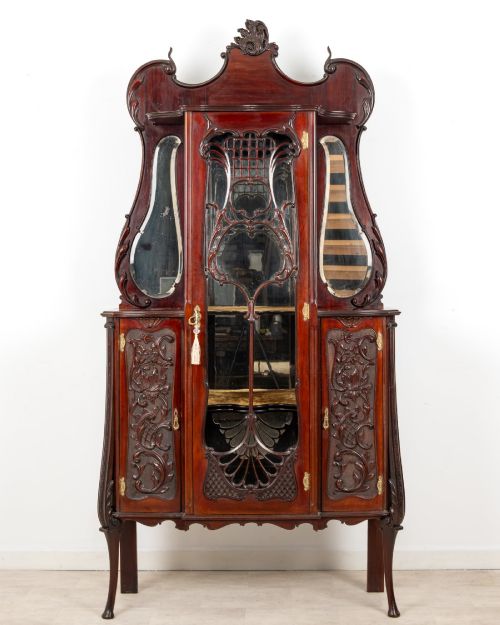
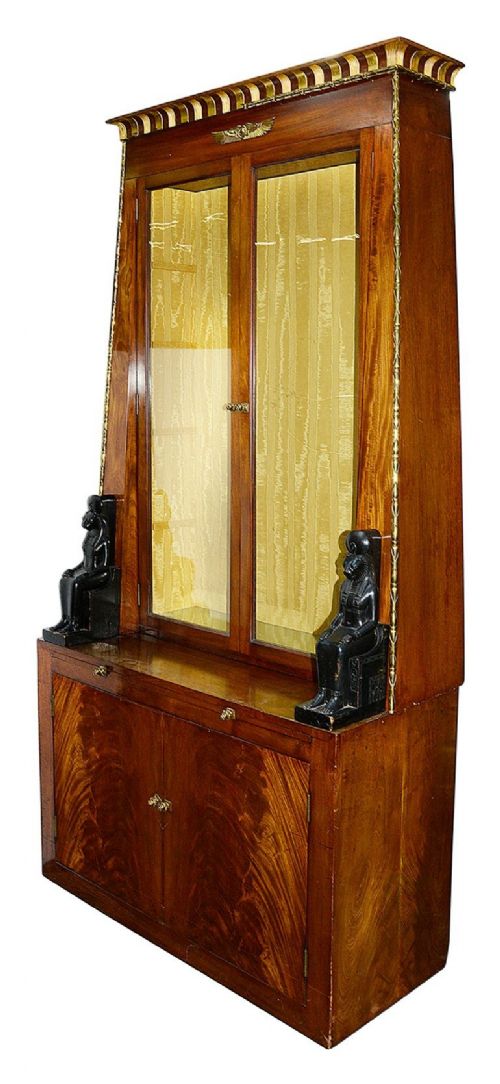
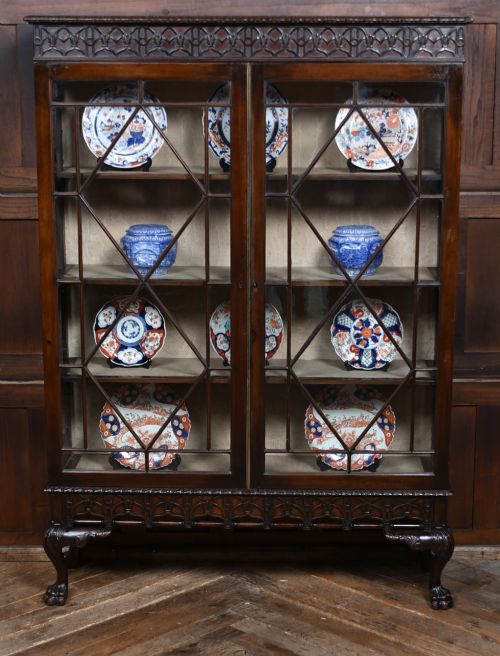

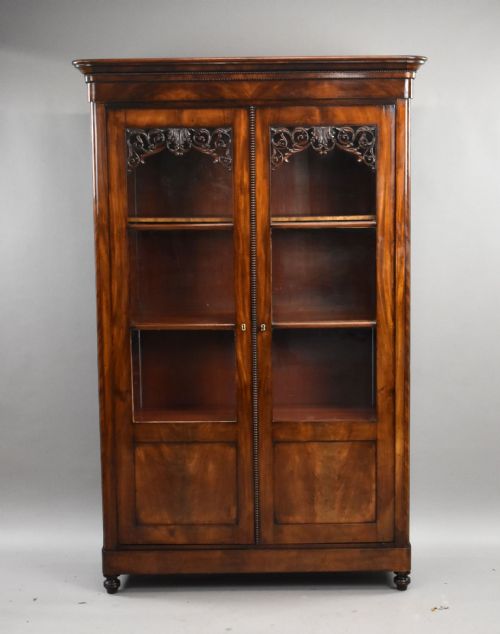


Carved Mahogany Vitrine Cabinet
A carved mahogany vitrine cabinet holds precious objects behind glass, bringing architectural proportion and rich timber tone into a room.
Carved Mahogany Vitrine Cabinet
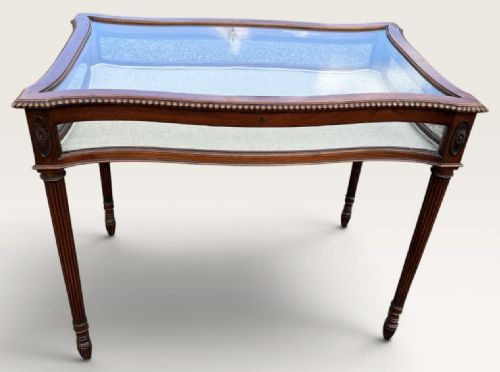
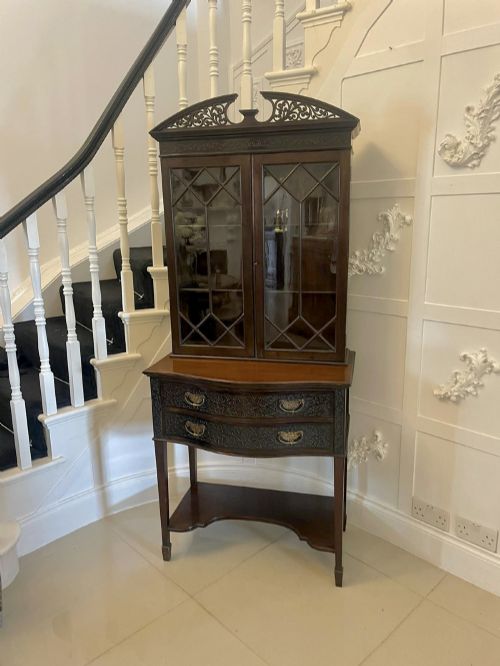
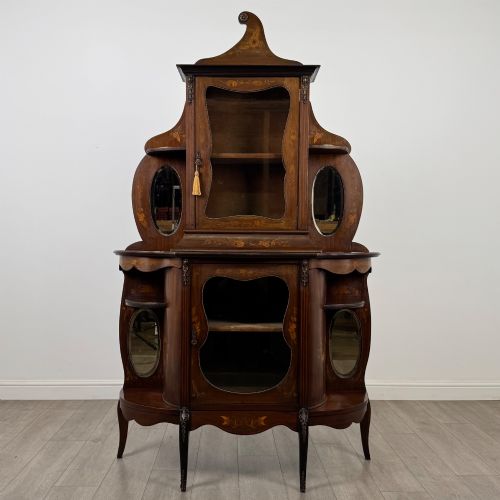
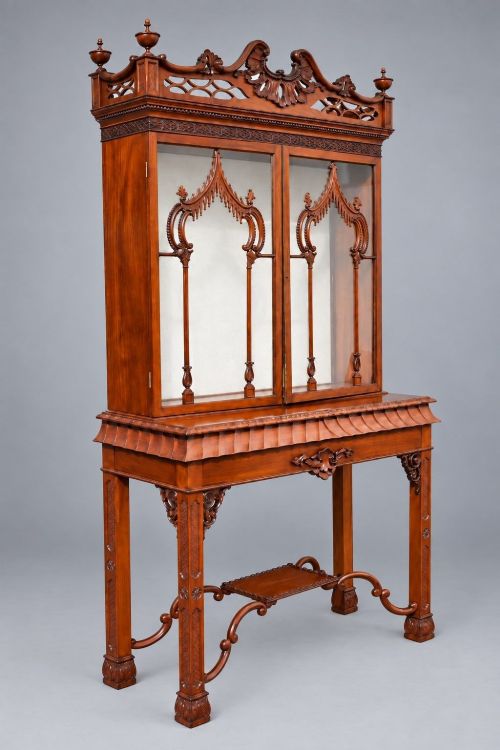
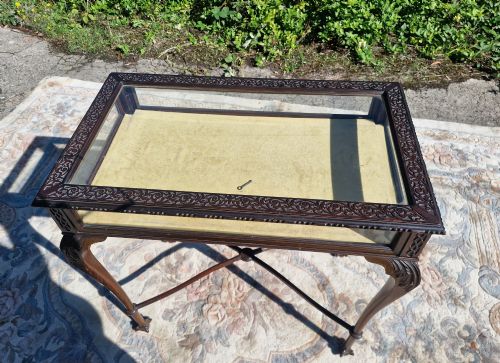
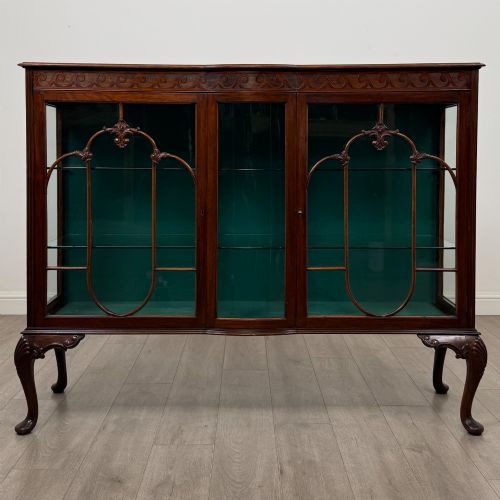
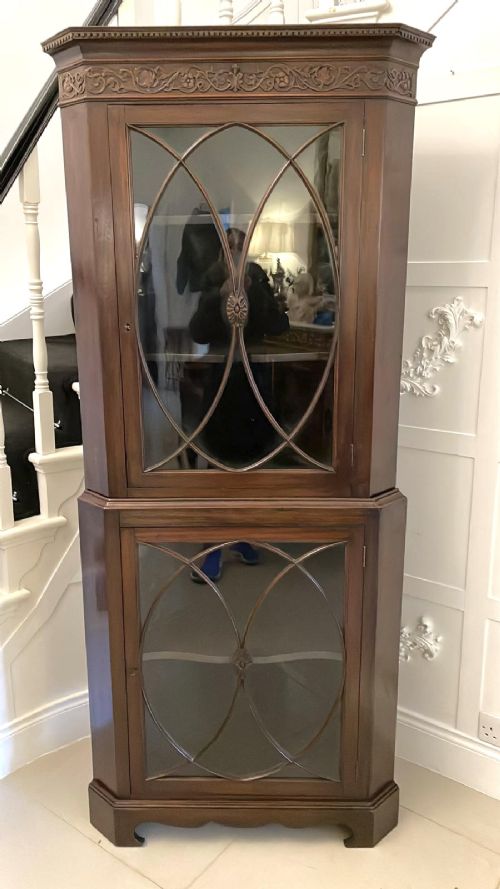
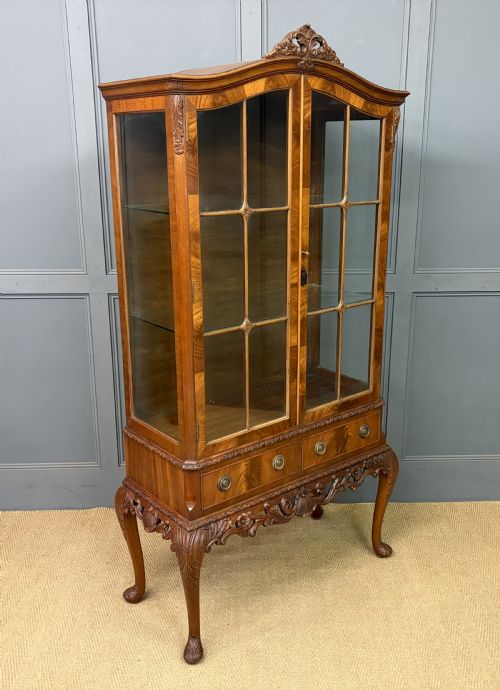
A carved mahogany vitrine cabinet takes several distinct architectural forms, appearing as tall display cabinets, corner units, low bijouterie tables, and bookcases with glazed doors. These pieces emerge across the Victorian and Edwardian eras, alongside items bearing dates from the late nineteenth century up to the 1930s.
Makers draw upon a wide vocabulary of historical revivals and design movements. Cabinets appear in Chippendale Revival, Queen Anne style, Neoclassical, Art Nouveau, and French Chateau designs, reflecting the varied tastes of their original commissioners.
Materials and construction
Makers construct these cabinets primarily using solid and veneered mahogany, often pairing the dense timber with glass panels, mirrored backs, and brass hardware. Certain examples incorporate satinwood or walnut for contrast, while interior display surfaces frequently feature fabric or velvet lining.
Glazing techniques range from simple rectangular panes to complex astragal bars, bow fronts, and serpentine shapes. Carved ornamentation, marquetry inlay, and chinoiserie details are applied by hand to define the distinct stylistic periods.
Several cabinets double as cocktail chests for hidden evening hospitality.
Distinctions in execution
Quality rests upon the precision of the cabinetmaker's joinery and the depth of the carved detailing on the mahogany frame. Cabinets with crisply moulded astragal bars and well-fitted glazed doors demonstrate superior workshop standards.
The choice of secondary woods and the sophistication of decorative elements, such as intricate marquetry or cast brass mounts, separate standard production pieces from those bearing the marks of prominent cabinet makers.
Maple & Co.·Edwards & Roberts·Waring & Gillow·Warings·C Hindley & Sons·Epstein
The Carved Mahogany Vitrine Cabinet Glossary
- Vitrine
- A glass-fronted display cabinet designed for showing porcelain, silver, or curiosities. The term derives from the French word for glass.
- Bijouterie table
- A low display table with a glazed top and sides, created specifically for small ornaments and jewellery. These pieces often stand on slender legs.
- Astragal glazed
- A window or door frame divided into smaller panes by wooden glazing bars. These bars can form intricate geometric or curved patterns.
- Chinoiserie
- European decorative style reflecting Chinese artistic influences, frequently seen in lacquerwork and carved motifs. This aesthetic appeared across various revival periods.
- Marquetry
- Decorative patterns formed by fitting together thin veneers of different coloured woods. Craftsmen apply this technique to cabinet doors and friezes.
Carved Mahogany Vitrine Cabinet: Frequently Asked Questions
How were vitrine cabinets used?
These cabinets served as formal display spaces in Victorian and Edwardian drawing rooms. Families used them to exhibit imported ceramics, silver collections, and travel souvenirs.
The glass doors kept dust away from delicate items while allowing guests to admire the collection without handling the objects.
How do I date a mahogany cabinet?
Dating relies on observing construction methods, timber characteristics, and stylistic revival cues. Victorian pieces often display heavier proportions and rich carved mahogany, while Edwardian examples can feature lighter inlaid satinwood.
Maker signatures or stamps found inside drawers provide more precise chronological markers.
Where should I place a corner cabinet?
A corner cabinet fits directly into unused room angles, making them practical for smaller spaces. They draw the eye upward and utilise vertical wall area effectively.
Pairing a corner vitrine with ambient lighting enhances the visibility of items stored within the glazed upper section.
What is a bijouterie table used for?
Bijouterie tables act as waist-height display cases for small flat items, pocket watches, and medals. The hinged glass top allows the owner to open the table and rearrange the contents.
They function well in sitting rooms as central display pieces rather than against walls.