

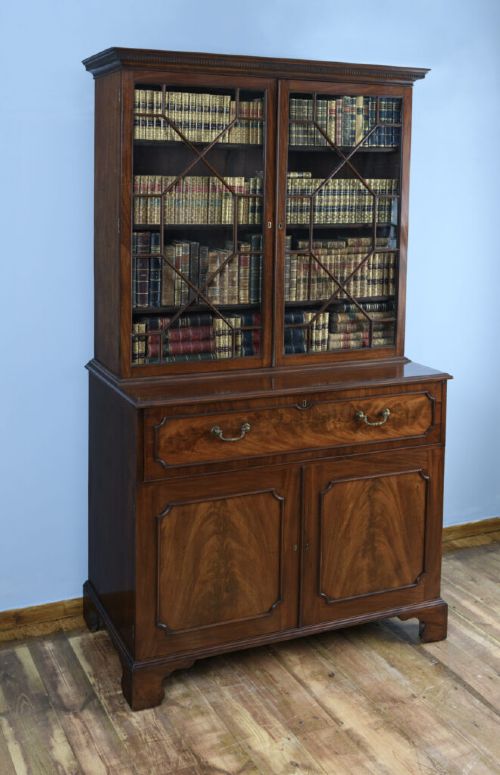
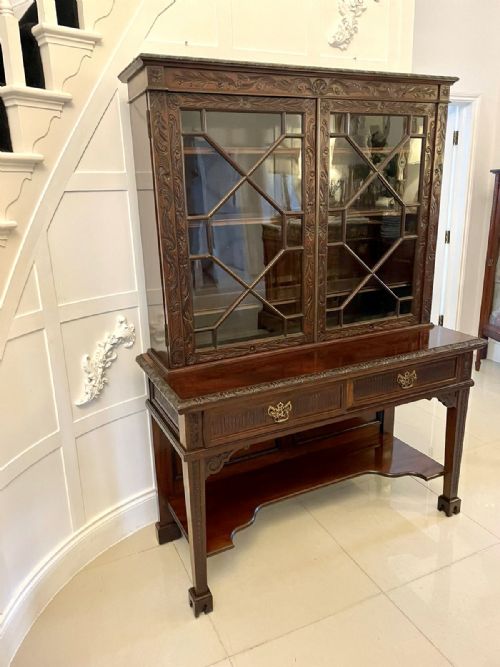
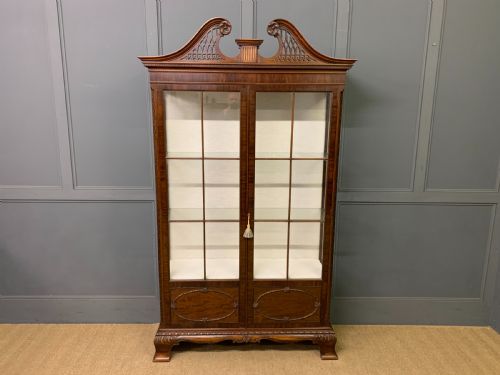
Chippendale Glazed Display Cabinet
These pieces of a chippendale glazed display cabinet combine fine timber and glass to showcase prized collections with architectural precision.
Chippendale Glazed Display Cabinet
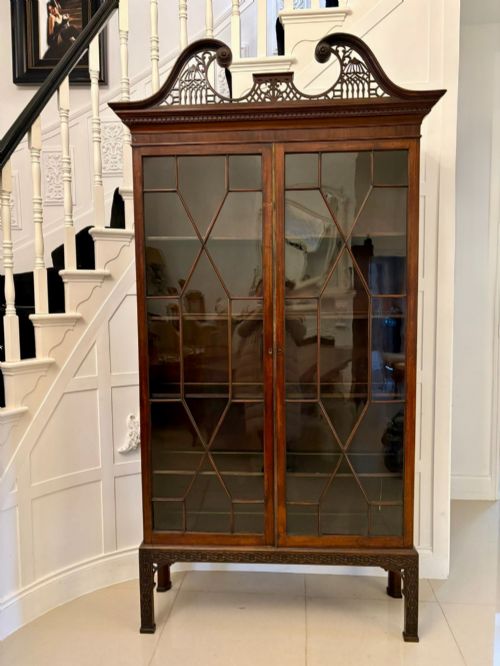
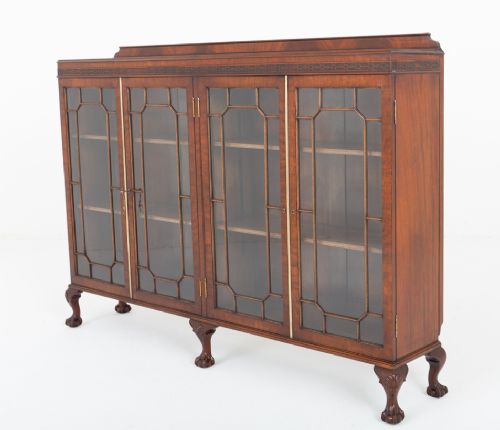
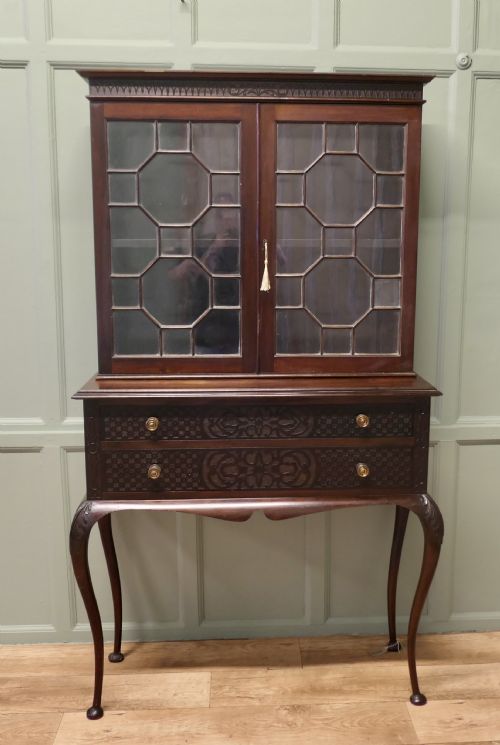
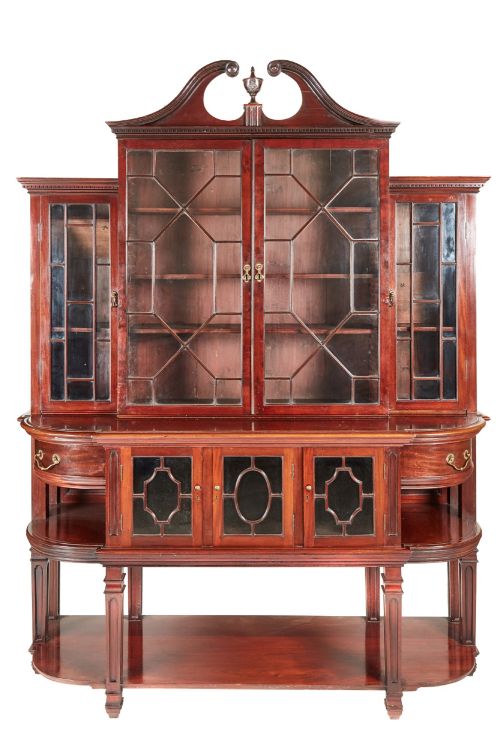
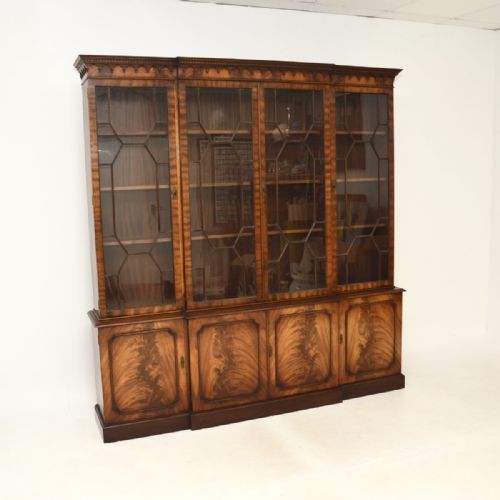
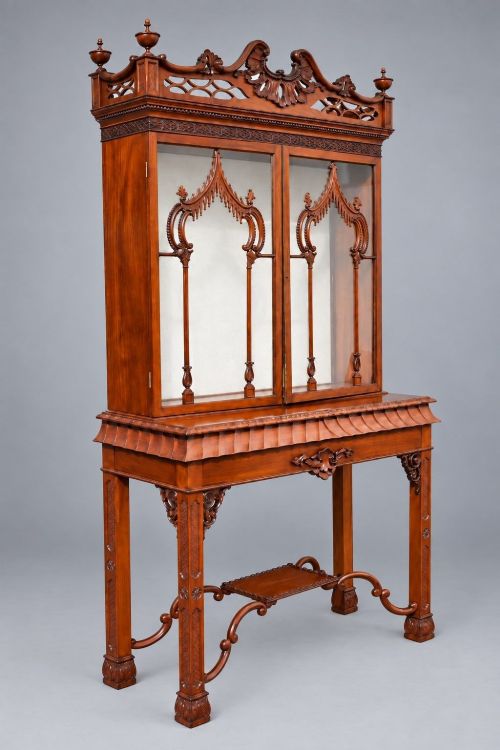
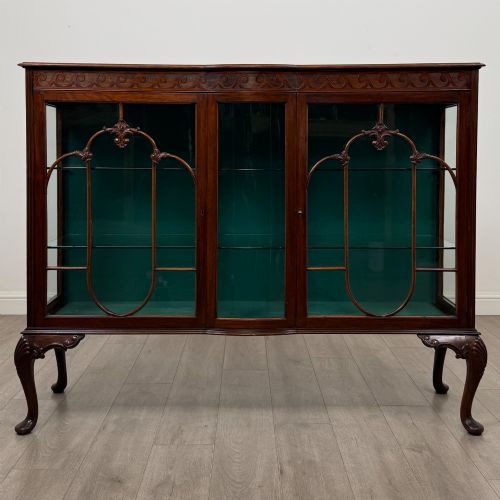
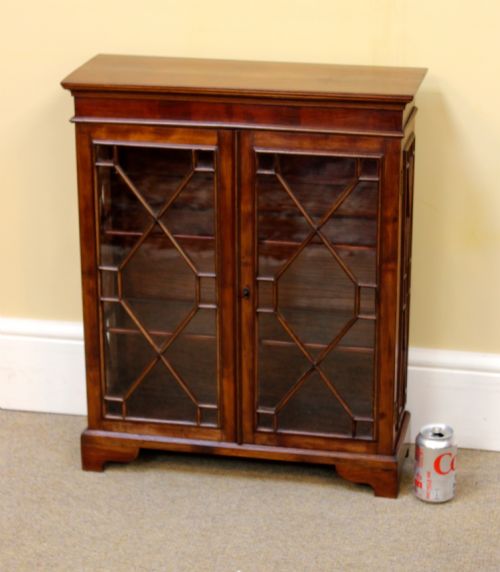
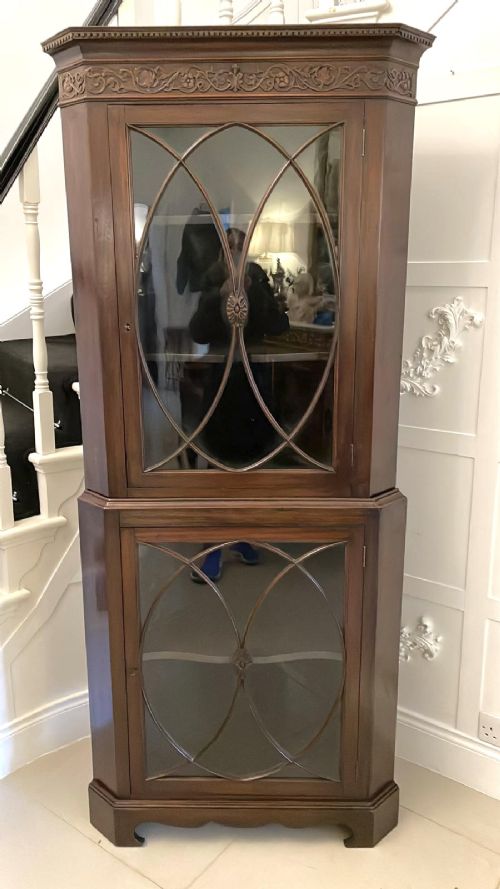
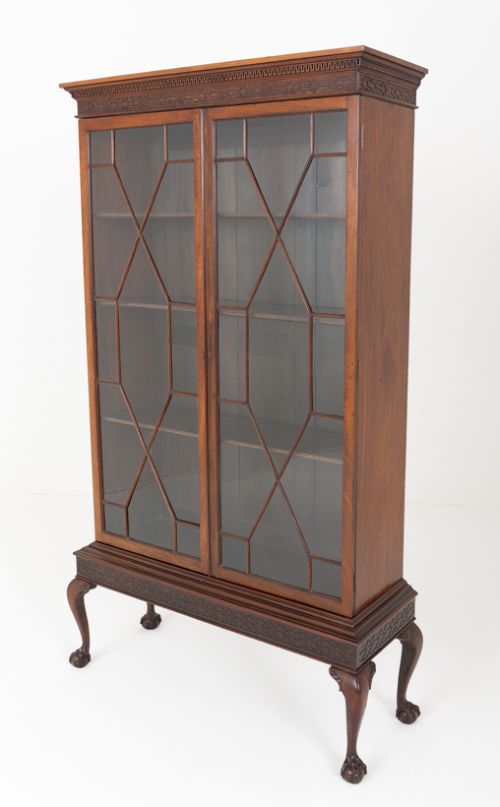
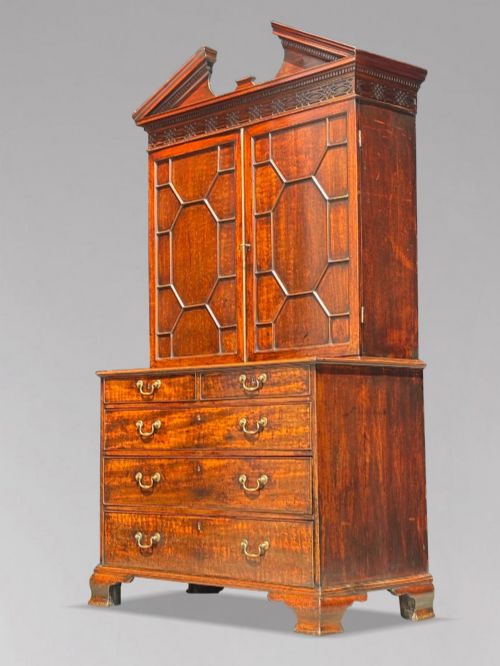
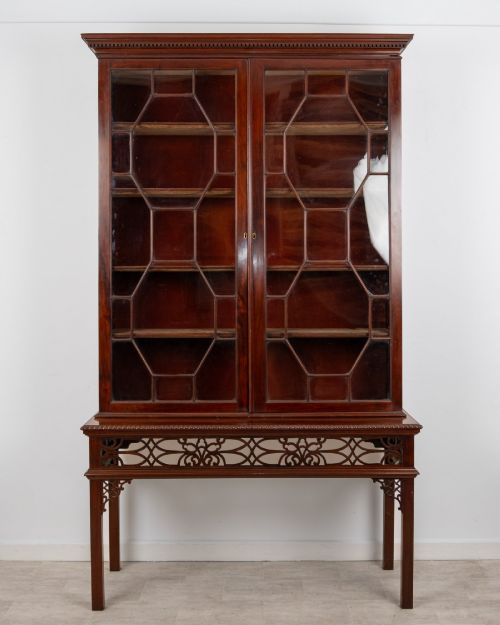
A chippendale glazed display cabinet takes several architectural forms, ranging from tall breakfront bookcases and corner units to compact pieces on stands and bijouterie tables. These items span the eighteenth, nineteenth, and twentieth centuries, produced during the original Georgian period and subsequent revival eras.
The version most commonly encountered on this page is the later revival piece, often dating from the Victorian and Edwardian periods or the early twentieth century. Makers of these later iterations drew heavily on Chinese Chippendale and standard Chippendale vocabularies, adapting them into display cabinets and side cabinets.
The underlying search phrase encompasses both dedicated display furniture and hybrid bookcase designs featuring glass doors. Buyers encounter formats suited for grand libraries as well as smaller domestic interiors.
Materials and Technique
Construction relies primarily on solid and veneered mahogany, frequently complemented by satinwood, marquetry inlay, and brass hardware. Cabinetmakers built these pieces to house books and delicate objects securely behind transparent barriers.
Glass panes are held within intricate timber frameworks known as astragals or astral glazing bars, defining the geometric or Gothic-inspired patterns across the front. Carved details such as blind fretwork and intricate glazing bars demonstrate the technical demands placed on the workshop.
Internal linings often incorporate fabric or velvet surfaces to cushion displayed items, while mirrors provide depth at the rear of the cabinet.
The inventory spans the Georgian period through to the Edwardian era and the early twentieth century.
Judging Quality
Quality rests upon the crispness of the timber carving and the architectural balance of the overall proportion. Pieces from the eighteenth century display hand-cut joinery and dense, well-figured timber, whereas revival pieces rely on the precision of the cabinetmaker's interpretation.
The complexity of the glazing bars dictates much of the visual merit. Finer cabinets feature slender, hand-assembled astragals that create delicate geometric divisions rather than heavy, utilitarian frames.
Thomas Chippendale·James Winter And Sons·Edwards And Roberts·Hille
The Chippendale Glazed Display Cabinet Glossary
- Astragal
- Moulding profile used to hold glass panes within a door or window frame. Astragal glazing bars create the decorative lattice work typical of these cabinets.
- Breakfront
- A cabinet front where the central section projects forward from the flanking wings. This architectural arrangement creates depth and shadow.
- Bijouterie cabinet
- A specialised display case with a glazed top or upper section designed specifically for smaller valuables and curiosities. They often stand on slender legs.
- Marquetry
- Decorative veneer work created by fitting small pieces of various woods and materials into a design. It adds pictorial or geometric enrichment to the surface.
- Chinoiserie
- Decorative style reflecting Chinese artistic motifs, popular in Chinese Chippendale furniture. It incorporates fretwork and pagoda-like silhouettes.
Chippendale Glazed Display Cabinet: Frequently Asked Questions
What is a chippendale glazed display cabinet?
A chippendale glazed display cabinet is a piece of furniture designed with glass doors and timber framing, drawing upon eighteenth-century design principles popularized by Thomas Chippendale and later revival movements.
These pieces serve to store and exhibit porcelain, books, and decorative objects while protecting them from dust.
How do I spot a revival piece?
Revival pieces generally date from the nineteenth and twentieth centuries, utilising machine-assisted woodworking techniques and standardised timber cuts that differ from eighteenth-century construction.
Examining the interior linings, secondary woods, and screw types helps distinguish an authentic Georgian period cabinet from a later Edwardian or Victorian interpretation.
Where should I place this cabinet?
These cabinets suit drawing rooms, dining rooms, and studies where ambient light can pass through the glass doors to illuminate the contents. Direct sunlight should be avoided to protect both the timber and any fabric linings inside.
Due to their height and weight, particularly breakfront forms, they require stable wall placement and level flooring.
How are the glass panels secured?
Individual glass panes are held in place within the door frame by slender timber glazing bars known as astragals, secured with putty or small pins.
These delicate wooden lattices require careful cleaning and maintenance to prevent the timber from drying out or splitting around the glass joints.