


Chippendale Fold Over Table
A chippendale fold over table provides a dual-purpose surface for social play and tea, evolving from Georgian parlours into later revival interiors.
Chippendale Fold Over Table
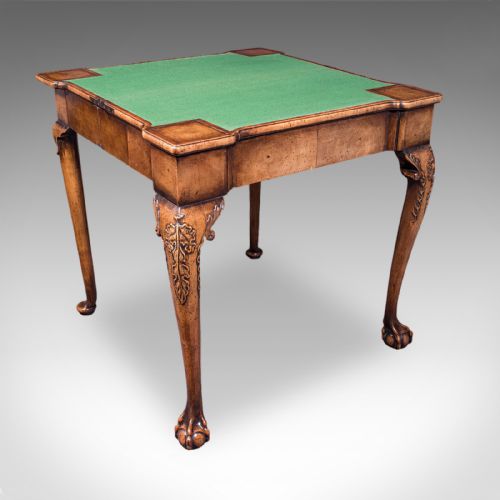
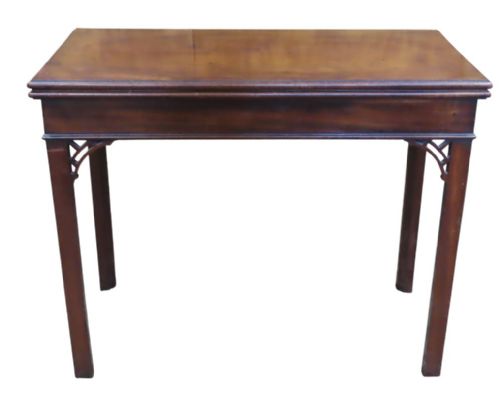
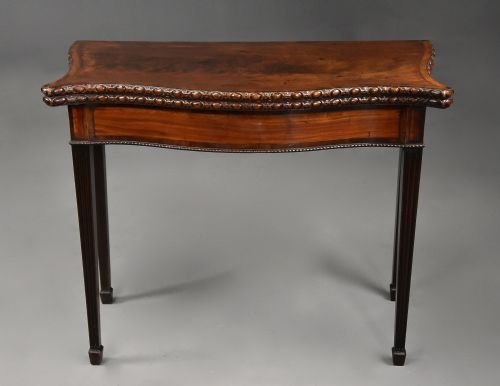
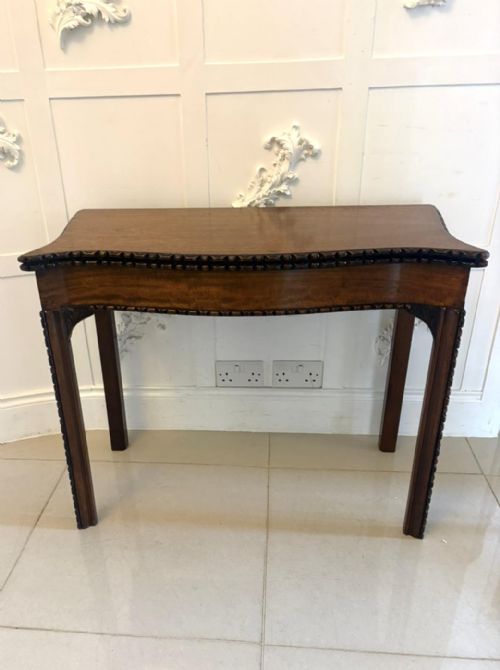
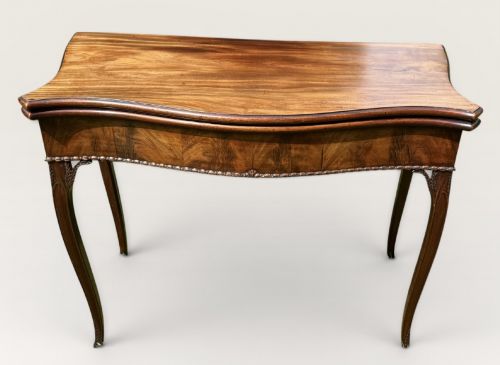
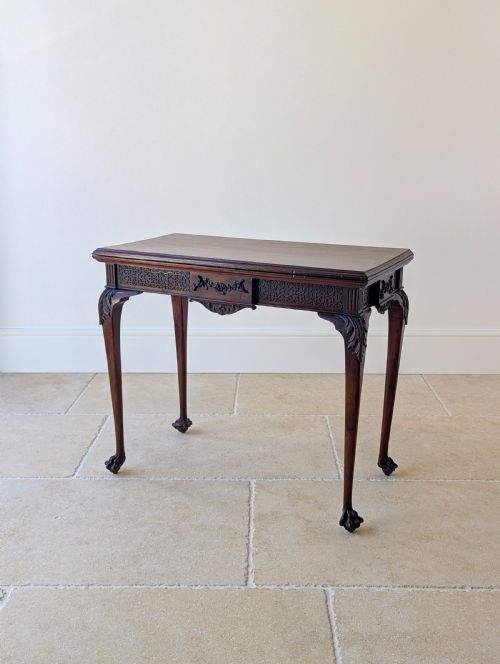
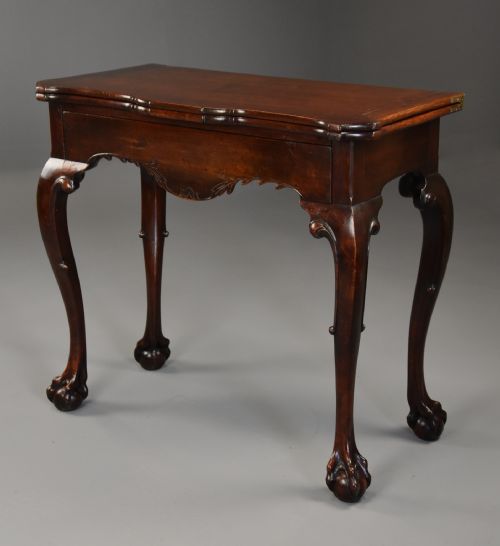
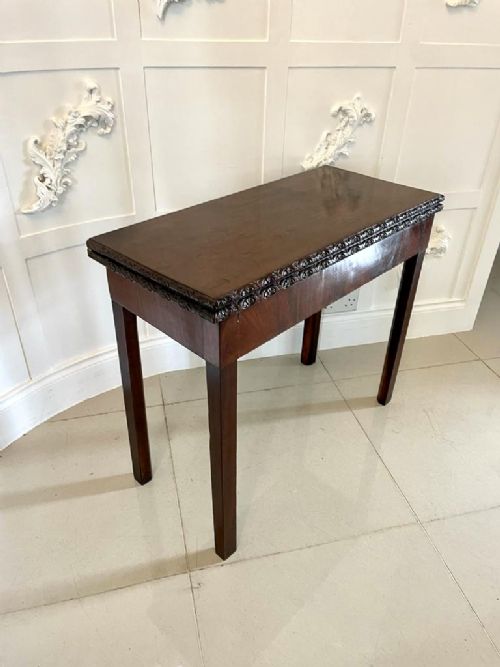
A chippendale fold over table serves as a card table, games table, or tea table, adapting its top surface through a hinged leaf supported by swinging back legs or a concertina action frame. These pieces appear predominantly from the 18th century, particularly the Georgian and George III periods, alongside later 19th-century Chippendale Revival and Edwardian interpretations.
Materials and Construction
Makers constructed these tables primarily from solid and veneered mahogany, alongside walnut, burr walnut, and occasional solid walnut variants. Timber selection dictated the weight and stability of the frame, particularly when supporting the heavy cantilevered weight of an extended fold-over top.
Internal joinery relies on sophisticated mechanisms such as concertina actions that expand the framework evenly when the leaf opens. Surfaces receive traditional finishes incorporating baize linings for gaming interiors and polished wood exteriors showing deep natural patination.
Chippendale Fold Over Table Retail Price Guide 2026
Typical asking prices for chippendale fold over table among the pieces listed under this phrase on Sellingantiques today, from the lower quarter to the upper quarter. They describe what is for sale here now, not the wider market.
Listings feature mahogany, walnut, and burr walnut timbers across Georgian, Victorian, and Edwardian periods.
Quality and Execution
The distinction between ordinary and exceptional tables rests in the depth and sharpness of hand-carved ornamentation, such as acanthus leaves, scrollwork, and gadrooning along the frieze and legs. Superior examples display precise joinery in the concertina frame, ensuring the extended leaf sits entirely flat without sagging at the hinge.
Original surface preservation heavily influences the standing of a piece, with undisturbed patination and minimal timber replacement commanding greater regard. The integration of high-grade materials like figured mahogany or solid walnut elevates the execution of the design.
Edwards and Roberts·Wylie and Lochheed
The Chippendale Fold Over Table Glossary
- Concertina action
- An expandable frame structure that opens with the hinged leaf to support all four corners equally. This mechanism requires complex joinery hidden within the table apron.
- Serpentine
- A shaped front edge curving outward at the centre and inward toward the ends. This contour demands meticulous hand-shaping of solid timber or thick veneers.
- Baize
- A coarse woollen fabric used to line the playing surface of card and games tables. It provides a soft, durable mat for dealing cards and placing counters.
- Patination
- The surface sheen and colour acquired by wood through age, handling, and light exposure over generations. Natural patination indicates unstripped historical finishes.
Chippendale Fold Over Table: Frequently Asked Questions
What is a concertina action?
A concertina action is an expanding frame mechanism that pulls outward when the top leaf unfolds, providing structural support beneath all four corners of the opened table.
This engineering allows the rear legs to move outward synchronously with the folding leaf, keeping the surface stable during card games.
How were these tables used?
These tables functioned primarily as dual-purpose furniture for the home parlour, serving as compact console or side tables when closed against a wall.
When unfolded, they provided a stable surface for evening pastimes such as card games, board games, or serving afternoon tea.
How do I identify a revival piece?
Chippendale Revival pieces typically date from the late 19th century or the Edwardian era, utilising machine-assisted woodworking alongside traditional hand-carving techniques.
They emulate 18th-century proportions and stylistic motifs but display distinct secondary woods and modern finishing methods characteristic of later manufacturing.
Why do some tops have baize?
Baize fabric was installed inside card tables to cushion the impact of dealing cards and prevent wooden surfaces from scratching during games.
This woollen lining also provided friction to keep cards and counters from sliding around during play.