

Chippendale Chest of Drawers
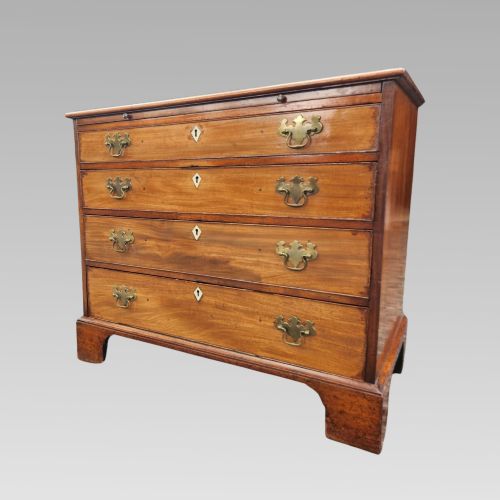
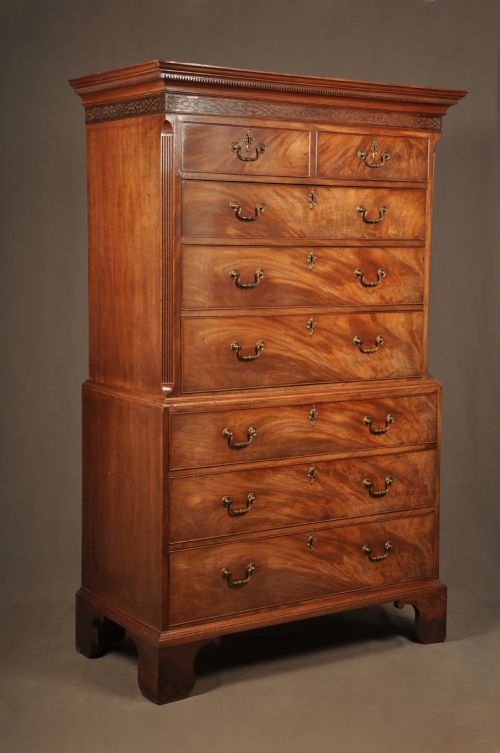
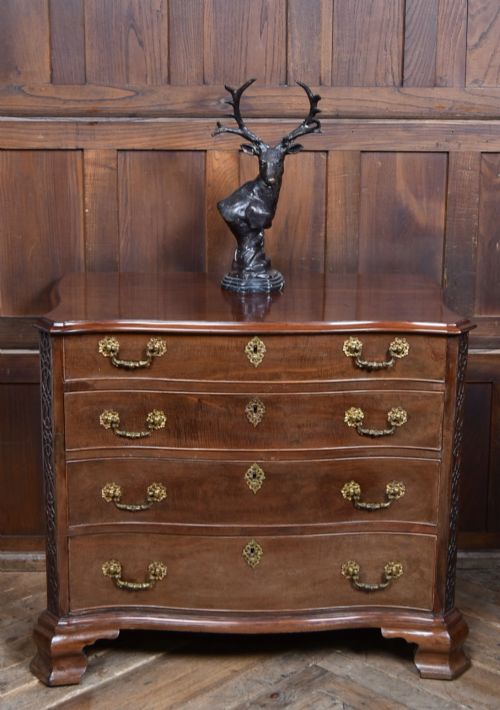
A chippendale chest of drawers brings substantial 18th-century cabinet-making into a room through carved detail and figured timber.
Chippendale Chest of Drawers
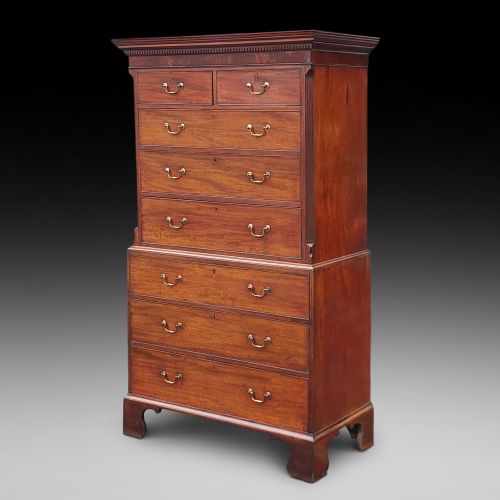
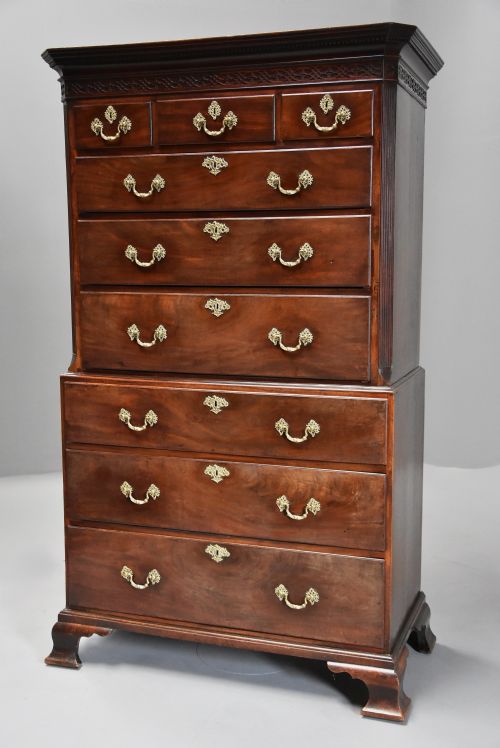
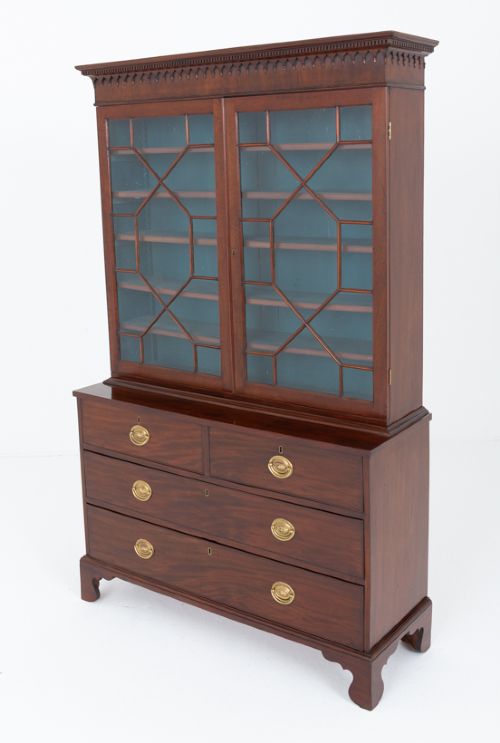
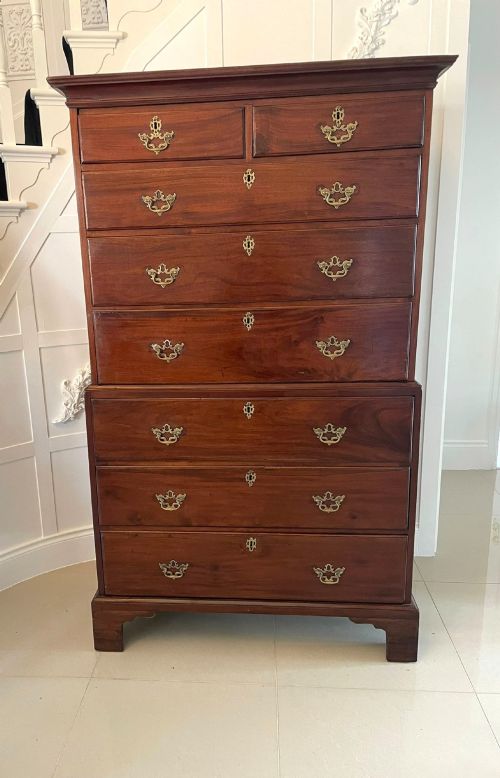
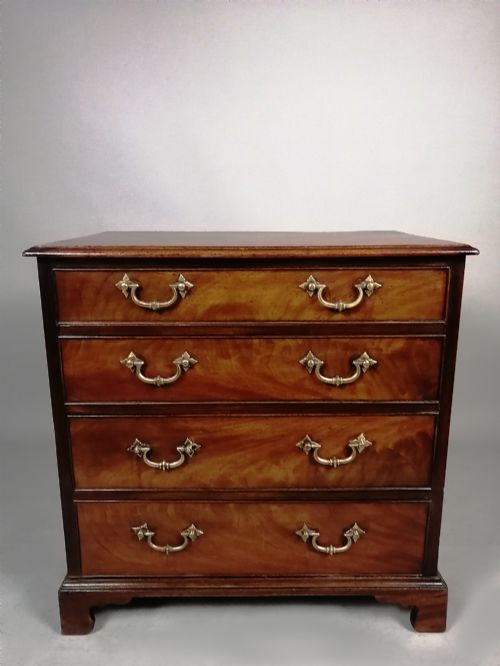
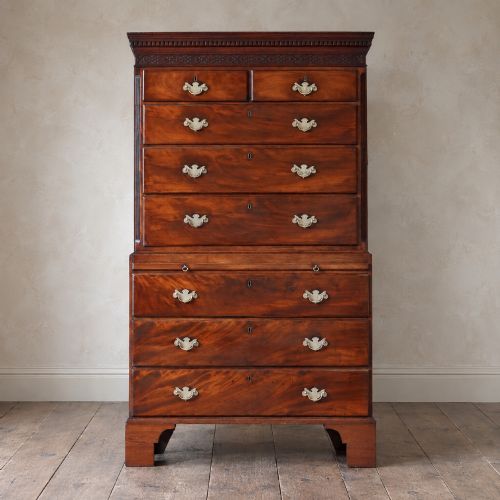
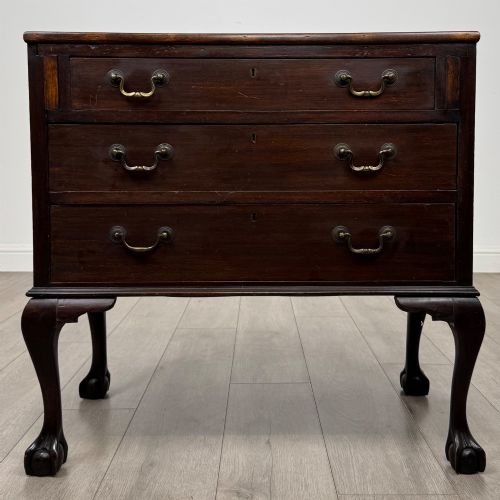
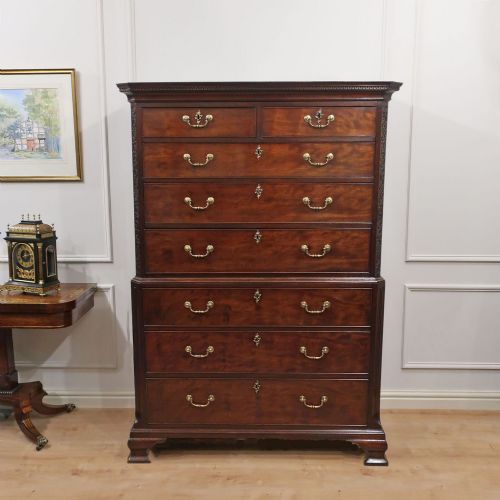
A chippendale chest of drawers is a storage piece constructed during the Georgian period or recreated in later revival eras. Buyers encounter standard chests, tallboys, and chest-on-chest forms originating from 18th-century workshops or later revival periods.
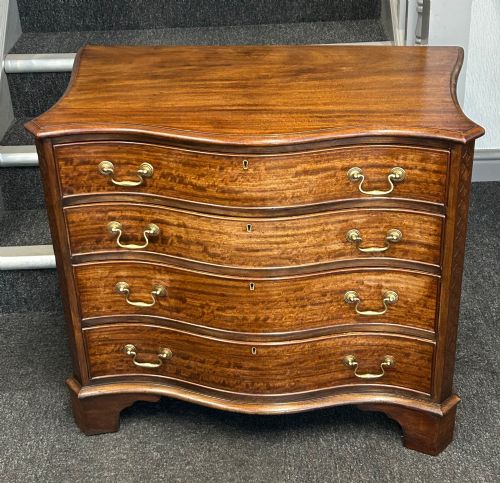
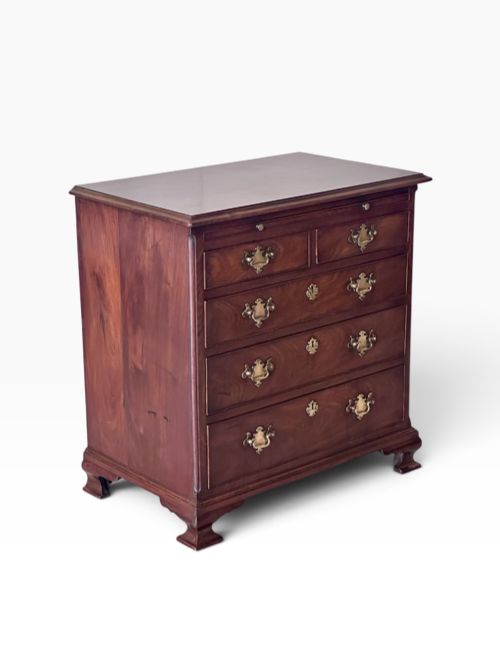
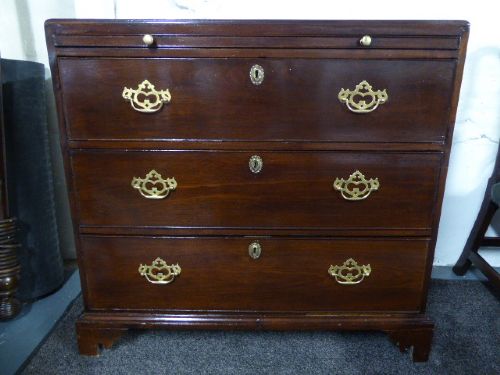
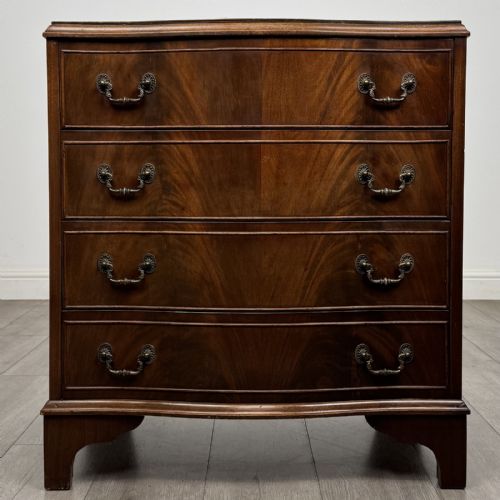
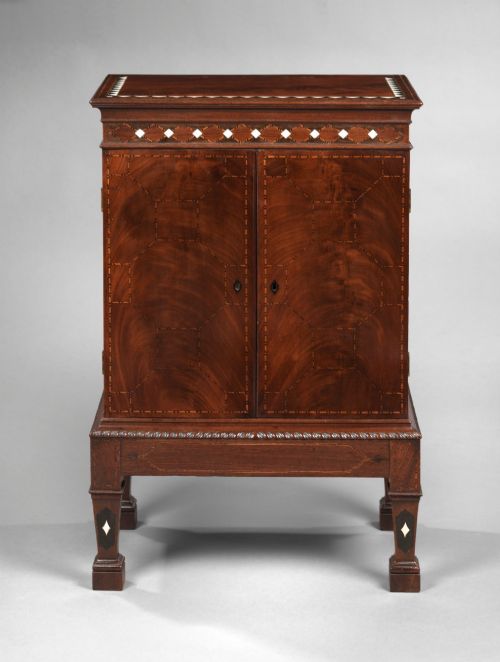
The form frequently incorporates serpentine fronts, brushing slides, and fitted writing compartments. Mahogany is the predominant wood, accompanied by related forms such as collector cabinets and bachelors chests.
How they were made
Cabinet-makers utilised dense timbers like Cuban mahogany alongside figured mahogany and elm, supported by brass hardware and occasionally bone inlay. Construction relied on traditional joinery methods to build sturdy carcass frames and panelled drawer linings.
Surfaces received careful finishing to highlight the grain pattern, particularly on serpentine and curved drawer fronts. Secondary woods were selected for internal drawer construction while primary mahogany formed the visible exterior.
Chippendale Chest of Drawers Retail Price Guide 2026
Typical asking prices for chippendale chest of drawers among the pieces listed under this phrase on Sellingantiques today, from the lower quarter to the upper quarter. They describe what is for sale here now, not the wider market.
Several chests hide secret compartments for confidential documents, proving that Georgian furniture designers enjoyed a touch of espionage.
What varies in quality
The crispness of carved mouldings and the retention of original brass handles distinguish period examples from later revivals. Proportions also dictate standing, with smaller scale and tallboy variations showing distinct joinery skill.

Thomas Chippendale
The Chippendale Chest of Drawers Glossary
- Serpentine
- A front profile curving outward at the centre and inward at the sides in an undulating line. This shape requires advanced woodworking skill to execute properly.
- Brushing slide
- A pull-out shelf positioned above the top drawers used for writing or brushing clothes. It conceals neatly when not in use.
- Chest on chest
- A tall storage unit comprising a lower chest section topped by a slightly smaller upper chest. Also known as a tallboy, it maximises vertical storage space.
- Bachelors chest
- A compact low chest of drawers often equipped with a folding top or sliding shelf. These pieces served domestic dressing or writing needs in smaller chambers.
- Patina
- The surface sheen and colour depth developed by wood through age and use over decades. Original patination is valued by collectors for its warmth.
Chippendale Chest of Drawers: Frequently Asked Questions
What is a chippendale chest of drawers?
A chippendale chest of drawers is a wooden storage piece following the design principles published in the 18th century. These units feature distinctive carved bracket feet, shaped drawer fronts, and solid timber construction.
Such pieces range from authentic 18th-century Georgian originals to Edwardian and later revival interpretations. They serve as functional bedroom or living space furniture with significant decorative presence.
How do I identify a period piece?
Period identification relies on examining the timber species, internal drawer construction, and wear patterns. Eighteenth-century examples typically employ Cuban mahogany and hand-cut dovetails.
Revival pieces from the Edwardian era or the 1920s often use standardised machine-cut joinery and different secondary woods. Checking the hardware fixings and the structural patina helps clarify the age of the item.
Where were these chests used?
These chests were originally placed in principal bedrooms, dressing rooms, and formal parlours of Georgian homes. Their primary function was storing garments, linens, and personal valuables.
In modern interiors, they function effectively in hallways, dining rooms, and sitting rooms as statement storage surfaces. Their sturdy construction suits daily domestic use alongside display purposes.
How do I care for mahogany furniture?
Mahogany furniture requires stable room temperatures and protection from direct sunlight to prevent timber drying and fading. Regular dusting with a soft, dry cloth preserves the polished surface.
Application of appropriate wax polish maintains the wood moisture and enhances the natural grain depth. Avoiding excessive moisture keeps the historical glue and joints secure.