
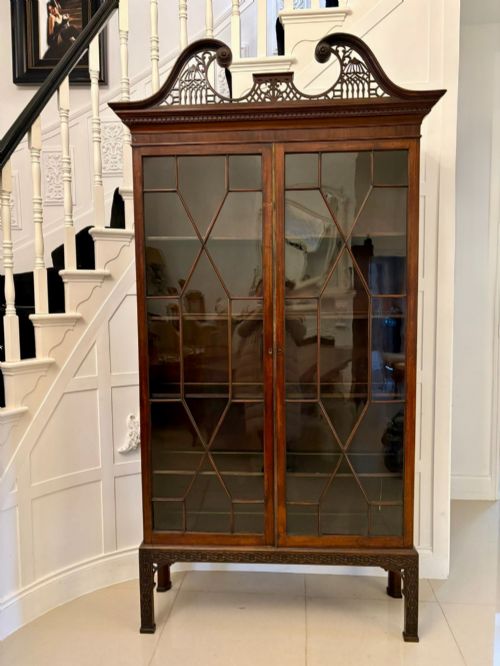
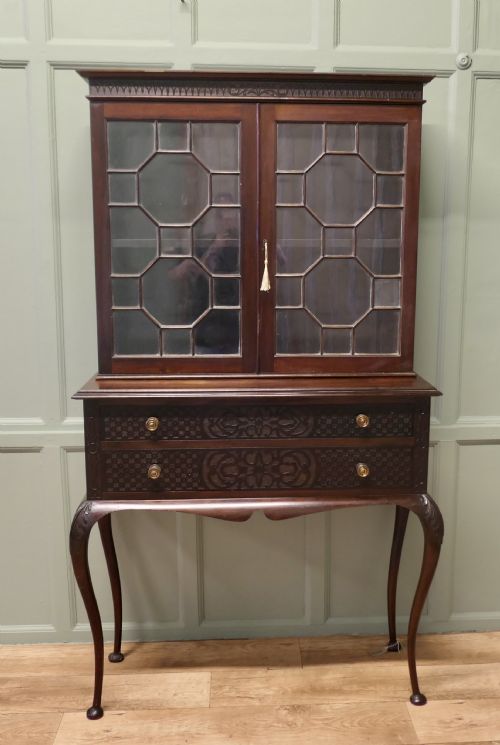
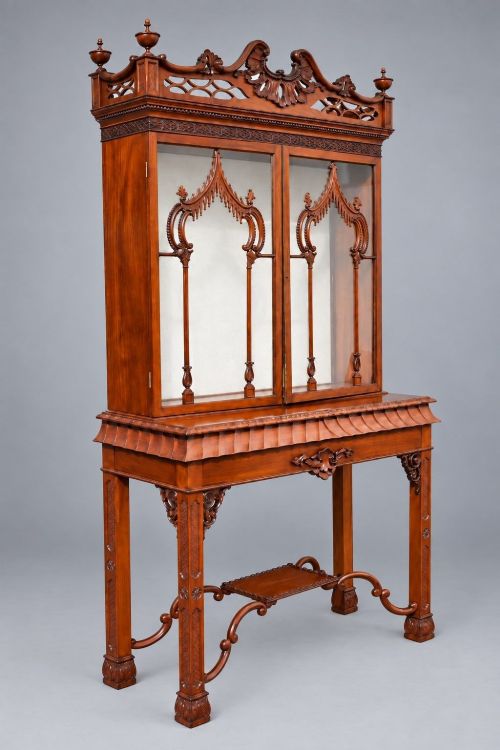

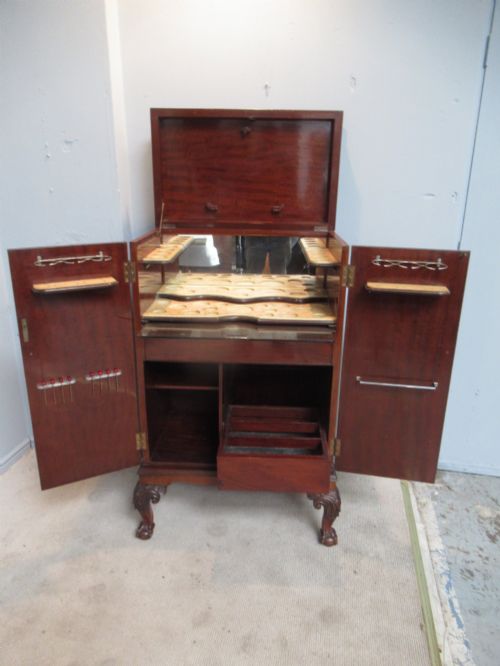
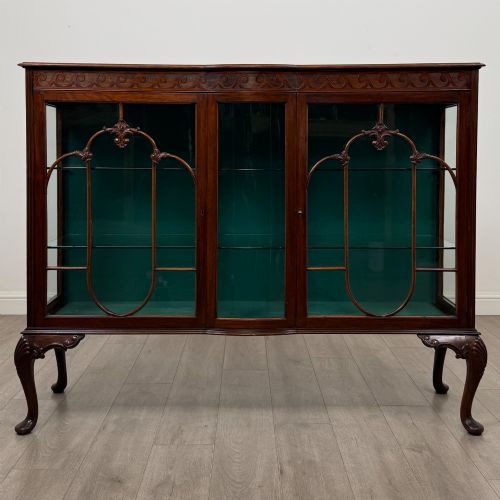
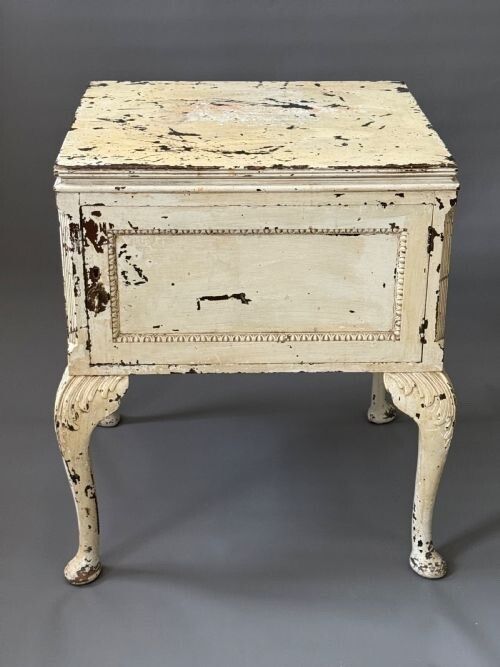
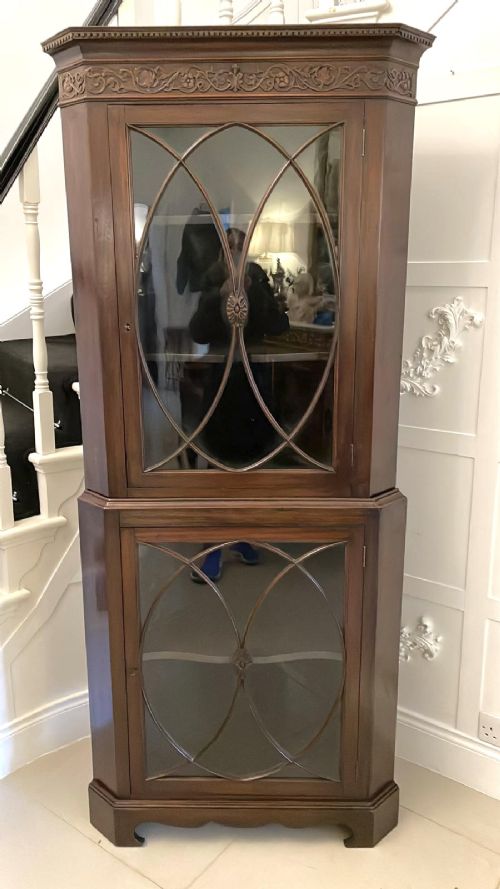
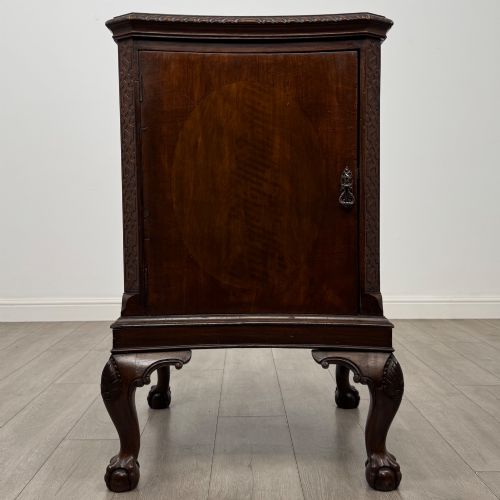

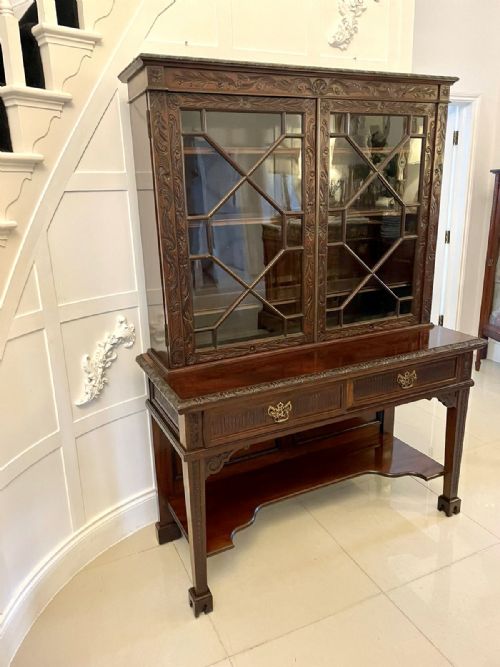
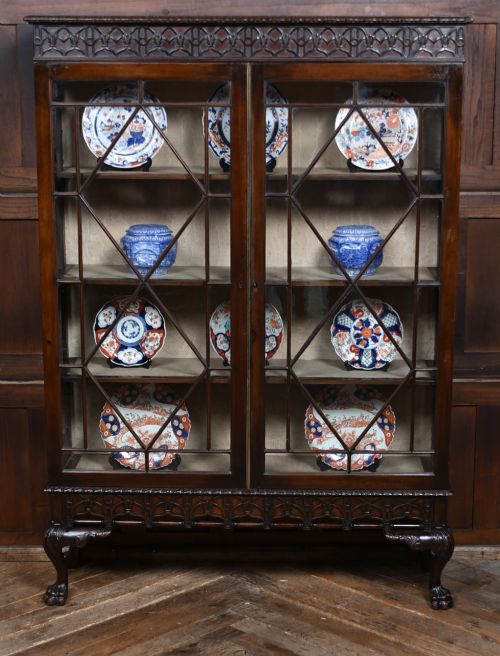
Chippendale Carved Mahogany Cabinet
A chippendale carved mahogany cabinet brings architectural line and figured timber to a room, ranging from Georgian originals to later revival pieces.
Chippendale Carved Mahogany Cabinet
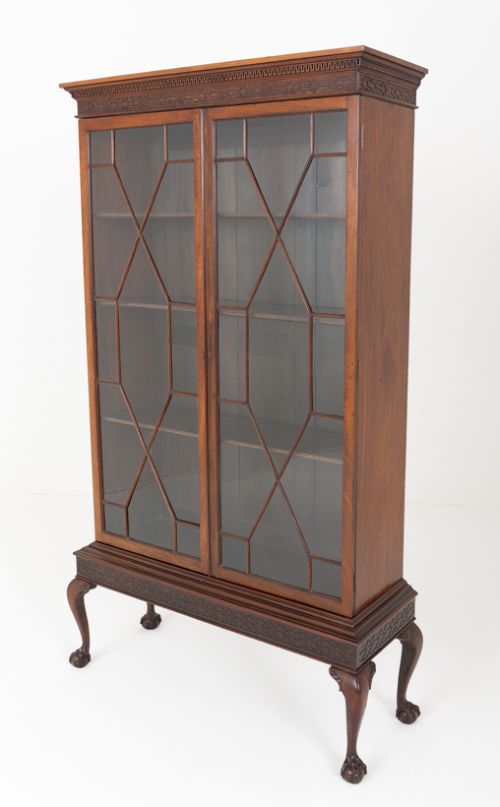
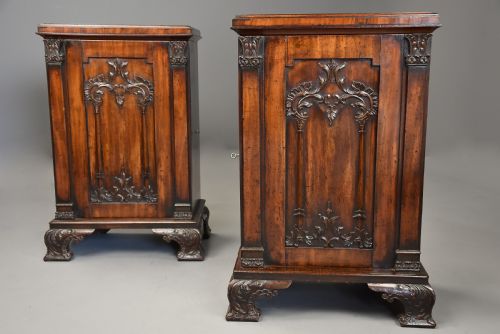
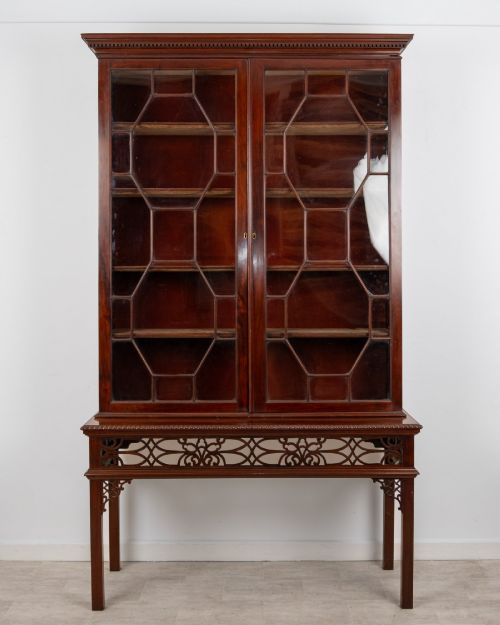
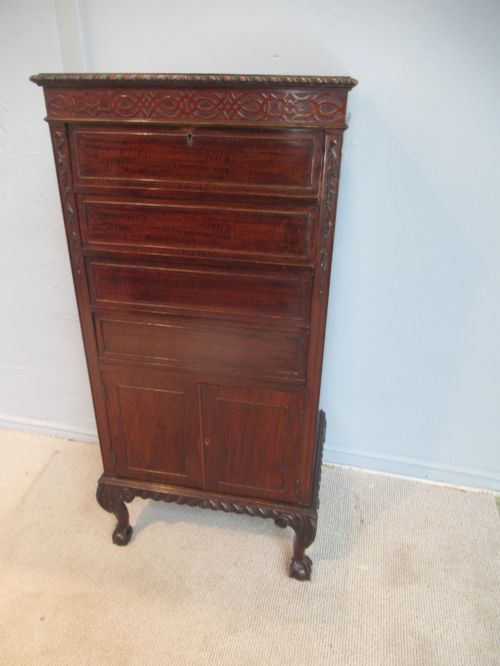
A chippendale carved mahogany cabinet encompasses a diverse group of storage and display furniture, taking the form of bookcases, display cabinets, linen presses, corner cabinets, and bedside cupboards. These pieces emerge across the eighteenth, nineteenth, and twentieth centuries, spanning genuine Georgian periods through Victorian and Edwardian revivals.
The version most commonly met on this page is the revival piece from the late nineteenth or early twentieth century, constructed in the Chippendale style or under the banner of Chippendale Revival. Alongside these revival works, the selection includes eighteenth-century Georgian originals and pieces influenced by Chinese Chippendale and Chinoiserie aesthetics.
What varies in quality
Quality diverges between pieces produced by renowned workshops and standard commercial output, visible in the crispness of the hand-carved detail and the selection of figured mahogany veneer. Original eighteenth-century pieces demonstrate structural joinery and timber selection that differ substantially from later revival interpretations.
The refinement of the proportions and the execution of architectural elements, such as astragal glazing bars and cornice mouldings, determine the standing of an individual cabinet within its period.
Listings feature items spanning the eighteenth, nineteenth, and twentieth centuries, including Georgian, Victorian, and Edwardian periods.
James Winter & Sons·Edwards & Roberts·Hille·Thomas Chippendale
The Chippendale Carved Mahogany Cabinet Glossary
- Astragal glazed
- A method of securing small panes of glass within a door using wooden mouldings known as astragals. This technique creates a grid pattern common on bookcase and display cabinet doors.
- Chippendale revival
- A style of furniture produced mainly during the Victorian and Edwardian periods that imitates the designs published by Thomas Chippendale. These pieces adapt eighteenth-century motifs for later homes.
- Linen press
- A tall cupboard traditionally used for storing folded linen, typically featuring sliding trays or shelves in the upper section above drawers. Many examples incorporate carved mahogany facades.
- Bijouterie display cabinet
- A specialised glass-topped cabinet designed for the exhibition of small valuable objects and curiosities. These pieces often feature glazed sides to maximise light exposure.
- Demi-lune
- A half-moon shape applied to the design of tables and cabinets with curved fronts. This form appears frequently in late nineteenth-century glazed cabinets.
Chippendale Carved Mahogany Cabinet: Frequently Asked Questions
What is a chippendale carved mahogany cabinet?
A chippendale carved mahogany cabinet is a storage or display piece built in solid mahogany or mahogany veneer, featuring carved decorative elements inspired by eighteenth-century design. These items range from Georgian originals to late nineteenth-century revival bookcases and display units.
They serve both functional storage roles and decorative display purposes, utilising glass doors and fitted shelving to showcase books or collections.
How do I identify a Georgian original?
Georgian originals date from the eighteenth century and show construction methods, timber patination, and hand-carved details characteristic of that era. They pre-date the revival movements that emerged during the Victorian period.
Examining the secondary timbers, drawer linings, and overall wear patterns helps distinguish an eighteenth-century piece from a later revival copy.
Where were these cabinets used?
These cabinets were placed in principal rooms such as libraries, drawing rooms, and dining rooms to store books, display porcelain, or house linens. Bedside versions served private sleeping quarters.
Their placement depended on their form, with corner cabinets utilising unused wall junctions and tall bookcases anchoring main reception spaces.
What is Chinese Chippendale?
Chinese Chippendale is a sub-style incorporating Asian-inspired fretwork, lattice patterns, and pagoda motifs into traditional mahogany furniture frames. It reflects the eighteenth-century European fascination with oriental design.
Cabinets in this style often feature intricate glazed fretwork doors and lighter proportions than standard revival pieces.
How do I care for mahogany furniture?
Mahogany furniture requires stable indoor humidity levels away from direct heat sources to prevent timber movement and veneer splitting. Regular dusting with a soft, dry cloth preserves the polished surface.
Avoiding harsh chemical cleaners ensures the historical finish and natural colour of the mahogany remain undisturbed.