
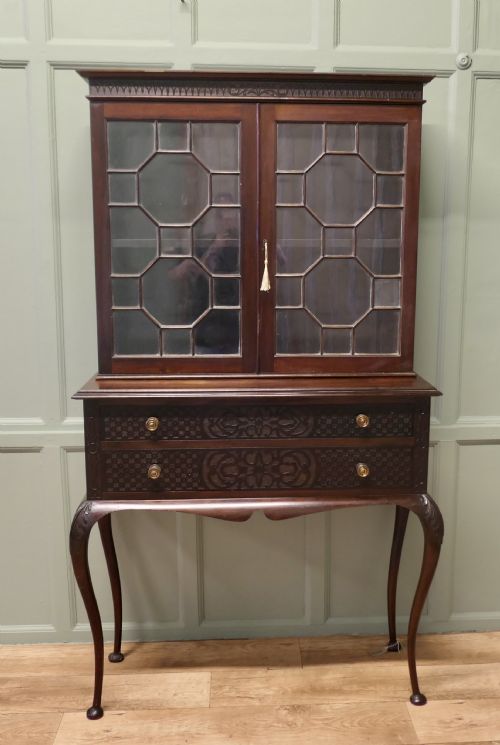
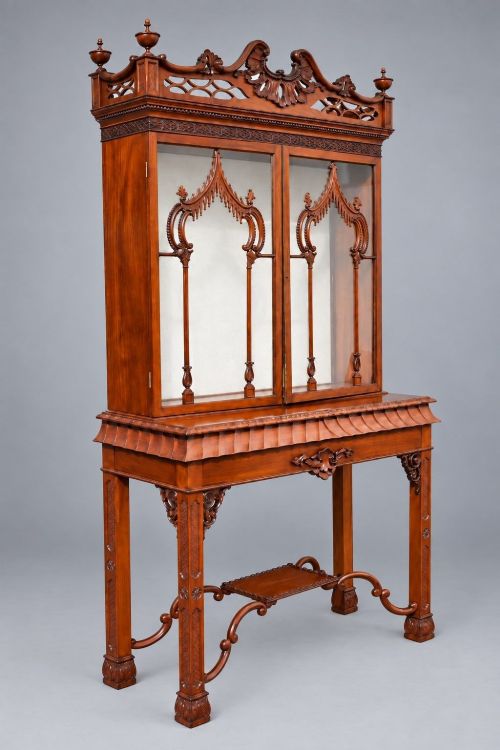
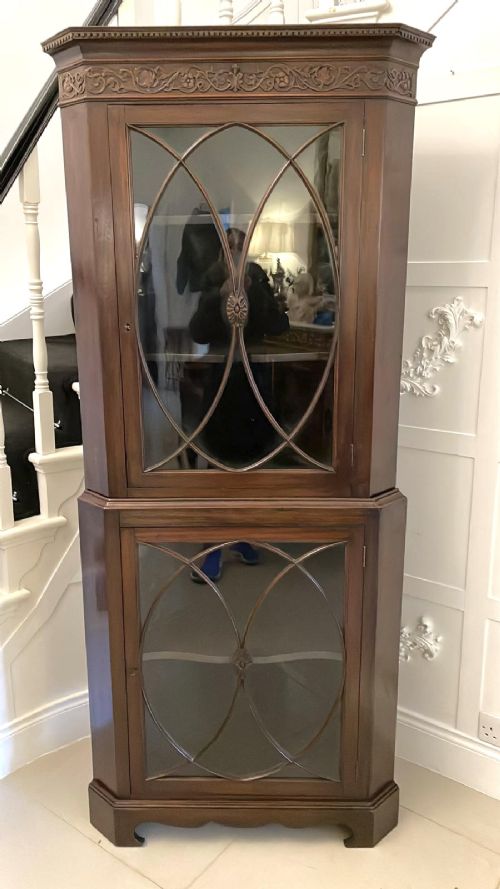
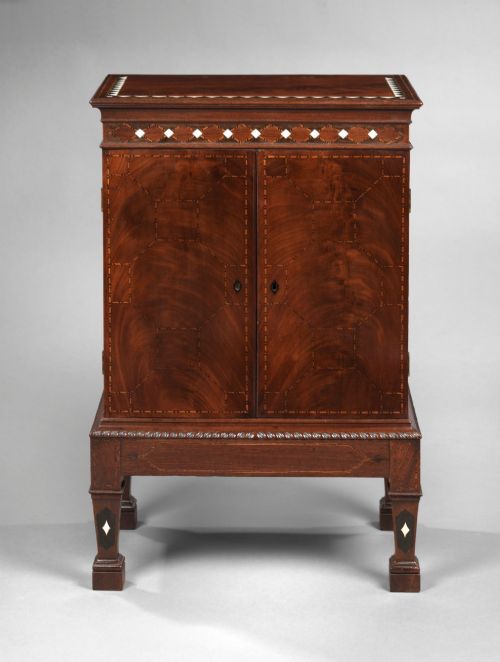
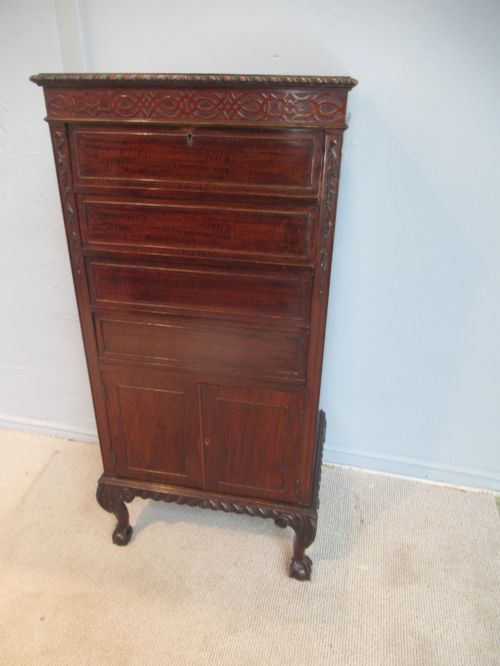
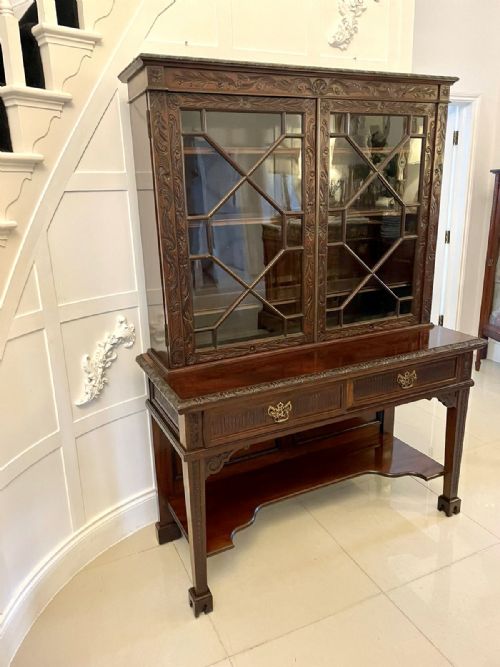


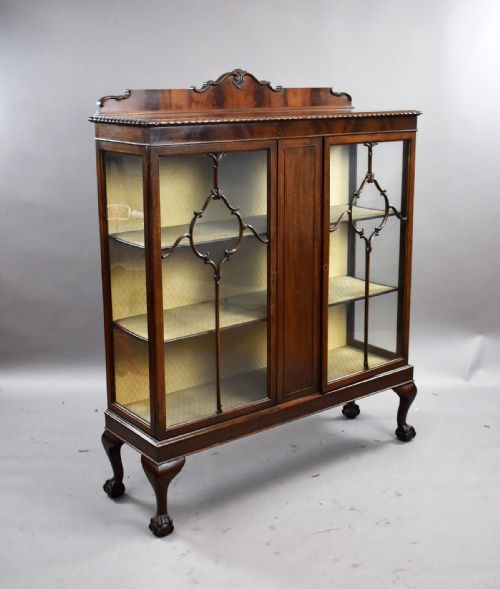


Chippendale Cabinet on Stand
A chippendale cabinet on stand brings together raised display space and sturdy elevation, giving rooms a refined focal point rooted in eighteenth-century proportions.

Chippendale Cabinet on Stand
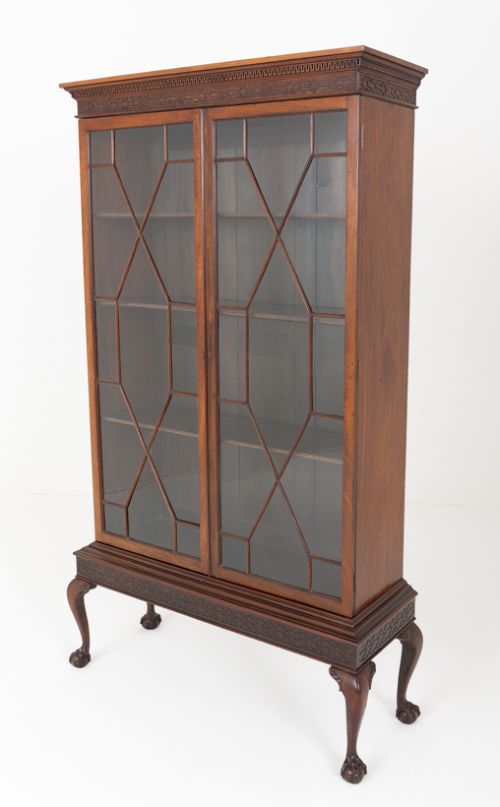
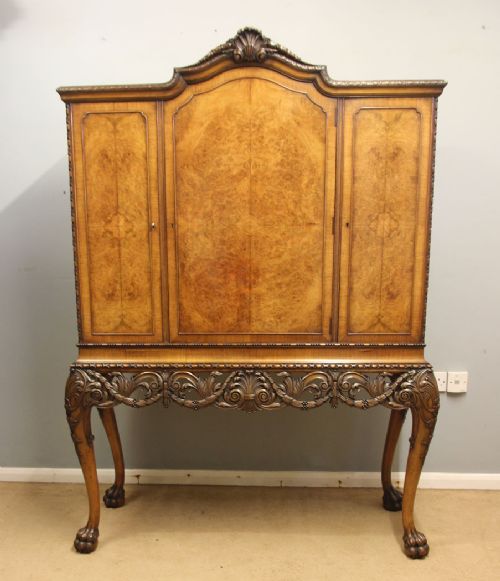
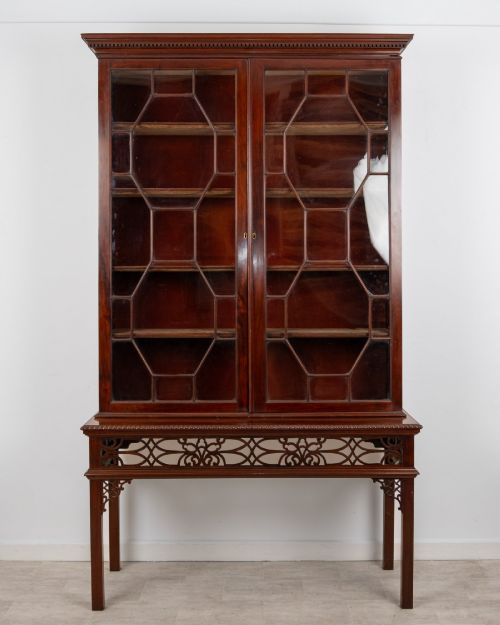
A chippendale cabinet on stand unites a glazed or panelled upper storage section with a distinct lower support frame, forming a raised furnishing suited to displaying cherished items. Buyers browsing this selection encounter pieces spanning original Georgian construction alongside later nineteenth-century revival interpretations.
The material palette centres heavily on mahogany, whilst archive records note occasional satinwood and lacquer variations. Upper compartments frequently house glass glazing bars or solid doors, resting upon open stands, cabriole legs, or bracketed supports characteristic of Chinese Chippendale and standard revival modes.
Forms diversify from straightforward display cabinets to specialised bureau desks and silver storage units raised on legs. Period attributions range from Georgian creation dates through Victorian and Edwardian revivals up to twentieth-century workshop productions.

Assessing Quality
The upper tier of craftsmanship appears in the crispness of hand-carved mahogany details, such as blind fretwork or claw-and-ball feet, which retain sharp definition rather than soft moulding lines. Timber selection dictates the visual depth, where well-figured grain patterns and matched veneers elevate the overall presence.
Structural integrity between the upper cabinet and its separate stand separates standard revival output from superior workshop production. Original brass hardware, clean glass astragals, and precise joinery throughout the base framework indicate higher execution standards.
Listings feature mahogany, burr walnut veneer, glass, brass, fabric, oak, and bone inlay across Victorian, Edwardian, and Georgian periods.
James Winter and Sons·Edwards and Roberts·Walker and Hall·Warings
The Chippendale Cabinet on Stand Glossary
- Astragal
- A small convex moulding used to hold glass panes within a cabinet door. These narrow timber strips divide the glazed surface into geometric or Gothic arch patterns.
- Chinoiserie
- European imitation of Chinese artistic motifs and techniques. This decorative style appears on lacquer finishes and fretwork within revival pieces.
- Bracket foot
- A corner foot shaped as a small bracket supporting case furniture. It provides a stable base beneath chests and cabinets without requiring a separate table stand.
- Bureau
- A desk fitted with a sloping writing flap that drops down to reveal small drawers and pigeonholes. It often forms the upper section of a cabinet on stand.
- Breakfront
- A cabinet front where the central section projects forward from the flanking wings. This architectural arrangement creates depth and shadow across large bookcases and display units.
Chippendale Cabinet on Stand: Frequently Asked Questions
How do I spot a genuine Georgian piece?
Original Georgian pieces display period timber patination, hand-cut secondary woods, and construction methods consistent with eighteenth-century workshop practices. Revival pieces from later eras often utilise machine-cut elements and standardised fittings.
Examining internal drawer linings, backboards, and hinge types helps establish the true period of manufacture versus nineteenth or twentieth-century revival dates.
What rooms suit a cabinet on stand?
These elevated pieces function effectively in dining rooms, studies, or drawing rooms where vertical display space is needed without dominating floor area. The raised stand keeps the visual weight light.
Placing the cabinet away from direct sunlight protects vulnerable mahogany surfaces and any interior fabric linings from fading over time.
How do standard and Chinese Chippendale differ?
Standard Chippendale designs emphasise classical carved mahogany ornamentation, cabriole legs, and traditional bracket feet. Chinese Chippendale incorporates distinctive straight legs, fretwork galleries, and pagoda-inspired motifs.
Both styles share the same structural approach to raised cabinet work whilst offering entirely different visual silhouettes.
Are stands attached or separate?
Stands on these cabinets are constructed as distinct lower frames upon which the upper storage carcase rests. Some designs secure the sections together with concealed fixings.
When moving or positioning the furniture, separating the upper cabinet from the stand ensures safe handling of heavy mahogany timber and glass components.