


Chinoiserie Tall Clock
A chinoiserie tall clock brings lacquer, gold leaf and brass movements together to anchor a room with centuries of narrative design.

Chinoiserie Tall Clock
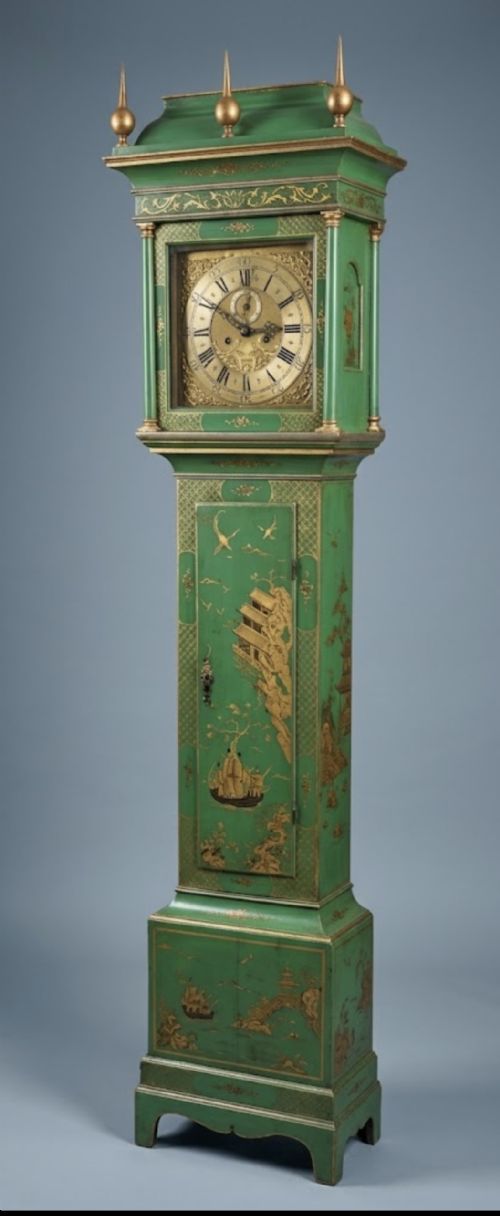
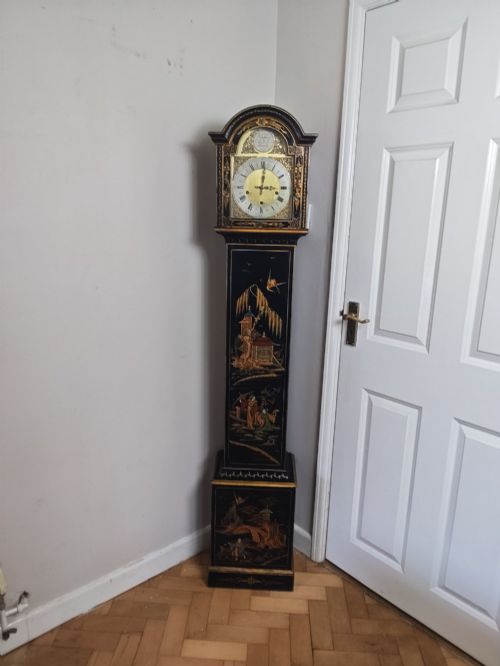
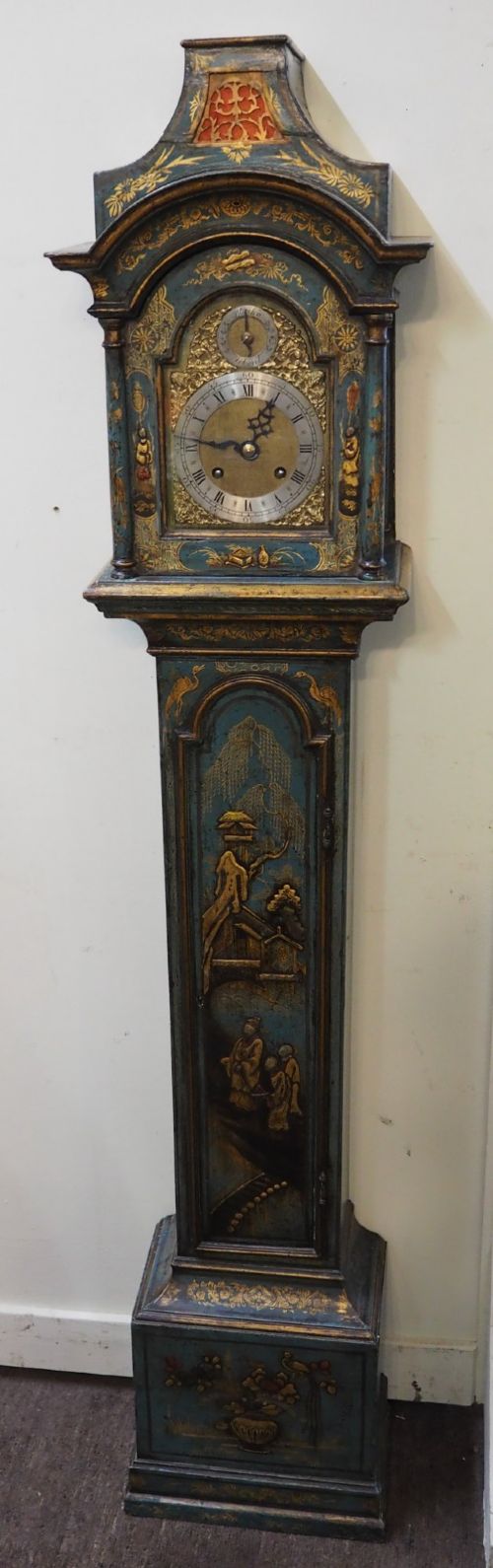
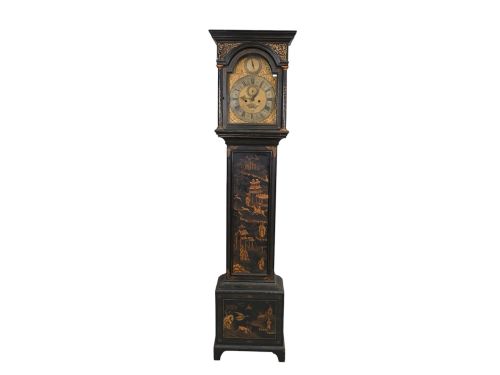
When searching for a chinoiserie tall clock, buyers encounter longcase, grandfather, and grandmother clocks spanning the Georgian period through the twentieth century. These vertical timepieces serve as functional furniture and decorative statements, often displaying figures, pavilions, and floral motifs derived from Asian design traditions.
The most common examples on this page date from the eighteenth century, featuring tall wooden cases finished with detailed lacquer work. Alongside these traditional longcase clocks, smaller grandmother clocks and musical variants appear from later decades such as 1920 and 1930.
Origins stretch across British clockmaking centres, with specific pieces attributed to London makers like William Kipling and John Fielder of Alton, as well as makers operating in Edinburgh. These regional variations demonstrate the widespread appeal of lacquered tall clocks across eighteenth-century Britain and beyond.
Materials and construction
Makers built these tall clocks using wooden carcases prepared for elaborate surface decoration. The exterior finish relies on lacquer, japanned wood, and gilt accents, often employing gold leaf to highlight figures and landscapes against a dark or coloured ground.
One clock brings moving parts to the surface by incorporating an automaton mechanism alongside its traditional lacquer decoration.
Judging quality and execution
Distinction across these clocks lies in the depth of the surface decoration and the crispness of the gilt detailing. Superior examples exhibit intricate hand-painted scenes on the lacquered wood, where figures and architecture retain their definition across the tall door and trunk.
Mechanical integrity also separates pieces, as demonstrated by signed brass movements from established makers like William Kipling or Gardner of London. The integration of specialised functions, such as musical chimes or automaton displays, reflects the ambition of the original workshop.
John Fielder of Alton·William Kipling London·Gardner of London
The Chinoiserie Tall Clock Glossary
- Japanned wood
- European imitation of East Asian lacquerwork, created by building up layers of varnish and applying metallic dust or gold leaf to raised motifs. This technique defined the decorative surface of many eighteenth-century tall clocks.
- Longcase clock
- A weight-driven pendulum clock enclosed in a tall wooden case, commonly known as a grandfather clock. These freestanding vertical clocks protect the pendulum and weights while displaying the dial at eye level.
- Grandmother clock
- A smaller version of the longcase clock, typically produced in the twentieth century. These compact floor clocks offer the traditional aesthetic of a tall clock in a reduced height.
- Brass movement
- The internal mechanical brass assembly that drives the clock hands, strikes the hours, and powers any musical or chime complications. Signed movements help identify the original maker.
Chinoiserie Tall Clock: Frequently Asked Questions
What is a chinoiserie tall clock?
A chinoiserie tall clock is a weight-driven timepiece housed in a tall wooden case decorated with European interpretations of Asian art. These pieces combine functional timekeeping with decorative lacquer and gilt surfaces.
Most examples stand on the floor as longcase or grandfather clocks, protecting the pendulum and weights behind a decorated door. Their visual character relies on painted scenes of figures, birds, and pagodas.
How do I date an 18th century clock?
Dating an eighteenth-century tall clock involves examining the style of the lacquer decoration, the construction of the wooden case, and the signatures on the brass dial. Makers often inscribed their names directly onto the brass face.
Stylistic shifts between early Georgian designs and later George III pieces provide further clues. Surviving records of specific makers also help narrow down the decade of manufacture.
Where should I place a longcase clock?
Longcase clocks require a stable, upright wall position where the floor is level and free from excessive vibration. Placing them away from direct sunlight and heat sources protects the lacquered wood and gilt details.
Because these clocks stand tall, hallways, landings, or high-ceilinged reception rooms provide adequate vertical clearance. Proper placement ensures the pendulum swings freely without interference.
What is the difference between a grandfather and grandmother clock?
The primary difference between grandfather and grandmother clocks is their overall height and the era of manufacture. Grandfather clocks are traditional eighteenth-century longcases, while grandmother clocks are generally smaller variants made in the twentieth century.
Despite the difference in scale, both types utilise similar weight-driven or spring-driven mechanisms housed inside a tall wooden case. Grandmother clocks offer a way to display lacquered decoration in rooms with lower ceilings.