
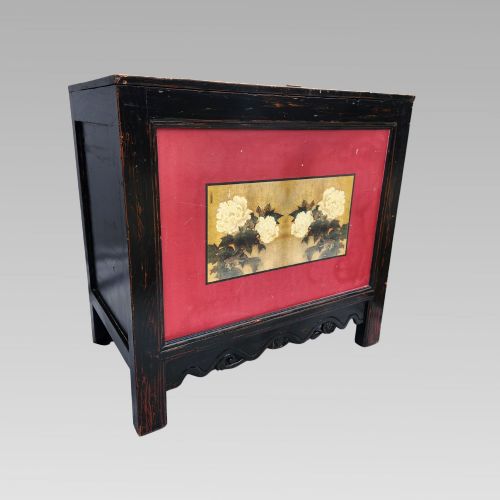


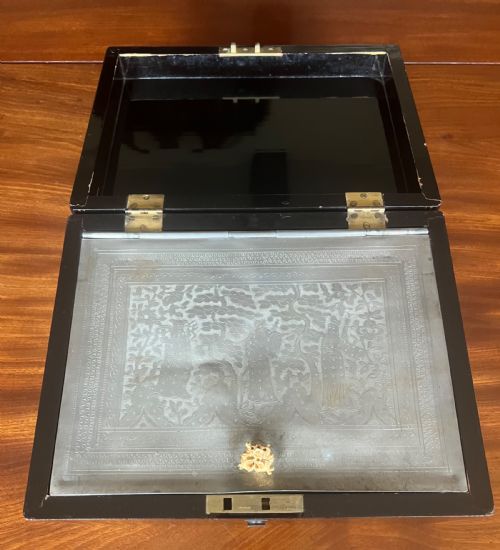


Chinoiserie Storage Chest
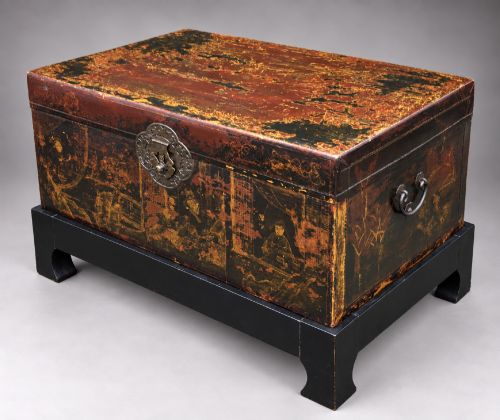
A chinoiserie storage chest brings painted motifs and lacquer work into a room, offering both decorative presence and practical capacity.
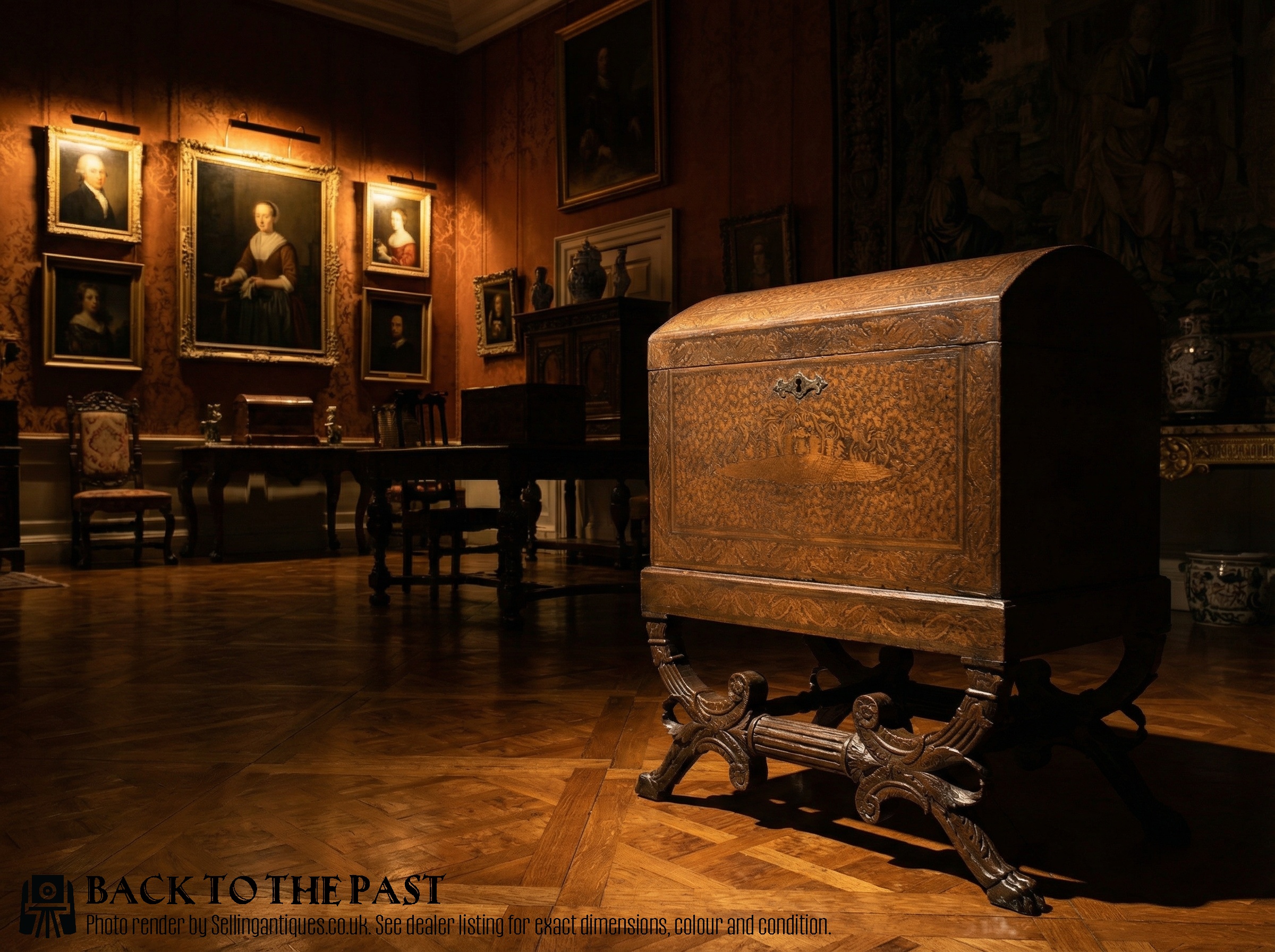
Chinoiserie Storage Chest
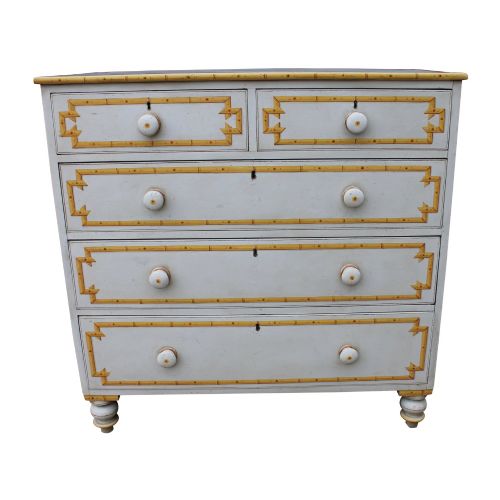
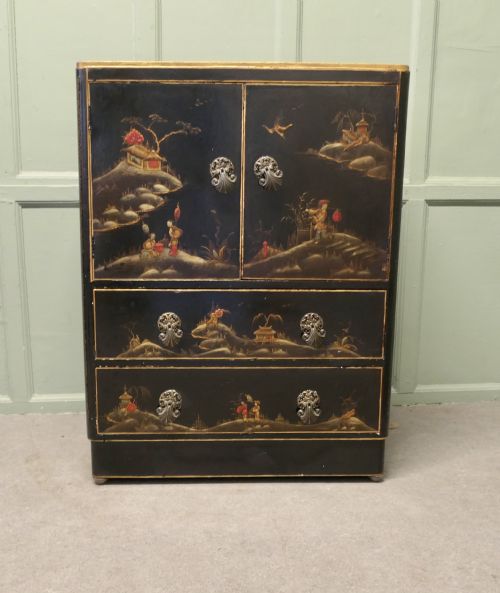
When you search for a chinoiserie storage chest, you encounter a distinct group of decorative containers spanning several centuries of craftsmanship. The pieces listed range from substantial blanket boxes and coffers to smaller cabinets on stands and tea caddies.
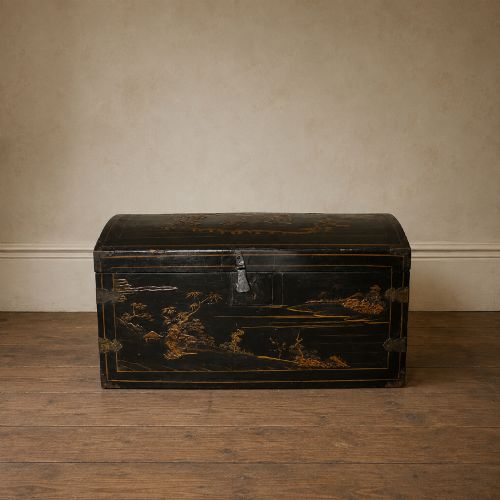
You are most likely to meet black or red lacquer examples decorated with gilt and gold leaf, often featuring traditional oriental scenes, birds, and floral details. The selection draws on periods from the eighteenth century through to the early decades of the twentieth century, alongside Regency penwork and Chinese export pieces.
The functional forms vary considerably, encompassing domed trunks, side cabinets, chests of drawers, and camphor wood coffers fitted with brass hardware. Each object combines utility with pictorial surface decoration that reflects European interpretations of Asian design traditions.
Assessing quality
The standard of a piece rests heavily on the depth and detail of the surface decoration, distinguishing masterwork gilding and hand-painted artistry from simpler production. Pieces featuring intricate pictorial scenes, layered lacquer work, and well-preserved gold leaf represent the finer end of the scale.
Structural integrity and the retention of original hardware, stands, and internal fittings also dictate value within the category. Chests that retain their original brass mounts and untouched lacquer surfaces demonstrate superior preservation compared to those with extensive later overpainting.
Camphor wood chests bring a distinct aromatic quality to a room, secretly perfuming your linens while looking entirely decorative.
Mercier Frères
The Chinoiserie Storage Chest Glossary
- Chinoiserie
- European decorative style reflecting Chinese artistic influences, prominent in furniture from the eighteenth to the twentieth century. This aesthetic employs painted motifs of landscapes, figures, and flora on lacquered surfaces.
- Lacquer
- A durable resin finish applied in multiple layers to wood surfaces, providing a smooth and glossy protective coating. Traditional examples often feature polished black or red grounds decorated with gilt.
- Gilt
- Application of gold leaf or gold powder onto a surface to create decorative highlights. It brings luminosity to the painted scenes on dark lacquered chests.
- Cofer
- A large box or chest traditionally used for storing valuables or textiles, often fitted with a domed or flat lid. These sturdy containers frequently feature robust iron or brass carrying handles.
- Penwork
- A meticulous decorative technique using ink applied with a pen to create fine linear designs on wood. This intricate method appears on select Regency period pieces.
Chinoiserie Storage Chest: Frequently Asked Questions
What is a chinoiserie storage chest?
A chinoiserie storage chest is a decorative container finished with lacquer and painted oriental motifs, used historically for keeping textiles and valuables.
These pieces combine practical storage capacity with elaborate pictorial surfaces derived from European interpretations of Asian art.
How do I date a lacquered chest?
Dating relies on examining the construction timber, the style of the hardware, and the specific characteristics of the lacquer and gilt work.
Eighteenth-century examples often display different structural joinery and pigment composition compared to pieces produced during the Regency era or the early twentieth century.
Were these chests made in China?
The category includes both Chinese export pieces made for Western markets and European items decorated in the oriental style.
Japanning and chinoiserie became widely practiced by European workshops alongside genuine imports from Qing dynasty China and later Japanese Meiji period production.
How should I care for lacquer furniture?
Lacquer surfaces require gentle maintenance away from direct sunlight and excessive temperature fluctuations to prevent cracking or fading.
Dusting with a soft, dry cloth preserves the finish without harming the delicate gilt and painted details.