



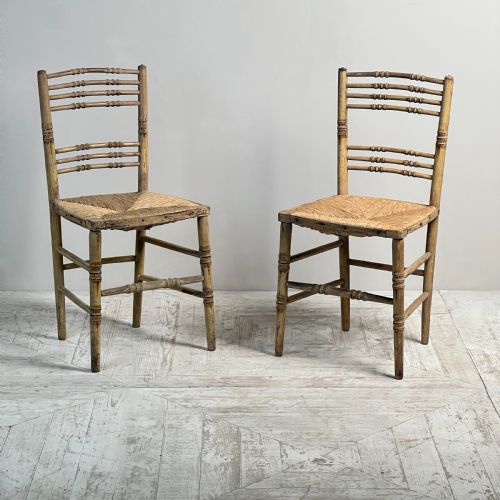


Chinoiserie Side Chair
A chinoiserie side chair brings distinctive oriental lacquer, gilt, and painted bamboo into a room through centuries of revival and design.
Chinoiserie Side Chair
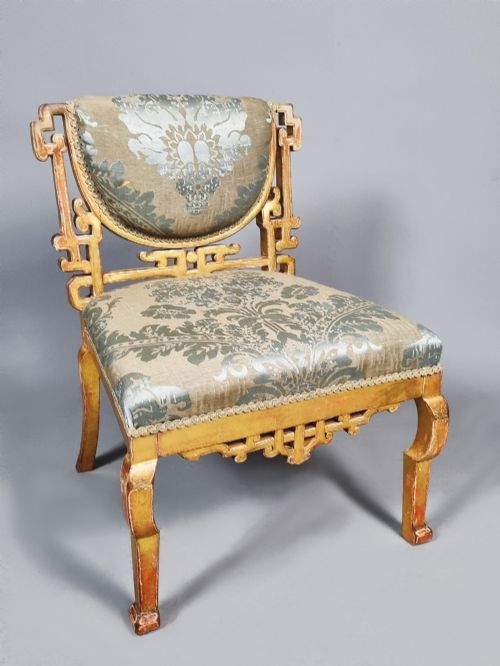
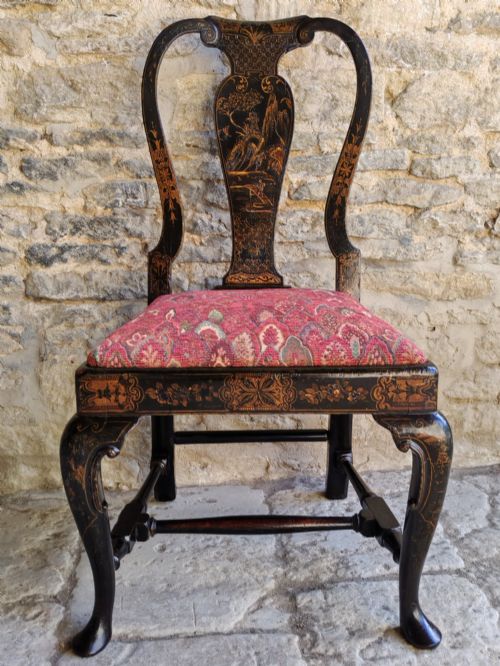
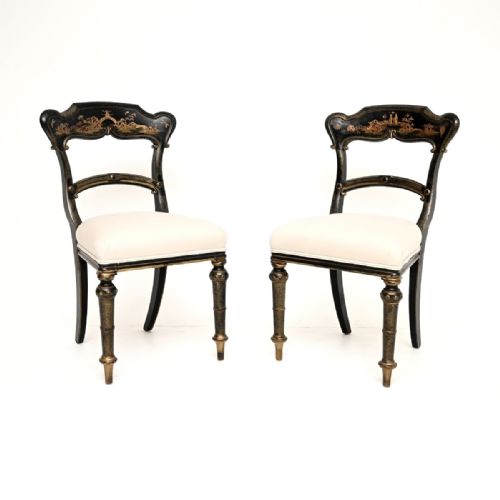
A chinoiserie side chair is a seat decorated with painted or lacquered oriental motifs, appearing in forms from the eighteenth century through to the twentieth century.
You will most frequently encounter pairs and sets of these chairs originating from the Victorian era and the Regency period.
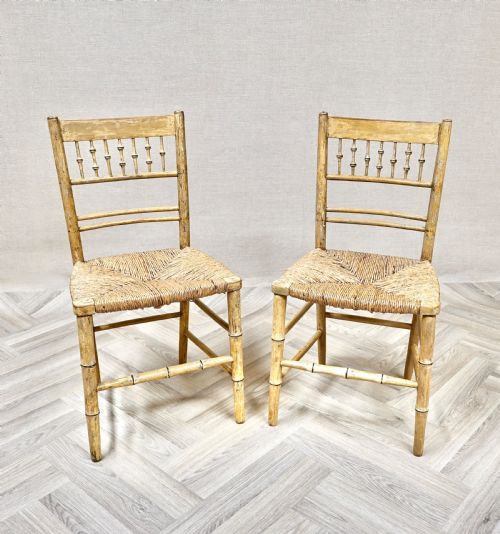
The evidence shows various forms including Chinese Chippendale designs, hall chairs, and faux bamboo frames with rush or cane seats.
Materials and Construction
Carers and makers constructed these chairs using timber such as mahogany and wood formed into simulated or faux bamboo.
Surfaces received layers of paint, black or green lacquer, and gilt decoration, sometimes accented with mother of pearl.
Seating areas utilised cane, rush, or fabric to complete the frames.
The listings span the eighteenth, nineteenth, and twentieth centuries, featuring wood, fabric, lacquered wood, paint, cane, gilt, mahogany, and rush.
Assessing Quality and Execution
Quality rests in the precision of the hand-applied lacquer and original gilt decoration rather than mass-produced finishes.
Finer examples display careful carving on mahogany or bamboo-turned wood, maintaining structural integrity across the frame.
Waugh and Son·Thomas Chippendale
The Chinoiserie Side Chair Glossary
- Chinoiserie
- European decorative art reflecting Chinese artistic styles. It appears frequently on lacquered and painted furniture.
- Faux bamboo
- Wood turned and carved to imitate natural bamboo stalks. This technique is common in Regency and Victorian seating.
- Lacquered wood
- Wood coated with resin or varnish to produce a hard, smooth, glossy finish. It often bears oriental figures and landscape scenes.
- Cane
- Woven material made from peeled rattan used for chair seats. It provides a light, flexible surface.
- Chinese Chippendale
- An eighteenth-century style drawing on Chinese motifs such as pagoda fretwork. It is seen on mahogany dining and side chairs.
Chinoiserie Side Chair: Frequently Asked Questions
Where were chinoiserie side chairs used?
These chairs served mainly as occasional seating in parlours, bedrooms, and reception rooms where decorative impact mattered.
They also appeared as hall chairs or dining chairs depending on the specific style and period.
How do I care for lacquered wood?
Keep lacquered surfaces away from direct sunlight and excessive moisture to protect the paint and gilt decoration.
Dust gently with a soft dry cloth and avoid chemical polishes that might damage the antique finish.
How do I spot a Regency faux bamboo chair?
Regency examples often feature turned wood mimicking bamboo joints, combined with painted finishes or ebonised surfaces.
Many of these chairs are paired with rush or cane seats characteristic of the period.
What is the difference between an 18th century and Victorian piece?
Eighteenth-century pieces often showcase Chinese Chippendale mahogany or early lacquer work with gilt details.
Victorian interpretations frequently utilise ebonised finishes, mother of pearl inlay, and faux bamboo frames.