



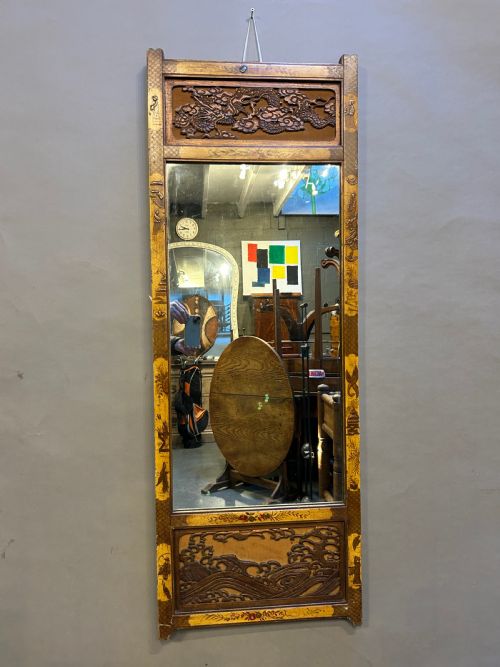


Chinoiserie Lacquered Mirrors
Chinoiserie lacquered mirrors bring painted oriental scenes and rich japanned surfaces into domestic rooms, offering centuries of decorative tradition.
Chinoiserie Lacquered Mirrors
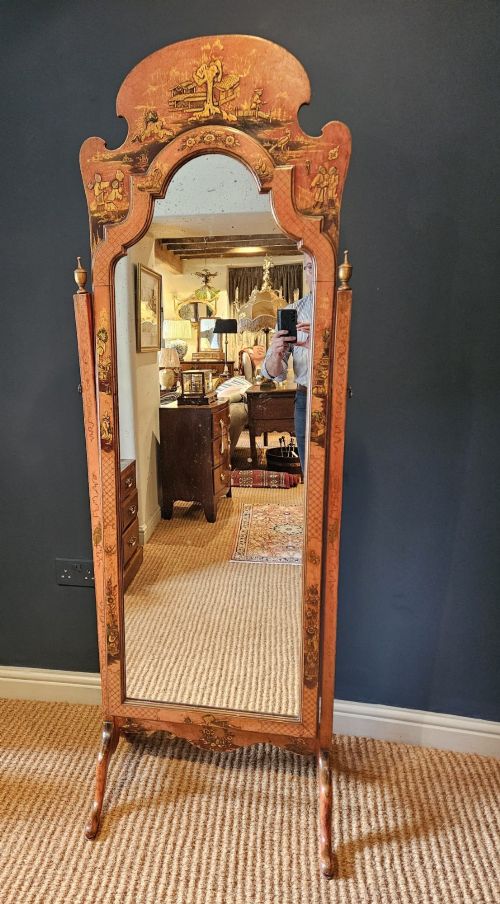
Chinoiserie lacquered mirrors combine European furniture forms with decorative motifs inspired by East Asian art, spanning centuries of production from the eighteenth century through to the mid twentieth century. These objects appear in various configurations including wall mirrors, cheval mirrors, and smaller dressing table mirrors.
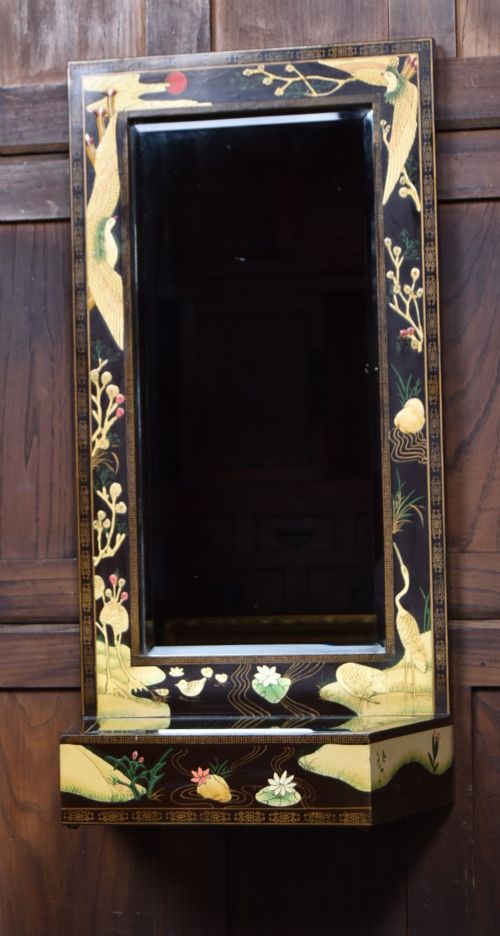
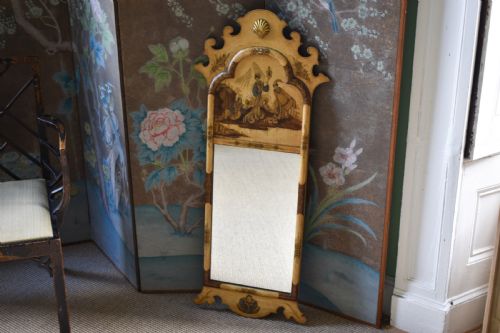
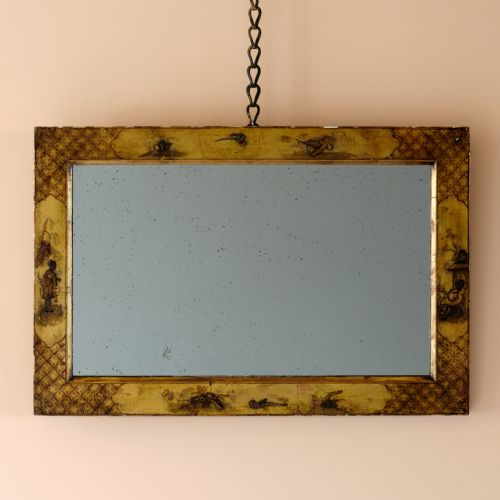
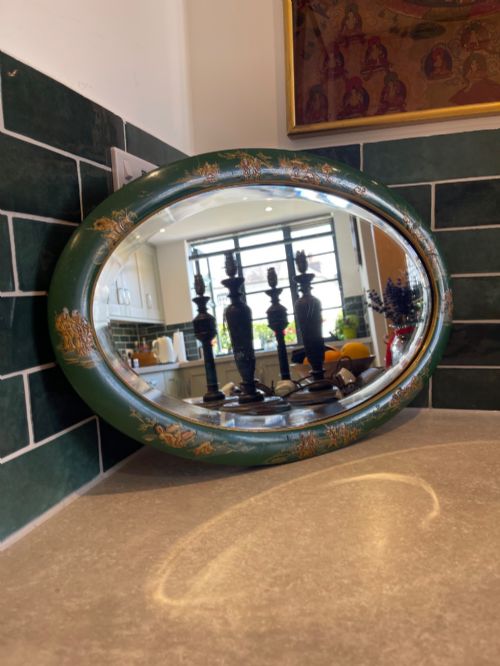
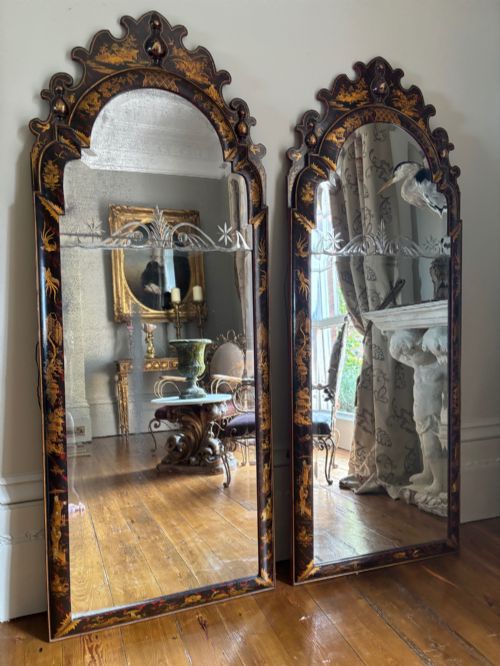
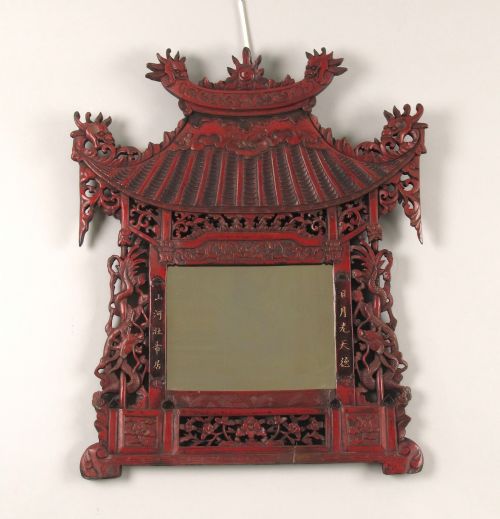
The selections on this page showcase diverse stylistic interpretations such as Queen Anne style, Georgian designs, and Edwardian revivals. Pieces range from grand red lacquer pagoda wall mirrors to understated black or cream framed ovals and rectangular pier glasses.
Makers and craftsmen utilised traditional japanning techniques to emulate Asian lacquerware, producing surfaces populated by figures, landscapes, and pavilions. Buyers encounter both early export pieces and later revival works that reflect changing interior tastes across generations.
Materials and Construction
Makers constructed the carcases of these mirrors from wood such as walnut or general timber substrates, preparing them to receive multiple layers of lacquer. Skilled artisans applied gold leaf and gilt highlights to articulate intricate motifs against dark or coloured backgrounds.
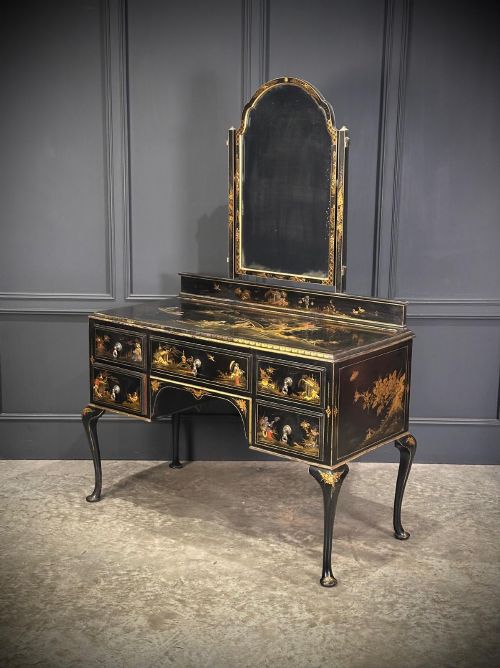
The reflective elements consist of mirror glass fitted into custom wooden frames, sometimes accompanied by brass hardware or integrated dressing furniture bases. Surfaces received detailed hand-painted decoration depicting traditional scenes in red, black, and cream palettes.
The object types available range from wall mirrors and cheval mirrors to dressing tables and miniature bureau combinations.
Assessing Quality and Execution
Superior examples demonstrate refined hand-painted detail in the figurative and landscape scenes, where the brushwork exhibits precision and depth. Lesser pieces rely on mechanical or simplified application that lacks the layered complexity of traditional japanning.
The integrity of the wooden frame and the preservation of the original lacquer surface heavily influence the character of each piece. Superior craftsmanship shows in the balanced proportions of Queen Anne or Georgian revival forms and the harmonious ageing of the gilt and mirror glass.
The Chinoiserie Lacquered Mirrors Glossary
- Japanning
- European imitation of East Asian lacquerwork involving layered varnishes and metallic dust. This technique creates the hard, glossy surfaces characteristic of these frames.
- Chinoiserie
- European artistic style reflecting Chinese and East Asian motifs. Artisans applied this aesthetic to furniture, mirrors, and decorative arts.
- Pier Mirror
- Tall mirror designed to hang on the wall between windows. These pieces often sit above console tables or dressing furniture.
- Cheval Mirror
- Freestanding full-length mirror mounted on a pivoting frame. The design allows the glass to tilt for dressing purposes.
- Chinese Export
- Goods manufactured in China specifically for Western markets. These items combine Eastern materials with European forms.
Chinoiserie Lacquered Mirrors: Frequently Asked Questions
How do I date an antique chinoiserie mirror?
Dating relies on examining the construction methods of the wooden frame, the composition of the mirror glass, and the style of the painted decoration. Eighteenth-century pieces typically show specific joinery and hand-beveled glass, whereas Edwardian and later revivals utilise machine-cut elements and distinct finishing techniques.
Comparing the specific lacquer colours and motifs against known historical periods helps narrow down the origin. Revival pieces often emulate earlier Queen Anne or Georgian forms while retaining the structural characteristics of their actual manufacturing era.
Where should I hang a wall mirror?
These mirrors work effectively in reception rooms, hallways, and bedrooms where they reflect natural light and add decorative depth to a wall space. Placing a pier mirror above a console table creates a traditional focal point in an interior.
Consider the scale of the room and the surrounding furniture when selecting a hanging position. Ensuring adequate wall support is essential given the solid wood construction and glass weight of larger examples.
What is the difference between black and red lacquer?
Black lacquer surfaces typically offer a restrained, classic appearance that integrates easily into various interior schemes. Red lacquer provides a bolder, more dramatic statement often associated with Chinese export styles and vibrant revival pieces.
Both finishes involve intricate hand-painted gold or multi-colour detailing, but the ground colour fundamentally alters the visual weight of the frame. Red japanned pieces frequently draw inspiration from oriental screen designs and architectural pagodas.
How do I care for a lacquered frame?
Maintenance involves dusting the wooden frame gently with a soft, dry cloth to prevent accumulation without disturbing the surface finish. Avoid using chemical cleaners, abrasive materials, or excessive moisture that could damage the delicate lacquer and gilt layers.
Keeping the piece away from direct sunlight and fluctuating humidity levels protects both the paintwork and the underlying wood. Professional conservation should be sought if structural stabilisation or surface restoration becomes necessary.