




Antique Red Frame Mirror
An antique red frame mirror brings a bold flash of crimson or scarlet colour to a room, offering both practical reflection and striking wall presence.
Antique Red Frame Mirror
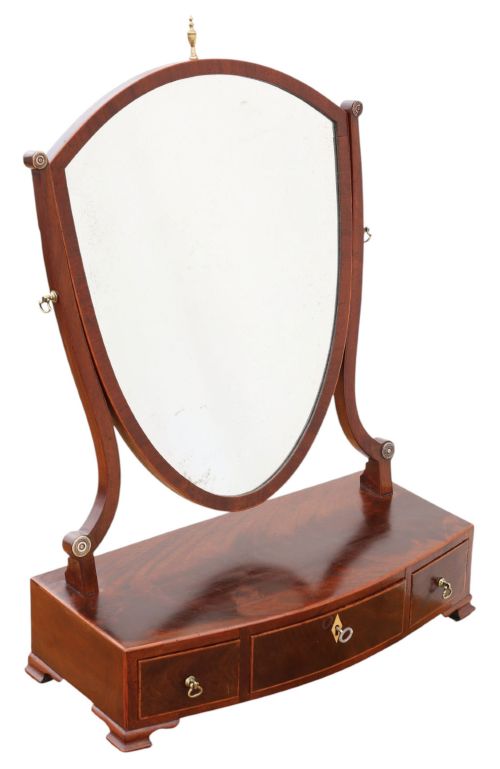
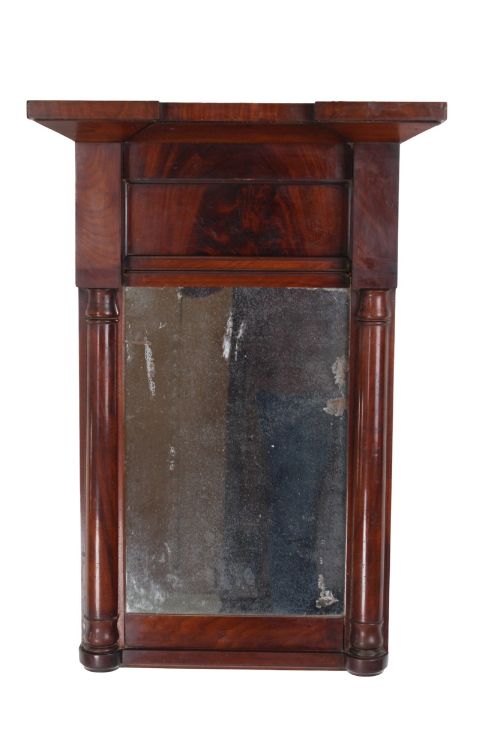
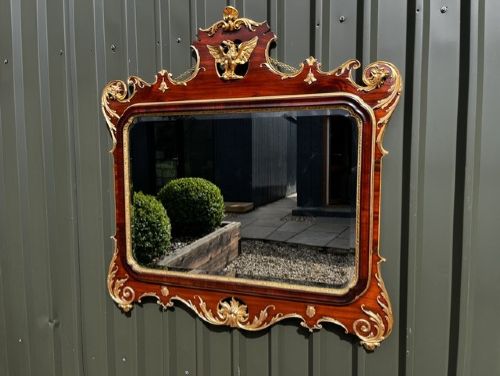
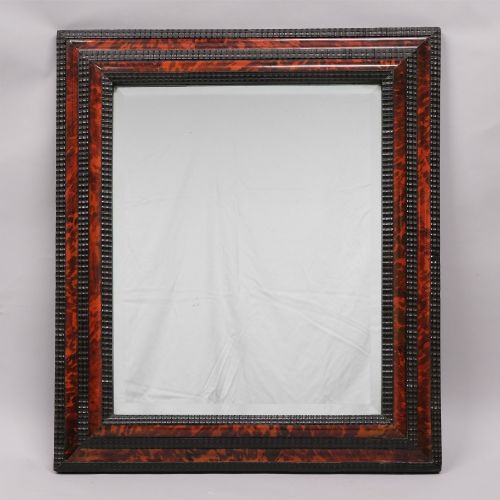
An antique red frame mirror brings a strong splash of colour to interiors, drawing the eye directly to the boundaries of the glass. These pieces appear in forms ranging from compact wall hangings to large overmantels, dressing table swings, and tall pier glasses.
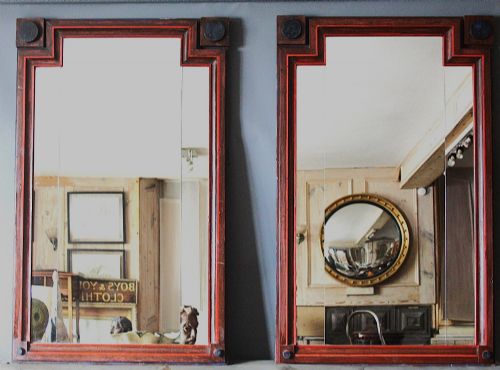
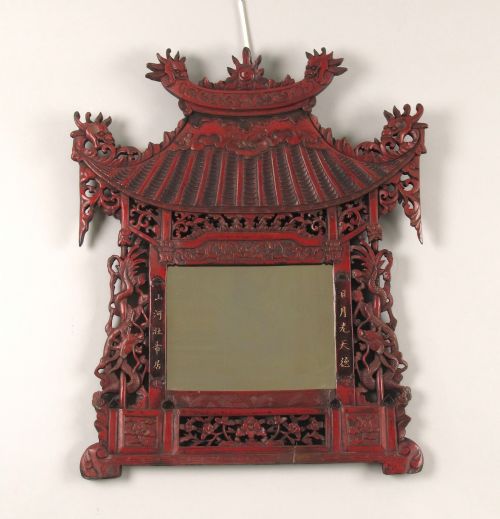
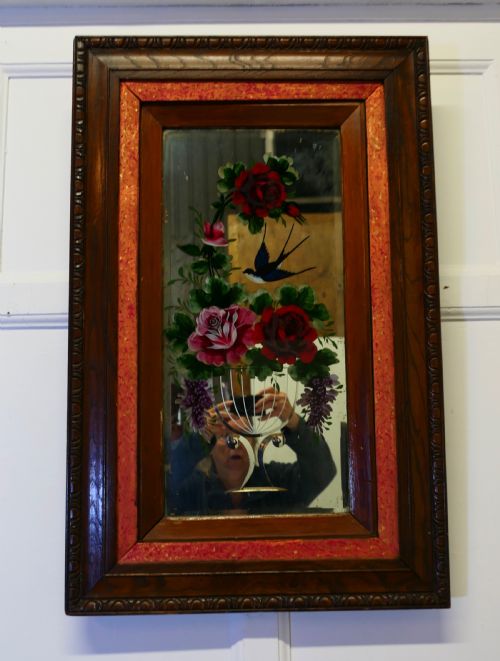
The versions met most often on this page include 19th-century Chinese lacquer and Chinoiserie wall mirrors alongside Victorian painted and reverse-painted examples. English and continental workshops produced these frames across the Georgian, Victorian, and Art Deco periods, utilising various shades of red from scarlet to deep ruby.
Makers shaped these mirrors into pagodas, cushion profiles, shields, and rectangular formats, matching the decorative tastes of their respective decades. Buyers select them to anchor a colour scheme or to introduce a vibrant focal point into neutral spaces.
Materials and construction
Carpenters constructed the underlying structures primarily from wood, mahogany, or carved gesso over wood, preparing smooth grounds for decorative finishes. Artisans applied layers of red paint, lacquer, or gilt to achieve the desired tone, occasionally incorporating velvet or tortoiseshell elements into the design.
Glaziers set silvered or cut and etched glass into the frames, sometimes utilising reverse painting techniques directly onto the glass surface. Chinese export pieces relied on traditional lacquer techniques, whilst European makers favoured painted or Japanned finishes to simulate exotic imports.
Object forms on this page range from compact dressing table swing mirrors to large overmantel and Chinese pagoda wall mirrors.
Assessing quality and craftsmanship
Quality rests in the depth and hand-application of the red surface finish, whether through layered lacquer, meticulous reverse painting, or carefully brushed pigment. Superior examples display crisp carving on wood and gesso frames, where details remain sharp rather than softened by excessive repainting.
The integrity of the original glass plate and the precision of the joinery at the frame corners distinguish finer pieces. Original backing boards, secure hanging hardware, and untouched aged patination elevate a mirror's standing among collectors.
The Antique Red Frame Mirror Glossary
- Chinoiserie
- European imitation of traditional Chinese artistic styles, frequently seen in red lacquered furniture and mirror frames.
- Japanned
- A European form of decorative finishing that emulates Japanese lacquerware using heat-dried varnish layers.
- Cushion frame
- A mirror frame with a rounded, convex profile that slopes outward from the glass toward the outer edge.
- Reverse painting
- An artistic technique where the design is painted directly onto the back of the glass panel to be viewed from the front.
- Pier mirror
- A tall, narrow mirror designed specifically to hang on the wall space between two windows.
Antique Red Frame Mirror: Frequently Asked Questions
Where should I hang a red frame mirror?
These mirrors suit spaces that benefit from a strong splash of colour, such as above a mantelpiece, in an entrance hallway, or over a dressing table.
Their striking frames allow them to function as standalone artworks, anchoring neutral walls or complementing existing red accents in a room's decor.
How do I care for antique glass and painted frames?
Dust the wooden or lacquered frame gently with a dry, soft cloth, avoiding commercial chemical polishes that can degrade aged finishes.
Clean the glass plate using a minimal amount of glass cleaner applied to a cloth rather than sprayed directly onto the mirror, protecting the surrounding edges.
How do I date a red frame mirror?
Examine the construction methods of the wooden frame, the type of backing boards used, and the bevel or silvering characteristics of the glass plate.
Stylistic cues such as Art Deco geometry, Victorian reverse painting, or 19th-century Chinese lacquer work also help assign pieces to specific eras.
Are these mirrors heavy to hang?
Many larger overmantel and carved wood examples possess substantial weight due to their dense timber and gesso construction.
Ensure you utilise appropriate wall fixings and locate structural studs or masonry supports when mounting heavy pieces securely.