


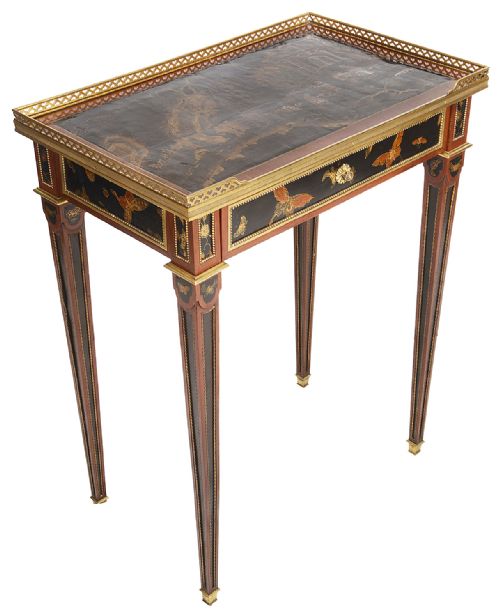
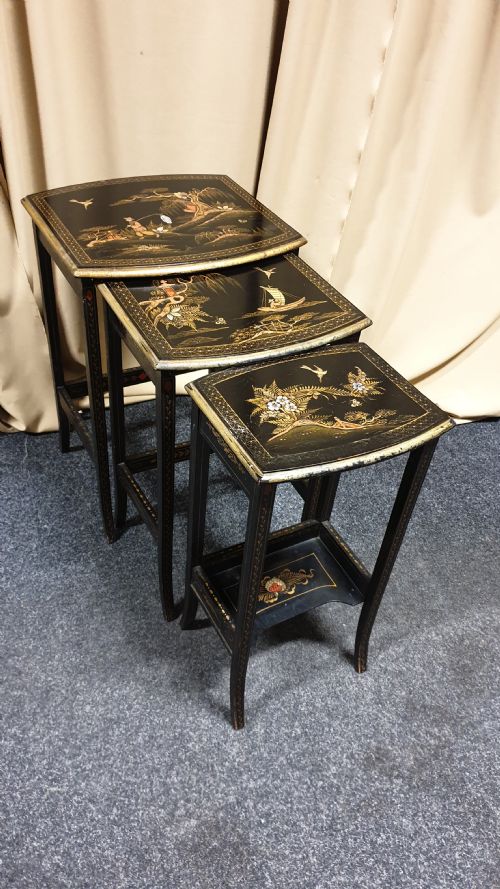
Chinoiserie End Tables
Chinoiserie end tables bring striking black, gilt, and red decoration into a room, offering surface space with rich oriental motifs.
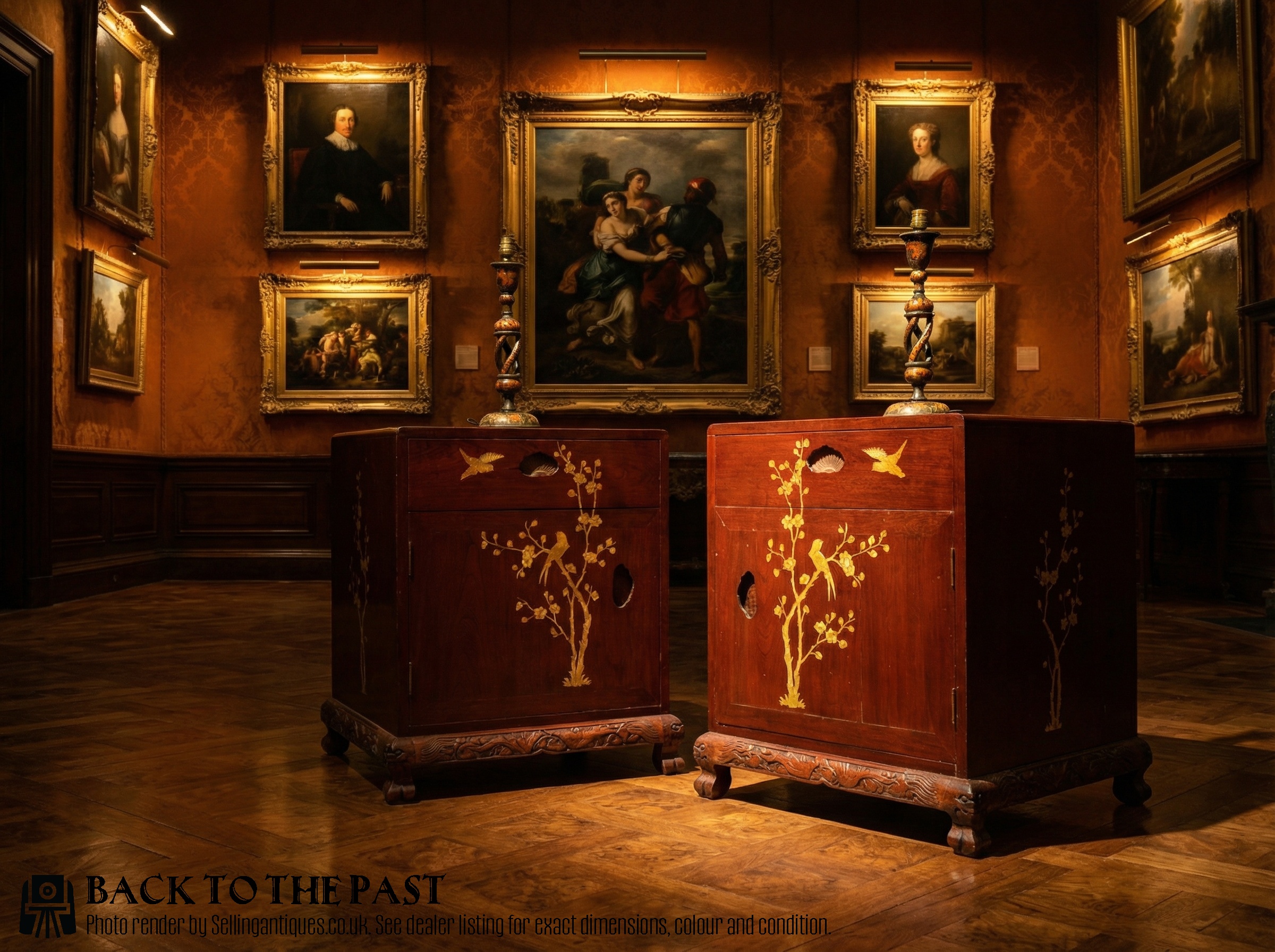
Chinoiserie End Tables
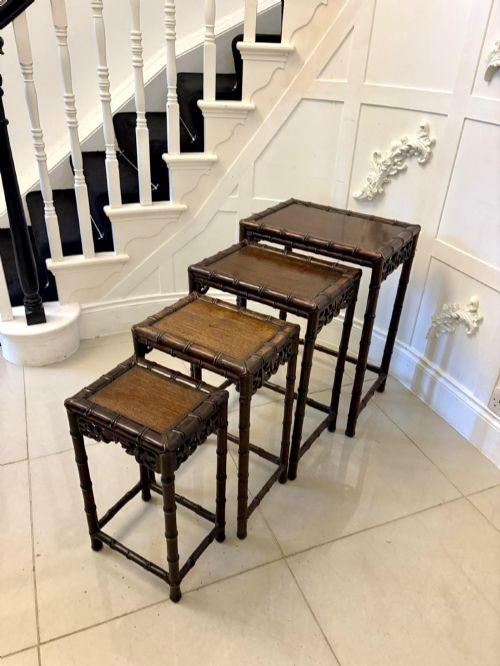
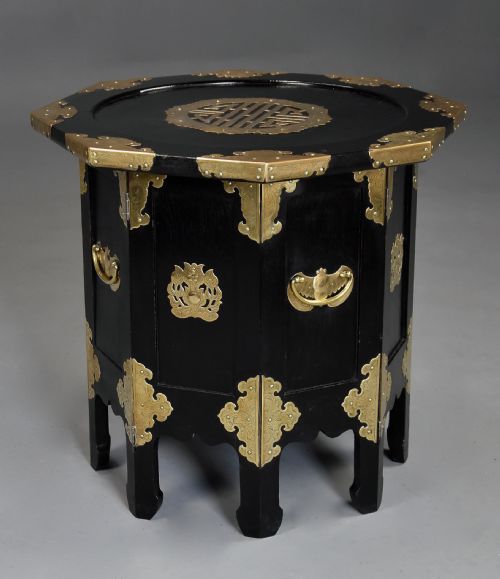
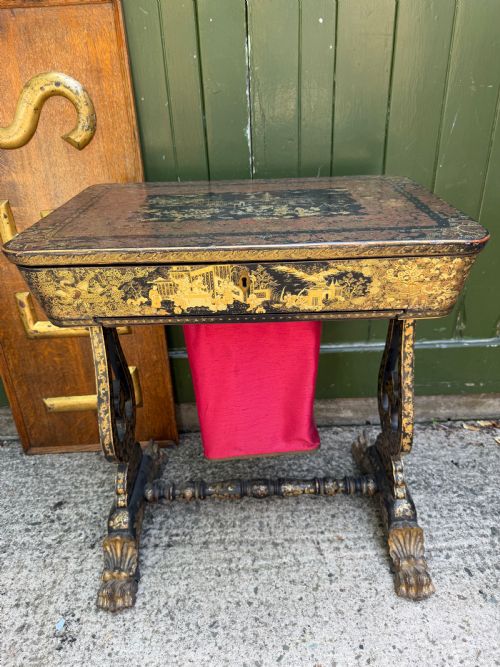
When you search for chinoiserie end tables, you are looking at small occasional furniture decorated in European interpretations of Chinese and Oriental design. These pieces take several forms across our listings, including nests of tables, lamp tables, dropleaf tables, and side cabinets designed to sit beside seating or beds.
The versions you are most likely to meet on this page span the nineteenth and early twentieth centuries, alongside pieces built in the Regency and Queen Anne styles. They often feature multiple tiers or folding leaves, combining practical surface areas with decorative lacquer panels.
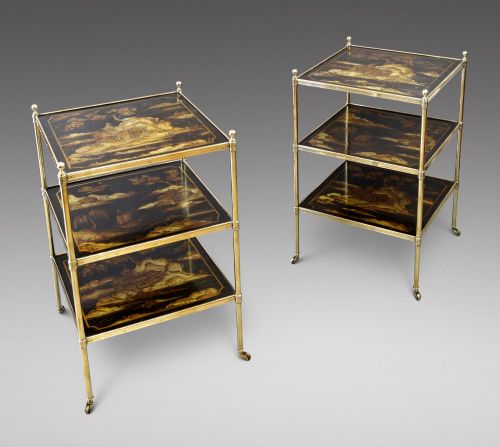
Makers drew on Chinese and Oriental motifs to create decorative furnishings for Western interiors. The forms range from simple occasional tables to pairs of brass etageres and bedside lamp cabinets.
How they were made
Makers utilised wood, hardwood, and ebonised wood as the structural foundation for these pieces, sometimes incorporating bamboo or faux bamboo framing. Lacquer and lacquered wood formed the primary surfaces, providing a smooth base for painted scenes.
Decoration relied heavily on gold leaf and gilt work applied over black and red lacquer grounds to depict Oriental figures and landscapes. Brass mounts, handles, and occasional cloisonne enamel insets completed the construction of these decorative items.
Several tables come in pairs, proving that even small occasional stands prefer not to travel alone.
What varies in quality
The distinction between ordinary and superior pieces rests on the execution of the surface decoration and the richness of the materials. Hand-applied gilt and detailed lacquering show greater depth than simpler painted finishes.
Construction details also separate the tiers of quality, seen in the choice of hardwoods, the integration of cloisonne enamel elements, and the retention of original decorative schemes.
The Chinoiserie End Tables Glossary
- Chinoiserie
- European artistic style reflecting Chinese and East Asian motifs, popular in furniture decoration. It typically employs lacquer, gilt, and painted Oriental scenes.
- Lacquer
- A durable resin finish applied in multiple layers and polished to a smooth sheen. It serves as the dark background for gilt decoration.
- Ebonised wood
- Timber stained or finished to resemble expensive ebony. This dark finish provides high contrast for gold leaf details.
- Cloisonne enamel
- Decorative metalwork technique where enamel paste is applied within wire partitions. It appears on select side tables for added colour and texture.
Chinoiserie End Tables: Frequently Asked Questions
What are chinoiserie end tables used for?
These tables provide convenient surface space next to seating or beds while adding decorative character to a room. They hold lamps, books, and small objects.
Their compact forms, such as nests of tables and small cabinets, allow them to fit into tight spaces without dominating the interior.
How do I tell different periods apart?
Dating relies on construction methods, timber choices, and stylistic cues such as Regency or Queen Anne silhouettes. Nineteenth-century examples often feature traditional joinery and hand-carved details.
Early twentieth-century pieces frequently utilise ebonised wood and distinct decorative lacquer work that reflects revival tastes.
Are these tables sturdy enough for daily use?
Most pieces are built from hardwoods or bamboo and handle normal daily use as lamp stands or side tables. Care should be taken with lacquered surfaces to avoid scratching.
Nests of tables offer flexible surface space that can be tucked away when not needed.
How should I care for lacquered furniture?
Lacquered surfaces require dusting with a soft, dry cloth and protection from direct sunlight and moisture. Avoid harsh cleaning products that can damage the finish.
Keeping the room climate stable helps preserve the wood and the delicate gilt decoration.