
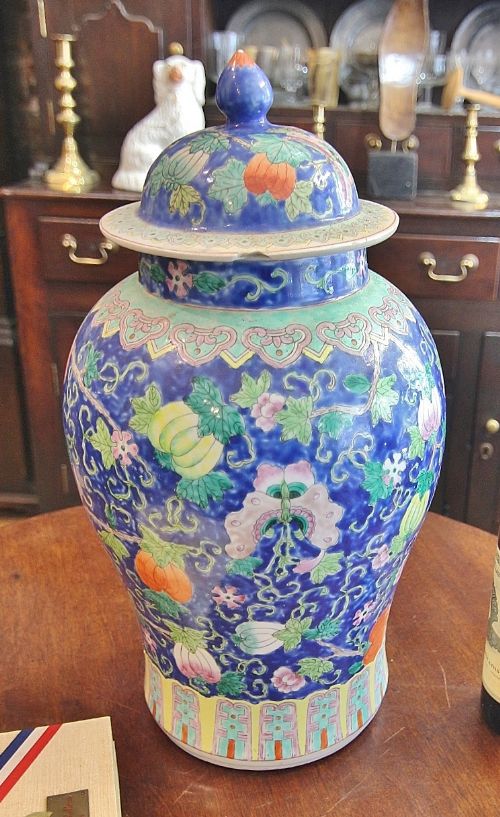


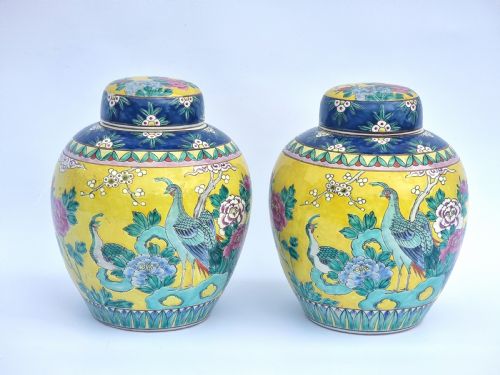


Chinoiserie Covered Urn
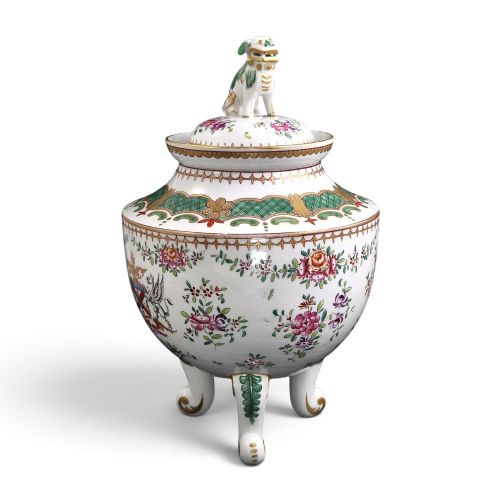
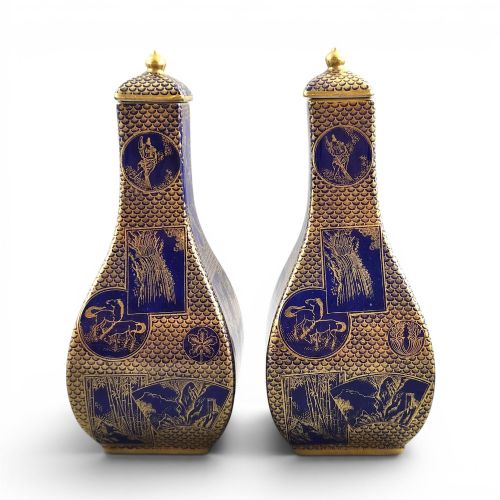
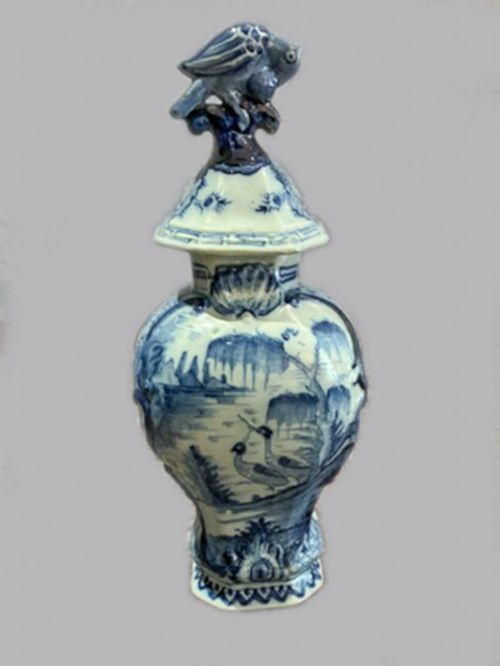
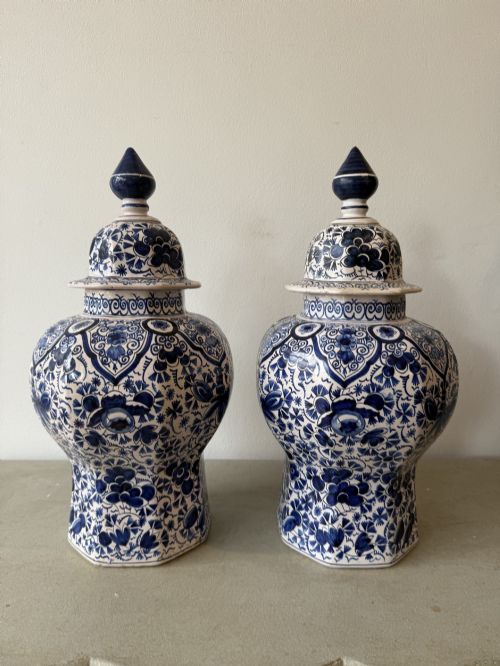
These chinoiserie covered urn pieces bring hand-painted decorative schemes and lidded forms from 19th Century, Georgian, and 20th Century periods to a room.
Chinoiserie Covered Urn
A chinoiserie covered urn combines European interpretations of East Asian motifs with lidded vessel forms spanning centuries of production. When exploring chinoiserie covered urn options on this page, buyers encounter various ceramic and ironstone bodies decorated with hand-painted patterns.
The selections range from 19th Century English ironstone and Continental maiolica to 20th Century Chinese porcelain and Dutch delftware. Forms include lidded vases, ginger jars, potpourri vases, and chestnut urns featuring distinctive covers.
Makers and workshops across the Georgian, Victorian, and Regency eras adapted traditional forms into decorative vessels. These pieces serve as focal points on tables, consoles, and mantelpieces.
Materials and Construction
Potters utilised materials such as porcelain, ironstone, tin-glazed earthenware, and stoneware to form the body of each urn and vase. These ceramic bases often received applied glazes, gold leaf, and gilt highlights.
Decoration relied on hand-painted enamel and blue and white pigments applied directly to the surface. Certain vessels integrated ormolu mounts to secure the foot or rim.
Manufacturing methods varied from 18th Century Dutch delftware techniques to 19th Century patent ironstone production in England.
Several lidded vessels disguise themselves as garden ginger jars while permanently holding court indoors.
Evaluating Quality
The distinction between standard production and top-tier examples lies in the execution of the hand-painted decoration and the crispness of the moulded form. Elaborate colour palettes involving mazarine blue grounds and gold leaf demonstrate higher workshop capability.
The integrity of the matching lid or cover alongside the main vessel body influences the overall coherence of the piece. Substantial scale and well-preserved glaze condition elevate the visual presence of the ironstone or porcelain.
Mason s·Samson Paris
The Chinoiserie Covered Urn Glossary
- Ironstone
- A patented ceramic body developed in the 19th century that combines durability with a refined white surface suitable for elaborate glaze decoration.
- Toleware
- Metalware, typically tin or iron, coated with an opaque lacquer or paint finish and often utilised for decorative chestnut urns.
- Maiolica
- Tin-glazed earthenware produced in Italy and other European centres, featuring opaque white glazes painted with coloured pigments.
- Garniture
- A set of three or more matching vases or urns designed to be displayed together on a mantelpiece or sideboard.
- Delftware
- Tin-glazed earthenware traditionally produced in the Netherlands, known for its distinctive blue and white palette mimicking imported porcelain.
Chinoiserie Covered Urn: Frequently Asked Questions
What periods do these lidded vases date from?
The pieces span the Georgian, Regency, and Victorian eras, extending into 20th Century production.
Dates range from late 18th Century examples up to mid-20th Century Chinese porcelain.
How were these covered urns originally used?
They functioned as decorative garnitures, potpourri containers, and display vessels in period interiors.
Lidded forms kept aromatic herbs or dry goods enclosed while contributing to table and mantel decoration.
What materials make up these vessels?
Makers utilised ceramic, porcelain, ironstone, tin-glazed earthenware, and stoneware for the primary bodies.
Surfaces frequently incorporate hand-applied glazes, gold leaf, gilt, and enamel paints.
How do I identify a true chinoiserie design?
Chinoiserie pieces feature European artistic interpretations of Chinese and East Asian motifs, landscapes, and figures.
These decorative schemes appear on Dutch delft, English ironstone, and Continental ceramics alike.