




Antique Chinoiserie Earthenware Vase
An antique chinoiserie earthenware vase brings hand-painted oriental scenes and centuries of ceramic history straight into your room.
Antique Chinoiserie Earthenware Vase
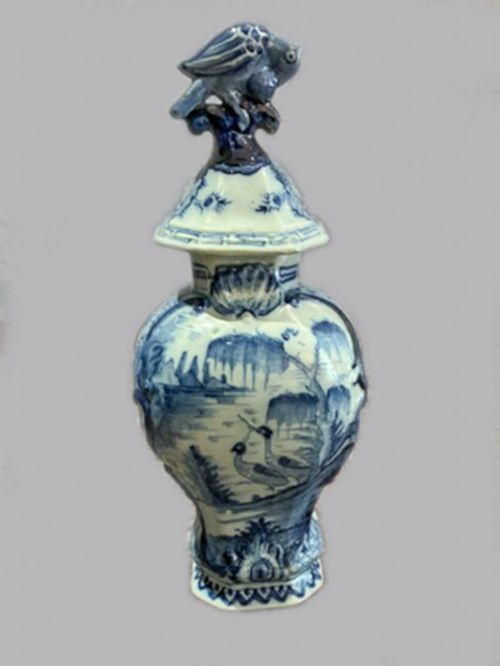
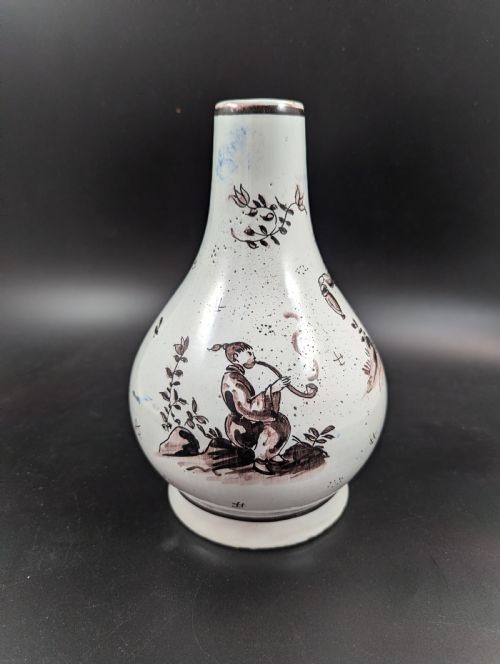
An antique chinoiserie earthenware vase combines European pottery traditions with Eastern decorative motifs. When searching for this phrase, buyers encounter vessels decorated with figures, birds, and botanical scenes rendered in blue and white or polychrome pigments.
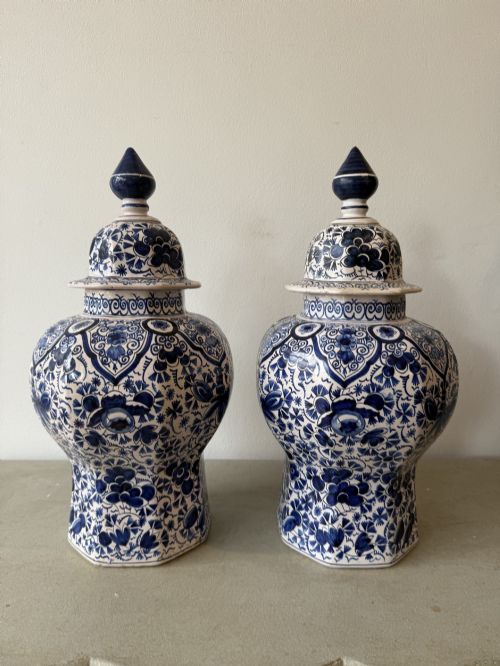
The pieces appearing on this page span several centuries, with particular emphasis on Dutch Delftware, English delftware, and later Victorian or early twentieth-century interpretations. Forms range from simple baluster vases and ribbed beakers to lidded vessels and converted table lamps.
Origins stretch from seventeenth-century workshops to nineteenth-century continental kilns and English potteries. Collectors find both single decorative bottles and matched pairs designed for mantelpieces.
Materials and construction
Potters shaped these vessels from earthenware bodies, frequently coating them in an opaque tin glaze that provided a smooth white surface for painting. Cobalt pigment was brushed directly onto this unfired or partially fired glaze to create the classic blue and white palette.
Enamels were also utilised for polychrome examples, introducing yellow and other bright hues over the glaze before a final firing. Ironstone and faience bodies appear alongside traditional delftware formulations, giving each piece a distinct weight and resonance.
Judging quality and character
The quality of an antique chinoiserie earthenware vase rests heavily on the confidence and fluidity of the brushwork. Superior examples display spirited, hand-painted details where birds, flowers, and figures possess genuine movement rather than stiff repetition.
The crispness of the tin glaze and the depth of the cobalt pigment further separate ordinary domestic wares from exceptional pieces. Potteries achieved finer results when the glaze covered the earthenware body evenly without excessive pooling or cloudiness.
Royal Doulton·Carlton Ware
The Antique Chinoiserie Earthenware Vase Glossary
- Delftware
- Tin-glazed earthenware produced in the Netherlands and England, famous for its absorbent white surface and blue painting. Potters imitated imported Chinese porcelain during the seventeenth and eighteenth centuries.
- Baluster
- A vase form characterised by a rounded body that tapers toward the neck and base, resembling an architectural baluster. This shape was widely used in European factories.
- Tin Glaze
- A ceramic glaze made opaque by the addition of tin oxide, creating a white background for painted decoration. It absorbs pigments deeply during firing.
- Faience
- European tin-glazed earthenware, particularly associated with French, Dutch, and continental workshops. The term describes pottery covered in an opaque white enamel.
- Ironstone
- A heavy, durable type of earthenware patented in the nineteenth century to imitate porcelain. It provides a sturdy body for intricate enamel decoration.
Antique Chinoiserie Earthenware Vase: Frequently Asked Questions
How do I date a delft vase?
Dating relies on stylistic shifts in the painting, the thickness of the earthenware body, and the characteristics of the tin glaze.
Early pieces often display looser brushwork and distinct potting marks, while later nineteenth-century interpretations show different glazing formulas and manufacturing stamps.
Are these vases waterproof?
Tin-glazed earthenware is slightly porous by nature, and centuries of age can make the body delicate.
It is safer to use these vessels for dry display rather than holding fresh water and flowers.
What is chinoiserie decoration?
Chinoiserie is a European interpretation of Chinese and East Asian artistic traditions, popularised during the seventeenth and eighteenth centuries.
Artists painted imaginary landscapes, pavilions, and exotic birds from imported porcelain rather than direct observation.
Why are some listed as lamps?
Many antique vases were converted into table lamps during the nineteenth or twentieth centuries to suit changing domestic interiors.
This adaptation involved drilling a discreet hole for wiring or mounting the ceramic body onto a brass base without destroying the original painted surface.