




Chinoiserie Ceramic Display Plate
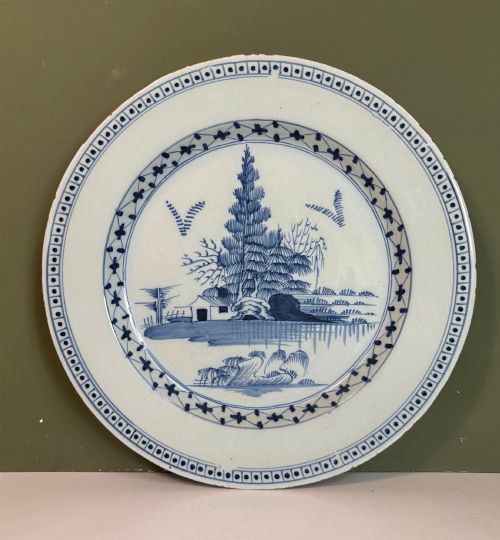
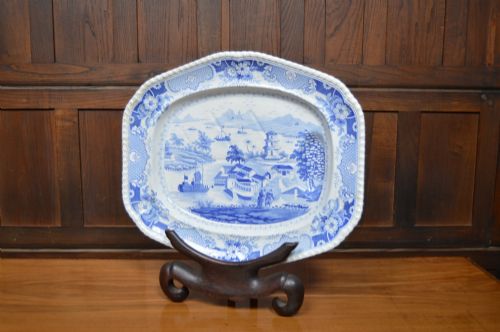
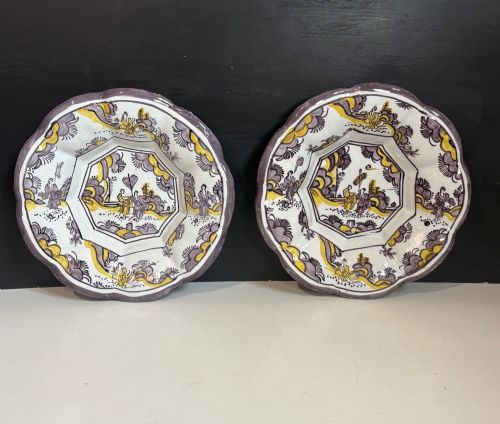
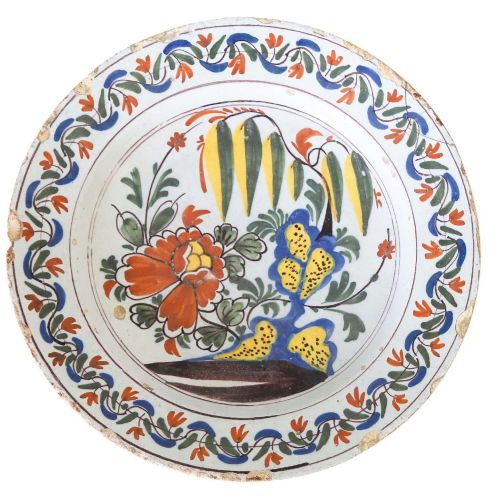
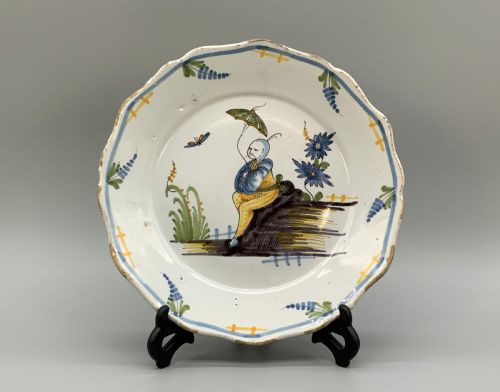
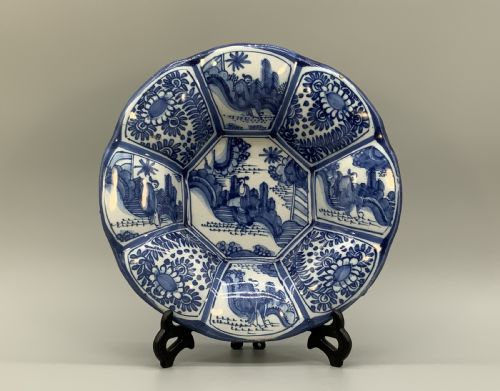
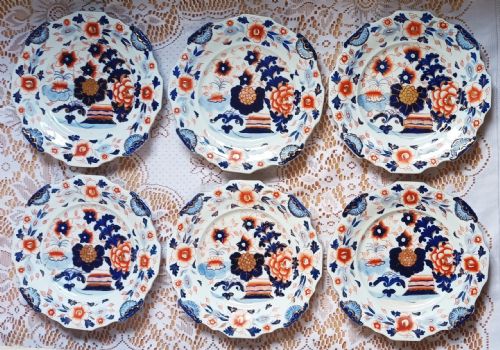
A chinoiserie ceramic display plate brings eighteenth-century fantasy landscapes and exotic flora into a room through tin-glazed earthenware and ironstone.
Chinoiserie Ceramic Display Plate
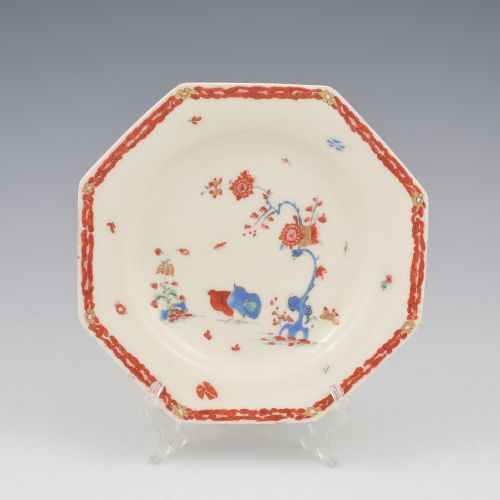
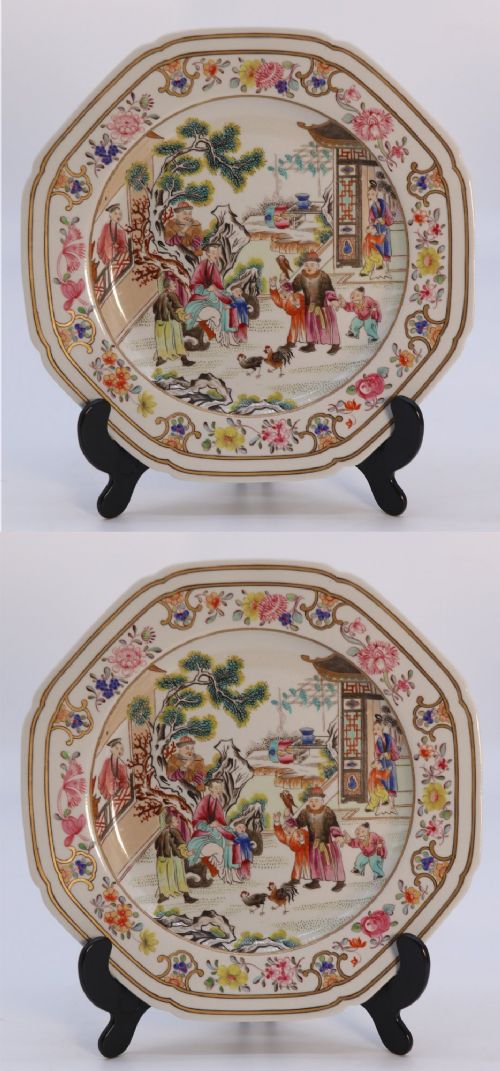
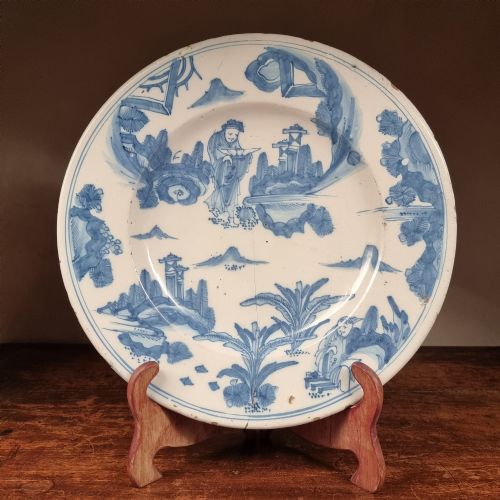
When you search for a chinoiserie ceramic display plate, you encounter wall chargers, cabinet plates, and octagonal dishes spanning from the seventeenth century through the Edwardian period. The versions met most often on this page are eighteenth-century delftware chargers and nineteenth-century ironstone plates bearing blue and white or polychrome oriental scenes.
Makers produced these pieces across England, France, and the Netherlands, drawing heavily on Chinese and Japanese export motifs such as pagodas, exotic birds, and Kraak styles. Forms range from large wall-hanging chargers to sets of dessert plates intended for display in dining rooms.
Materials and Technique
Potters utilised earthenware, tin glaze, and ironstone as the structural base for these items, applying cobalt pigment and enamel paints by hand before firing. English and continental factories often employed transferware techniques alongside hand-painted brushwork to render intricate pagoda and floral patterns.
Tin glazing provided an opaque white surface that absorbed pigments effectively, allowing workshops to achieve the distinctive blue and white or manganese and yellow palettes seen across delftware and ironstone.
The inventory records extensive examples of English Delftware alongside nineteenth-century Mason's ironstone chargers.
Evaluating Quality
Quality rests upon the crispness of the hand-painted or transferred oriental details and the stability of the tin glaze or ironstone body. Pieces with rich polychrome enamel work and well-preserved gilt or cobalt pigments stand apart from simpler utilitarian wares.
The precision of the potting, particularly in octagonal cabinet plates and large chargers, dictates the distinction between standard production items and works from notable English and continental factories.
Bow Porcelain·Flight Barr And Barr·John Ridgway·Masons Patent Ironstone·Minton·Spode Stone China·Worcester
The Chinoiserie Ceramic Display Plate Glossary
- Charger
- A large decorative plate traditionally used for wall display or ceremonial service rather than everyday dining.
- Tin Glaze
- An opaque white ceramic coating containing tin oxide, providing a smooth canvas for painted decoration on delftware.
- Ironstone
- A heavy, durable type of earthenware patented in England during the nineteenth century to imitate porcelain.
- Chinoiserie
- European artistic styles reflecting Chinese and East Asian motifs, popular across eighteenth- and nineteenth-century ceramics.
- Kraak Style
- A seventeenth-century Chinese export porcelain design featuring paneled borders and central landscape motifs, widely copied by European delft potteries.
Chinoiserie Ceramic Display Plate: Frequently Asked Questions
How do I hang a heavy charger?
Large chargers require specialised wire wall hangers that grip the rim securely without causing stress fractures to the earthenware body.
Ensure the fixing is anchored directly into a wall stud to support the substantial weight of eighteenth-century delft or nineteenth-century ironstone.
Were these plates used for dining?
While many nineteenth-century ironstone sets served functional dining purposes, large chargers and cabinet plates were primarily intended for visual display.
Delftware chargers often hung on dining room walls or sat on dresser shelves to showcase exotic imported aesthetics.
How do I clean ceramic display plates?
Dust these items gently with a dry, soft microfiber cloth to prevent accumulation without exposing the porous tin glaze to moisture.
Avoid using water or chemical cleaners, particularly on antique delftware and enamel surfaces where the glaze may be stable yet sensitive.
How do I date a delft charger?
Dating relies on examining the thickness of the earthenware body, the tone of the tin glaze, and the specific pigment characteristics.
Earlier pieces often exhibit irregularities in the potting and hand-painted cobalt brushwork typical of seventeenth- and eighteenth-century workshops.