




Chinoiserie Blue White Platter
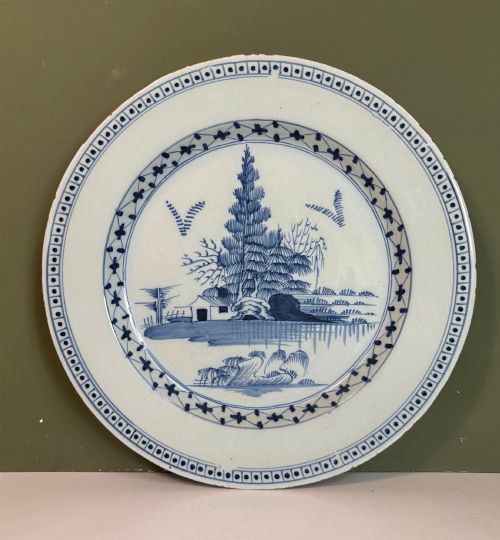
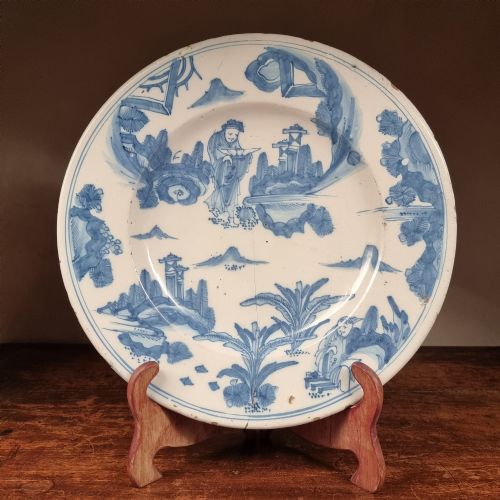
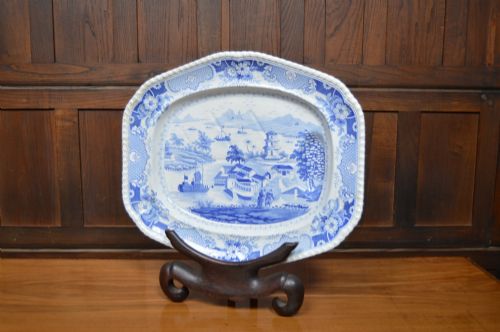
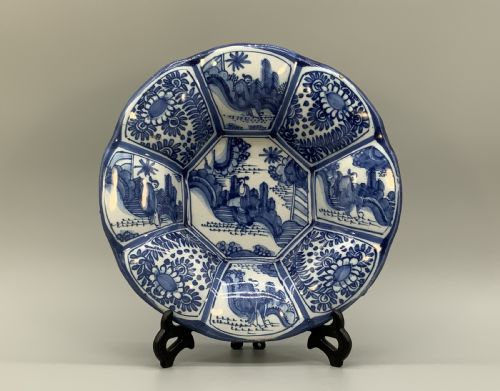
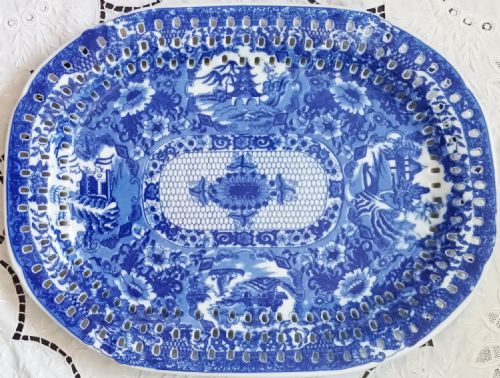
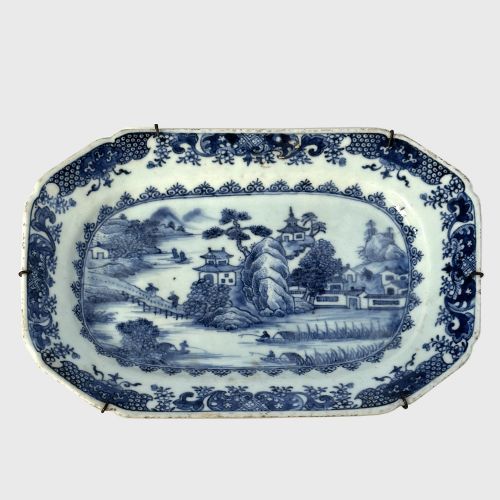
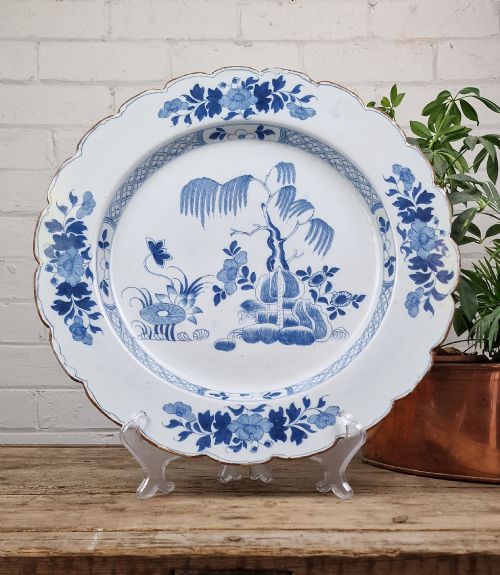
These chinoiserie blue white platter examples bring imaginative scenes and coastal landscapes onto earthenware and porcelain for grand dining tables.
Chinoiserie Blue White Platter
When you search for a chinoiserie blue white platter, you encounter large serving dishes, meat platters, and chargers shaped by centuries of decorative traditions. The selection spans earthenware, ironstone, and tin-glazed pottery bearing orientalist landscapes and garden motifs.
Most entries originate from the eighteenth and nineteenth centuries, merging English transferware production with Asian aesthetic influences. Forms range from deep chargers to specialised meat drainers and bread stands.
Makers adapted motifs such as willow patterns, pagoda scenes, and fauna into large-scale serving vessels intended for formal dining. Collectors find both English transfer-printed pottery and earlier tin-glazed delftware vessels representing these decorative schemes.
Materials and Techniques
Potters utilised earthenware, pearlware, ironstone, and porcelain bodies coated in white glaze before applying cobalt pigment for decoration. Tin glaze provided an opaque white surface for early delftware chargers, while transfer printing allowed intricate patterns like India Temple and Chinese Garden to be transferred onto clay.
Firing techniques determined the vitrification of the ceramic body, particularly in heavy ironstone and stoneware vessels designed to withstand daily service. Enamel highlights occasionally augmented the cobalt designs, adding depth to floral and architectural elements.
Some nineteenth-century platters depict exotic elephants and grasshoppers wandering through idealized English interpretations of Chinese gardens.
Factors of Quality
Visual distinction rests upon the clarity of the cobalt transfer and the richness of the underlying glaze. Sharply rendered lines in patterns such as the elephant or net design indicate careful copperplate engraving during production.
Substantial ironstone bodies and large-format chargers with intact foot rings represent robust manufacturing standards. The crispness of the painted or printed motifs distinguishes standard utility wares from exhibition-grade serving pieces.
John Ridgway·Caughley·Copeland and Garrett·Minton·Mason·Davenport·John Rogers and Son·Bow·Elkin Knight and Bridgwood·Elkington
The Chinoiserie Blue White Platter Glossary
- Transferware
- Pottery decorated by pressing a printed paper design from an engraved copper plate onto the ceramic surface. This technique enabled uniform mass production of complex pictorial scenes.
- Charger
- A large decorative plate or serving dish intended for display on a sideboard or use during feast service. These oversized vessels provide an expansive canvas for pictorial layouts.
- Pearlware
- A refined earthenware developed in the late eighteenth century featuring a subtle bluish glaze that pooled in recesses to mimic Chinese porcelain. It superseded creamware in popularity for blue and white services.
- Tin Glaze
- An opaque white ceramic coating containing tin oxide, providing the characteristic ground for delftware pottery before firing. It creates a smooth surface suited to hand-painted brushwork.
- Well and Tree
- A specialised meat platter design featuring a recessed channel and central reservoir to collect juices during carving. This functional innovation kept joints elevated above accumulated liquids.
Chinoiserie Blue White Platter: Frequently Asked Questions
How were these large platters used?
These large platters served joints of meat, poultry, and communal dishes at formal dining tables. Their generous dimensions accommodated substantial feasts.
Specialised variants like well-and-tree dishes managed carving juices, while deep chargers often doubled as decorative display items on sideboards.
What is the difference between delftware and ironstone?
Delftware employs a porous earthenware body covered in an opaque tin glaze, resulting in a softer, hand-painted aesthetic typical of earlier centuries. Ironstone is a dense, vitrified ceramic developed for durability.
Ironstone pieces withstand heavier service and typically display crisp transfer-printed patterns rather than hand-painted brushwork.
How do I care for antique ceramic platters?
Gentle hand washing in lukewarm water with mild soap preserves the antique glaze and prevents crazing. Dishwashers and harsh detergents cause surface damage.
Display platters benefit from stable wall hangers or padded plate stands that distribute weight evenly across the ceramic body.
How can I tell the period of a blue and white platter?
Ceramic bodies and manufacturing techniques offer primary clues to dating, with early pieces utilising tin-glazed earthenware and later examples employing heavy ironstone or refined pearlware. Transfer-printed patterns often reflect Regency or Victorian stylistic preferences.
Maker marks, impressed ciphers, and pattern names on the reverse provide precise chronological markers when present.