
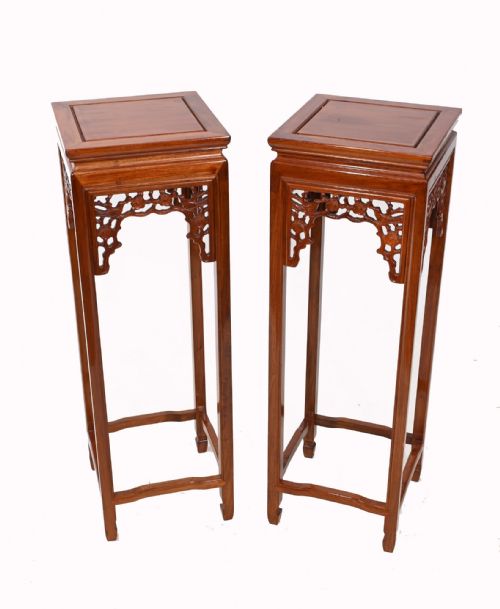
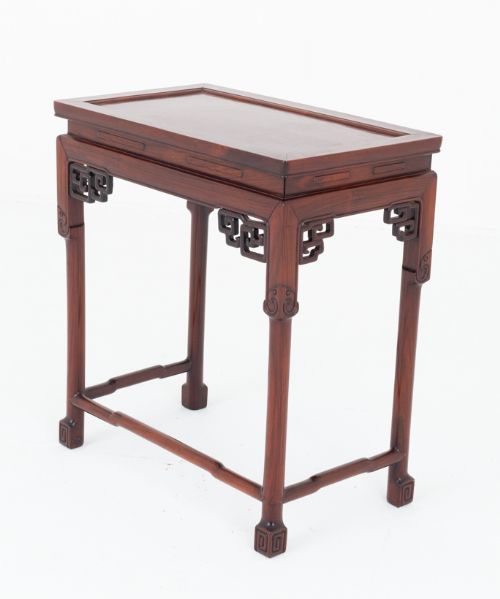


Chinese Wooden Flower Stand
A Chinese wooden flower stand brings quiet architectural form into a room, designed to elevate ceramics and plants with traditional craftsmanship.
Chinese Wooden Flower Stand
When you search for a chinese wooden flower stand, you encounter elevated pedestals and small tables created to display jardinieres, vases, and urns. These pieces serve as focused display platforms within traditional and eclectic interiors alike.
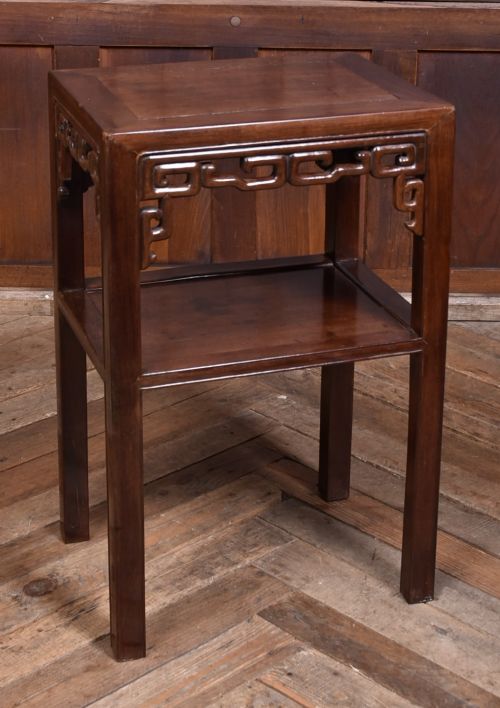
The selections on this page span the nineteenth century through the early twentieth century, encompassing Qing Dynasty pieces alongside later export and traditional styles. Forms range from single-tier plant stands and torcheres to two-tier hongmu urn stands and occasional tables.
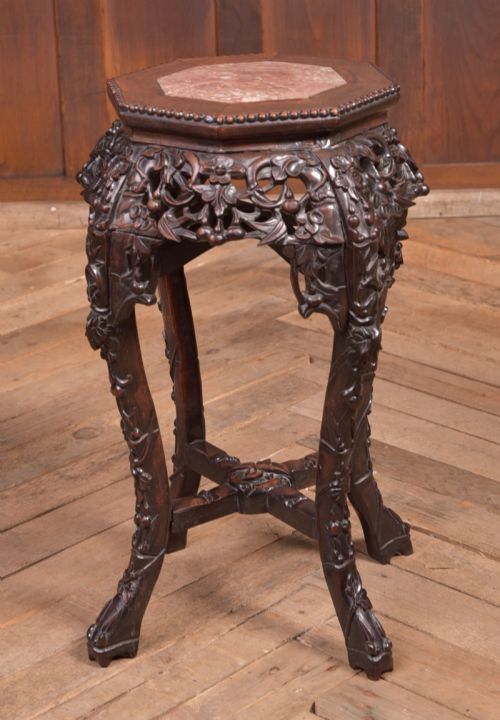
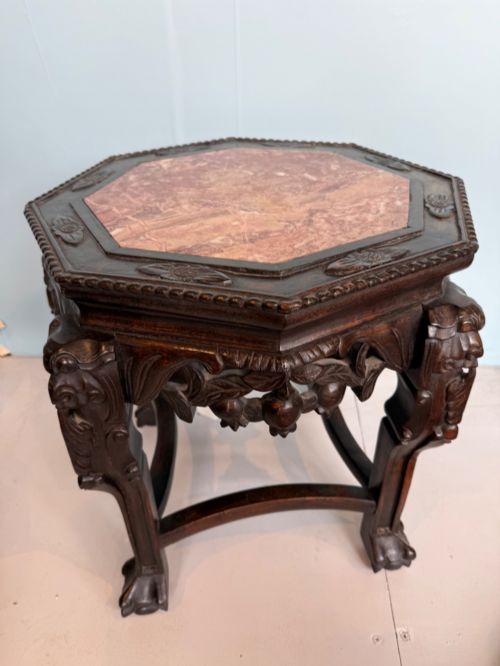
Buyers most frequently meet compact hardwood stands inset with marble panels, designed to support heavy planters while protecting the underlying wood from moisture. These functional items double as side tables, wine tables, and bedside surfaces.
How they were made
Makers utilised dense hardwoods such as hongmu and rosewood, renowned for their structural stability and capacity for intricate relief carving. These timbers provide the rigid framework necessary to support heavy stone inserts without warping.
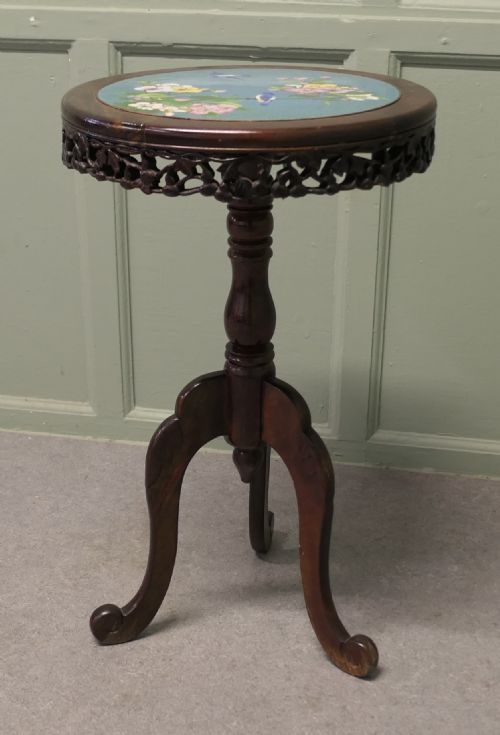
Many examples incorporate polished marble or stone panels set flush into the wooden top, offering a cool, water-resistant surface for damp flower pots. Selected pieces integrate brass elements, cloisonne enamel, or lacquered and painted finishes to enrich the decorative scheme.
Recorded forms include jardiniere stands, wine tables, side tables, and multi-tiered pedestals reflecting traditional Chinese and Qing Dynasty styles.
What varies in quality
The distinction between ordinary and exceptional examples rests upon the depth and crispness of the carved detail in the hardwood frame. Superior pieces display fluid, deeply undercut foliage and geometric motifs executed with deliberate precision rather than mechanical repetition.
The quality of the inset marble and the tightness of the joinery further define the hierarchy of these stands. Well-fitted stone panels, stable frames showing minimal shrinkage, and rich, unblemished patination separate finer workshop production from simpler utility pieces.
The Chinese Wooden Flower Stand Glossary
- Hongmu
- A dense tropical hardwood prized in traditional Chinese furniture making for its deep reddish-brown tone and heavy weight. It accommodates fine, intricate carving without splintering.
- Jardiniere stand
- A tall, narrow piece of furniture specifically designed to hold a large ornamental flower pot or plant container. These stands raise foliage to eye level within a room.
- Torchere
- A tall stand or pedestal originally intended to support a torch or candle, later adapted to hold lamps, vases, or floral displays. The form provides a slender profile for room corners.
- Chinoiserie
- European artistic interpretation and imitation of Chinese decorative styles, prevalent in furniture and design from the eighteenth through the early twentieth century. This style blends Asian motifs with Western forms.
- Cloisonne enamel
- A decorative metalwork technique where enamel paste is applied within compartments created by soldered wires before firing. It appears on select table surfaces and decorative accents.
Chinese Wooden Flower Stand: Frequently Asked Questions
What is a Chinese wooden flower stand used for?
These stands were traditionally built to elevate potted plants, heavy ceramic jardinieres, and decorative vases above the floor level. This elevation protected valuable containers from damage and showcased botanical displays as focal points.
In modern interiors, they function equally well as compact side tables, lamp tables, or independent display pedestals for sculpture and ceramics.
How do I identify a Qing Dynasty stand?
Qing Dynasty pieces often utilise dense hardwoods like hongmu or rosewood, paired with inset marble tops and deeply carved traditional motifs. The construction relies on traditional joinery methods designed to manage wood movement over time.
Examining the patination, tool marks on the underside, and the weight of the timber helps distinguish nineteenth-century examples from later reproductions.
Can these stands support heavy plants?
Original stands constructed from dense hardwoods and reinforced with robust joinery are inherently sturdy and engineered to carry considerable weight. The inclusion of heavy marble inserts adds both stability and a solid base for large pots.
It remains wise to inspect the frame stability and leg joints to ensure the antique structure can safely bear heavy loads without strain.
What is the difference between a plant stand and a torchere?
Plant stands generally feature broader tops designed specifically to accommodate wide jardinieres, sometimes incorporating protective marble panels against moisture. Their proportions prioritise a stable base for heavy vessels.
Torcheres are typically taller and narrower, originally intended to hold candles or lighting fixtures rather than wide planters, resulting in a more slender vertical presence.