





Chinese Wall Charger
A Chinese wall charger is a large display dish that brings centuries of ceramic artistry and bold colour directly to a room.
Chinese Wall Charger
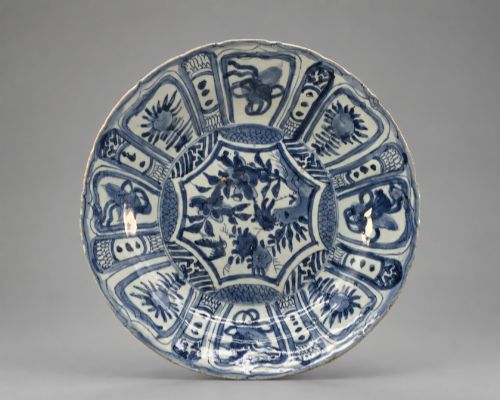
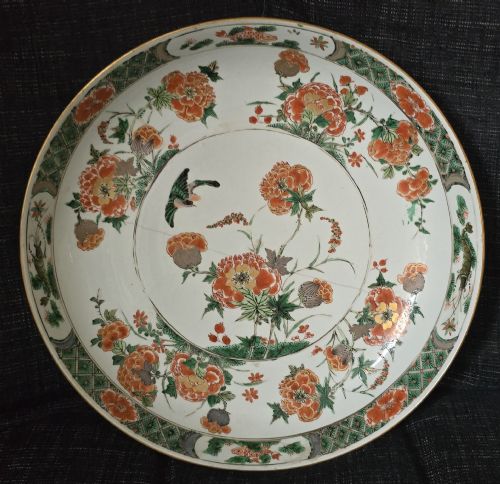
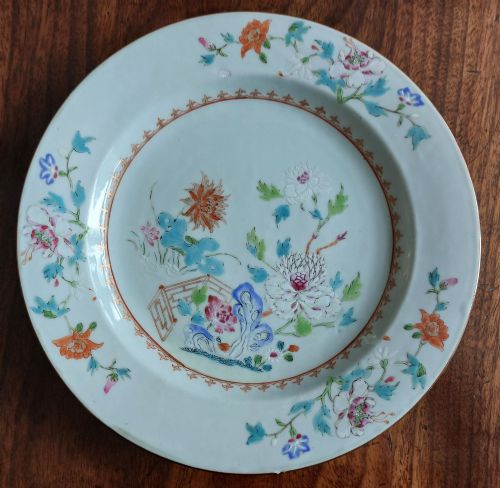
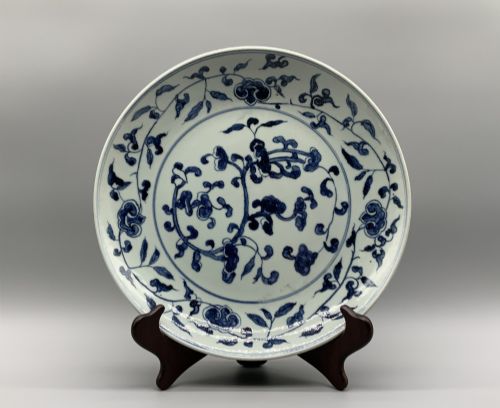
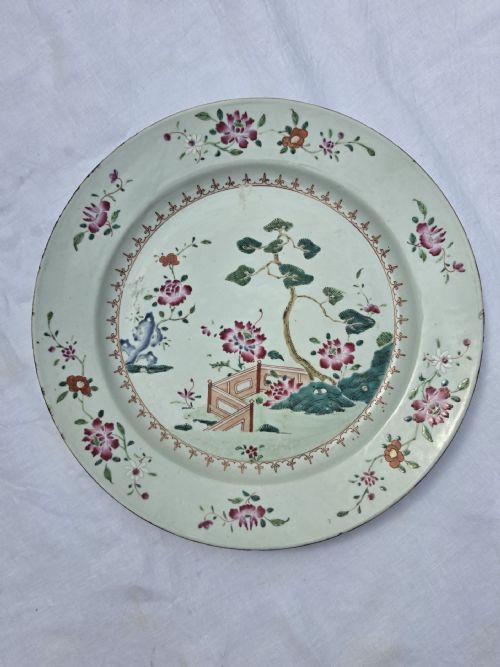
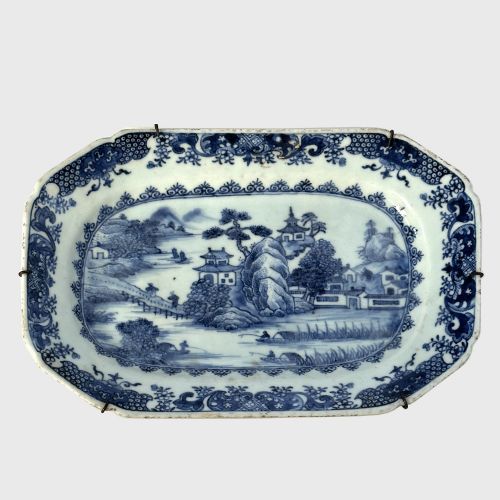
A Chinese wall charger spans a broad decorative tradition, taking the form of large porcelain or earthenware dishes intended primarily for display rather than dining.
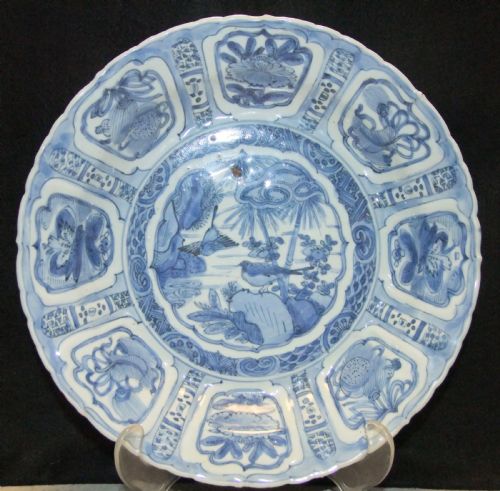
The pieces on this page range from the robust blue and white porcelain of the seventeenth century to intricate eighteenth-century export wares and later nineteenth-century interpretations.
Forms include wide chargers, deep plates, and scalloped dishes, representing periods from the Ming and Qing dynasties alongside later European responses to East Asian styles.
Materials and technique
Potters utilised hard-paste porcelain and earthenware as foundations, shaping large plates and dishes to carry expansive decorative schemes.
Decoration relied on cobalt glaze and cobalt pigment for blue and white designs, alongside vibrant enamel palettes for Famille Rose and Famille Verte compositions.
Techniques combined hand-painted brushwork with high-temperature firing, occasionally integrating cloisonne or bronze mounts to complete the object.
Chinese Wall Charger Retail Price Guide 2026
Typical asking prices for chinese wall charger among the pieces listed under this phrase on Sellingantiques today, from the lower quarter to the upper quarter. They describe what is for sale here now, not the wider market.
Court life scenes painted on chargers give tiny, permanent windows into historical fashion and garden design.
Evaluating quality
The finesse of the brushwork distinguishes superior examples, where hand-painted details display confident lines and careful control of pigment.
Depth of glaze and clarity of colour separate standard production wares from pieces commissioned for export or high-status domestic use.
The preservation of the ceramic body and the crispness of moulded or scalloped edges reflect the original skill of the workshop.
The Chinese Wall Charger Glossary
- Charger
- A large decorative plate or dish, traditionally exceeding the diameter of standard dining ware and intended for display.
- Famille Rose
- A palette of opaque enamels dominated by pink or rose hues, introduced during the Qing dynasty and widely used on export porcelain.
- Famille Verte
- A polychrome enamel decoration scheme dominated by green tones, prevalent on porcelain from the seventeenth century onward.
- Kraak porcelain
- A type of Chinese export porcelain characterised by panelled decoration and blue and white motifs, produced mainly during the Wanli period.
- Hard-paste porcelain
- A dense, vitrified ceramic made from petuntse and kaolin, fired at high temperatures to create a durable, non-porous body.
Chinese Wall Charger: Frequently Asked Questions
How were Chinese wall chargers used historically?
These large dishes served primarily as decorative items for display on tables, sideboards, or walls in prosperous households and palaces.
Their substantial size provided artisans with an expansive canvas to showcase intricate narrative scenes, floral motifs, and symbolic patterns.
How do I hang a heavy antique charger safely?
Hanging a heavy porcelain or ceramic charger requires a specialised, spring-loaded wall hanger with rubber-coated prongs that distribute weight evenly.
Ensure the fixing is anchored directly into a wall stud or uses a rated wall plug to support the substantial mass securely.
How can I tell eighteenth-century porcelain from later copies?
Eighteenth-century porcelain typically exhibits subtle imperfections in the glaze, variations in cobalt pigment depth, and lightweight yet dense body characteristics.
Handling numerous examples helps reveal the distinct feel of period potting methods compared to uniform modern reproductions.
What is the difference between export ware and domestic porcelain?
Export wares were specifically manufactured in China to suit European tastes and interior decoration trends, often featuring specific shapes and motifs.
Domestic pieces followed native aesthetic standards and imperial preferences, though both share high levels of ceramic craftsmanship.