


Chinese Rosewood Stool
A Chinese rosewood stool is a solid timber seat or low stand, prized for its dense grain and carved Qing dynasty detail.
Chinese Rosewood Stool
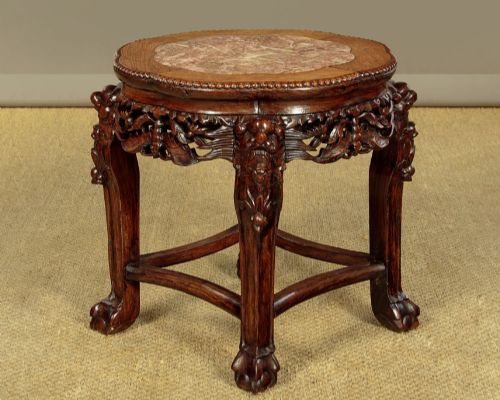
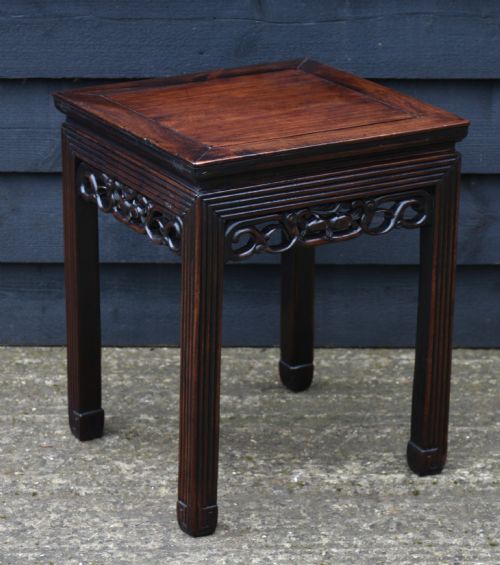
A Chinese rosewood stool encompasses low seats, window seats, and compact occasional tables used across the nineteenth century. These forms include square low tables, barrel-form stands, and round dish-top stools fashioned for traditional interiors.
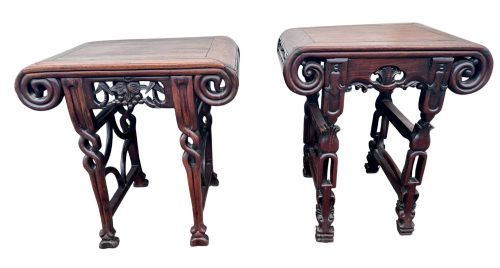
The pieces appearing here stem largely from the nineteenth century and the Qing dynasty, often crossing over into Chinese export styles. Buyers encounter matched pairs as well as single plant stands and side tables alongside the seating.
Makers utilised dense Asian timbers to build pieces that double as plant stands, lamp tables, and jardiniere holders. Their robust construction suits domestic display just as well as actual seating.
How they were made
Joinery relies on dense timbers such as rosewood, hongmu, and huali wood, selected for their weight and rich natural colour. Artisans carved these heavy hardwoods deeply to create complex floral and geometric motifs.
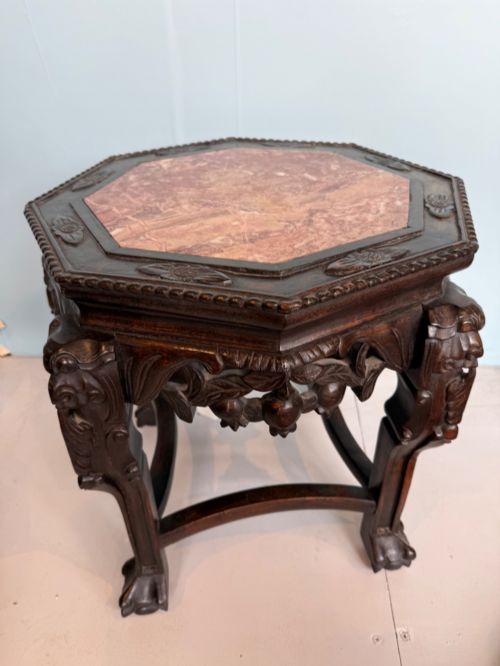
Many tops incorporate inset slabs of rouge marble or smooth porcelain panels to contrast with the dark timber framework. Mother-of-pearl inlay occasionally adds brightness to the carved surfaces of the stool or stand.
Object forms span low occasional tables, barrel-form stands, window seats, and paired plant stands created during the Qing dynasty.
What varies in quality
The crispness of the hand-carved detail separates standard joinery from superior examples of nineteenth-century work. Deep, undercut carving on the aprons and legs demonstrates greater artisanal skill than shallow surface incisions.
The selection and fitting of inset marble or porcelain panels determine the visual balance of the piece. Well-matched stone with lively natural veining elevates a rosewood stand far above plain timber tops.
The Chinese Rosewood Stool Glossary
- Hongmu
- A dense, dark tropical hardwood used traditionally in Chinese furniture making. It translates literally as red wood and develops a deep patina over time.
- Huali wood
- A fragrant and highly figured hardwood prized in Qing dynasty seating and tables. Its grain patterns often display intricate whorls and eyes.
- Rouge marble
- A reddish ornamental stone imported and cut to fit the inset tops of stands and tables. It provides a cool, smooth surface contrasting with dark timber.
Chinese Rosewood Stool: Frequently Asked Questions
Are these stools meant for sitting?
Many nineteenth-century examples functioned as dressing stools, window seats, or low occasional furniture for domestic use.
Others served primarily as plant stands, jardiniere holders, or display tables for porcelain objects.
How do I care for rosewood furniture?
Keep these timber pieces away from direct heat sources and sudden humidity changes to prevent wood movement.
Apply a light application of natural wax occasionally to nourish the dense grain without building up heavy residue.
What is the difference between hongmu and huali?
Both terms describe dense Asian hardwoods utilised in nineteenth-century Chinese cabinetmaking.
Hongmu refers generally to heavy red woods, while huali denotes specific fragrant varieties known for striking grain figures.
Why do some stands have marble tops?
Inset marble panels provided a cool, heat-resistant surface suitable for holding warm teapots or heavy plant pots.
This stone also added decorative contrast and weight stability to tall plant stands and lamp tables.