






Chinese Root Carving
These Chinese root carving pieces turn natural gnarled timber into expressive figures, lamps, and stands that bring organic form into a room.
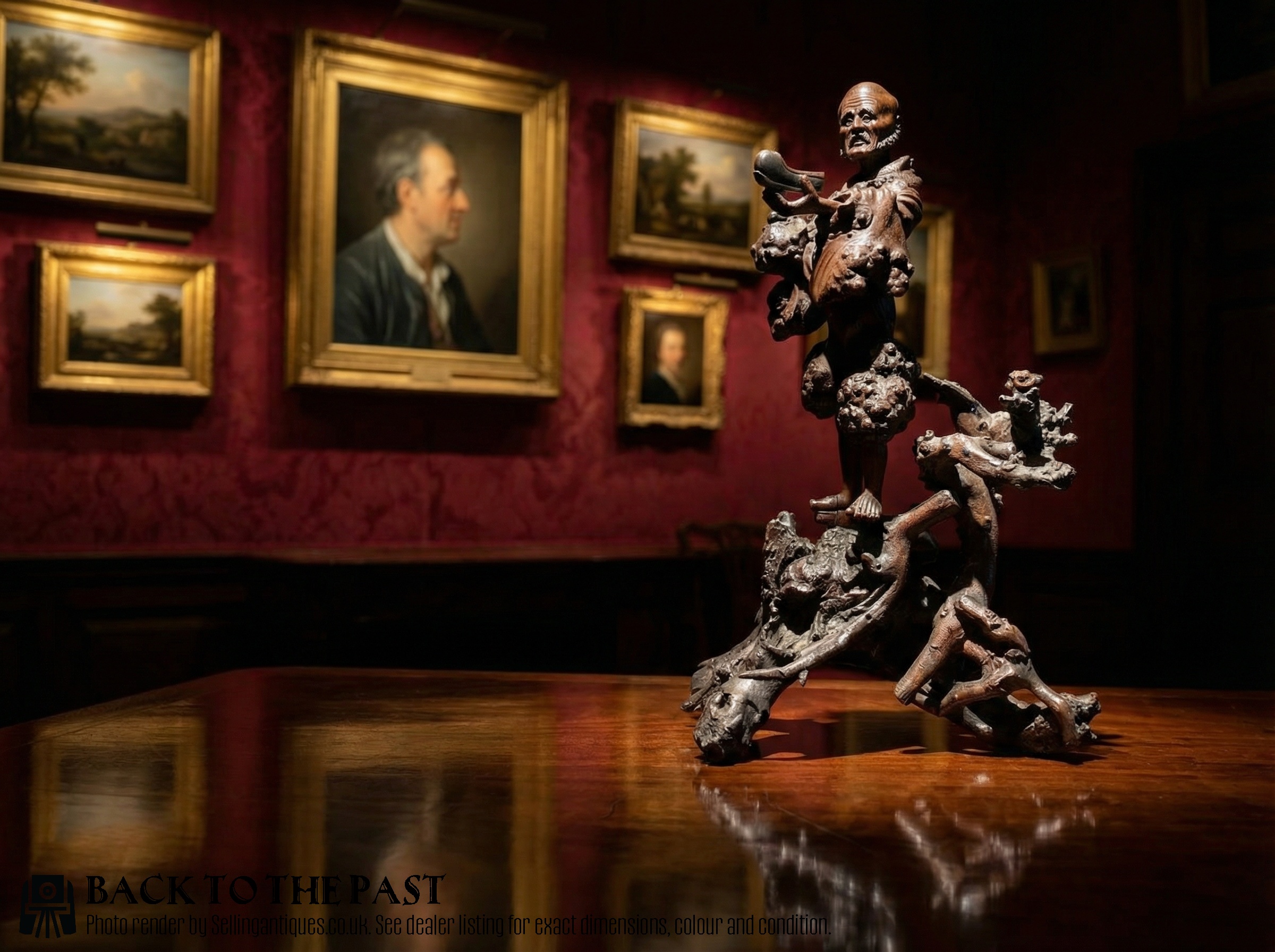
Chinese Root Carving
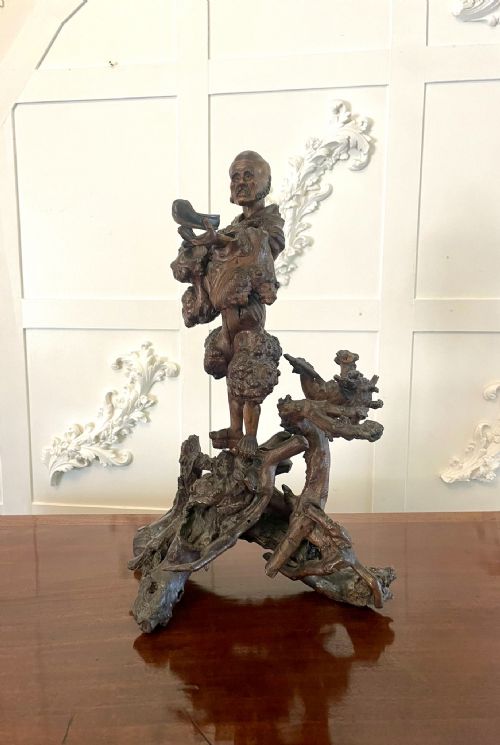
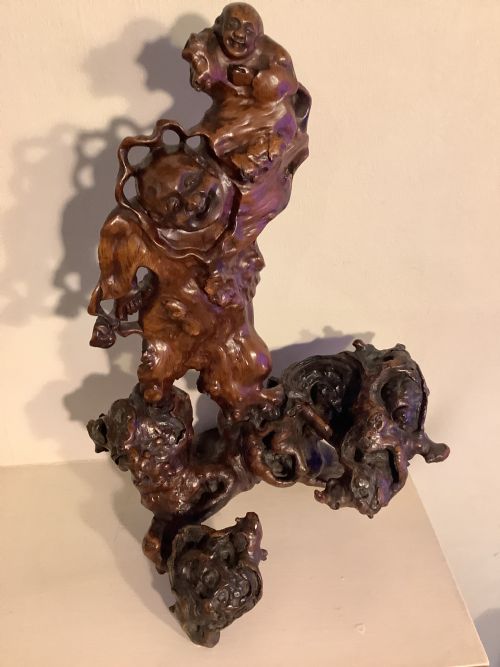
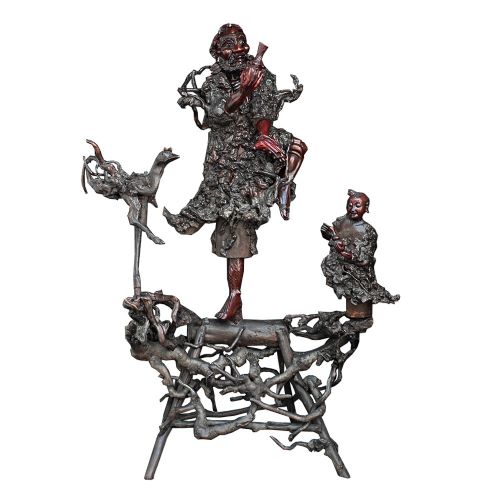
A Chinese root carving uses the natural twists, knots, and turns of timber to suggest figures, animals, and scholars rather than starting from a regular block. These works emerge primarily in forms such as figural sculptures, table lamps, small stands, and headrests.
The pieces on this page span the eighteenth and nineteenth centuries, including items from the Qing Dynasty. Figures often depict scholars, deities such as Shou Lao, or mortals accompanied by children.
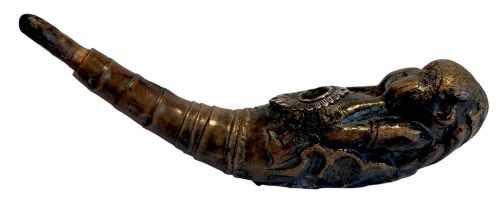
Beyond standalone sculptures, artisans also shaped root wood into functional objects like smoking pipes and table bases, sometimes incorporating stone tops like quartz.
Materials and construction
Carvers worked with dense materials including root wood, rootwood, burr wood, and bamboo, following the eccentric contours dictated by nature. Artisans trimmed and polished the timber to develop a deep patina while retaining the gnarls and hollows of the original root.
Secondary elements occasionally integrate other media, such as brass or lacquer details, alongside fitted stone surfaces for tables and stands.
Assessing quality and detail
The condition of the patina and the stability of the chunky root structure also determine the desirability of each sculpture or lamp.
The Chinese Root Carving Glossary
- Root wood
- Timber taken from the root system of a tree, prized for twisted and gnarled growth patterns. Carvers shaped these organic forms into figurative sculptures and functional objects.
- Burr wood
- A growth on a tree where the grain has deformed in a swirl, creating highly figured patterns. Artisans valued this material for its rich surface texture.
- Shou Lao
- The Chinese Taoist god of longevity, frequently depicted as an old man with a high forehead. Sculptors often portrayed him carrying a staff or peach.
- Foo Dog
- A traditional guardian lion depicted in pairs outside Chinese buildings and in smaller carvings. These mythical beasts symbolize protection and prosperity.
- Qing Dynasty
- The last imperial dynasty of China, lasting from 1644 until 1912. Many extant root carvings date to the later decades of this period.
Chinese Root Carving: Frequently Asked Questions
How were Chinese root carvings used?
These pieces served as scholar's desk ornaments, decorative sculptures in homes, and occasionally as functional items like lamp bases or small tables. They brought elements of nature and traditional symbolism into interior spaces.
Figures of deities and sages were placed to invite longevity and good fortune, while headrests and pipes served daily domestic functions.
What wood was used for these carvings?
Carvers utilised various dense timbers including root wood, burr wood, and bamboo. The choice depended on finding a root with natural twists that resembled a human figure or animal.
Hardwoods and specialised root materials were selected for their ability to take a smooth, polished patina over time.
Are these carvings solid wood?
Yes, they are carved from single pieces of dense root timber or bamboo. The natural weight of the root gives these sculptures a heavy and chunky feel.
Larger table bases and stands may incorporate fitted stone inserts such as quartz alongside the carved wooden frame.