


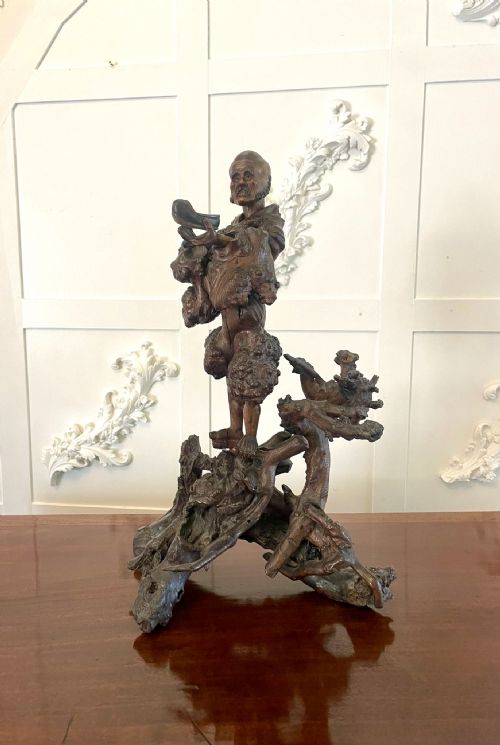


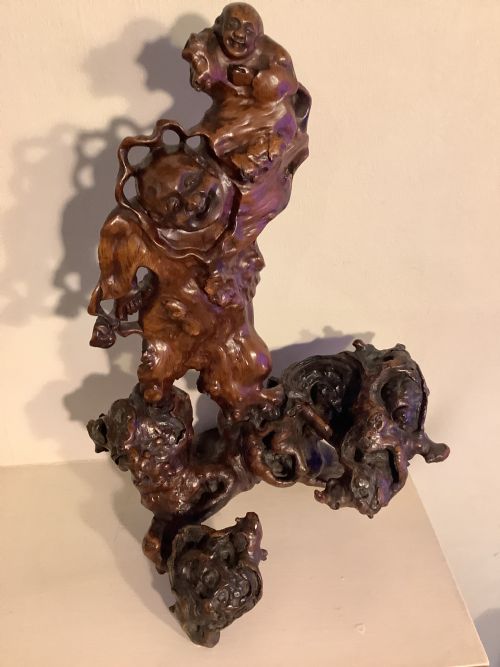
Chinese Root Carving Sculpture
These Chinese root carving sculpture pieces combine natural organic forms with skilled hand manipulation, offering collectors tactile figures, stands, and lamps.
Chinese Root Carving Sculpture
A Chinese root carving sculpture is an organic three-dimensional object formed by shaping natural wood roots, burrs, and bamboos into figures, tables, and lamps. These items date primarily from the nineteenth century, including specific years from eighteen sixty to nineteen hundred, and often align with the Qing Dynasty or traditional regional Chinese aesthetics.
The most common items you will encounter on this page are figural sculptures depicting scholars, deities, and men carrying companions, alongside functional items such as tables, stands, headrests, and table lamps. Figures frequently portray cultural archetypes like Dogs of Foo or lion dogs with distinct expressions and robust proportions.
Materials and construction
Makers utilised root wood, rootwood, burr wood, hardwood, bamboo, and occasionally brass or lacquer accents to construct these sculptures. Burr wood and root wood provided knotty, irregular textures that carvers exploited for dramatic effect.
Carvers cut away excess material while preserving the natural twists, knots, and grain patterns inherent to the root or bamboo. This subtractive method required working with the grain rather than against it, ensuring the finished sculpture retained the structural integrity of the raw timber.
Chinese Root Carving Sculpture Retail Price Guide 2026
Typical asking prices for chinese root carving sculpture among the pieces listed under this phrase on Sellingantiques today, from the lower quarter to the upper quarter. They describe what is for sale here now, not the wider market.
Listings feature nineteenth-century items spanning from eighteen sixty to nineteen hundred, including the Qing Dynasty period.
Assessing quality in root carvings
Quality rests upon the harmony between the natural growth of the wood and the intervention of the carver. Superior pieces use the eccentric knots and twists of the root to articulate anatomy or drapery without looking forced.
The depth of the patina and the crispness of the residual chisel work distinguish finer examples. A well-maintained surface displays a warm, deep sheen built up through handling and age, while maintaining distinct sculptural edges on faces and hands.
The Chinese Root Carving Sculpture Glossary
- Root wood
- Timber sourced from the underground or lower structural growth of a tree, prized for its dense, gnarled grain. This material forms the foundation of most sculptural works on this page.
- Burr wood
- A tree growth where grain has deformed in a deformed manner, creating intricate swirls and patterns. Carvers utilised burr wood sections to add visual complexity to robes or body forms.
- Dog of Foo
- A mythical guardian lion depicted in pairs as a protector of sacred spaces. These creatures appear frequently in nineteenth-century root and hardwood carvings with stylised manes and open mouths.
- Patina
- The surface sheen and coloration developed through age, oxidation, and handling. A good patina indicates genuine antiquity and careful preservation of the raw timber.
Chinese Root Carving Sculpture: Frequently Asked Questions
How do I care for a root wood sculpture?
Keep wooden sculptures away from direct sunlight and severe humidity fluctuations to prevent the natural timber from splitting.
Dust the intricate crevices gently with a soft brush and avoid applying modern chemical polishes that can damage the antique surface.
Were these carvings used as furniture?
Several pieces double as functional objects, including small display stands, side tables, and headrests integrated into the organic root structure.
Makers often adapted natural forks and burls to support stone inserts like quartz or to serve as stable bases for daily use.
What subjects do these sculptures usually depict?
Common subjects include Daoist immortals, scholars, figures carrying companions, and mythical guardian animals such as lion dogs.
These motifs reflect traditional Chinese cultural values, longevity, and auspicious protection within the home.
How can I tell the period of a carving?
Dating relies on tool marks, wood shrinkage, wear patterns, and stylistic conventions associated with the nineteenth century and Qing Dynasty.
Evidence of hand-carving techniques and a deep, undisturbed surface patina point toward nineteenth-century manufacture.