



Chinese Relief Carved Vessel
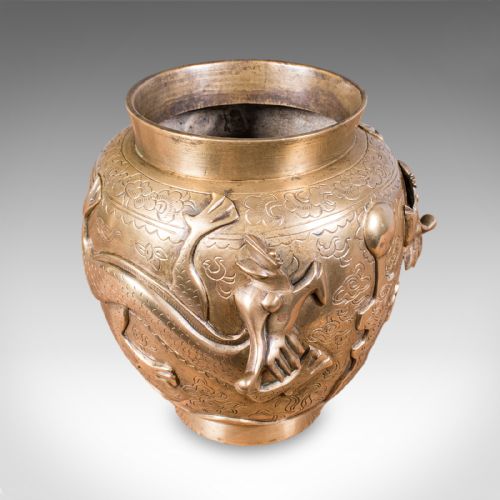
A Chinese relief carved vessel brings tactile depth to a room, presenting intricate sculptural scenes cast in metal or carved directly into organic matter.
Chinese Relief Carved Vessel
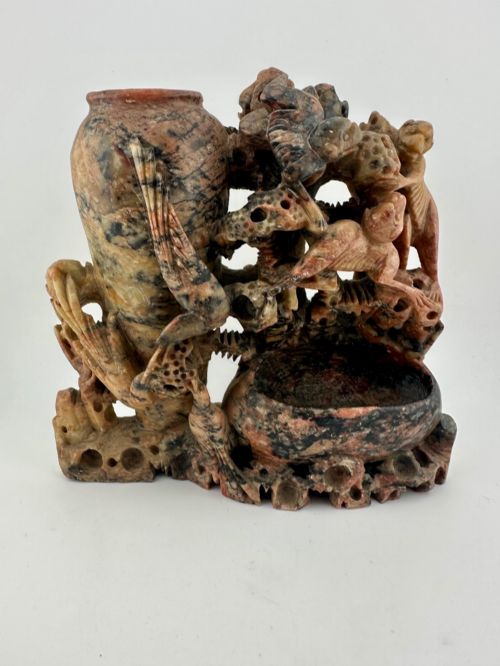
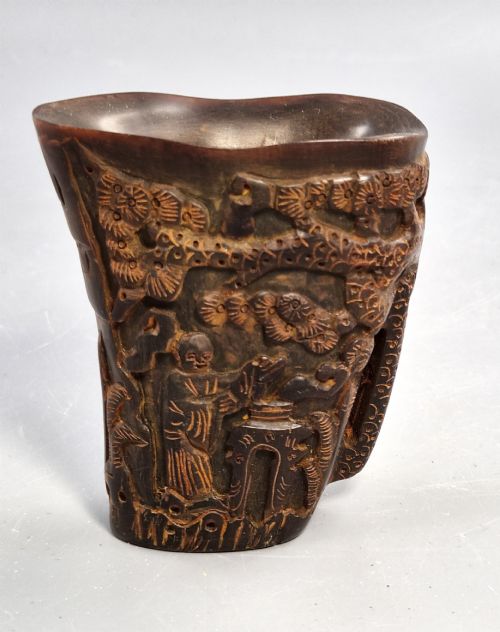
A Chinese relief carved vessel encompasses diverse functional and decorative forms created for scholarly and domestic environments. These objects range from soapstone brush washers and water buffalo horn libation cups to bronze baluster vases and bamboo brush pots.
The pieces on this page span several centuries, with examples originating from the Ming and Qing dynasties alongside Victorian interpretations and 19th-century works. Forms frequently serve scholarly pursuits or display ritual motifs, including Daoist immortals, dragons, and floral panels.
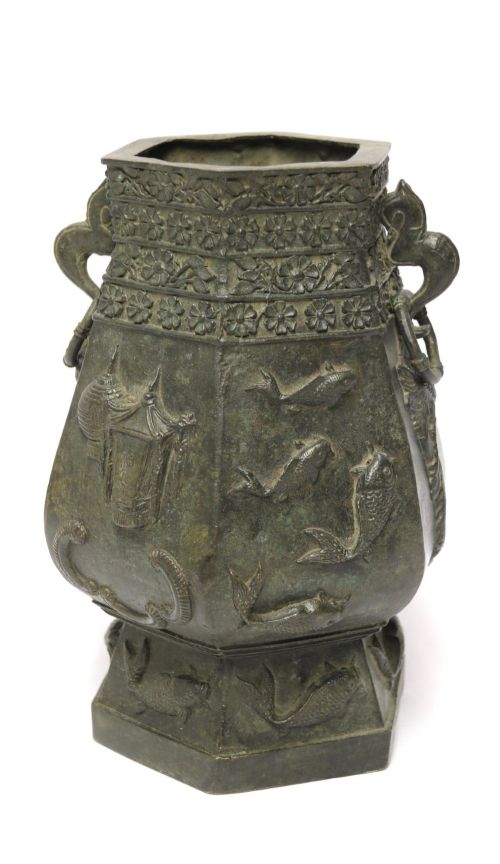
Buyers encounter receptacles shaped as hexagonal vessels, lidded boxes, and censer bowls alongside tall baluster vases and desk planters. Each piece demonstrates the translation of traditional iconography into three-dimensional surface decoration.
Materials and construction
Metalwork vessels rely on casting techniques using bronze, copper alloy, brass, and cast iron to form sturdy bodies like baluster vases and temple baths. Artisans then worked these surfaces to raise distinct motifs, integrating base marks and structural relief panels.
Organic media such as bamboo, soapstone, and water buffalo horn undergo meticulous hand carving rather than casting. Craftsmen utilise the natural grain and density of bamboo and horn to execute deep, profuse pictorial scenes depicting figures, pine trees, and animals.
Chinese Relief Carved Vessel Retail Price Guide 2026
Typical asking prices for chinese relief carved vessel among the pieces listed under this phrase on Sellingantiques today, from the lower quarter to the upper quarter. They describe what is for sale here now, not the wider market.
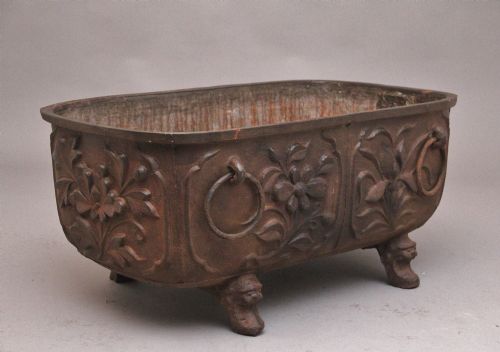
A heavy cast iron temple bath sits ready for an exceptionally tiny deity.
Distinctions in quality
Quality rests upon the depth and precision of the carving or casting, distinguishing flat surface decoration from dynamic high-relief work. Superior pieces exhibit crisp detailing in complex motifs such as Daoist immortals and dragon panels, whereas lesser examples show softer edges and shallower definition.
The selection of raw material dictates the caliber of the finished vessel, whether dealing with dense, unblemished soapstone, heavy-gauge cast bronze, or finely figured bamboo and horn. Handling weight and structural integrity further separate standard utility wares from master-carved scholar's objects.
The Chinese Relief Carved Vessel Glossary
- Libation cup
- A ceremonial vessel, often carved from rhinoceros or water buffalo horn, designed for pouring ritual liquids. These pieces frequently feature intricate exterior scenes depicting figures and natural landscapes.
- Censer
- A vessel utilised for burning incense during ritual or scholarly practices. Bronze examples often incorporate relief panels and tripod supports.
- Baluster vase
- A vase featuring a bulbous lower body that tapers towards a narrow neck and flared rim. This silhouette provides an expansive surface area for high-relief figural scenes.
- Brush washer
- A small scholar's desk object used to clean calligraphy brushes. Soapstone and ceramic examples appear frequently within scholarly contexts.
Chinese Relief Carved Vessel: Frequently Asked Questions
What is a scholar's vessel used for?
Scholar's vessels served practical functions within traditional Chinese studies, holding writing brushes, washing ink tools, or burning incense. They were designed to sit on a desk to assist the literati in daily writing and contemplation.
Beyond utility, these carved objects reflected the owner's refined taste and philosophical interests through symbolic motifs like Daoist immortals and the three friends of winter.
How do you date a bronze vessel?
Dating relies on examining casting techniques, patination, stylistic markers, and any inscribed base marks, such as a Xuande reference. Metal composition and the sharpness of the cast relief help distinguish Ming dynasty pieces from 19th-century works.
Comparing the vessel's form and iconography to documented examples from specific periods provides further chronological context.
What materials are carved in these pieces?
Carvers utilised a variety of organic and inorganic substances, including dense bamboo, water buffalo horn, and soapstone. Each medium required distinct hand-carving techniques to achieve raised pictorial designs.
Metalworkers instead cast bronze, brass, copper alloy, and iron before applying surface chiselling and relief work to create vases, censers, and planters.
How should I display a relief vessel?
These vessels suit placement on flat surfaces where adequate lighting highlights the depth of the carved or cast relief. Placing them away from direct heat sources protects organic materials like bamboo and horn from drying out.
Allowing sufficient space around heavier bronze vases and jardinières ensures their sculptural forms remain the focal point of a room.