




Chinese Relief Bronze Urn
A Chinese relief bronze urn brings heavy metalwork into a room, shaped in styles from the Qing Dynasty and Victorian periods.
Chinese Relief Bronze Urn
A Chinese relief bronze urn represents a category of metal vessels made in forms such as vases, censers, and jardinières. These items originate from periods including the 19th century, Qing Dynasty, and Victorian era.
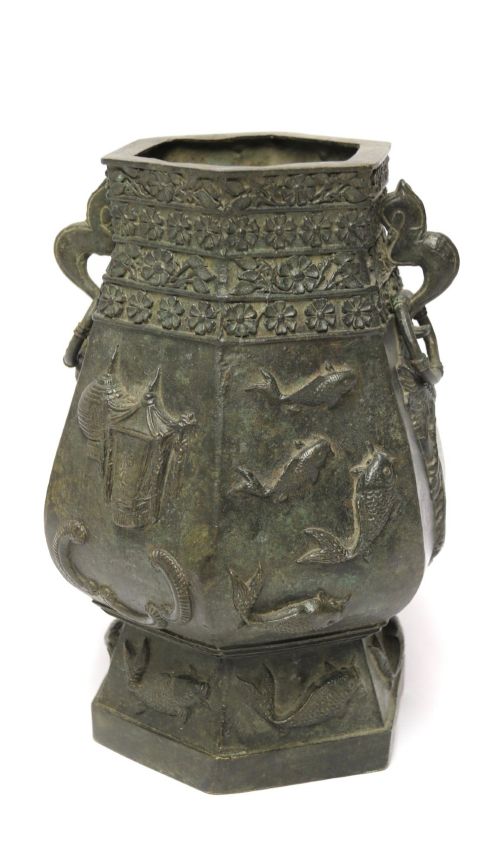
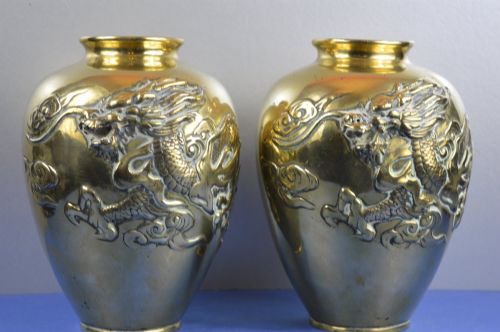
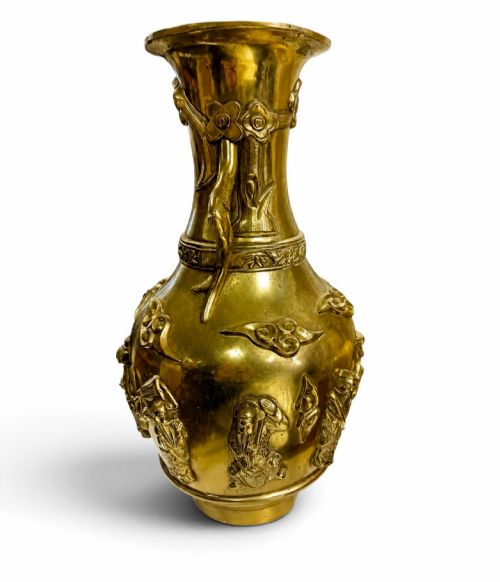
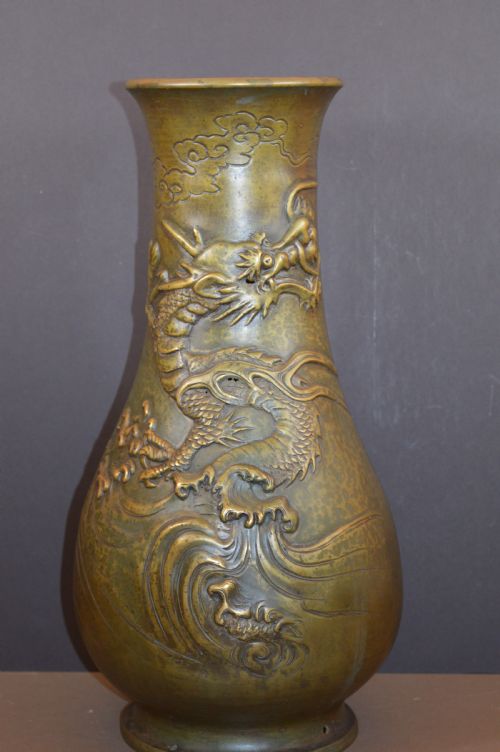
Buyers seeking a Chinese relief bronze urn will most frequently encounter large baluster vases, pairs of dragon vases, and solid hexagonal vessels. The pieces often feature high-relief decoration depicting Daoist Immortals, dragons, and Fu lion finials.
The design lineage spans Chinese Export and Late Qing Dynasty aesthetics, alongside occasional Japanese Meiji or broader Asian and Oriental stylistic overlaps in the record. Such heavy vessels serve as decorative display pieces rather than utilitarian containers.
How they were made
Makers utilised bronze, brass, copper alloy, and gilt bronze to cast these substantial objects. The metal is often finished with a dark patina or highlighted in gilt.
Relief casting and high-relief sculptural elements define the surface work, creating dimensional figures and dragons wrapping around the body. Bases sometimes carry specific marks, such as a Xuande mark.
A fierce Fu lion keeps watch as a removable finial on top of a heavy bronze censer.
What varies in quality
Weight and scale separate the substantial examples, some exceeding five kilograms, from lighter pieces. The definition and crispness of the high-relief figures, such as Daoist Immortals or Fu lions, dictate the visual strength of the cast.
The choice of finish, ranging from plain patinated bronze to gilt enrichment, alters the character of the surface. Base marks and overall structural integrity further differentiate individual vessels.
The Chinese Relief Bronze Urn Glossary
- Censer
- A vessel used for burning incense. These often feature distinctive covers topped with figures like a Fu lion.
- Baluster
- A vase shape with a rounded lower body that tapers into a narrower neck. This form provides a broad surface for relief decoration.
- Patina
- A surface coloration resulting from age or chemical treatment. Patinated bronze displays varied dark tones on the metal.
- Xuande base mark
- A stamp or inscription referencing the Xuande Emperor period. Later dynastic pieces frequently used these marks in tribute.
Chinese Relief Bronze Urn: Frequently Asked Questions
How heavy are these bronze urns?
Many examples weigh several kilograms, often ranging from three to over five kilograms depending on the scale and thickness of the metal.
This solid construction gives the vessels a heavy, stable presence when placed in a room.
What do the dragon motifs mean?
Dragons appearing on these vessels relate to traditional Chinese symbolism denoting power, strength, and imperial association.
They are frequently cast winding around the necks or bodies of large baluster vases.
Are these pieces strictly Chinese?
The listings encompass Qing Dynasty and Chinese Export origins, alongside Victorian interpretations and related Meiji period items.
Asian and Oriental stylistic influences overlap within the broader group of metalwork.
How do I clean patinated bronze?
Patinated surfaces require gentle dusting with a soft, dry cloth to preserve the dark finish.
Moisture and harsh cleaning agents should be avoided to protect the aged metal.