


Chinese Polychrome Ceramic Lamp
A chinese polychrome ceramic lamp brings vibrant enamels and rich historical form into an interior, offering colour and illumination.
Chinese Polychrome Ceramic Lamp
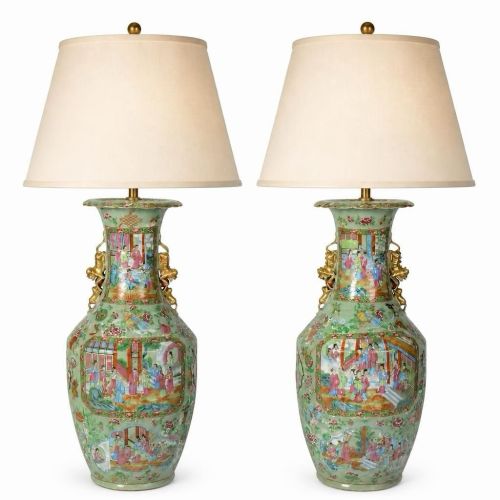
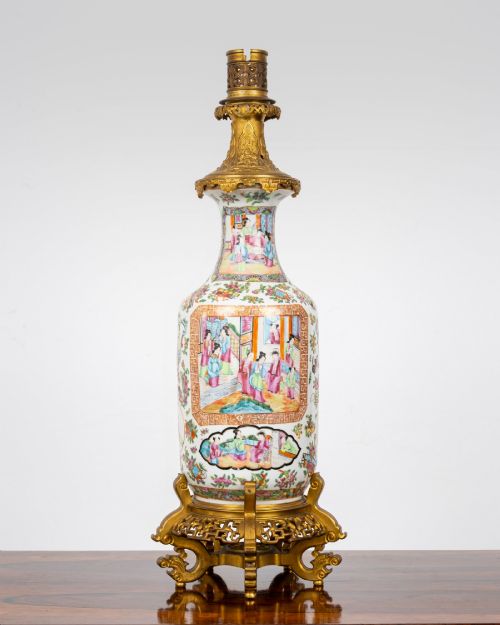
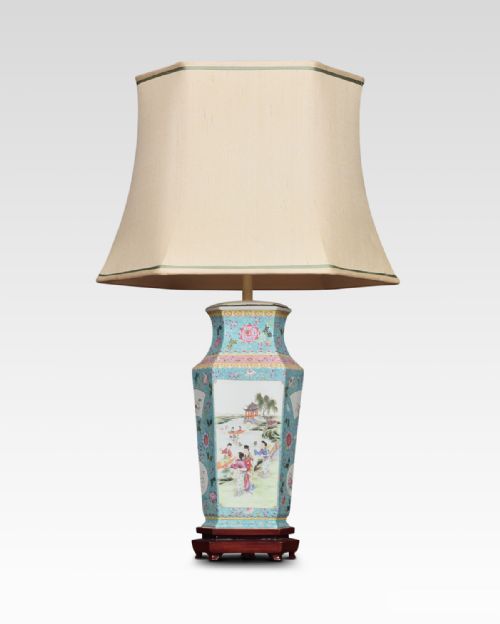
A chinese polychrome ceramic lamp typically originates from the nineteenth century or the early twentieth century, formed from historic porcelain vases and ginger jars. These vessels, including rose medallion and canton styles, are converted into table lamps to display hand-painted decoration within a modern interior.
The objects frequently feature famille rose and famille verte palettes, depicting traditional scenes, flowers, and alternating bands of ornament. Many examples appear in pairs, retaining their original proportions while supporting electrical fittings.
Mounts in brass, gilt bronze, and gilt metal often secure the ceramic body to a wooden base. These additions transform functional storage vessels and decorative vases into stable lighting centerpieces.
How they were made
Potters shaped the porcelain bodies on the wheel or in moulds, applying intricate mineral enamels by hand before high-temperature firing. This process produced durable surfaces with rich polychrome colour schemes.
Metalworkers subsequently fitted the porcelain vessels with brass, gilt bronze, or gilt metal mounts to stabilize the base and accommodate lamp wiring. Hardwood elements were often integrated to complete the structure.
Ginger jars once held spices, but now they hold light bulbs.
What varies in quality
The precision and detail of the hand-painted enamels define the visual calibre of the piece. Superior examples exhibit finely rendered figures and crisp floral bands, while simpler versions display broader, repetitive brushwork.
The integration of metal mounts and hardwood components also marks the difference between standard conversions and finer decorative works. High-grade mountings complement the porcelain contour without obscuring the original ceramic decoration.
Samson Porcelain
The Chinese Polychrome Ceramic Lamp Glossary
- Famille Rose
- A palette of opaque pink or rose enamel introduced in the eighteenth century. It dominates many nineteenth-century porcelain pieces.
- Rose Medallion
- A distinct style of Canton porcelain featuring panels of figures alternating with birds and flowers. The decoration is densely coloured and highly detailed.
- Ginger Jar
- A wide-shouldered ceramic vessel originally used for spices. Many are later mounted and wired as table lamps.
- Baluster Vase
- A vase with a rounded body and a narrow neck, shaped like a baluster. This form provides a stable silhouette for domestic lighting.
Chinese Polychrome Ceramic Lamp: Frequently Asked Questions
Are these lamps converted from old vases?
Most pieces start life as nineteenth-century or early twentieth-century Chinese porcelain vases, ginger jars, or baluster vessels. Artisans later adapt these decorative objects for electrical use.
This conversion process retains the original hand-painted ceramic body while adding appropriate wiring and mounts.
How do I identify a rose medallion lamp?
Rose medallion pieces feature distinct panels filled with painted figures, bordered by vibrant floral and bird motifs. The palette relies heavily on pink enamel alongside rich gilding.
These designs originated in Canton and are frequently found on nineteenth-century table lamps.
Can I find matching pairs of lamps?
Several listings feature balanced pairs of vases or ginger jars converted into matching lamps. These pairs share identical colorways, motifs, and approximate dimensions.
They work particularly well on matched side tables or a large sideboard.
What metal mounts are used on the bases?
Makers employ brass, gilt bronze, and gilt metal to secure the porcelain vessels and support the electrical fittings. These metals often complement the warm tones of the painted enamels.
Wooden or hardwood elements may also be integrated into the base construction.