


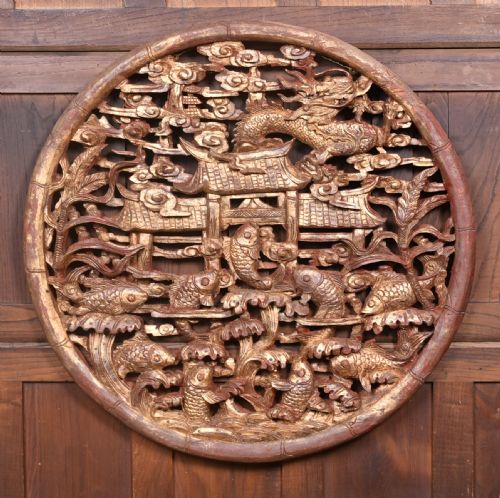


Chinese Pagoda Carving
These Chinese pagoda carving items are striking decorative pieces that bring elaborate architectural form and historical craftsmanship into a room.
Chinese Pagoda Carving
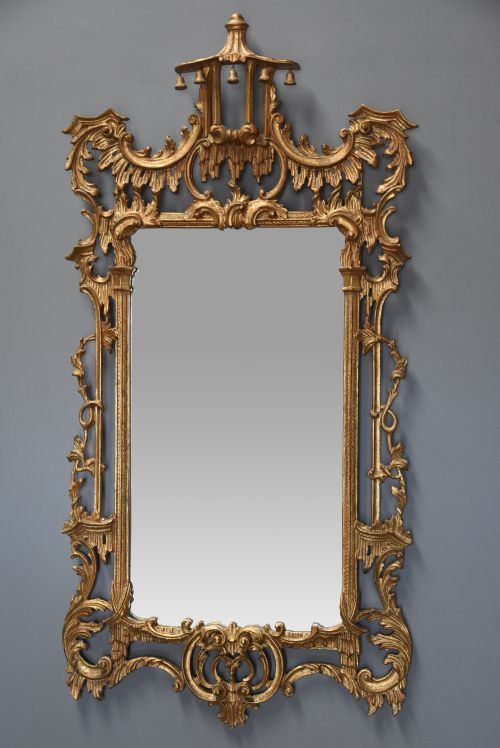
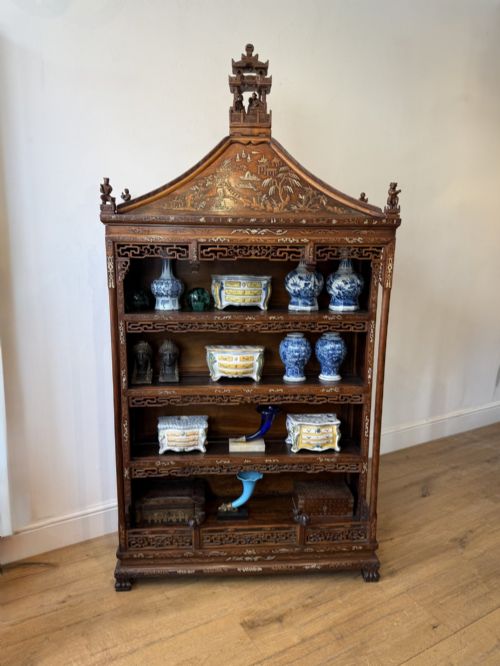
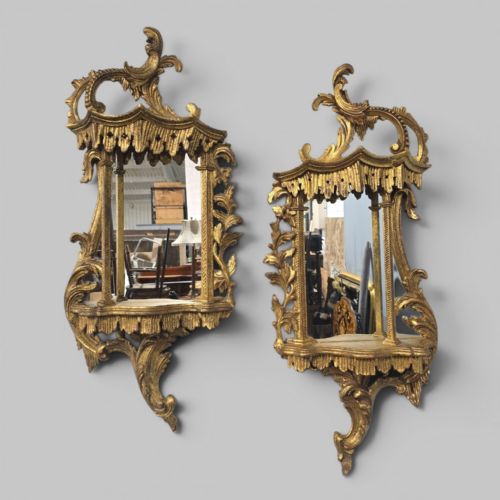
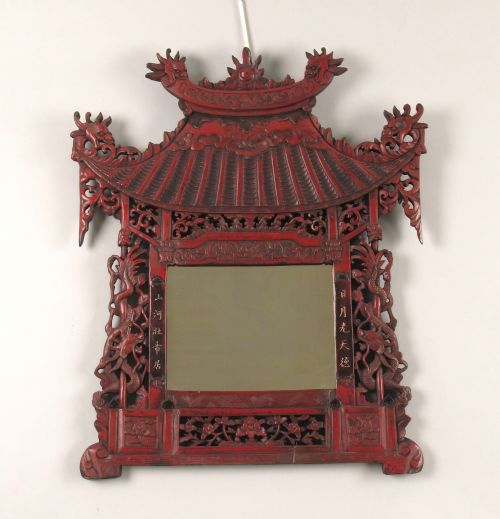
A chinese pagoda carving brings traditional architectural motifs into various decorative forms such as display cabinets, wall mirrors, and sculptures. You encounter pieces dating from the Georgian period through to the Victorian era and the early twentieth century.
The selection on this page includes intricate wooden wall plaques, decorative boxes, dining chairs, sideboards, and floor clocks. Many examples blend Chinese traditional styles with European aesthetic movements like Chinoiserie and Chinese Chippendale.
Makers and artisans adapted the tiered silhouette of the pagoda for functional furniture and ornamental display. These objects serve as focal points that reflect cross-cultural design exchanges across multiple centuries.
How they were made
Craftsmen utilised various woods including mahogany, rosewood, and general hardwood to construct the foundational structures of cabinets, chairs, and mirrors. Giltwood and red lacquer finishes were frequently applied to enhance the visual depth of the architectural carvings.
Details incorporate delicate media such as glass, mother of pearl, and soapstone. Soapstone was carved into sculptures depicting continuous landscapes and incense burners shaped like pagodas.
Joinery and surface decoration combine traditional eastern motifs with western cabinetmaking techniques seen in George III and Victorian workshops.
Chinese Pagoda Carving Retail Price Guide 2026
Typical asking prices for chinese pagoda carving among the pieces listed under this phrase on Sellingantiques today, from the lower quarter to the upper quarter. They describe what is for sale here now, not the wider market.
What varies in quality
The refinement of the carving dictates the distinction between standard production and exceptional examples. Crisp execution in giltwood, lacquer, or hardwood reveals the hand of a skilled artisan.
The integrity of applied finishes, such as red lacquer or gilding, influences the visual impact of the piece. Superior examples maintain the intricate balance of architectural proportions characteristic of pagoda designs.
Thomas Chippendale
The Chinese Pagoda Carving Glossary
- Chinoiserie
- European artistic style reflecting Chinese motifs and decorative techniques. It heavily influenced furniture and interior design during the Georgian and Victorian periods.
- Pagoda
- Tiered tower with multiple eaves, originating in Asian architecture. This form is rendered in wood, soapstone, and giltwood across various decorative objects.
- Giltwood
- Wood carved and treated with a thin layer of gold leaf or gilt. This finish highlights intricate architectural details on mirrors and furniture.
- Soapstone
- Talc schist carved into sculptural forms. Artisans utilised this soft stone for detailed landscape plaques and incense burners.
- Qing Dynasty
- The final imperial dynasty of China, spanning from the seventeenth to the early twentieth century. Pieces from this era often feature traditional carving and lacquer work.
Chinese Pagoda Carving: Frequently Asked Questions
What is a Chinese pagoda carving?
A Chinese pagoda carving is an architectural or decorative representation of a tiered tower rendered in materials like hardwood, soapstone, or giltwood.
These carvings appear on furniture, wall mirrors, display cabinets, and decorative boxes across various historical periods.
How were these carved items used?
These items functioned as ornamental display pieces, functional furniture like dining chairs and sideboards, or wall-mounted mirrors and plaques.
They added exotic architectural motifs to European and British interiors influenced by Chinoiserie and Chinese Chippendale styles.
How do I identify the period?
Dating relies on stylistic markers such as Georgian proportions, Victorian ornamentation, or early twentieth-century manufacturing techniques.
Materials like red lacquer, giltwood, and soapstone also provide clues to the era of production.
What materials are common?
Common materials include hardwoods such as mahogany and rosewood, alongside decorative mediums like mother of pearl, glass, and soapstone.
Surfaces are frequently finished with red lacquer or gilding to accentuate the carved architectural details.